Por lo general, los extranjeros no pueden comprar viviendas existentes en Nueva Zelanda en virtud de la Ley de Enmienda de Inversiones en el Extranjero de 2018, excepto los australianos, los singapurenses y ciertos titulares de visas elegibles.
Recent 2025 changes also allow Active Investor Plus and Investor 1 or 2 visa holders to purchase or build homes worth NZD $5 million or more.
This guide brings together everything you need to know from deciding where to live in New Zealand, understanding ownership rules, and budgeting for costs, to navigating the legal and financial systems that shape its property market.
This includes various aspects of property buying in New Zealand for foreigners such as:
- Who can buy property in New Zealand?
- How to decide where to live in NZ?
- How much money do I need to buy a house in New Zealand?
Mis datos de contacto son hello@adamfayed.com y WhatsApp +44-7393-450-837 si tiene alguna pregunta.
La información contenida en este artículo es meramente orientativa. No constituye asesoramiento financiero, jurídico o fiscal, ni una recomendación o solicitud de inversión. Algunos hechos pueden haber cambiado desde el momento de su redacción.

Can a foreigner buy a property in New Zealand?
In most cases, only New Zealand citizens and residents who meet certain conditions can buy residential property.
Some buyers may also need approval from Land Information New Zealand (LINZ) before completing a purchase.
The official government website of New Zealand offers a Homebuyer eligibility tool, which comes in handy.
Update (September 2025):
En Government announced that overseas investors holding an active Investor Plus Visa, will now be able to buy or build one home valued at NZD $5 million or more.
This includes those with Investor 1 or Investor 2 residence visas. This exemption applies to a very small share of the housing market (less than 1% of homes).
The primary objective of this scheme is to attract high-value investors who bring skills, capital, and global connections to New Zealand.
Is it difficult to buy property in New Zealand?
Buying property in New Zealand can be more complicated for foreigners compared to residents and citizens.
This is because, in 2018, the New Zealand government introduced the Overseas Investment Amendment Act.
This act largely banned most foreigners from purchasing existing residential property.
The purpose of the law was to cool down the overheated housing market, which had become increasingly unaffordable for locals.
However, there are exceptions. Australians and Singaporeans, due to free trade agreements, are allowed to buy property in New Zealand without restriction.
Foreigners on certain visas may also be permitted to purchase if specific conditions are met.
The buying process may feel bureaucratic for overseas investors since it requires clearance from the Overseas Investment Office (OIO) in most cases.
Therefore, while it is not impossible, it is certainly more difficult for non-residents compared to citizens or permanent residents.
Is property cheap in New Zealand?
Property in New Zealand is not considered cheap by global standards. In fact, it has consistently ranked among the most expensive housing markets globally, particularly in cities like Auckland, Wellington, and Queenstown.

The affordability crisis stems from a combination of limited land availability, population growth, strong demand from investors, and construction costs.
While smaller towns and rural areas can provide more affordable options, the general trend remains one of high prices, especially in urban or scenic regions.
That being said, compared to markets like London, Hong Kong, or Sydney, some areas in New Zealand can still offer relatively good value for money.
Prices also vary heavily depending on whether the property is freehold, leasehold, or new construction.
Cost of housing in New Zealand
Negotiation is common when buying. It costs around NZ$6,500 to NZ$8,000 per square metre, depending on the specific location.
As of recent reports, median house prices can range from:
- Around NZD 1 million in Auckland
- NZD 750,000 in Wellington
- NZD 700,000 in Christchurch
- Over NZD 1.2 million in Queenstown
Small-town and regional areas may have properties available for NZD 400,000–500,000, making them more accessible.
Listings may show RV (Rateable Value), GV (Government Valuation), or CV (Council Valuation), but these are only used for setting property taxes and don’t always reflect true market value.
For accuracy, consider hiring a registered valuer, who factors in local sales, property features, and construction type.
When budgeting, include rates (council taxes). Rates are charged by local councils to fund community services and are based on the property’s value.
Homeowners, including landlords, must pay these rates, while tenants do not.
The average property price in New Zealand fluctuates depending on the region.
How to buy a property in New Zealand
The general steps to purchasing New Zealand real estate are:

- Obtain eligibility clearance: Ensure you meet the criteria under foreign ownership laws.
- Engage professionals: Hire a lawyer and possibly a licensed conveyancer to handle legal documentation and negotiate.
- Financiación segura: Apply for a mortgage if eligible, or prepare sufficient proof of funds if buying outright.
- Search for a property: Use local real estate websites, auctions, or property agents.
- Haz una oferta: This can be unconditional or conditional on mortgage approval, inspections, or legal checks.
- Sign an agreement: After negotiations, sign a Sale and Purchase Agreement.
- Settle the transaction: Pay the deposit, finalize financing, and complete the transfer through the local land office.
The purchase process usually takes 3–4 weeks once you’ve chosen a home. After a seller accepts your offer, no late bids can be made (unlike in some other countries).
Most sales go through a real estate agent, though private sales also occur.
Searching for a property in New Zealand
Start your search on property websites with listings from agents and private sellers. Foreign investors and residents can explore property listings through:
- Online platforms like Trade Me Property, Realestate.co.nz, o OneRoof.
- Licensed real estate agents specializing in buyer needs.
- Property auctions conducted locally.
Buyers must carefully revise zoning rules, leasehold arrangements, and land classifications before purchase.
Some homes are advertised only on local agent sites or brochures.
Properties for sale often display signs outside with the agent’s or the relevant person’s contact details.
Can a foreigner get a mortgage in New Zealand?
Todos major banks in New Zealand offer mortgages. Many also provide migrant banking services with multilingual staff.
You can also work with mortgage brokers. Anyhow, you should note that:
- New arrivals should bring proof of overseas credit history.
- A significant deposit is usually required because of the loan-to-value ratio (LVR) restrictions set by the Reserve Bank.
Home Insurance in New Zealand
Homes in New Zealand are insured on a “sum insured” basis. You must estimate the rebuild cost of your home, often using online calculators or professional valuations.
- Earthquake cover is provided by the Natural Hazards Commission (Toka Tū Ake) and is included in your seguro premium. Private insurance is required to qualify.
- If you buy an apartment, building insurance is typically included in the body corporate fee, but you’ll still need your own contents insurance.
Home insurance is strongly recommended to cover risks such as earthquakes, floods, and fires, which are common in New Zealand due to its geography.
Banks typically require insurance as a condition of providing a mortgage.
Premiums vary depending on the property’s age, structure, and location. Expect to spend between NZD 1,000 and 2,500 annually on homeowner’s insurance.
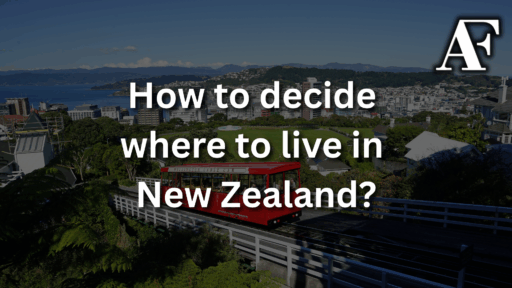
How to decide where to live in New Zealand?
The best place to live in New Zealand depends on your work or study location, budget, and lifestyle. When choosing where to settle, consider the following key factors:
- Climate and Heating – The north is milder than the south. Most homes lack central heating, so check insulation, sunlight, and heating systems.
- Gastos de vivienda – Property and rent are highest in big cities like Auckland and Queenstown, while smaller towns are more affordable.
- School Zones – Families should confirm if preferred schools have enrolment zones, as these determine guaranteed admission.
- Healthcare Access – Major cities offer better hospital and specialist services; rural areas may require longer travel.
- Transport Links – Public transport is strongest in cities; smaller towns often rely on cars. Remote areas may be far from airports.
- Comunidad y estilo de vida – Choose areas that match your interests or family needs. Talking to locals or joining online groups helps you learn about neighborhoods.
Key Considerations When Buying Property in New Zealand
Buying property in New Zealand is not just about eligibility. Potential buyers must also navigate:
- High housing costs with median prices reaching NZD 1 million in Auckland and over NZD 1.2 million in Queenstown, though smaller towns remain more affordable.
- Regional lifestyle choices from climate differences and heating needs to school zones, healthcare, and transport links.
- Strict processes property purchases usually take 3–4 weeks and involve lawyers, registered valuers, and compliance with local council regulations.
- Financing and insurance banks impose high deposit requirements, and earthquake or natural hazard coverage is a standard part of insurance policies.
Conclusión
Buying property in New Zealand as a foreigner is possible, but highly restricted.
The foreign buyer ban remains in place for most, with only select visas, trade partners, or special exemptions granting access.
Even for eligible buyers, the process involves strict oversight, significant financial requirements, and higher-than-average housing costs.
For those who qualify, New Zealand offers both a safe and transparent property market and the opportunity to live in one of the most desirable countries in the world.
But it’s essential to approach the journey with realistic expectations, proper legal and financial guidance, and a clear understanding of the responsibilities that come with property ownership.
In short, while New Zealand is not an easy market for foreign buyers, it can still be rewarding for those who meet the criteria and are ready to invest not just in property, but in the country’s future.
Preguntas frecuentes
How much money do you need for a mortgage in NZ?
The deposit requirement depends on whether you are a resident or foreign buyer. Residents usually need at least 20% down, while foreigners may need 30–40%.
For example, a NZD 800,000 home would require an NZD 240,000–320,000 deposit.
Can you buy property in NZ without residency?
Yes, but with restrictions. Most foreigners cannot buy existing residential homes, but they may buy new developments or commercial properties with approval.
Australians and Singaporeans can buy without residency due to free-trade agreements.
What is the foreign buyer ban in New Zealand?
The foreign buyer ban refers to the government legislation introduced in 2018 that prevents most overseas investors from buying existing residential property.
The law was created to prevent speculative investments from driving up housing costs and to keep property available for local buyers.
Is buying property in New Zealand a good investment?
For residents, buying property has historically been a strong investment, with steady appreciation due to housing demand.
However, growth has slowed in recent years due to affordability concerns and government restrictions.
For foreigners, the limited scope of ownership opportunities significantly reduces investment potential.
What’s the downside of living in New Zealand?
While New Zealand offers beautiful landscapes and a high quality of life, it is not without downsides:
– High coste de la vida and expensive housing.
– Limited job opportunities in certain sectors compared to larger economies.
– Geographic isolation with long travel times to Europe or North America.
– Natural risks such as earthquakes and volcanic activity.
¿Le duele la indecisión financiera?

Adam es un autor reconocido internacionalmente en temas financieros, con más de 830 millones de respuestas en Quora, un libro muy vendido en Amazon y colaborador de Forbes.