Los nómadas digitales pueden generar ingresos de inversión en todo el mundo, pero las normas fiscales, el estatus de residencia y la estructura de inversión determinan si esos ingresos favorecen o limitan la movilidad a largo plazo. Sin
Sin una planificación fiscal clara y una alineación jurisdiccional, los rendimientos de las inversiones globales pueden resultar ineficientes o gravables involuntariamente.
Este artículo trata:
- ¿Qué hacen exactamente los nómadas digitales?
- ¿Cuál es el salario medio de un nómada digital?
- ¿Hay que pagar impuestos si se es nómada digital?
- ¿Los rendimientos de las inversiones se incluyen en la base imponible?
- ¿Cuáles son algunas inversiones inteligentes?
- ¿Dónde pagan el impuesto sobre la renta los nómadas digitales?
- ¿Qué país tiene los mejores impuestos para los nómadas digitales?
Principales conclusiones:
- Las acciones, los ETF, los bienes inmuebles y los fondos de inversión son las principales opciones de inversión para los nómadas digitales.
- Los rendimientos de las inversiones suelen estar sujetos a impuestos, incluso durante los viajes.
- Elegir un país fiscalmente favorable puede reducir las obligaciones fiscales globales.
- Diversificar los flujos de ingresos garantiza la movilidad y la seguridad financiera a largo plazo.
Mis datos de contacto son hello@adamfayed.com y WhatsApp +44-7393-450-837 si tiene alguna pregunta.
La información contenida en este artículo es meramente orientativa. No constituye asesoramiento financiero, jurídico o fiscal, ni una recomendación o solicitud de inversión. Algunos hechos pueden haber cambiado desde el momento de su redacción.

¿Quién puede considerarse nómada digital?
A nómada digital es alguien que trabaja a distancia con un estilo de vida independiente de su ubicación.
Aunque viajar es un rasgo definitorio, lo que realmente califica a alguien como nómada digital es la capacidad de trabajar y ganar dinero sin estar atado a un país concreto.
Los nómadas digitales dan prioridad a la flexibilidad y eligen los destinos en función de su estilo de vida, el coste de la vida o las ventajas fiscales, en lugar de por el precio. residencia permanente.
Y lo que es más importante, ser nómada digital no consiste sólo en viajar, sino en tener la libertad económica y profesional de trabajar desde cualquier lugar del mundo.
¿Cuánto ganan los nómadas digitales?
Los nómadas digitales suelen ganar entre $1.000 y $10.000+ al mes, con autónomos y empleados remotos a menudo en el rango inferior o medio y empresarios o inversores que ganan cantidades superiores.
Estos ingresos pueden proceder de una combinación de trabajos en línea, como autónomos, consultoría, trabajos a distancia o gestión de negocios digitales.
Muchos nómadas digitales también complementan sus ingresos con flujos de ingresos pasivos, incluyendo dividendos, propiedades de alquiler, cursos en línea u otros ingresos por inversiones.
La ubicación también puede influir en los ingresos. Vivir en países con un coste de la vida más bajo permite a los nómadas mantener un estilo de vida cómodo incluso con ingresos modestos, mientras que los nómadas con ingresos elevados pueden ahorrar o reinvertir una parte importante de sus ingresos.
En última instancia, los niveles de ingresos vienen determinados por la combinación de aptitudes, experiencia, tipo de trabajo y capacidad para aprovechar eficazmente los ingresos de las inversiones para lograr la libertad financiera a largo plazo.
Opciones de inversión inteligentes para nómadas digitales
Los nómadas digitales pueden obtener ingresos flexibles a través de inversiones como ETFs o propiedades de alquiler, que les permiten aumentar su patrimonio sin depender de su ubicación.
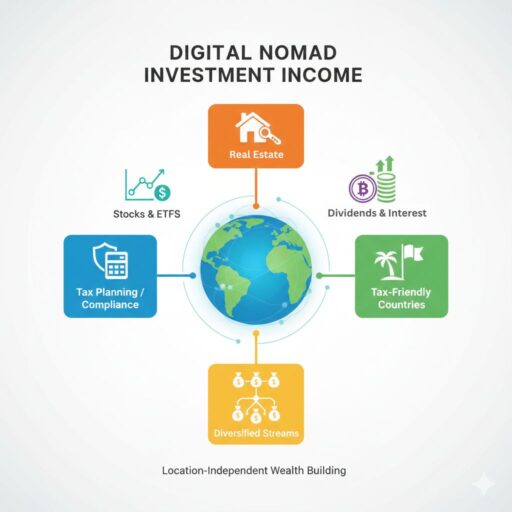
- Inversiones independientes de la ubicación: Acciones en línea, ETF y criptomoneda pueden gestionarse totalmente en línea. Estos activos proporcionan acceso global sin necesidad de una dirección fija.
- Inversiones de bajo mantenimiento: Acciones que pagan dividendos, REITs, y las plataformas de inversión automatizadas generan ingresos pasivos constantes con una participación mínima en el día a día, lo que permite a los nómadas centrarse en viajar o trabajar a distancia.
- Inversiones fiscalmente eficientes: Activos mantenidos en jurisdicciones favorables, determinados ETF extranjeros o inmobiliario con ventajas fiscales pueden reducir la deuda tributaria total. Entender las leyes locales y aprovechar las exenciones o los tratados puede optimizar las devoluciones legalmente.
¿Pagan impuestos los nómadas digitales?
Sí, los nómadas digitales generalmente deben pagar el impuesto sobre la renta, con obligaciones determinadas por las normas de residencia fiscal, las leyes locales y los tratados fiscales internacionales.
Dependiendo de dónde se les considere residentes fiscales, los nómadas pueden tributar por las rentas de origen local, por las rentas mundiales o por una combinación de ambas.
Esta responsabilidad fiscal se aplica no sólo a las rentas activas del trabajo a distancia o autónomo, sino también a las rentas de inversión, incluidos dividendos, intereses, rentas de alquiler y plusvalías.
Incluso cuando los ingresos proceden de corredores de bolsa extranjeros, cuentas en paraísos fiscales o plataformas digitales, la mayoría de las autoridades fiscales exigen la divulgación y la presentación de informes.
Algunos países ofrecen regímenes fiscales favorables o incentivos para los nómadas digitales, mientras que otros gravan con impuestos los ingresos globales una vez alcanzados los umbrales de residencia.
Sin una planificación adecuada, la obtención de ingresos en varias jurisdicciones puede dar lugar a una doble imposición o a responsabilidades inesperadas.
¿A quién pagas impuestos si eres nómada digital?
Por lo general, los nómadas digitales deben pagar impuestos al país en el que se les considera residentes fiscales.
La mayoría de los países gravan la renta mundial de los residentes, lo que significa que todos los ingresos, incluidos los extranjeros, pueden estar sujetos a tributación.
Algunos países, sin embargo, sólo gravan los ingresos de origen local, por lo que los obtenidos fuera del país pueden no estar sujetos a impuestos.
Dependiendo de las circunstancias individuales, los nómadas digitales pueden necesitar:
- Declarar ingresos en su país de origen si mantienen obligaciones de residencia fiscal o ciudadanía.
- Pagar impuestos en el país donde residen temporalmente, si su estancia cumple los umbrales de residencia (normalmente 183 días o más).
- Utilice tratados fiscales entre países para evitar la doble imposición y beneficiarse de exenciones o créditos.
¿Cuál es la estrategia fiscal de los nómadas digitales?
Los nómadas digitales pueden minimizar legalmente los impuestos y proteger sus ingresos planificando estratégicamente la residencia, diversificar los ingresos, y utilizando estructuras fiscalmente eficientes.
Un enfoque claro y proactivo les permite mantener la movilidad al tiempo que cumplen la legislación fiscal mundial.
Entre las estrategias eficaces figuran:
- Planificación de la residencia: Establecer la residencia fiscal en países con tipos impositivos bajos o favorables. Algunos países ofrecen visados especiales para nómadas digitales o programas de incentivos que reducen el impuesto sobre la renta de las rentas del trabajo o de las inversiones. Comprender las normas de residencia, incluida la regla de los 183 días o los umbrales locales, es esencial para evitar obligaciones fiscales involuntarias.
- Diversificación de los ingresos: Combine los ingresos del trabajo a distancia con ingresos de inversión fiscalmente eficientes, como dividendos, ETF o bienes inmuebles en jurisdicciones favorables. Diversificar las fuentes de ingresos ayuda a los nómadas digitales a mantener la estabilidad financiera y reduce el riesgo de ser gravados en un solo lugar.
- Aprovechamiento de los convenios fiscales: Utilice los convenios de doble imposición entre países para evitar pagar impuestos dos veces por los mismos ingresos. Los convenios fiscales suelen permitir exenciones, créditos o tipos reducidos para las rentas obtenidas en el extranjero, lo que puede reducir considerablemente la carga fiscal total.
- Cuentas de jubilación e inversiones en paraísos fiscales: Utilizar cuentas que difieran los impuestos o se beneficien de un tratamiento favorable en el extranjero. Offshore o internacional cuentas de jubilación, junto con determinadas estructuras de inversión, pueden reducir legalmente los impuestos al tiempo que proporcionan una acumulación de riqueza a largo plazo.
¿Qué país tiene los mejores impuestos para los nómadas digitales?
Países como Portugal, Georgia, Estonia, Barbados, Bermudas y Croacia están considerados entre los mejores para los nómadas digitales debido a sus favorables normas fiscales, programas de visado para nómadas digitales, e incentivos para los trabajadores a distancia.
Elegir un lugar con un entorno fiscal favorable puede reducir significativamente las obligaciones tanto sobre los rendimientos del trabajo como sobre las inversiones, al tiempo que proporciona seguridad jurídica a los profesionales que se desplazan.
- Portugal: Mientras que el antiguo Residente no habitual (NHR) ha finalizado para los nuevos solicitantes, Portugal sigue ofreciendo incentivos fiscales a través del programa de Incentivos Fiscales a la Investigación Científica y la Innovación (IFICI), a veces denominado NHR 2.0. El IFICI puede ofrecer un tipo impositivo a tanto alzado de 20% sobre los ingresos portugueses que cumplan los requisitos y exenciones sobre determinados ingresos de fuente extranjera durante un máximo de 10 años si se cumplen los criterios de elegibilidad (incluida la residencia y la participación en actividades que cumplan los requisitos).
- Georgia: A través de la A distancia desde Georgia los autónomos pagan un impuesto fijo del 1% sobre los ingresos hasta un determinado umbral. Esto hace que Georgia resulte extremadamente atractiva para los nómadas digitales que buscan una fiscalidad mínima combinada con un bajo coste de la vida.
- Estonia: Conocido por su Programa de e-Residencia, Estonia permite a los emprendedores digitales crear y gestionar empresas en línea. Su sistema fiscal es sencillo y favorable a las empresas, con un impuesto de sociedades diferido sobre los beneficios reinvertidos y normas claras para los ingresos digitales.
- Barbados, Bermudas y Croacia: Estos países ofrecen visados para nómadas digitales de corta duración con impuestos locales sobre la renta reducidos o nulos para los extranjeros, lo que los hace adecuados para los nómadas que prefieren estancias más cortas o movilidad estacional mientras disfrutan de regímenes fiscales bajos.
Nómadas digitales frente a viajeros perpetuos
Los nómadas digitales mantienen flujos de ingresos mientras viajan, mientras que los viajeros perpetuos evitan establecer su residencia en cualquier lugar para minimizar impuestos y obligaciones.
Los nómadas digitales suelen contar con residencias semipermanentes o estancias basadas en visados, lo que les proporciona estabilidad a la hora de elaborar informes y planificar la fiscalidad.
Los viajeros perpetuos deben aplicar estrategias más complejas para evitar la fiscalidad mundial, lo que dificulta la gestión de los ingresos de las inversiones.
Para los nómadas, esto significa normas más claras y posibles protecciones en los tratados, mientras que los viajeros perpetuos se enfrentan a la incertidumbre en múltiples jurisdicciones.
Entender estas diferencias ayuda a los profesionales móviles a elegir el enfoque que mejor equilibra la libertad, los ingresos y la eficiencia fiscal.
Conclusión
La libertad financiera de los nómadas digitales pasa por alinear los ingresos, inversiones, y de ubicación con objetivos a largo plazo.
La planificación estratégica de las obligaciones fiscales, los tipos de inversión y la residencia convierte la movilidad en una ventaja y no en una complicación.
Al abordar los ingresos y gestión de patrimonios deliberadamente, los nómadas pueden crear un estilo de vida en el que los viajes, el crecimiento y la seguridad financiera se refuercen mutuamente.
Al final, los nómadas digitales de éxito son aquellos que ponen cada decisión, desde las inversiones hasta la elección del país, al servicio tanto de la libertad como de la sostenibilidad.
Preguntas frecuentes
¿Cuáles son los distintos tipos de nómadas digitales?
Los nómadas digitales suelen clasificarse en trabajadores totalmente nómadas, nómadas lentos o estacionales y viajeros perpetuos.
Los trabajadores totalmente nómadas se desplazan con frecuencia entre países mientras obtienen ingresos por Internet, mientras que los nómadas lentos o estacionales permanecen en cada lugar durante varios meses, a menudo siguiendo el clima o los horarios personales.
Los viajeros perpetuos evitan establecer su residencia en cualquier lugar para reducir impuestos y mantener la flexibilidad.
¿Los nómadas digitales pagan dos veces impuestos?
Potencialmente, sí. Sin una planificación cuidadosa, puede tener que pagar impuestos en su país de origen y en el de residencia.
Los convenios fiscales suelen mitigar esta situación.
¿Están sujetos a tributación los rendimientos procedentes de activos digitales virtuales?
Sí. Las ganancias de criptomonedas, NFT y otros activos digitales suelen tributar como ganancias de capital en la mayoría de los países.
¿Qué país es mejor para un nómada digital?
Emiratos Árabes Unidos (EAU) es una de las principales opciones por su impuesto sobre la renta de las personas físicas 0% y sus modernas infraestructuras, que lo hacen ideal para los trabajadores a distancia.
Otros destinos populares son España, Croacia y Estonia, que ofrecen visados para nómadas digitales, Internet fiable y buena calidad de vida.
Muchos nómadas también tienen en cuenta el coste de la vida, el clima y las comunidades locales a la hora de elegir un país para vivir y trabajar.
¿Le duele la indecisión financiera?

Adam es un autor reconocido internacionalmente en temas financieros, con más de 830 millones de respuestas en Quora, un libro muy vendido en Amazon y colaborador de Forbes.