Mauricio cuenta con un próspero sector de banca privada, con entidades como Mauritius Commercial Bank (MCB) Private Banking y Barclays Bank Mauritius Private Banking, a las que suelen recurrir los particulares con grandes patrimonios.
Estos bancos ofrecen acceso internacional, servicios a medida y una gestión especializada de las relaciones.
Sin embargo, elegir el banco privado adecuado depende de factores que van más allá del reconocimiento de la marca. El estatus de residencia, la exposición fiscal y los objetivos de inversión son importantes.
Trabajamos con clientes con movilidad internacional para evaluar estas variables y ayudarles a encontrar soluciones de banca privada adecuadas en Mauricio.
No nos centramos en promocionar ninguna institución, sino en alinear la banca privada con la planificación financiera y de residencia más amplia de los clientes.
Este artículo trata:
- ¿Qué cualidades debe buscar a la hora de elegir un banco?
- ¿Qué tipo de clientes se benefician más de los servicios de banca privada?
- ¿Qué es la banca para ricos?
- ¿Cómo elegir el mejor banco?
Principales conclusiones:
- La banca privada en Mauricio está adaptada a los clientes de alto patrimonio neto con necesidades de inversión internacional.
- Los extranjeros pueden abrir cuentas con la documentación adecuada y una prueba de fondos.
- La selección de un banco privado implica sus servicios, reputación y gestión de relaciones, además de otros factores.
Mis datos de contacto son hello@adamfayed.com y WhatsApp +44-7393-450-837 si tiene alguna pregunta.
La información contenida en este artículo es meramente orientativa. No constituye asesoramiento financiero, jurídico o fiscal, ni una recomendación o solicitud de inversión. Algunos hechos pueden haber cambiado desde el momento de su redacción.

¿Por qué se realizan operaciones bancarias en Mauricio?
La gente realiza operaciones bancarias en Mauricio para acceder a un centro financiero bien regulado y con credibilidad internacional, con servicios eficientes desde el punto de vista fiscal y conectados a escala mundial.
Mauricio se ha consolidado como uno de los principales centros financieros internacionales, ocupando el primer lugar en África y el segundo en el mundo. 19ª posición mundial en el Índice de Centros Financieros Mundiales.
El país cuenta con más de 900 fondos, gestores de inversión e instituciones financieras con sede en él y más de $80.000 millones de dólares en activos gestionados.
Su sector de servicios financieros aporta alrededor de 13 % del PIB y apoya tanto a los inversores locales como a los transfronterizos.
Los bancos de Mauricio ofrecen diversos servicios adaptados a clientes de todo el mundo, como cuentas multidivisa, banca privada, soluciones de inversión y gestión de patrimonios, Respaldada por sólidas normas de prevención del blanqueo de capitales y de cumplimiento normativo y por una plantilla cualificada y bilingüe.
El régimen fiscal es especialmente atractivo, con un tipo único del impuesto de sociedades del 15%, sin impuesto sobre las plusvalías, sin impuesto sobre el patrimonio ni sobre sucesiones, y numerosos convenios de doble imposición, lo que lo hace favorable tanto para los residentes como para los inversores internacionales.
Estos factores hacen que Mauricio sea especialmente codiciado por los particulares con grandes patrimonios, oficinas familiares, Los servicios financieros transfronterizos y la planificación patrimonial se centran en las personas, los expatriados y las empresas multinacionales.
¿Cuál es el mejor banco privado de Mauricio?
Mauritius Commercial Bank (MCB) Private Banking está ampliamente considerado como el principal banco privado de Mauricio debido a su escala, su sólida base de capital y su posición dominante en el mercado local y regional.
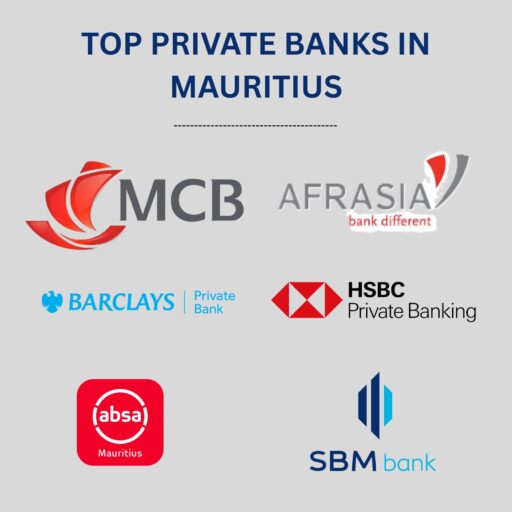
He aquí los principales bancos privados de Mauricio, con sus puntos fuertes y sus limitaciones equilibradas:
1. MCB Banca Privada
La división de Gestión Privada de Patrimonios de MCB ha sido galardonada en repetidas ocasiones con el premio “Mejor banco privado de Mauricio”que subraya el amplio reconocimiento de la calidad del servicio y la innovación digital.
Puntos fuertes:
- El banco más grande y con más solera de Mauricio
- Amplia gestión de patrimonios y servicios discrecionales de cartera
- Sólidos conocimientos y ofertas de servicios regionales
Debilidades:
- Más centrado regionalmente que algunos competidores mundiales
- La estructuración mundial puede ser menor que la de las potencias internacionales
2. Barclays Bank Mauricio Banca Privada
Parte de la histórica Barclays conocida por su gran alcance internacional y su capacidad bancaria transfronteriza (ahora estrechamente vinculada a la evolución de las operaciones de Absa).
Puntos fuertes:
- Experiencia bancaria internacional
- Acceso a mercados y servicios mundiales
Debilidades:
- La dirección estratégica en África ha cambiado con el tiempo
- Menos flexibilidad que los bancos más pequeños
3. Banca Privada AfrAsia Bank
ÁfricaAsia ha obtenido múltiples premios de banca privada, entre ellos “Mejor banco privado - Mauricio” y galardones por sus servicios de investigación de inversiones y de grandes patrimonios en ceremonias mundiales del sector.
Puntos fuertes:
- Servicio de tipo boutique con especial atención a África y Asia
- Gestión personalizada de las relaciones
Debilidades:
- Balance más pequeño en comparación con los bancos nacionales o mundiales
- Menor reconocimiento global de la marca
4. Absa Bank Mauritius Banca Privada
Absa Bank ha abierto recientemente un Centro de riqueza y adquirió el negocio nacional de banca patrimonial y personal de HSBC Mauricio, ampliando así sus capacidades de banca privada.
Puntos fuertes:
- Fuerte presencia nacional
- Buena relación con el cliente y canales digitales
Debilidades:
- Perfil menos global
- Servicios de estructuración internacional más limitados
5. HSBC Mauricio Banca Privada
HSBC Mauritius ha sido reconocido por su responsabilidad corporativa y la excelencia de su servicio durante muchos años, incluso cuando parte de su negocio de banca personal y patrimonial pasó a manos de Absa.
Puntos fuertes:
- Red bancaria mundial y experiencia transfronteriza
- Sólidas plataformas de custodia e inversión
Debilidades:
- Enfoque más estandarizado y menos personalizado
- Umbrales mínimos más elevados
6. State Bank of Mauritius (SBM) Banca Privada
SBM ha sido reconocido como uno de los mejores bancos de Mauricio en cuanto a experiencia del cliente, lo que refleja su compromiso digital y su enfoque en el servicio al cliente.
Puntos fuertes:
- Fuerte presencia nacional
- Buena relación con el cliente y canales digitales
Debilidades:
- Perfil menos global
- Servicios de estructuración internacional más limitados
Los requisitos exactos de documentación y los mínimos de las cuentas varían según el perfil del cliente y el banco. Trabajamos con los clientes para determinar qué entidades se ajustan a sus necesidades patrimoniales e internacionales.
¿Puede un extranjero abrir una cuenta en Mauricio?
Sí, los extranjeros pueden abrir cuentas bancarias en Mauricio, y el sector financiero del país está estructurado para acoger a clientes no residentes.
La mayoría de los bancos privados exigirán documentación estándar como prueba de identidad, prueba de residencia e información verificable sobre el origen de los fondos para cumplir los requisitos de cumplimiento y lucha contra el blanqueo de capitales (AML).
Muchas entidades también ofrecen cuentas multidivisa, que permiten a los no residentes mantener y realizar transacciones en las principales divisas internacionales, haciendo que inversión transfronteriza y la gestión de tesorería más eficiente.
Además de las cuentas normales, algunos bancos tienen ofertas especializadas para expatriados e inversores extranjeros, que incluyen soluciones patrimoniales a medida y equipos de relación dedicados a ayudarles. banca internacional necesidades.
¿Cuál es la diferencia entre banca privada y banca para ricos?
La banca privada suele estar reservada a personas con un elevado patrimonio neto y activos invertibles significativos, mientras que la banca afluente atiende a clientes acomodados pero por debajo del umbral de la banca privada.
Por lo general, la banca de alto poder adquisitivo se dirige a clientes con entre 1.400.000 y 1.400.000 millones de euros en activos invertibles, ofreciéndoles cuentas premium, facilidades de crédito y asesoramiento básico en materia de inversión.
La banca privada suele comenzar a partir de $1 millón a $5 millones en activos invertibles, ofreciendo una gestión patrimonial totalmente personalizada, a medida estrategias de inversión, y gestores de relaciones dedicados.
Los bancos privados pueden ofrecer servicios ultraexclusivos, como apoyo a las oficinas familiares, planificación filantrópica y estructuras de inversión globales personalizadas, a personas con un patrimonio neto muy elevado, que suelen definirse como aquellas que poseen $30 millones o más.
Estos umbrales pueden variar según la institución y la jurisdicción, y algunos bancos ofrecen servicios de banca privada escalonados en función de los niveles de activos, en lugar de tener un límite estricto.
¿Por qué elegir un banco privado?
Los bancos privados se eligen por su capacidad para ofrecer soluciones patrimoniales a medida que van más allá de los servicios bancarios estándar.
Entre sus principales ventajas figuran:
- Asesoramiento de inversión y planificación patrimonial a medida: Estrategias personalizadas alineadas con sus objetivos financieros.
- Acceso a productos financieros exclusivos: Oportunidades no disponibles a través de los bancos minoristas.
- Confidencialidad y discreción: Mayor privacidad para asuntos financieros delicados.
- Servicios de planificación patrimonial y sucesoria: Orientación para transferir eficazmente la riqueza de una generación a otra.
- Estrategias de inversión fiscalmente eficientes: Estructuración de las inversiones para optimizar el rendimiento después de impuestos.
Para los particulares con grandes patrimonios, estos servicios hacen de la banca privada una herramienta estratégica para preservar y aumentar el patrimonio a largo plazo.
¿Cómo elegir un banco privado?
Elija un banco privado que tenga una sólida reputación y una estructura de comisiones transparente para garantizar la fiabilidad y el valor.
Entre los factores que hay que tener en cuenta figuran:
1. Reputación y estabilidad: Garantizar que el banco tiene un historial sólido, una posición de capital sólida y reconocimiento en el sector.
2. Gama de servicios: Busque ofertas completas, que incluyan gestión de inversiones, planificación patrimonial y soluciones de asesoramiento.
3. Gestión personalizada de las relaciones: Los banqueros privados especializados y los servicios personalizados son esenciales para los clientes con un elevado patrimonio neto.
4. Accesibilidad y capacidades digitales: Las sólidas plataformas de banca móvil y en línea mejoran la comodidad y la gestión transfronteriza.
5. Tasas y estructuras de costes: Comprenda los mínimos de cuenta, las comisiones de gestión y los costes de transacción para evaluar el valor global.
Visite el banco y hable de sus objetivos financieros con un asesor financiero. asesor financiero suele ser la mejor manera de confirmar si la institución es adecuada.
Centros mundiales de banca privada
Banca privada La excelencia se concentra en centros financieros clave de todo el mundo, como Mauricio en África, Singapur en Asia y Suiza en Europa.
- Mauricio destaca como la joya de África en materia de gestión de patrimonios, ya que ofrece estabilidad normativa, eficiencia fiscal y conocimientos transfronterizos adaptados al continente y a los mercados del Océano Índico.
- En Asia, Singapur domina con su conectividad global, sofisticada infraestructura financiera y amplios servicios de family office.
- Suiza sigue a la cabeza de Europa, reconocida por su discreción, su larga tradición bancaria y sus servicios a los clientes con patrimonios muy elevados.
- En el continente americano, Estados Unidos y Canadá en particular Nueva York, Miami y Toronto, ofrecen una gran liquidez, mercados de inversión a gran escala y soluciones integrales para las family offices.
Esta perspectiva pone de relieve la posición única de Mauricio: aunque de menor escala que estas potencias mundiales, ofrece servicios boutique altamente especializados y un acceso regional estratégico que pocas jurisdicciones africanas pueden igualar.
Conclusión
Mauricio se ha consolidado como un centro estratégico para particulares con grandes patrimonios que buscan estabilidad, conectividad global y soluciones financieras a medida.
La selección del banco privado adecuado va más allá del tamaño de su cartera y depende de hasta qué punto los servicios, el asesoramiento personalizado y el acceso global a las inversiones del banco se ajustan a sus objetivos financieros.
Para los extranjeros y los inversores transfronterizos, conocer los puntos fuertes, el enfoque regional y las capacidades digitales de cada banco puede influir significativamente en la planificación del patrimonio a largo plazo.
La evolución de bancos como Absa y MCB demuestra que Mauricio sigue innovando en banca privada, equilibrando las normas internacionales con la experiencia local.
En última instancia, la relación de banca privada más eficaz combina confianza, soluciones personalizadas y conocimientos estratégicos para respaldar la conservación, el crecimiento y la sucesión del patrimonio a través de las generaciones.
Preguntas frecuentes
¿Quién puede acceder a la banca privada?
Por lo general, los clientes pueden acceder a la banca privada si disponen de activos invertibles a partir de 1 millón de dólares, aunque los umbrales exactos varían según el banco y la jurisdicción.
Algunas instituciones también pueden tener en cuenta los ingresos, la propiedad de la empresa o el valor global de la relación con el cliente a la hora de determinar la elegibilidad.
¿Cuántos millonarios hay en Mauricio?
En Mauricio viven aproximadamente 5.000 personas de alto poder adquisitivo, que refleja la creciente riqueza de la isla y su atractivo como centro financiero.
¿Cuáles son las 5 C de la banca?
Las 5 C de la banca son Carácter, Capacidad, Capital, Garantía y Condiciones. Los bancos las utilizan para evaluar la solvencia y fiabilidad financiera de un cliente.
¿Le duele la indecisión financiera?

Adam es un autor reconocido internacionalmente en temas financieros, con más de 830 millones de respuestas en Quora, un libro muy vendido en Amazon y colaborador de Forbes.