In 2026, Afghanistan, Iraq, Syria, and Pakistan hold some of the world’s weakest passports, severely limiting their holders’ visa-free travel and international mobility.
These passports often rank lowest across global mobility indexes, reflecting restricted diplomatic ties and fewer visa-free agreements worldwide.
Este artículo trata:
- What is considered a weak passport?
- What are the weakest passports in the world?
- What are the 5 strongest passports?
Principales conclusiones:
- Weak passports like those of Afghanistan and Syria restrict global travel.
- Holders of weak passports often need visas for nearly all destinations.
- Second citizenship, residency programs, and visa facilitation can expand travel options.
- Japan, Singapore, and Germany provide the most powerful passports in 2026.
Mis datos de contacto son hello@adamfayed.com y WhatsApp +44-7393-450-837 si tiene alguna pregunta.
For digital nomad or residence visas that require income, assets, or qualifying investments, we can help structure suitable investment solutions that may align with those requirements, depending on your circumstances.
La información contenida en este artículo es meramente orientativa. No constituye asesoramiento financiero, jurídico o fiscal, ni una recomendación o solicitud de inversión. Algunos hechos pueden haber cambiado desde el momento de su redacción.

What does it mean when you have a weak passport?
A weak passport is one that provides limited visa-free or visa-on-arrival access to other countries. Holders often face more restrictions, higher costs, and longer processing times when traveling abroad.
Passports are considered weak based on several criteria:
- Visa Restrictions: The number of countries you can visit without obtaining a visa in advance.
- Economic and Political Stability: Countries with smaller economies or political unrest often have weaker passports.
- International Relations: Strained diplomatic ties limit travel freedom for citizens.
- Security Concerns: Higher-risk regions may face stricter entry requirements from other nations.
Having a weak passport can affect business opportunities, global mobility, and even emergency evacuation options.
Knowing your passport’s ranking helps you plan travel, inversiones, and strategies to improve your mobility.
How the Least Powerful Passports are Measured
Different global indexes use distinct methodologies to determine passport strength. Understanding their focus helps explain why some countries appear higher or lower in mobility rankings.
| Index | Focus | Methodology |
| Nomad Capitalist Passport Index | Overall global citizenship value | Visa-free travel, taxation, personal freedom, perception, ability to hold dual citizenship |
| Índice de pasaportes de Henley | Pure travel mobility | Number of visa-free or visa-on-arrival destinations |
| Índice de pasaportes de Arton Capital | Travel access and diplomatic agreements | Visa-free mobility plus real-time diplomatic updates |
What are the top 10 countries with the weakest passport?
In 2026, passports from Afghanistan, Iraq, Syria, and Pakistan consistently rank among the weakest in the world, offering their holders very limited visa-free travel.
According to rankings from the Henley Passport Index, Nomad Capitalist, and Arton Capital Passport Index, the following countries regularly appear at the bottom.
| Rango | Nomad Capitalist | Arton Capital | Índice de pasaportes de Henley |
| 1 | Afganistán | Afganistán | Afganistán |
| 2 | Syria, Eritrea | Syria | Syria |
| 3 | Iraq | Iraq | Iraq |
| 4 | North Korea | Somalia, Pakistan | Yemen, Pakistan |
| 5 | Pakistán | Yemen | Somalia |
| 6 | Irán | Palestinian Territories, Bangladesh | North Korea, Nepal |
| 7 | Palestinian Territory | North Korea | Bangladesh |
| 8 | Somalia | Eritrea | Eritrea |
| 9 | Yemen, Myanmar | Sudán del Sur | Sri Lanka, Palestinian Territory, Libya |
| 10 | República Democrática del Congo | Sudán | Irán |
Weakest Passports Compared: 2025 vs 2026 Rankings
Compared with 2025, the bottom three positions remain largely unchanged, with Afghanistan, Syria, and Iraq consistently occupying the lowest ranks across all three indices.
This reflects ongoing geopolitical instability, limited diplomatic agreements, and persistent visa restrictions that continue to limit international mobility for citizens of these countries.
Despite slight shifts in positions among other countries, the overall composition of the weakest passports remains similar year over year.
However, there are some notable changes between the 2025 and 2026 rankings.
For example, Iran and Myanmar appear more prominently in the Nomad Capitalist list, while Sri Lanka and Iran newly appear in the lower tier of the Henley ranking.
Meanwhile, South Sudan emerges in the Arton Capital ranking, highlighting changes in visa agreements and diplomatic relations that influence passport strength.
These shifts show how passport rankings can fluctuate annually based on foreign policy developments, visa waivers, and international mobility agreements.
What are the strongest passports in 2026?
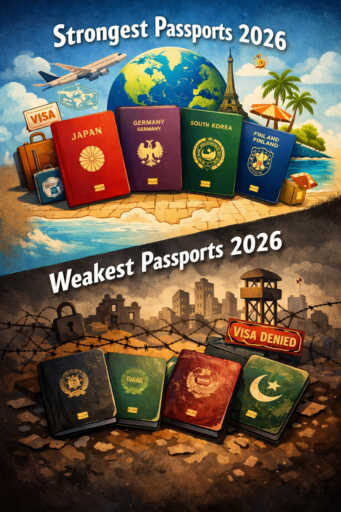
In 2026, Japan, Singapore, Germany, South Korea, and Finland rank among countries with the pasaportes más potentes del mundo, giving their citizens access to over 180 destinations without needing a visa in advance.
These countries consistently top global rankings due to their strong diplomatic relationships, stable economies, and extensive visa-waiver agreements.
On the opposite end of the spectrum from the weakest passports, the strongest passports offer extensive visa-free or visa-on-arrival access and significantly greater global mobility.
Having one of these strong passports provides several advantages beyond simple travel convenience.
Citizens can move across borders more easily for business expansion, international education, and oportunidades de inversión a escala mundial.
Entrepreneurs and professionals benefit from easier market access, while students can pursue education abroad with fewer bureaucratic hurdles.
Strong passports also reflect broader geopolitical and economic influence.
Countries with high-ranking passports often maintain strong diplomatic ties, stable governance, and active participation in international agreements, all of which contribute to wider travel freedom for their citizens.
Options for Improving Mobility with A Weak Passport
For holders of a weak passport, options such as segunda ciudadanía, residency-by-investment programs, or visa facilitation services can significantly improve international mobility.
These strategies allow individuals to access more countries with fewer visa restrictions and greater travel flexibility.
- Second Citizenship or Residency Programs – Countries like Portugal, Malta, y el Emiratos Árabes Unidos offer citizenship or residency through investment programs, allowing individuals to eventually obtain stronger travel documents or long-term residence rights.
- Visa Facilitation Services – Specialized agencies can streamline visa applications, helping applicants navigate documentation requirements and improve approval chances for countries with strict visa policies.
- Regional Travel Agreements – Some regions allow free movement within member states. For example, citizens within the European Union can travel freely across member countries, while Caribbean nations benefit from agreements under CARICOM.
- Emergency Travel Documents – In cases of lost, stolen, or expired passports abroad, temporary travel documents issued by embassies can help individuals return home or continue essential travel.
Taking these steps can significantly reduce the limitations posed by a weak passport and open access to broader international opportunities.
Regions with the Most Visa Restrictions in the World
In 2026, passports from countries in the Middle East, Sub-Saharan Africa, and politically isolated states face the strictest visa restrictions, severely limiting international travel for their citizens.
Many of the weakest passports come from these regions due to conflict, economic challenges, or limited diplomatic agreements.
Middle East Conflict Zones
Countries experiencing prolonged conflict or geopolitical tensions often rank among the weakest passports.
Nations such as Afghanistan, Iraq, Syria, and Yemen face strict visa requirements from many countries due to security concerns and unstable political environments.
As a result, their citizens typically need visas for the majority of international destinations.
Parts of Sub-Saharan Africa
Several passports from Sub-Saharan African countries also rank lower globally due to economic limitations and fewer visa-waiver agreements.
Countries like Somalia, Eritrea, and Sudan frequently appear in weaker passport rankings, although regional agreements within Africa sometimes allow easier travel between neighboring states.
Politically Isolated States
Some countries face mobility restrictions primarily because of political isolation and limited diplomatic engagement.
For example, North Korea has one of the most restricted passports in the world, with very limited travel freedom for its citizens due to strict government controls and international sanctions.
Countries with Limited Global Mobility Agreements
In some cases, weaker passports stem from fewer bilateral visa agreements or limited participation in global travel frameworks.
Countries that lack strong diplomatic networks or international partnerships often have fewer visa-free arrangements with other nations.
Understanding these regional patterns highlights that passport strength is rarely just about travel policy.
It is closely tied to geopolitics, international relations, and economic development, which shape how freely citizens can move across borders.
Conclusión
Passport strength is ultimately a reflection of a country’s diplomatic reach, economic stability, and global relationships.
While individuals cannot directly change the geopolitical factors that determine their passport’s ranking, they can take strategic steps to reduce the limitations that come with weaker travel documents.
For many people, global mobility is becoming increasingly important for career opportunities, business expansion, education, and personal freedom.
As a result, solutions such as residency programs, second citizenship, and strategic visa planning are gaining attention among individuals from countries with limited travel access.
Over time, passport rankings can shift as nations strengthen diplomatic ties or implement new visa agreements.
For now, understanding where your passport stands and the options available to improve mobility can help you plan more effectively for international opportunities.
Preguntas frecuentes
What stops you from being able to get a passport?
Common reasons include: lack of citizenship documentation, unresolved legal issues, unpaid taxes, or restrictions due to national security concerns.
Some countries also impose eligibility requirements based on residency or parental nationality.
Who has a black passport?
Countries issuing black passports include New Zealand, Trinidad and Tobago, Palestinian Territories, and some African nations, though designs may vary.
Black passports are mostly symbolic and do not indicate passport strength.
Which passport is the most difficult to get?
Some of the most difficult passports to obtain include those from North Korea and Bhutan, where citizenship is rarely granted to foreigners due to strict government policies.
Countries like Japan and Switzerland also have demanding naturalization requirements, including long residency periods and strong integration criteria.
What if I lost my old expired passport?
If you lost your expired passport, report it to your country’s passport authority and apply for a replacement.
You will usually need proof of identity, citizenship documents, and sometimes a police report.
¿Le duele la indecisión financiera?

Adam es un autor reconocido internacionalmente en temas financieros, con más de 830 millones de respuestas en Quora, un libro muy vendido en Amazon y colaborador de Forbes.