Un fideicomiso de las Islas Cook no puede ser disuelto voluntariamente por el fideicomitente una vez establecido. Estos fideicomisos están diseñados para ser irrevocables, lo que significa que el fideicomitente renuncia a la propiedad y no puede simplemente deshacer la estructura o reclamar los activos a voluntad.
Sin embargo, la disolución no es imposible en la práctica. Los tribunales de otras jurisdicciones, en particular de Estados Unidos, han demostrado que la aplicación de la ley puede presionar a los fideicomitentes para que adopten medidas que pongan fin o desmantelen efectivamente el fideicomiso.
Cuando los tribunales ordenan la repatriación de los activos de un fideicomiso de las Islas Cook, el incumplimiento puede dar lugar a condenas por desacato, multas o incluso penas de prisión.
Esta presión también puede dar lugar a que el fideicomitente acepte rescindir el fideicomiso o devolver los activos.
¿Prefiere audio? Escuche por qué irrevocable no significa intocable y cómo los tribunales, el control del fideicomitente y el cumplimiento pueden afectar a la protección de los fideicomisos en las Islas Cook.
Principales conclusiones:
- El fideicomitente no puede disolver voluntariamente el fideicomiso, pero los tribunales pueden obligar a repatriar los activos.
- Una influencia excesiva aumenta el escrutinio y el riesgo de aplicación de la ley.
- El cumplimiento de las obligaciones legales y de información protege al fondo fiduciario frente a impugnaciones.
- Ningún fideicomiso offshore ofrece inmunidad absoluta.
Mis datos de contacto son hello@adamfayed.com y WhatsApp +44-7393-450-837 si tiene alguna pregunta. También ofrecemos soluciones de estructuración a medida adaptadas a su situación.
La información contenida en este artículo es meramente orientativa, no constituye asesoramiento financiero, jurídico o fiscal y puede haber cambiado desde el momento de su redacción.

¿Qué hace que un fideicomiso de las Islas Cook sea irrevocable?
Fideicomisos de las Islas Cook están estructurados para separar permanentemente la propiedad legal de la propiedad efectiva, siendo los fideicomisarios quienes ostentan la titularidad legal y gestionan los activos para los beneficiarios.
Esta estructura impide a los fideicomitentes reclamar unilateralmente los activos transferidos, haciendo que el fideicomiso sea legalmente irrevocable una vez establecido.
El marco jurídico de las Islas Cook lo refuerza al limitar las reclamaciones de los acreedores y restringir la capacidad del fideicomitente para interferir en el fideicomiso tras su constitución.
Estas características son la razón por la que los fideicomisos de las Islas Cook se utilizan ampliamente para la protección de activos y la planificación patrimonial internacional.
- Los fideicomisarios poseen la titularidad legal mientras que los beneficiarios reciben los beneficios, lo que crea una fuerte separación de la propiedad.
- La discrecionalidad del fideicomisario limita la capacidad del fideicomitente para dirigir o reclamar los activos.
- La irrevocabilidad es una característica esencial de la estructura, aunque no impide que los tribunales internacionales ejerzan presiones ejecutivas en determinadas circunstancias.
¿Puede un tribunal disolver un fideicomiso de las Islas Cook?
Los fideicomisos de las Islas Cook pueden rescindirse cuando los tribunales obligan a su cumplimiento, en particular si un fideicomitente o fideicomisario desobedece órdenes legales.
Los tribunales no disuelven los fideicomisos a la ligera, pero están facultados para exigir la repatriación de los activos u otras medidas correctoras.
In re Allen (Caso de quiebra)
Daniel Allen transfirió activos a un fideicomiso de las Islas Cook mientras el litigio ya estaba en curso, según Justia Law.
Cuando un tribunal de quiebras estadounidense ordenó la repatriación, alegó que era imposible cumplir la orden porque el síndico controlaba los activos.
El tribunal rechazó la defensa, dictaminando que la imposibilidad era autocreada, ya que el fideicomiso se estableció durante el litigio. Allen fue declarado culpable de desacato, y la decisión fue posteriormente confirmada en apelación.
BB&T contra Bellinger
Después de que un banco le exigiera el reembolso de un importante préstamo, el deudor transfirió activos a un fideicomiso de las Islas Cook. Un tribunal estadounidense le ordenó solicitar la repatriación al fideicomisario.
Cumplió y solicitó la devolución de los activos, pero el fideicomisario se negó en virtud de los términos del fideicomiso y de la legislación de las Islas Cook, lo que pone de relieve la brecha jurisdiccional entre los tribunales estadounidenses y los fideicomisarios de paraísos fiscales.
Estados Unidos contra Grant
Esta aplicación del IRS caso se refería a activos vinculados a fideicomisos de las Islas Cook. El tribunal se negó inicialmente a declarar al beneficiario culpable de desacato.
Sin embargo, pruebas posteriores demostraron que Arline Grant seguía dirigiendo y recibiendo distribuciones del fideicomiso a través de cuentas familiares, lo que llevó al tribunal a concluir que conservaba el control efectivo y había incumplido la orden de repatriación.
Estos casos demuestran que la irrevocabilidad no garantiza la inmunidad frente a la ejecución legal transfronteriza.
Los tribunales, sobre todo en las jurisdicciones con fuertes mecanismos de ejecución, pueden imponer consecuencias reales, incluida la disolución forzosa.
Extinción voluntaria vs. Extinción forzosa de un fideicomiso en las Islas Cook
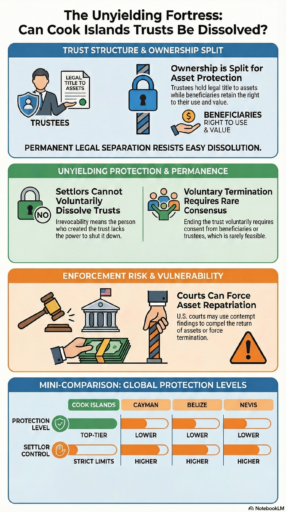
La terminación voluntaria de un fideicomiso de las Islas Cook es extremadamente limitada, mientras que la terminación forzosa de un fideicomiso de las Islas Cook puede ocurrir a través de la ejecución judicial.
Por lo general, un fideicomitente no puede disolver un fideicomiso de las Islas Cook por su cuenta porque la estructura está diseñada para ser irrevocable.
La rescisión voluntaria suele requerir
- Consentimiento del beneficiario, si todos los beneficiarios están de acuerdo con la disolución, o
- La discrecionalidad del fideicomisario, que puede estar limitada por la escritura fiduciaria y los deberes fiduciarios.
En la práctica, estas condiciones rara vez se cumplen sin consultas legales y acuerdos formales, e incluso entonces, los tribunales pueden examinar la rescisión si parece que elude las reclamaciones de los acreedores.
La percepción de que la irrevocabilidad es flexible es, por tanto, engañosa; estos fideicomisos están pensados para bloquear los activos de forma permanente.
Cómo afecta el control del fideicomitente a la ejecución de los fideicomisos en las Islas Cook
El grado de influencia del fideicomitente afecta directamente a si un fideicomiso de las Islas Cook puede resistir la presión externa. Un control excesivo por parte del fideicomitente aumenta el escrutinio y el riesgo de acciones coercitivas.
Los poderes del fideicomitente que suelen desencadenar la ejecución incluyen:
- La posibilidad de sustituir a los fideicomisarios o protectores fiduciarios.
- Participación directa en la inversión fiduciaria o la asignación de activos.
- Utilizar los activos del fideicomiso para gastos personales.
Incluso cuando los poderes formales son limitados, los tribunales pueden determinar que el incumplimiento es autoprovocado, lo que da lugar a constataciones de desacato u órdenes de repatriación de activos.
Acuerdos internacionales de intercambio de información como FATCA y CRS amplifican el riesgo, ya que las autoridades transfronterizas pueden coordinar su aplicación.
Conceptos erróneos sobre la protección y ejecución de fideicomisos en las Islas Cook
Muchas personas sobrestiman el poder protector de los fideicomisos de las Islas Cook. Creer que el fideicomiso es impenetrable puede ser peligroso.
- La negativa del fideicomisario no garantiza la protección; los tribunales pueden exigir el cumplimiento.
- Irrevocable no significa intocable; la ejecución puede llevar a la disolución.
- El fideicomiso no es un escudo para actividades ilegales; los tribunales anularán las protecciones en casos de fraude o uso indebido.
Los materiales promocionales a veces presentan los fideicomisos de las Islas Cook como una protección casi absoluta frente a acreedores y reclamaciones legales.
Sin embargo, la aplicación judicial y las normas de cumplimiento multijurisdiccional demuestran que estas estructuras tienen limitaciones reales.
Su eficacia depende de una planificación adecuada, del cumplimiento de la legislación y de una gobernanza responsable, más que de discursos promocionales sobre su fortaleza.
Cómo los HNWI pueden estructurar fideicomisos en las Islas Cook
Las personas con grandes patrimonios deben estructurar los fideicomisos de las Islas Cook con fideicomisarios independientes, un control limitado del fideicomitente y el pleno cumplimiento de las siguientes normas normas internacionales de información.
Un diseño adecuado reduce el escrutinio legal y refuerza el marco de protección de activos del fideicomiso.
- El diseño del fideicomiso importa: La independencia del fideicomisario, los poderes del fideicomitente y unos derechos claros de los beneficiarios pueden reducir el escrutinio.
- El cumplimiento es fundamental: Intentar ocultar bienes después de la demanda puede acarrear multas, desacato o prisión.
- Transparencia internacional: Los informes CRS y FATCA aumentan la probabilidad de aplicación de la ley.
- Planificación a largo plazo: Los fideicomisos deben formar parte de una estrategia más amplia que incluya seguros, entidades extraterritoriales y planificación fiscal.
La protección de activos más sólida se produce antes de que surja cualquier reclamación, no de forma reactiva. Una vez que aparecen los problemas legales, incluso los fideicomisos irrevocables de las Islas Cook son vulnerables.
Cómo proteger los activos en un fideicomiso en las Islas Cook
Los activos de un fideicomiso de las Islas Cook se protegen manteniendo una separación estricta entre el fideicomitente y los activos del fideicomiso, al tiempo que se garantiza el cumplimiento continuo de las obligaciones legales y de información.
El fideicomiso debe funcionar como una estructura realmente independiente y no como una extensión de las finanzas personales del fideicomitente.
Evite utilizar los activos del fideicomiso para gastos personales, lo que puede socavar la afirmación de que el fideicomitente ha renunciado al control.
Mantener la documentación y los registros contables adecuados para demostrar que los fideicomisarios ejercen una toma de decisiones independiente.
Cumplir las obligaciones internacionales de información, incluidas las normas de transparencia fiscal que se aplican a las estructuras financieras transfronterizas.
Trabajar con fideicomisarios y asesores jurídicos experimentados para garantizar que las acciones fiduciarias sean coherentes con la escritura fiduciaria y los deberes fiduciarios.
Estas prácticas ayudan a preservar la integridad del fideicomiso y reducen la probabilidad de que los tribunales consideren la estructura como una herramienta para eludir obligaciones legales.
Perspectiva Comparativa: Fideicomisos de las Islas Cook frente a otros fideicomisos offshore
Los fideicomisos de las Islas Cook generalmente ofrecen protecciones estatutarias más fuertes contra acreedores y la ejecución de tribunales extranjeros que otras jurisdicciones offshore populares, aunque ningún fideicomiso es completamente inmune.
Comprender las diferencias en los marcos jurídicos y los mecanismos de aplicación es fundamental a la hora de elegir la estructura adecuada.
Fideicomisos en las Islas Caimán
- Existen fideicomisos discrecionales y de protección de activos.
- Una participación más flexible del fideicomitente aumenta la comodidad operativa, pero puede exponer el fideicomiso a un mayor escrutinio.
- Un sólido sistema judicial de derecho consuetudinario permite la ejecución efectiva de las reclamaciones de los acreedores locales.
- Los acreedores pueden invocar la legislación sobre transmisiones fraudulentas, lo que significa que la protección no es absoluta.
- Disposiciones legales estrictas sobre protección de activos y privacidad.
- Los fideicomisos discrecionales son comunes, pero los fideicomitentes a menudo pueden retener más influencia que en los fideicomisos de las Islas Cook.
- La ejecución en tribunales extranjeros es más lenta, por lo que se dispone de más tiempo para responder, pero las reclamaciones pueden llegar a prosperar.
- Los precedentes judiciales están menos asentados, por lo que los resultados pueden ser menos predecibles que en las Islas Cook.
- Bien considerado por su protección de la intimidad y de los acreedores, con plazos de prescripción cortos para su ejecución.
- Los fideicomisarios suelen tener amplias facultades discrecionales, lo que puede mejorar la protección si se estructura adecuadamente.
- La mala conducta del fideicomitente, el fraude o las transferencias posteriores a la reclamación aún pueden exponer los activos a la repatriación forzosa.
- Los mecanismos para hacer cumplir la ley son más débiles que en las Islas Cook, pero la protección sigue siendo limitada si se cometen irregularidades.
Los fideicomisos de las Islas Cook ofrecen una sólida protección en virtud de su marco legal y de los precedentes judiciales establecidos.
Sin embargo, los tribunales de otras jurisdicciones aún pueden exigir la repatriación de los activos u ordenar la disolución del fideicomiso si se descubren irregularidades o incumplimientos.
Reflexiones finales
Los fideicomisos de las Islas Cook siguen siendo una poderosa herramienta para el comercio internacional. gestión de patrimonios, pero no son invulnerables.
Aunque son jurídicamente irrevocables, pueden disolverse de forma efectiva u obligarse a devolver activos mediante ejecución judicial cuando se trata de irregularidades o incumplimientos.
Su eficacia depende, en última instancia, de lo bien que se integre el fideicomiso en una estrategia patrimonial más amplia, que incluya estructuras complementarias como seguros, entidades corporativas y planes de sucesión.
Una gobernanza meditada, una supervisión jurídica proactiva y la adecuación a las normas internacionales determinan si el fideicomiso cumple la finalidad prevista.
Para las personas con un elevado patrimonio neto y los expatriados, el éxito radica en utilizar el fideicomiso como uno de los componentes de un enfoque disciplinado y a largo plazo para la conservación del patrimonio, en lugar de confiar únicamente en la etiqueta de irrevocabilidad.
Preguntas frecuentes
¿Son seguros los fideicomisos de las Islas Cook?
Los fideicomisos de las Islas Cook se consideran una de las estructuras de protección de activos offshore más sólidas porque las leyes locales limitan las reclamaciones de los acreedores y dificultan la ejecución de las sentencias extranjeras.
Sin embargo, no son completamente inmunes a la presión legal. Los tribunales de otras jurisdicciones aún pueden obligar a los fideicomitentes a cumplir las órdenes de repatriación o enfrentarse a sanciones por desacato, lo que puede afectar indirectamente al fideicomiso.
¿Cuánto cuesta al año un fideicomiso en las Islas Cook?
La mayoría de los fideicomisos de las Islas Cook cuestan entre 8.000 y 15.000 USD al año, dependiendo de la complejidad y los servicios fiduciarios.
La configuración inicial suele costar entre 15.000 y 25.000 dólares, lo que refleja las mayores ventajas de la protección de activos.
¿Puedo rescindir voluntariamente un fideicomiso?
La disolución voluntaria es extremadamente limitada. Un fideicomiso de las Islas Cook sólo puede disolverse si todos los beneficiarios lo consienten o el fideicomisario lo acuerda en virtud de la escritura de fideicomiso, lo que rara vez ocurre sin procedimientos legales formales y asesoramiento profesional.
¿Están los fideicomisos de las Islas Cook a salvo de la aplicación de la ley FATCA?
No. La Ley de Cumplimiento Fiscal de Cuentas Extranjeras exige a las instituciones financieras de todo el mundo que informen de las cuentas vinculadas a contribuyentes estadounidenses.
Es decir fideicomisos extraterritoriales puede seguir notificándose a las autoridades fiscales, lo que aumenta la transparencia y la probabilidad de aplicación si el fideicomiso se utiliza indebidamente.
¿Cuáles son los peligros de utilizar un fideicomiso para proteger su dinero?
Los principales riesgos son las demandas por transferencia fraudulenta, el control excesivo del fideicomitente y el incumplimiento de las órdenes judiciales.
¿Cuál es la mejor manera de dejar sus bienes a sus hijos?
Para las familias internacionales, el enfoque más eficaz suele combinar herramientas de planificación patrimonial como fideicomisos, testamentos y estructuras de seguros.
Un fideicomiso bien estructurado puede transferir activos a los hijos controlando al mismo tiempo cómo y cuándo se realizan las distribuciones, lo que ayuda a proteger el patrimonio de una generación a otra.
¿Le duele la indecisión financiera?

Adam es un autor reconocido internacionalmente en temas financieros, con más de 830 millones de respuestas en Quora, un libro muy vendido en Amazon y colaborador de Forbes.