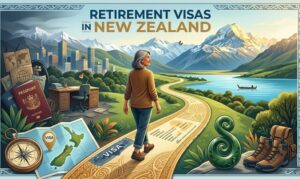
New Zealand offers two main retirement visa pathways, based on whether you have family ties in the country or are applying independently—the Parent Retirement Resident Visa and Temporary Retirement Visitor Visa.
The Temporary Retirement Visitor Visa allows retirees aged 66 and up to live in New Zealand for up to two years if they meet strict financial and health requirements, while the Parent Retirement Resident Visa offers a path to permanent residence for those with a qualifying child in New Zealand.
Este artículo trata:
- How to apply for a temporary visa in NZ?
- Can I bring my elderly parents to New Zealand permanently?
- How much do you need for a retirement visa?
- What are the requirements for a retirement visa?
- How much does it cost to retire to New Zealand?
- What is the best thing about living in New Zealand?
- What are the negatives of living in New Zealand?
- Where is the best place to live in New Zealand for retirees?
Principales conclusiones:
- New Zealand has two retirement visa pathways: temporary and family-based residency.
- Popular retirement locations in New Zealand include Auckland, Wellington, and Napier.
- Financial requirements vary, with investments and savings ranging from NZD 750,000 to over NZD 1 million.
- The country offers high quality of life but comes with relatively high living costs.
Mis datos de contacto son hello@adamfayed.com y WhatsApp +44-7393-450-837 si tiene alguna pregunta.
Para los visados de nómada digital o de residencia que requieran ingresos, activos o inversiones cualificadas, podemos ayudarle a estructurar soluciones de inversión adecuadas que puedan ajustarse a esos requisitos, en función de sus circunstancias.
La información contenida en este artículo es meramente orientativa, no constituye asesoramiento financiero, jurídico o fiscal y puede haber cambiado desde el momento de su redacción.

Can I immigrate to New Zealand if I am retired?
Yes, you can immigrate to New Zealand as a retiree, but only through specific visa pathways.
The two options cater to independent retirees and those with an adult child in New Zealand.
You must meet age, health, and financial requirements to qualify.
Many retirees are drawn to New Zealand for its clean environment, peaceful lifestyle, and excellent healthcare system, making it an attractive destination for long-term retirement.
What is a retirement visa in New Zealand?
A visado de jubilación in New Zealand is a government-authorized pathway that lets eligible retirees to live in the country under specific visa categories, mainly the Temporary Retirement Visitor Visa and the Parent Retirement Resident Visa.
These visas, outlined by Immigration New Zealand rules, are intended for individuals aged 66 or older who can financially support themselves without relying on local employment or social welfare.
En Temporary Retirement Visitor Visa permits stays of up to two years and is ideal for independent retirees who meet the age, health, and financial requirements.
Meanwhile, the Parent Retirement Resident Visa offers a route to permanent residence but requires an adult child who is a New Zealand citizen or resident, along with higher investment thresholds.
Both visas are designed to ensure retirees can enjoy New Zealand’s high quality of life including safety, healthcare, and natural beauty, while maintaining financial self-sufficiency.
How to get a New Zealand retirement visa?
A New Zealand retirement visa is obtained through either the Temporary Retirement Visitor Visa or the Parent Retirement Resident Visa, with proof of age, health, character, and financial eligibility required.
Aquí tienes una guía paso a paso:
1. Check your age: Ensure you meet the minimum age requirement, generally 66 years or older.
2. Prepare financial proof: Gather documents showing sufficient funds or investments to support yourself and any dependents.
3. Complete health and character checks: Obtain medical examinations and police clearance certificates as required by Immigration New Zealand.
4. Choose the right visa pathway: Decide whether you will apply under the Temporary Retirement Visitor Visa (for independent retirees) or the Parent Retirement Resident Visa (if you have an adult child in New Zealand).
5. Submit your application: Complete the visa application with all supporting documents and submit it to Immigration New Zealand.
What are the requirements for a retirement visa in New Zealand?
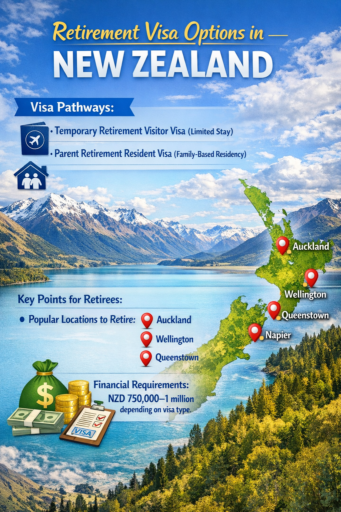
To qualify for a New Zealand retirement visa, applicants must generally be at least 66 years old, prove financial self-sufficiency, and meet health and character standards set by Immigration New Zealand.
- Age: 66 years or older.
- Financial: For the Temporary Retirement Visitor Visa, you generally need at least NZD 750,000 in investments and an annual income of around NZD 60,000. For the Parent Retirement Resident Visa, the requirements are higher: an investment of NZD 1 million over four years, NZD 500,000 settlement funds, and an annual income of NZD 60,000.
- Health: Pass a medical examination demonstrating good health.
- Character: Provide police clearance certificates showing no serious criminal record.
- English language: You may need to demonstrate basic English proficiency if applying for certain visas, especially the Parent Retirement Resident Visa, to show you can communicate and live independently in New Zealand.
These requirements ensure that retirees can support themselves while living in New Zealand and maintain compliance with immigration rules.
How much money do you need for a retirement visa in New Zealand?
Getting a New Zealand visa for retirees generally requires NZD 750,000 to NZD 1 million in inversiones or savings, plus NZD 7,891 to NZD 12,850 in visa application fees.
Financial requirements:
- Temporary Retirement Visitor Visa: Invest at least NZD 750,000 in New Zealand for 2 years, have NZD 500,000 or more for living expenses, and an annual income of NZD 60,000+.
- Parent Retirement Resident Visa: Invest at least NZD 1 million in New Zealand for 4 years, maintain NZD 500,000 for settlement funds, and an annual income of NZD 60,000+.
Visa costs (application fees):
- Temporary Retirement Visitor Visa: NZD 7,891.
- Parent Retirement Resident Visa: NZD 12,850.
How long does it take to get a retirement visa in New Zealand?
Getting a retirement visa in New Zealand typically takes about 5 weeks for the Temporary Retirement Visitor Visa and up to around 9 months for the Parent Retirement Resident Visa when your application is complete.
- Temporary Retirement Visitor Visa: Most applications are processed within about 5 weeks (80% completed within this time frame) if you provide a complete application with all required documents.
- Parent Retirement Resident Visa: The resident visa processing times for categories like parent sponsorship average around 9 months, though some cases may take longer depending on individual circumstances and supporting evidence.
These time frames can vary based on how complete your documentation is when you apply, whether additional information is requested, and the current workload at Immigration New Zealand.
Applying early and ensuring all required forms, financial proofs, and health/character documents are included can help avoid delays.
How much money do I need to retire to New Zealand?
To retire comfortably in New Zealand, experts generally recommend at least NZD 1–1.5 million in savings and investments, which can cover living expenses, healthcare, housing, and travel over several years.
- Living costs: Urban centers such as Auckland or Wellington are more expensive, with monthly costs ranging from NZD 3,000 to NZD 6,000 for a modest lifestyle, while smaller towns or rural areas typically cost NZD 2,000 to NZD 4,000 per month.
- Healthcare: Although New Zealand provides subsidized healthcare for residents, retirees may initially require private health insurance. Comprehensive coverage can cost NZD 2,000–5,000 per year.
- Housing: Renting or buying varies widely. A two-bedroom apartment in central Auckland may cost NZD 2,500–3,500 per month, while a similar property in smaller towns may be under NZD 2,000.
- Lifestyle and travel: Domestic travel, hobbies, and occasional international trips can add NZD 10,000–20,000 per year, depending on lifestyle choices.
These figures are ballpark estimates and vary based on city, type of accommodation, and lifestyle preferences.
Careful planning ensures funds last comfortably while enjoying New Zealand’s quality of life.
Where is the best place to retire in New Zealand?
Cities like Auckland, Wellington, Queenstown, and Napier are among the best places to retire in New Zealand, offering a combination of good healthcare, lifestyle amenities, safety, and quality of life.
- Auckland: Offers a vibrant urban lifestyle with excellent healthcare facilities, diverse cultural experiences, and numerous shopping and dining options, though housing and living costs are higher than in smaller towns.
- Wellington: The capital city provides a rich cultural scene, including theaters, museums, and festivals, along with a mild climate and strong public services, making it appealing for retirees who enjoy city life.
- Queenstown: Renowned for natural beauty and outdoor recreational activities such as hiking, skiing, and boating, Queenstown suits retirees who prioritize an active lifestyle and scenic surroundings, though costs can be relatively high.
- Napier & Hawke’s Bay: These regions offer more affordable living, pleasant climate, and scenic landscapes with vineyards and beaches, appealing to retirees seeking a relaxed lifestyle close to nature.
These locations balance quality of life, access to services, and lifestyle preferences, allowing retirees to select an environment that matches personal priorities.
Is New Zealand a good place to live for retirees?
Yes, New Zealand is widely regarded as a good place to live for retirees, thanks to its high quality of life, strong safety rankings, generally good health outcomes, and abundant natural beauty.
- Quality of life and well-being: New Zealand scores a very high Quality of Life Index, reflecting strong purchasing power, good climate, and overall life satisfaction among residents.
- Healthcare: According to the latest health survey, a large majority of adults report being in ‘good’ or better health, and life expectancy in New Zealand is above the OECD average at around 82 years.
- Seguridad: New Zealand consistently ranks among the world’s safest countries, with very low violent crime and a stable social environment that many retirees find reassuring.
- Natural beauty and lifestyle: The country’s varied landscapes from beaches and forests to mountains and lakes offer retirees ample opportunities for outdoor recreation and a relaxed lifestyle.
What are the disadvantages of living in New Zealand?
While New Zealand offers many benefits for retirees, it also presents some challenges, including high living costs, geographic isolation, limited rural transport, and lengthy visa processes.
- High cost of living: Cities such as Auckland and Wellington are among the most expensive in the country, with average rent for a two-bedroom apartment ranging from NZD 2,500 to NZD 3,500 per month, and overall living expenses (food, utilities, and services) often higher than many other OECD countries.
- Geographic isolation: New Zealand’s location in the South Pacific makes international travel long and costly, which can be challenging for retirees who want to visit family or friends abroad regularly.
- Limited public transportation in rural areas: While major cities have reliable public transport, smaller towns and rural regions often lack frequent bus or train services, making a car essential for mobility.
- Lengthy visa processing times for retirees: Parent Retirement Resident Visa applications can take up to 9 months to process, and any incomplete documentation can lead to further delays.
Healthcare and Insurance Considerations for NZ Retirees
Planning healthcare is a key part of retiring in New Zealand, especially since eligibility for publicly funded services hinges on visa status and can affect costs and access to care.
Public Healthcare Eligibility
- Elegibilidad: Only New Zealand citizens, residents (including those on resident visas), and certain long‑term work visa holders qualify for publicly funded health services such as free hospital care and subsidized medicines. Temporary retirees on a Temporary Retirement Visitor Visa generally do not qualify for publicly funded health care until they achieve resident status.
- Services covered: For those eligible, the public system provides free or low‑cost hospital services, emergency care, disability support, and subsidized prescriptions.
Private Healthcare and Insurance
- Private insurance recommended: Since temporary retirees usually aren’t eligible for subsidized public care, comprehensive private health insurance is strongly recommended to cover doctor visits, specialist consultations, elective procedures, and other non‑emergency services.
- Cost expectations: Plans tailored to retirees often range from NZD 200–400 per month or more, depending on age and coverage level.
- Waiting times: Even for residents, public healthcare can involve long waiting lists for elective or non‑urgent care, leading many retirees to choose private insurance for quicker access to specialists.
Accident and Emergency Coverage
- ACC support: New Zealand’s Accident Compensation Corporation (ACC) covers treatment for accidental injuries for everyone in the country, including visitors and temporary residents, although it doesn’t cover general illness or non‑accident care.
What This Means for Retirees
- Before residency, full reliance on the public system isn’t guaranteed, so budgeting for private insurance is important.
- After gaining resident status (such as through a Parent Retirement Resident Visa), eligibility for subsidized public healthcare greatly improves financial security, though many still maintain private coverage for convenience and speed.
Conclusión
Choosing New Zealand for retirement is more than meeting visa or financial requirements.
It is a decision to embrace a lifestyle that prioritizes well-being, nature, and community.
The country offers retirees unique opportunities to stay active, socially engaged, and connected to the outdoors in ways that are difficult to find elsewhere.
Success in retirement depends on strategic planning, including healthcare, housing, and gestión financiera, so that challenges such as high living costs or geographic isolation remain manageable.
With careful preparation, New Zealand can provide a retirement that is not only secure but also deeply fulfilling, offering a meaningful and enriching long-term living experience.
Preguntas frecuentes
What is the New Zealand retirement plan?
New Zealand offers a government pension called NZ Super, but it is generally only available to citizens or residents who meet specific residency requirements.
Most foreign retirees on a retirement visa must rely on their own savings, investments, or overseas pensions to support themselves.
What documents do I need to apply for NZ pension?
To apply for NZ Super, eligible retirees need proof of age, proof of New Zealand residency, identification documents (passport or birth certificate), and bank account details for payment.
Foreign retirees must still meet the residency criteria before they can receive payments.
How hard is it to move to New Zealand to retire?
It can be challenging due to financial and visa requirements, but with proper planning and sufficient funds, it is achievable.
Is healthcare free in New Zealand?
Public healthcare is subsidized for residents but not fully free. Retirees on a retirement visa usually need private health insurance until they become eligible for public coverage.
¿Le duele la indecisión financiera?

Adam es un autor reconocido internacionalmente en temas financieros, con más de 830 millones de respuestas en Quora, un libro muy vendido en Amazon y colaborador de Forbes.