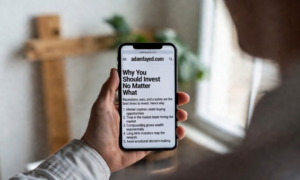
Most people avoid investing during wars, recessions, and market crashes. That is usually the wrong move. History shows that markets tend to recover and grow after crises, not collapse permanently.
The real risk is missing long-term compounding, not short-term volatility.
Andrew Craig, a British investor, founder of Plain English Finance, and author of How to Own the World, explains why staying invested is one of the most reliable ways to build wealth.
Watch the Full Interview
What You’ll Learn
- Why markets recover after crises
- The most common investor mistakes
- How media bias affects decisions
- A modern alternative to the 60/40 portfolio
- How to stay consistent and benefit from compounding
Mis datos de contacto son hello@adamfayed.com y WhatsApp +44-7393-450-837 si tiene alguna pregunta.
La información contenida en este artículo es meramente orientativa. No constituye asesoramiento financiero, jurídico o fiscal, ni una recomendación o solicitud de inversión. Algunos hechos pueden haber cambiado desde el momento de su redacción.
Why do markets recover after crises?
Markets are forward-looking. They price in expectations about future growth, not current fear.
Take March 2020 as an example. COVID-19 dominated global headlines, and sentiment was overwhelmingly negative. Most people would have advised against investing.
Yet 2020 and 2021 turned out to be some of the strongest years for equities in recent history.
This highlights a core investing principle, that is, crises create uncertainty, but not permanent decline.
Markets typically fall sharply, then recover as conditions stabilize and growth resumes.
What is the biggest mistake investors make?
The most common mistake is waiting for “good news” before investing.
By the time headlines feel safe again, markets have usually already rebounded. This leads investors to:
- Sell during downturns
- Stay in cash too long
- Miss the recovery phase
In practice, this behavior destroys long-term returns far more than short-term volatility ever could.
How does media bias affect investment decisions?
Financial decisions are heavily influenced by media narratives, and the media is structurally biased toward negativity.
“If it bleeds, it leads.”
Crashes, wars, and recessions dominate headlines because they capture attention. Steady growth does not.
This creates a distorted perception that markets are constantly on the brink of collapse, even when long-term data shows consistent upward progress.
The result: investors feel most fearful at the exact moments when valuations are often most attractive.
Why are equities the best way to build long-term wealth?
Equities represent ownership in businesses, which in turn drive global progress.
Since the 1980s, the global economy has expanded dramatically in real terms.
Entire industries—technology, biotech, artificial intelligence—have transformed how people live and work. Investors who owned equities participated in that growth.
If you want to benefit from human progress, you need to own assets that reflect it.
Do markets perform well during wars and recessions?
Historically, yes over the long term.
Major events such as global conflicts, terrorist attacks, and economic crises have typically caused:
- Short-term declines
- Followed by recovery and growth
This is because markets anticipate recovery before it becomes visible in the real economy.
What is a modern approach to asset allocation?
Traditional 60/40 portfolios are less reliable in current conditions.
A more updated rule:
- 120 minus your age in equities or growth assets
This reflects longer lifespans and the need for higher returns.
Global diversification is also critical. Concentrating too heavily in one market increases risk, especially as economic leadership shifts over time.
Why is consistency more important than timing?
Successful investing is less about timing the market and more about time in the market.
Consistency improves outcomes.
- Reduce emotional decisions
- Capture market dips
- Build wealth through compounding
Compounding works best when investments remain uninterrupted.
The Bottom Line
The world is not becoming less investable. It is becoming more productive, innovative, and interconnected.
Crises will continue to happen. Headlines will remain negative. Long-term market growth continues to reflect human ingenuity and economic expansion.
The biggest risk is not investing during uncertain times. It is staying out of the market and missing the recovery.
¿Le duele la indecisión financiera?

Adam es un autor reconocido internacionalmente en temas financieros, con más de 830 millones de respuestas en Quora, un libro muy vendido en Amazon y colaborador de Forbes.