
Are you wondering how to avoid French inheritance tax? Learn about it in this article.
Depending on your circumstances and connections to the deceased, you might be able to lower the inheritance tax you must pay.
According to allowances and tax rates that differ based on your relationship to the beneficiary of your estate, inheritance tax, or droits de succession as it is known in France, can range from zero to 60%.
The two factors, inheritance law and rate, must both be taken into consideration, especially if you are a French resident, whereas if you are a non-resident, traditional property in France is the main concern.
In terms of inheritance law, the general rule is that all movable assets located anywhere in the world, including some real estate located abroad, are subject to French laws. It doesn’t worry non-residents.
Making a will and specifying that your estate be governed by your national law rather than French inheritance law is an alternative that works better in some more complex family situations.
Mis datos de contacto son hello@adamfayed.com y WhatsApp +44-7393-450-837 si tiene alguna pregunta.
La información contenida en este artículo es meramente orientativa. No constituye asesoramiento financiero, jurídico o fiscal, ni una recomendación o solicitud de inversión. Algunos hechos pueden haber cambiado desde el momento de su redacción.
Understanding French Inheritance Law and Its Implications on Taxation
French inheritance law is unique, especially when compared to laws in countries like the UK. It includes specific provisions under the Napoleonic code designed to keep property within the family bloodline.
The law mandates that children must inherit between 50% and 75% of your estate, depending on the number of children. This is in stark contrast to the UK system, where you have more freedom in deciding who inherits your estate.
Impact on Taxation
French inheritance tax varies significantly depending on the relationship between the deceased and the beneficiary. For instance, siblings have a tax-free allowance of €15,932, followed by a 35% tax on the next €24,430 and a 45% tax above that.

Nieces and nephews receive a tax-free allowance of €7,967 each, followed by a 55% tax rate. Non-relatives have a tax-free allowance of €1,594, followed by a 60% tax rate.
Estate Planning Considerations
Estate planning in France can be challenging due to its complex succession law and tax regimes. Understanding these laws is crucial for effective estate planning, ensuring your estate is passed according to your wishes and with minimal tax implications.
EU Succession Law
Since 2015, under the EU succession regulation (Brussels IV), you can opt for the succession law of your country of nationality to apply upon your death, instead of the law of your country of residence.
However, this choice must be clearly stated in your will. It’s important to note that choosing UK succession law could potentially make you liable for UK inheritance tax on your worldwide assets, as well as French succession tax.
Succession Tax for Expats
Expats living in France are subject to French inheritance tax on worldwide assets if considered domiciled in France at the time of death.
This includes living in France for more than six months per year or having their main center of vital interests in France.
The inheritance tax rates are progressive, ranging from 5% to 45% for children and varying for other relatives.
Exemptions and Reductions
Several exemptions and deductions can reduce the inheritance tax, such as donations made during the deceased’s lifetime, life insurance proceeds paid to the deceased’s spouse or civil partner, and works of art and antiques donated to the state or a public museum.
Furthermore, spouses and members of a civil partnership are fully exempted from inheritance tax, although they are subject to gift tax.
Forced Heirship Laws in France
French inheritance law operates under a residence-based system and is derived from the French civil code. This implies that all residents of France, regardless of nationality, are subject to French inheritance law.
Forced heirship laws safeguard the direct line of descent, which includes parents, children, and grandchildren.
Historically, the purpose of this was to safeguard the family, such as to prevent an unscrupulous outsider from pressuring an elderly person to deny family members inheritance.
However, forced heirship laws require that a certain percentage of the estate pass to the deceased person’s children or spouse regardless of any will. The remainder can then be freely distributed in accordance with a French will following this.
If done in front of two notaries, children in France are able to renounce their inheritance rights. After the parent’s passing, this is irrevocable.
According to French inheritance law, the sum designated as the reserve is as follows:
- If there is only one child, that child will get half of the estate.
- With two kids, they split the estate at a rate of 66.6%.
- Children who have three or more receive 75% of the estate between them.
- The spouse is entitled to 25% of the estate if there are no children.
- To be entitled to a share of the estate, a spouse must be married at the time of death.
Unfortunately, if the surviving spouse was in a civil union, an unmarried partnership, or was divorced in France, they would not automatically be entitled to a portion of the estate.
The right to live in the family home for up to a year after their partner’s passing exists for survivors in civil partnerships, though.
French Inheritance Law on Pensions
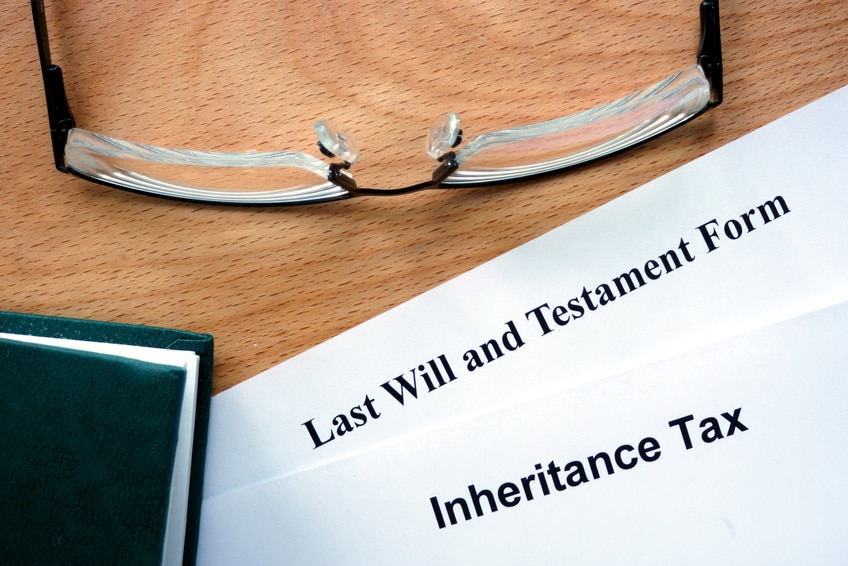
Regarding pensions, inheritance law is intricate and dependent on a variety of variables. If the deceased was also receiving a pension from a member state of the EU (or a non-member state), things get even more complicated.
If the deceased left a French pension, it would not automatically pass to a spouse or ex-spouse if they were under 55 and earning a certain amount of money.
While residing in France, you have the option of transferring your UK pension to a QROPS trust with your children as the beneficiaries if you choose to do so. However, the deceased’s pension will be subject to French succession tax if they had been a resident for at least 10 years at the time of death.
The stakes in tax matters can be very high, so seek professional advice to avoid making costly errors.
EU Expats in France
You must specify this in a will or separate declaration if you are an expat with EU citizenship living in France and want the inheritance laws of your home country to be applied.
So long as they don’t go against local public policy, these laws will typically then be applicable.
These issues relating to your inheritance are exempt from EU regulations:
- Impuesto de sucesiones
- Your civil status
- The division of your property following the death of your spouse or partner, or the property regime of your marriage or partnership
- issues involving businesses
Once you are a legal resident of France, all of your assets, with the exception of any real estate owned elsewhere, may be governed by French inheritance law. This is due to the fact that inheritance laws specific to that nation generally apply to foreign real estate.
The relationship between the deceased and the estate affects the tax rates in France. The French are actually concerned about having assurance décès, or life insurance, in France, especially if inheritance will go to a non-blood or distant relative.
In fact, inheritance tax is one of the reasons for this. You can get insurance for different members of your family, your kids, a friend, or even your lover.
How Much of an Inheritance is Exempt From French Inheritance Taxes? How Much Is The French Inheritance Tax Rate?
After debts have been subtracted from the estate’s net value, the estate is divided into shares, with each share receiving a non-taxable allowance based on the beneficiary’s familial connection to the deceased.
For instance:

- According to French law, a surviving spouse, Pacs, or civil partner is completely tax-exempt.
- Direct heirs (children or, in the event that they have passed away or given up their share, grandchildren) are exempt from paying taxes on the first €100,000. Thereafter, they pay a staggered percentage starting at 5% up to €8,072, 10% up to €12,109, 15% up to €15,932, 20% up to €552,324 and 30% up to €902,838. Thereafter, they pay 45% up to €1,805,677.
- The same rates apply to grandchildren, but only after receiving an allowance of €1,594.
- Up to €15,932 siblings are exempt from paying taxes, then they pay 35% up to €24,430 and 45% after that. Siblings who shared a home with the deceased are, however, also exempt under some circumstances. They must have shared a residence with the deceased for the previous five years and be 50 years of age or older, single, widowed, or divorced at the time of the death.
- Unless they are inheriting in place of a deceased or renounced parent, nephews and nieces must pay 55% of any amount over €7,967, and other relatives up to the fourth degree (such as children of cousins) must pay the same percentage after €1,594.
- Those who follow must pay 60% of the total.
How To Avoid or Reduce French Inheritance Tax
Get A Life Insurance Policy
Life insurance, known as ‘Assurance Vie’ in France, plays a significant role in estate planning, particularly in reducing the burden of French Inheritance Tax.
The reason this works is that payouts to the beneficiaries listed in these are typically not viewed as a part of the estate for intestate succession purposes. For instance, if you designate stepchildren as beneficiaries of the policy, they will not be subject to the 60% inheritance tax on their payout.
Additionally, you can give your kids more tax-free gifts than you could with just inheritance tax exemptions.
The policyholder has complete freedom to designate the beneficiary or beneficiaries of their choice. This can be done at the time of signing the contract or later, often through a will.
The flexibility to change beneficiaries without justification adds to the strategic value of life insurance in estate planning. However, it’s essential to specify in the contract if the beneficiary will be determined by a will.
The beneficiary will be subject to a fixed rate of 20% of the death benefit after a tax-free allowance of €152,500 if the contract is entered into and the premiums are paid before the age of 70.
For substantial payouts, a higher rate is used: 31.25% after €700,000.
If the policyholder is a resident of France at the time of their death, this tax is applied to the entire payout and deducted by the insurance company or bank.

Keep in mind that you should not confuse assurance vie with assurance décès, an insurance plan that provides beneficiaries with a lump sum payment that is tax-free in the event that the policyholder passes away.
In this situation, however, regular premiums must be paid each month; they get more expensive as you age, and the policy eventually expires after you reach the age of 75 to 80.
As a means of lowering inheritance tax, it is therefore of limited interest.
There are different types of life insurance policies available in France, such as ‘Whole of Life’ policies, which are investment-linked and have a cash-in value, and ‘Term Assurance’ policies, which provide a specified amount of cover for a specific period.
The choice of policy type should align with the individual’s financial goals and estate planning objectives.
Donate Or Gift
In France, there are specific exemptions and allowances for gifts that can help reduce the inheritance tax. For instance, parents can gift each child €100,000 free of gift tax every fifteen years.
Additionally, grandparents can gift each grandchild €31,865 tax-free. These allowances are cumulative, allowing a child to receive gifts from both parents and grandparents without affecting the exemption limits of each other.
Although there may be tax benefits to giving during your lifetime, keep in mind that gifts made in excess of the allowed limits will be treated as inheritances for tax purposes. It is known as droits de donation in this instance.
Nevertheless, there are some differences between gift tax allowances and inheritance tax rates. For bequests or gifts given to individuals who are not close family members, French taxes are very high.
The following regulations apply to donations that have an international component:
- If a donor lives in France, any significant gifts to residents or non-residents may be subject to French gift tax; if they do not, then any applicable gift tax treaties will apply (there is none between the UK and France).
- Only gifts of property located in France are considered if the recipient is a non-resident.
- If the recipient is a resident, gifts of property outside of France are also subject to taxation, provided that they have not been so for less than six of the previous ten years.
You can give anything to anyone, but if French inheritance laws will be applied to your estate after your death, you must consider any “reserved heirs'” rights to certain assets.
After the donor passes away, the deceased’s heirs may contest any lifetime gifts made by the donor that give someone other than their children a larger portion of the deceased’s estate.
The fact that gifts are eligible for tax-free allowances and that they are renewed after 15 years is a significant benefit.
For instance, before inheritance tax rates take effect, each parent can give a child a tax-free gift of €100,000 every 15 years.
Additionally, in addition to the regular allowance amounts, it is possible to give a specific monetary gift of up to €31,865 (in cash, check, or transfer) every 15 years to a child or grandchild (or nephews and nieces if there are no child or grandchile).
Finally, registered disabled individuals are eligible for a supplement of up to €159,325.
For the purpose of accounting for allowances and exemptions, all real estate gifts must be made through a formal deed witnessed by a notary.
To ensure that taxes are paid and everything is properly accounted for, tax advisors also advise doing it for significant gifts of cash, shares, valuables, etc.
Otherwise, you should be aware that any non-notarized gifts—also referred to as “manual gifts”—that are not ordinary presents still need to be declared by the recipient.
This is typically done to the Service des impôts des particuliers non-résidents when someone is located outside of the country. If in doubt, ask this organization or the donor’s tax office about the regulations that apply to your circumstance.
It’s also important to declare larger gifts on tax returns, even if gift tax is not due. For instance, loans of more than €5,000 must be declared, even if they are interest-free loans to a family member or friend.
Strategies for Tax-Efficient Estate Planning in France
Understanding French Inheritance Law
French inheritance law, known for its strict ‘forced heirship’ regime, requires a portion of your estate to be reserved for your children.
This reserved portion varies depending on the number of children, with a minimum of 50% reserved for one child and up to 75% for three or more children.
French law generally doesn’t recognize trusts as part of estate planning, and this can impact how you plan for the distribution of your assets, particularly real estate.
It’s crucial to seek informed legal advice before buying property in France to determine the most appropriate form of ownership.
Utilizing EU Succession Regulation
The EU succession regulation, known as Brussels IV, allows you to opt for the law of your nationality to apply upon death, potentially bypassing French forced heirship rules.
However, this decision may have implications for your entire global estate, including potential exposure to UK inheritance tax if you are a British national.
Marriage Regimes and Inheritance
In France, various marriage regimes can affect asset ownership between spouses.
Changing your marriage regime could potentially offer benefits for estate planning, but it’s essential to understand the tax implications of such a change. A UK/French legal expert can provide advice on the most suitable regime for your situation.
Assurance Vie as an Estate Planning Tool
An ‘assurance vie’ policy is a popular tool in France for estate planning. It can mitigate succession tax and is exempt from succession law, passing automatically to nominated beneficiaries upon death.
This type of policy can be particularly beneficial for transmitting inheritance to distant relatives or third parties, as it can help bypass the high tax rates applicable to non-direct descendants.
Gifting and Lifetime Transfers
You can make tax-free gifts up to a specific allowance every 15 years. However, if you gift an asset within this allowance and pass away before the 15-year period ends, it will be added to your estate for French inheritance tax calculations.
This strategy requires careful timing and consideration of tax consequences.
Dismemberment Strategy
A strategy of ‘démembrement’ involves splitting real estate into life interest (‘nu-propriété’) and usufruct (‘usufruit’). This can significantly reduce the inheritance tax bill, particularly if done earlier rather than later via a will at the time of death.
Transfer Property Before Death
In France, you can leave your property to someone else while retaining the right to use it.
For instance, a married couple may give away the nue-propriété (residual ownership) of a piece of inmobiliario while keeping the usufruit (lifetime use) of the property until the death of the surviving spouse.
The value of the gift is less than the full market value of the property if the donor keeps the proceeds from a home. The amount of the reduction varies depending on the donor’s age, and it gets smaller as they get older; for instance, if the donor is between the ages of 61 and 70, the value is 60% of market value.
When receiving a nue-propriété gift, the recipient pays less tax than if they were to inherit the same asset later because the gift’s value accounts for the beneficiary’s partial ownership of the asset.
When the life tenant (usufruitier) passes away, the recipient inherits the entire property and is not required to pay any additional taxes.
Pay The Gift Tax Yourself
If the donor pays the tax, this is not regarded as another taxable gift in and of itself, which is something to keep in mind and go over with your notaire if the gift is notarized.
If you plan to give the money to cover the tax component at the same time as the rest of the money gift, this is especially advantageous.
This is calculated using a complicated formula, but it has the advantage of allowing you to give the same amount while the recipient receives significantly more, which is especially useful when giving to people who would otherwise pay high tax rates (unrelated people, more distant relatives, etc.).
Invest In Woodland
The portion of the value of your investment in woodland that is subject to inheritance tax is only 25%.
A groupement foncier forestier (GFF) is a structure that makes it simple to do this. However, the investment typically needs to be at least €5,000.
From the management of the forest and the sale of wood, a small profit (between 2 and 3%) is received.
Invest In Real Estate Through A SCI Property Holding Company
An SCI, or société civile immobilière, is a unique type of company that can be used to own property in France. A notaire can assist in making this arrangement. The ownership is then represented by several shares in the business.
One advantage of using SCI for inheritance planning is that owners can give shares to their children or other recipients while still enjoying the benefits of gifts mentioned above (eg. the allowances are renewed every 15 years). When the donor passes away, the shares are not subject to inheritance tax.
A portion of a home owned in “ordinary” ownership is valued higher for tax purposes than shares in a SCI, which are subject to a lower valuation (between 10 and 15 percent less).
International Tax Treaties and Their Impact on French Inheritance Tax
Understanding Tax Treaties and French Inheritance Tax
International tax treaties play a crucial role in determining how French Inheritance Tax is applied, especially for non-residents or those with foreign assets.
These treaties divide taxation rights based on the deceased’s country of residence for tax purposes and the location of the assets making up the estate, without considering the location of the heirs or legatees.
When a tax treaty stipulates that an asset is taxable in both France and another country, the tax paid abroad on foreign assets may be offset against the French Inheritance Tax owed.
Key Aspects of Tax Treaties Impacting Inheritance
- Tax Credit for Foreign Tax Paid: In cases where French tax is applicable on foreign assets, a tax credit is available. This allows the foreign tax paid to be set against the French Inheritance Tax, potentially reducing the overall tax burden.
- Declaration of Inheritance: French law requires a declaration of inheritance to be made in the case of a resident of France inheriting. This requirement holds even for exempt inheritances from abroad, with only a few official exceptions based on the value of the deceased’s estate and the relationship to the deceased.
- Tax Treaties with Various Countries: France has established double taxation agreements (DTAs) with numerous countries. These treaties can significantly affect how inheritance tax is calculated and paid, especially in scenarios involving assets or beneficiaries across multiple countries.
Navigating Inheritance Tax for UK Residents with Assets in France
For UK residents owning assets in France, the assets are subject to French succession tax and form part of the estate for UK inheritance tax purposes. However, heirs are entitled to a credit for the tax paid in France.
This is an essential consideration in estate planning, as it can influence the overall tax liability in both countries. Understanding the specific provisions of the France-UK tax treaty is crucial in these situations.
Paying French Inheritance Tax
Banks, insurance companies, and governmental organizations may need some time to determine the decedent’s assets after death.
The tax authorities must receive a declaration from you within six months, though you can frequently request an extension if the deceased resided abroad. After that, the government can challenge the figures used in the declaration and tax calculation.
You need to pay the tax right away if they don’t. Depending on your relationship to the deceased and the tax authorities, you may be able to defer payments for five to ten years. You have six months to pay the tax if the inheritance contains more than half liquid (cash) assets.
When assets are subject to tax in two nations, this can occasionally result in double taxation. To prevent double taxation, France has tax treaties with many nations, including the UK and the US. Doubts about double taxation in France are also admissible.
Regardless of your circumstance, it’s a good idea to work with a certified estate planner to help you navigate the process.
Reflexiones finales
Depending on your circumstances and connections to the deceased, you might be able to lower the inheritance tax you must pay. So, do yourself a favor and hire a competent estate planner to guide you through everything and lower your tax burden.
¿Le duele la indecisión financiera?

Adam es un autor reconocido internacionalmente en temas financieros, con más de 830 millones de respuestas en Quora, un libro muy vendido en Amazon y colaborador de Forbes.



Hola,
I need help with inheritance tax implications for my upcoming purchase of a French property. I will remain a US citizen and US tax resident. Will my heirs still be subject to the French inheritance tax laws? If so, can you help me structure a plan that would minimize the tax payment?
Thank you,
Thanks, Katy. I will send you an email.