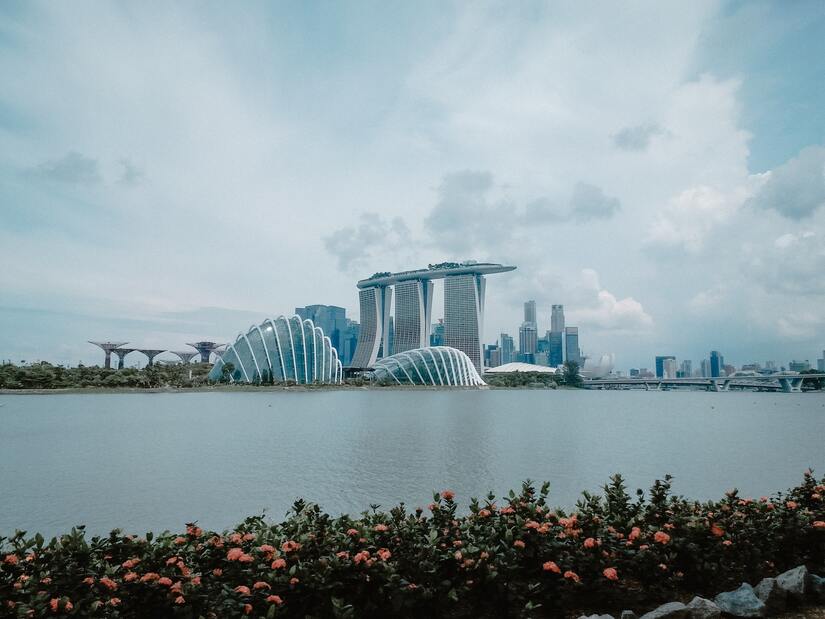
What is the CPF Special Account in Singapore?
In addition to your CPF Special Account savings, exploring international investment opportunities can diversify your retirement portfolio with global options
If you have any questions or want to invest as an expat or high-net-worth individual, you can email me (advice@adamfayed.com) or use these contact options.
Introducción
If you’ve been living and working in Singapore for a while, you might have heard something about the CPF and the CPF Special Account.
In this article, we will discuss what it is and how you can make use of it—or accounts like it—to make your financial life in Singapore one that is closer to your goals.

What is the CPF Special Account?
One of the main components of Singapore’s social security system is the Central Provident Fund (CPF). CPF assists Singaporeans and Permanent Residents in saving money to create a solid retirement foundation.
The CPF allows you to make contributions to savings in three key accounts: your Ordinary Account (OA), MediSave Account (MA), and Special Account (SA). There is also a Retirement Account (RA) that is automatically created for you when you reach the age of fifty-five.
As such, the CPF Special Account is a part of Singapore’s social security savings scheme. It is designed to supplement your retirement income and it’s an excellent way to build up your savings.
The CPF was created on July 1st, 1955, to assist workers in saving for retirement by allowing them to contribute a portion of their monthly pay.
What followed a decade later was the Public Housing Scheme being established by the government in 1968, allowing Singaporeans to repay the mortgages on their HDB apartments using their CPF savings rather than their take-home pay.
Through the CPF, many Singaporeans were able to acquire homes because to housing affordability measures. As Singaporeans in their senior years are no longer required to pay rental costs out of their retirement funds, this has emerged as a crucial tenet of retirement security.
As CPF is designed to assist Singaporeans in saving for important financial decisions, the contributions put into it are placed into various accounts with various purposes. The allocations for each account also change when as their holders get older.
Housing, insurance (such the Dependants’ Protection Scheme), investments, and education can all be paid for with money that is put into your CPF Ordinary Account (CPF OA).
This is where the majority of contributions are put into for younger people aged 35 below. For young couples wanting to purchase a new house, this account is particularly crucial.
To prevent Singaporeans from investing in greater risk products that might not appropriately compensate them for the risk they are taking, the investment possibilities for their CPF OA are also restricted.
The CPF MediSave Account (CPF MA) can be used for medical insurance premiums for the government-mandated MediShield Life as well as hospitalization costs. The mandatory basic MediShield Life premiums can be paid in full using MediSave, which provides coverage for up to $100,000 in claims benefits per year and is sufficient for big hospitalization expenditures in Class B2 or C wards of public hospitals, even if the holder still has to pay a percentage of the costs.
You can apply for an Integrated Shield Plan to receive additional coverage for higher class wards (Class B1 and above) or to stay in private hospitals (IPs). If the holder of the account is under 40 years old, the additional insurance premium is $300, and they can use your MediSave account to pay it.
Finally, the CPF Special Account (CPF SA) has a restricted use because it is intended for retirement savings and investments. An SA account offers greater interest rates, and in order to protect the holder’s retirement money, only safer investments may be made using CPF SA funds.
The CPF Special Account, along with other CPF accounts, is compulsory for all employees and employers in Singapore to contribute to.
It should be noted that the CPF Special Account is a part not strictly an investment account or insurance plan, and should not be treated as an investment instrument.
Under the CPF Act, the Singapore government sees an employee as defined as: A person who is employed in Singapore under a Contract of Service (COS); or a Singapore Citizen who is employed under a contract of service or other agreement entered into in Singapore as a master, seaman, or apprentice in any vessel.
Your employer is required to make CPF contributions on your behalf if you are a Singaporean citizen or a permanent resident of Singapore with total monthly earnings of more than $50.
This definition of an employee includes all workers who are employed on full-time, part-time, temporary, contract, or casual basis.
What can you use a CPF Special Account for?
The money in your CPF Special Account can be used for investments, such as a home or a business.
The CPF Special Account was designed for long-term gains, and so has returns higher interest rates than the Ordinary Account. This leverages compound interest to ensure that your retirement grows at the best pace.
The money in your CPF Special Account is intended for retirement-related financial products, especially “safer” financial products like unit trusts and annuities. But that does not mean that its use is limited to such options.
Since every dollar of contributions will be credited with interest, this means that more money will accumulate as time goes by!
Your CPF Special Account can be used to invest in a business. If you want to start your own company, then the money in your CPF Special Account can be used as capital for it.
You may also use the money in your CPF accounts, such as your CPF Ordinary Account and CPF Special Account, to buy a house or pay for education fees and other expenses that arise during your lifetime.
There are resources on the official CPF website about all the ways you can use your CPF account, including paying off education loans, purchasing medical insurance, and home financing.
It’s possible that your parents or siblings have enrolled in the CPF Education Scheme and taken out a student loan. One year after graduating, you must begin making payments on the loan, and these must be made in cash.
A lump sum payment or monthly payments for a period of up to 12 years are also options. Paying off the loan as soon as you can to avoid paying interest can be in the best interests of your family.
In the event that unanticipated health issues arise, having medical insurance can help. It will always be worthwhile to give yourself enough medical insurance to meet future high medical costs, given that global healthcare prices have been rising over recent years.
As a holder of a CPF account, you are enrolled in the MediShield Life program automatically, and any insurance premiums will be taken out of your MediSave account on your behalf. You can purchase an Integrated Shield Plan from a private insurer to receive additional coverage.
For options, you can put your money into insurance plans with the major providers approved by the Government of Singapore, such as AIA, Singlife, Great Eastern, NTUC Income and Prudential.
You can also take advantage of a variety of CPF housing subsidies to assist you fund your house purchase.
You can use CPF to finance the majority of your bank mortgage down payment as well as the entire down payment for a loan from the Singapore Housing and Development Board.
Keep in mind that there is a 25% down payment required for the purchase price, of which up to 20% may be paid from CPF OA funds and the remaining 5% in cash. Whether the lease can cover you for 95 years also affects how much CPF you can use.
Take note that CPF funds are not regarded as a part of your estate and are not protected by a will. The Public Trustee’s Office will safeguard the funds before they are dispersed in accordance with intestacy regulations, however there is a cost associated with this service.
Another important point to remember is that the CPF Special Account is a great way to supplement other forms of retirement income. If you want to save more for retirement and have an assurance that your money will be invested well, then a CPF Special Account will provide.
How much do I pay into my CPF Special Account?
As a mandatory social security system, the CPF aims to provide for the needs of Singapore Citizens and Permanent Residents (PRs) in the country’s workforce, from setting aside funds primarily for their retirement, to providing the necessary cushion for their healthcare, homeownership, family protection, and asset enhancement.
As such, CPF contributions automatically change the rates of allocation depending on the age of the person holding the account. The intended goal for this is to help them transition into the next life stage.
This is also the reasoning behind the automatic creation of a CPF Retirement Account at the age of 55.
CPF contribution rates can range from 12.5% to 37% of your monthly salary, depending on your age.
You will be required to contribute to your CPF on a monthly basis for the first 10 to 15 years of your employment when you are aged below 35, equal to 37% of your earnings (up to a salary cap of $6,000.
In other words, the first $6,000 of your monthly pay is subject to CPF contributions. It is the obligation of both employers and employees in Singapore to contribute to social security funds, with businesses contributing 17% and employees 20% of salaries.
The allocations are changed when you reach the age range of 35 to 50. You earn 4.0% annually (p.a.) on your SA and MA balances, which is more than the 2.5% p.a. You improve your retirement planning and medical needs protection as you catch up on your OA balances.
Your CPF Special Account receives more contributions than your MA when you reach 50 to 55, in preparation for the creation of your RA.
Before being permitted to take any extra funds from your RA, you must deposit the Full Retirement Sum (FRS) in your Retirement Account (RA) by the time you are 55.
Additionally, since the return on your OA savings is limited to 2.5% per year, you have the option to follow the government’s example and move a portion of your OA balances to SA in order to maximize your CPF savings. It’s crucial to remember that these transactions cannot be reversed.
From 55 to 60, your CPF payments will be reduced to 26%, with employers paying 13% (down from 17%) and employees paying 13% (down from 20%).
While your allocation rates may have altered before to this, the overall contribution rate stayed at 37% of your pay, with employers and employees contributing 17% and 20%, respectively.
Your CPF payments further decrease to 16.5% from 26% from 60 to 65, with 9% from employers and 7.5% from employees. As a result, older personnel continue to be less expensive than younger ones. During this age group, allocation to your OA drops significantly to 3.5% from 12%.
Finally, for those aged above 65, Your CPF contributions will now drop to 12.5%, of which 7.5% will come from your employer and 5% from you. What’s more, just 1% of each will be applied to your OA and SA, respectively. Of your contributions, 10.5% still go to your MA.
Can an expat open a CPF Special Account?
No, expats and foreign nationals who do not have permanent residence in Singapore cannot open CPF accounts.
The purpose of the CPF as a comprehensive social security program is to benefit Singaporeans and Singapore Permanent Residents (SPRs).
As of January 1, 2003, foreign employees are not allowed to pay CPF contributions because they may not retire in Singapore. As a result, only Singapore citizens and SPRs can make CPF contributions.
The CPF Act specifically identifies workers that are not required to make CPF contributions. They consist of foreigners, domestic workers, United Nations employees, and students who meet the requirements for exemption, as well as sailors who meet the requirements for exemption.
If you’re an expat who is not a permanent resident of Singapore, you might be interested in opening a Supplementary Retirement Scheme (SRS) with the Ministry of Finance instead.
The SRS is a component of the Singapore government’s multifaceted plan to help Singaporeans save more money for their golden years in order to meet the financial needs of a graying population.
It has been going since 2001, and the private sector is responsible for its operation.
The CPF and SRS work in tandem. Savings from the CPF are intended to cover basic living expenses after retirement as well as housing and medical costs.
In contrast to the CPF program, SRS participation is optional. Subject to a cap, SRS members may make varying contributions to SRS at their discretion. Different investment instruments may be purchased with the contributions.
The SRS provides enticing tax advantages. For expats who are unable to open a CPF Special Account, the tax benefits of contributions to SRS are available as an attractive option.
Personal income tax reduction for SRS donations made on or after January 1, 2017, is capped at $80,000 per year of assessment beginning with the year of assessment 2018.

The CPF Special Account, as part of the government-mandated CPF accounts, is a special account that you can use to save money. It is designed for your retirement, but also can be used in different ways to meet different needs.
Whether it’s paying for a first house, schooling, or medical insurance and bills, CPF funds are there for Singapore citizens and permanent residents before, during, and after these significant financial milestones in life.
For those who are qualified for CPA Special Accounts and the other accounts associated with the CPF, it is important to assume greater financial responsibility by understanding how these funds may support their financial plans.
For any questions, it is highly advised to seek the counsel of a trusted financial planner or expert to ensure you make the correct choices for your needs.
We hope that this article has been helpful to you in understanding what the CPF Special Account is. If you have any questions or need more information, please contact your local CPF office or visit www.cpf.gov.sg to learn more about how this retirement savings plan works.
¿Le duele la indecisión financiera? ¿Quiere invertir con Adam?

Adam es un autor reconocido internacionalmente en temas financieros, con más de 830 millones de respuestas en Quora, un libro muy vendido en Amazon y colaborador de Forbes.