It’s important to know whether the banks in Singapore are safe and secure especially in today’s world where financial frauds and cyber-attacks are becoming increasingly common.
Singapore is widely regarded as one of the world’s leading financial hubs, and its banking sector is renowned for its stability and security.
In this blog, we will be discussing the various factors that contribute to the safety of banks in Singapore, including the role of the Monetary Authority of Singapore (MAS), the use of technology, and the measures taken by banks themselves to protect customer deposits.
If you want to invest as an expat or high-net-worth individual, which is what I specialize in, you can email me (advice@adamfayed.com) or use WhatsApp (+44-7393-450-837).
Understanding the safety of banks in Singapore is crucial for financial security planning, especially for individuals holding assets in Singapore banks.
Overall, we aren’t a fan of the private banks, and feel better options exist for investing.
There are often equally as safe options held outside of banking structure, which are cheaper.
What are the reasons why banks in Singapore are safe?
When it comes to safeguarding your hard-earned money, the safety of your bank is of utmost importance. In Singapore, banks are known for their stability and security, and there are several reasons why.
From the strong regulatory framework to the use of advanced technology, these factors play a crucial role in ensuring the safety of customer deposits.
Strong regulatory framework
The Monetary Authority of Singapore (MAS) is the country’s central bank and financial regulator, and it plays a crucial role in ensuring the stability and safety of the banking sector. The MAS regularly monitors and assesses the financial health of banks and implements measures to minimize risks and protect consumers.
High standards of corporate governance
Banks in Singapore are required to adhere to high standards of corporate governance and maintain strong internal controls to ensure the safety of customer deposits. Banks are also required to undergo regular audits and assessments to ensure they are in compliance with regulations.
Advanced technology
Banks in Singapore have embraced technology to improve the safety of their operations. This includes the use of advanced security measures such as biometric authentication, encryption, and firewalls to protect customer data and transactions.
Diversified economy
Singapore has a strong and diversified economy, which helps to mitigate the risk of bank failures. The country’s economy is not heavily reliant on any single sector, which helps to reduce the impact of economic downturns on the banking sector.
Strong track record
Singapore’s banking sector has a strong track record of stability and safety, with no significant incidents of bank failures in recent history. This has helped to build confidence in the country’s banking system, and many customers choose to keep their money in Singaporean banks due to the perceived safety of these institutions.
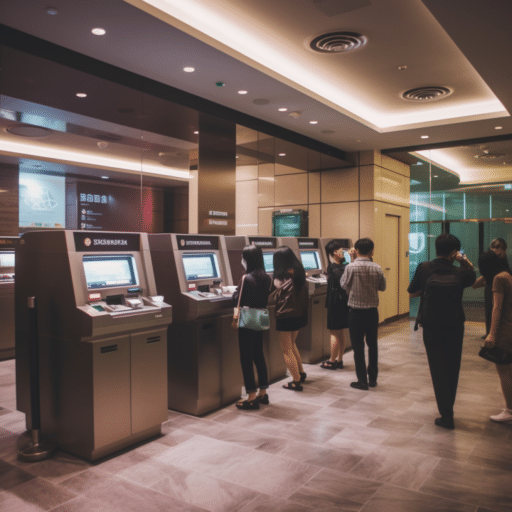
Banks in Singapore are known for their stability and security.
What measures are in place to ensure the safety of customer deposits in Singaporean banks?
There are several measures in place to ensure the safety of customer deposits in Singaporean banks, including:
Regulatory framework
The Monetary Authority of Singapore (MAS) is the central bank and financial regulator in the country, and it plays a key role in ensuring the stability and safety of the banking sector. The MAS regularly monitors and assesses the financial health of banks and implements measures to minimize risks and protect consumers.
Corporate governance
Banks in Singapore are required to adhere to high standards of corporate governance and maintain strong internal controls to ensure the safety of customer deposits. Banks are also required to undergo regular audits and assessments to ensure they are in compliance with regulations.
Technology
Banks in Singapore have embraced technology to improve the safety of their operations. This includes the use of advanced security measures such as biometric authentication, encryption, and firewalls to protect customer data and transactions.
Insurance schemes
Deposits in Singaporean banks are insured under the Deposit Insurance and Policy Owners’ Protection Schemes Act. This act provides insurance coverage for depositors in the event of a bank failure up to a certain limit.
Diversified economy
Singapore has a strong and diversified economy, which helps to mitigate the risk of bank failures. The country’s economy is not heavily reliant on any single sector, which helps to reduce the impact of economic downturns on the banking sector.
How does the Monetary Authority of Singapore (MAS) monitor and regulate banks in Singapore?
The Monetary Authority of Singapore (MAS) plays a crucial role in ensuring the stability and safety of the banking sector in Singapore.
MAS is responsible for monitoring and regulating banks in the country, with the goal of maintaining a stable and secure financial system.
To achieve this, the MAS implements a range of measures and policies designed to minimize the risk of bank failures and protect consumers.
One of the ways the MAS monitors and regulates banks is through regular assessments and stress tests. These tests help identify potential risks and weaknesses in the banking system and allow the MAS to address these issues before they become serious problems.
The MAS also requires banks to maintain strong capital and liquidity ratios, which provide a buffer against potential losses and ensure they have the resources to meet their obligations to depositors.
In addition to monitoring and regulating banks, the MAS also provides guidance and support to banks on issues related to risk management and consumer protection.
The authority also works closely with law enforcement agencies and international regulatory bodies to detect and prevent financial crimes, such as money laundering and terrorism financing.
Is there a government guarantee for bank deposits in Singapore?
Yes, there is a government guarantee for bank deposits in Singapore. The Deposit Insurance and Policy Owners’ Protection Schemes Act provides insurance coverage for depositors in the event of a bank failure up to a certain limit.
This act ensures that depositors can recover their deposits, up to the insured amount, in the unlikely event of a bank failure. The insured amount is currently set at SGD 75,000 per depositor per bank.
This means that if a bank fails, depositors can recover up to SGD 75,000 of their deposits, regardless of the amount they have deposited.
It’s important to note that the deposit insurance scheme in Singapore is not a guarantee of the solvency or performance of the bank.
Instead, it provides a safety net for depositors in the event of a bank failure. Depositors are still encouraged to exercise caution and do their own due diligence when choosing a bank to ensure their money is safe.

Good customer service is important when choosing a bank in Singapore.
How has technology affected the safety of banking in Singapore?
Technology has had a significant impact on the safety of banking in Singapore. Banks in the country have embraced technology to improve the safety of their operations and protect customer deposits. Here are a few ways in which technology has affected the safety of banking in Singapore:
Advanced security measures
Banks in Singapore have implemented advanced security measures, such as biometric authentication, encryption, and firewalls, to protect customer data and transactions. These measures help to prevent fraud and cyberattacks and ensure that customer information and funds are secure.
Online and mobile banking
The widespread adoption of online and mobile banking has made it easier and more convenient for customers to access their accounts and manage their finances. However, it has also increased the risk of fraud and cyberattacks. To address this, banks in Singapore have implemented sophisticated security measures to protect customer data and transactions made through online and mobile channels.
Real-time monitoring
Banks in Singapore have implemented real-time monitoring systems to detect and prevent fraudulent activity. These systems use machine learning and artificial intelligence to analyze large amounts of data and identify unusual transactions that may be indicative of fraud.
Improved risk management
Technology has also helped banks in Singapore to improve their risk management processes. Banks are now able to collect and analyze data more effectively, allowing them to identify and mitigate risks more efficiently. This has helped to improve the safety of the banking sector in the country.
What should consumers look for when choosing a bank in Singapore to ensure their money is safe?
Choosing a bank is an important decision that can have a significant impact on your financial well-being.
To ensure your money is safe, it’s important to consider several factors when choosing a bank in Singapore. Here are a few things that consumers should look for when choosing a bank:
Regulatory oversight
The Monetary Authority of Singapore (MAS) is the central bank and financial regulator in the country, and it plays a key role in ensuring the stability and safety of the banking sector. When choosing a bank, it’s important to ensure that it is regulated by the MAS and subject to the authority’s oversight.
Financial stability
It’s important to choose a bank that has a strong financial foundation and a good track record of stability. Consumers can check the financial health of a bank by looking at its balance sheet, income statement, and other financial reports.
Security measures
Technology has had a significant impact on the safety of banking, and it’s important to choose a bank that has implemented advanced security measures to protect customer data and transactions. Consumers should look for banks that use biometric authentication, encryption, and firewalls to protect their accounts and transactions.
Customer service
Good customer service is important when choosing a bank. Consumers should look for banks that have a reputation for providing high-quality customer service and are responsive to customer needs.
Fees and charges
Banks in Singapore charge various fees and charges for their services, and it’s important to choose a bank that has transparent and reasonable fees. Consumers should compare the fees charged by different banks and choose the one that best meets their needs.
Are there any recent incidents or cases of bank failure in Singapore?
There have been no significant incidents or cases of bank failure in Singapore in recent years. Singapore’s banking sector is considered stable and secure, and the country has a strong track record of maintaining the safety and stability of its banking system.
The Monetary Authority of Singapore (MAS) plays a crucial role in ensuring the stability and safety of the banking sector in the country.
The MAS regularly monitors and assesses the financial health of banks and implements measures to minimize risks and protect consumers.
In addition, the deposit insurance scheme in Singapore provides insurance coverage for depositors in the event of a bank failure up to a certain limit.
While no banking system is completely immune from risks and failures, the banking sector in Singapore is considered to be among the safest in the world.
The country’s strong regulatory framework, high standards of corporate governance, and advanced technology have helped to ensure the stability and safety of the banking sector and provide a secure environment for customer deposits.

Banks in Singapore should keep their client’s personal and financial information secure.
What steps can consumers take to protect their money and ensure it is safe in a Singaporean bank?
Consumers can take several steps to protect their money and ensure it is safe in a Singaporean bank:
Choose a regulated bank
Consumers should choose a bank that is regulated by the Monetary Authority of Singapore (MAS) and subject to the authority’s oversight. This helps to ensure that the bank is operating within a strong regulatory framework and is committed to maintaining the safety and stability of its operations.
Check the financial stability of the bank
Consumers should check the financial stability of a bank before depositing their money. They can do this by looking at the bank’s balance sheet, income statement, and other financial reports.
Use advanced security measures
Consumers should use advanced security measures, such as biometric authentication and encryption, to protect their accounts and transactions. They should also ensure that their online and mobile banking accounts are protected with strong passwords and two-factor authentication.
Monitor their accounts regularly
Consumers should monitor their bank accounts regularly to detect any suspicious or unauthorized transactions. They should also notify their bank immediately if they notice any unusual activity.
Keep their personal and financial information secure
Consumers should keep their personal and financial information secure by avoiding phishing scams and not sharing sensitive information with anyone they don’t trust.
Consider deposit insurance
Consumers should consider depositing their money in a bank that is covered by the deposit insurance scheme in Singapore. This provides insurance coverage for depositors in the event of a bank failure up to a certain limit.
Is there a compensation scheme in place for customers in the event of a bank failure in Singapore?
Yes, there is a compensation scheme in place for customers in the event of a bank failure in Singapore. The Deposit Insurance and Policy Owners’ Protection Schemes Act provides insurance coverage for depositors in the event of a bank failure, up to a certain limit.
This act ensures that depositors can recover their deposits, up to the insured amount, in the unlikely event of a bank failure. The insured amount is currently set at SGD 75,000 per depositor per bank.
This means that if a bank fails, depositors can recover up to SGD 75,000 of their deposits, regardless of the amount they have deposited.
It’s important to note that the deposit insurance scheme in Singapore is not a guarantee of the solvency or performance of the bank. Instead, it provides a safety net for depositors in the event of a bank failure.
Depositors are still encouraged to exercise caution and do their own due diligence when choosing a bank to ensure their money is safe.
¿Le duele la indecisión financiera?

Adam es un autor reconocido internacionalmente en temas financieros, con más de 830 millones de respuestas en Quora, un libro muy vendido en Amazon y colaborador de Forbes.