It is paramount to select the best banks in the Bahamas when it comes to handling your money in this beautiful group of islands.
The Bahamas is famous for its beautiful beaches, crystal-clear waters, and lively culture. It’s not only a popular destination for tourists seeking a tropical paradise, but also a bustling center for financial activities.
These financial institutions provide a variety of services to meet the needs of both local residents and international clients who are interested in setting up offshore accounts or investing in the local economy.
In this guide, we will discuss the best banks in the Bahamas, discussing their strengths, services, and the unique advantages they provide to individuals and businesses.
If you’re searching for a trustworthy institution to protect your wealth, access global markets, or handle your everyday banking needs, the Bahamas offers a variety of excellent banks that are prepared to meet your specific requirements.
Come and join us as we explore the financial treasures that make the Bahamas not just a beautiful tropical paradise, but also a top choice for exceptional banking services.
Si desea invertir como expatriado o particular con un elevado patrimonio neto, que es en lo que estoy especializado, puede enviarme un correo electrónico (advice@adamfayed.com) o WhatsApp (+44-7393-450-837).
We recommend that most wealthy locals and expats in the Bahamas invest offshore despite this list, and we can help with that.
In general, we don’t suggest investing with big banks. Superior alternatives exist. Nevertheless, we have listed five of the better banks in the region on this article.
Discover the best banks in the Bahamas and explore investment services offered by reputable investment institutions.
What are the Best Banks in the Bahamas
Scotiabank Bahamas
Scotiabank first started operating in the Bahamas back in 1956. Over time, they gradually grew their presence by opening several branches in Nassau and Freeport throughout the 1960s.
Scotiabank Bahamas was officially incorporated in 1998, and its Registered Office is situated at Rawson Square.
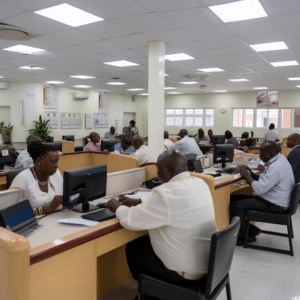
Currently, Scotiabank in the Bahamas has around 700 employees who work across 69 ATMs and 19 branches. They offer a wide range of services for both retail and commercial customers.
This includes electronic cash management services, a specialized mortgage center, and a Private Banking Centre. Click aquí to know more about priority and private banking.
Scotiabank not only focuses on its banking operations but also shows a strong dedication to engaging with the community in the Bahamas.
The bank is committed to making a positive impact on the local community through various areas like education, social services, and culture.
They aim to contribute to the well-being of the community in these aspects. Banking in the Bahamas was made easy and safe by Scotiabank Bahamas.
Royal Bank of Canada (RBC) Bahamas
In June 2008, the RBC Bahamas made a significant acquisition by purchasing RBTT Financial Group (RBTT). This transaction had a major impact on the financial landscape of the Caribbean, resulting in the establishment of RBC Financial Caribbean.
This decision proved to be quite clever, as it resulted in the establishment of one of the biggest and most influential banking networks in the Caribbean. RBC has a long-standing history of over a century, playing a significant role in the growth and progress of the banking sectors in the Bahamas and the Caribbean.
RBC Financial Caribbean is not just a bank, but a highly diverse financial services powerhouse that provides a wide array of services.
They offer a range of services to cater to both personal and business needs. RBC Bahamas banking services include personal and business accounts, assistance with managing wealth, insurance options, and the management of trusts and assets.
RBC Bahamas also offers corporate and investment banking solutions. Don’t know what investment funds to invest in? Choose from wide selections aquí.
The diverse array of services offered caters to a broad spectrum of customers, including individuals, small businesses, large corporations, multinational companies, and even government entities.
RBC will celebrate its 100th anniversary in the Bahamas in 2008. The Bahamas holds a unique significance in the history of the bank.
RBC made history by becoming the first foreign bank to establish a branch in the beautiful Bahamas.
This significant milestone was achieved on November 2, 1908, when RBC proudly opened its main branch in the vibrant city of Nassau.
This significant event took place during a time when the majority of individuals in Nassau relied on transportation methods such as horse-drawn carriages and donkey carts.
RBC made a well-thought-out decision to take a risk, as it recognized the potential of the tourist and sisal industries in driving economic growth in the Bahamas.
Sir George Henry Gamblin, a Bahamian native, was selected to assume the leadership position at the bank due to his extensive 17-year tenure at the Bank of Nassau.
Thanks to his assistance, RBC was able to establish a solid presence in the country and successfully acquired the Bank of Nassau in 1917.
The impact of Sir George continues to be felt in RBC, as the bank has expanded to nearly 30 branches in the Bahamas and now provides employment to over 750 individuals.
Technology has undergone significant transformations in the Bahamas since RBC’s inception, mirroring the bank’s own evolution throughout the years.
Back in 1906, the downtown offices of RBC were equipped with cutting-edge communications technology, making them stand out among other establishments on the island.
The initial telephone system was constructed and catered to around 150 individuals who eventually became the first customers of RBC Bahamas.
Electricity was introduced to Nassau in 1909. The introduction of this innovative power source played a significant role in the rapid growth of the city.
RBC has consistently been at the forefront in the Bahamas, leading the way with new ideas and innovations. During the 1960s, this bank became the pioneer in utilizing computers for banking operations, revolutionizing the way banks operated in the region.
RBC also played a significant role in implementing automated banking machines, making banking more convenient for both local residents and visitors.
RBC demonstrated its commitment to the Bahamas by investing in a large-scale head office building, showcasing its loyalty to the country. This indicates that the company believes there is significant potential for growth in the country.
Currently, RBC Bahamas plays a significant role in the local economy. The company’s asset portfolio is estimated to be nearly $3 billion.
This includes various financial services such as retail banking, mortgage financing through RBC FINCO, and business banking.
Actually, RBC Bahamas plays a significant role in contributing to RBC’s overall income in the Caribbean region. It accounts for approximately 55-60% of the total income generated by RBC in this area.
The bank has a broader range of concerns beyond its primary business services. RBC Bahamas actively participates in the local community and contributes significantly to various charitable causes.
Additionally, the company invests a significant amount of money in training and career development programs for its employees.
More than 88% of the bank’s employees actively participate in RBC’s share ownership programs. This creates a feeling of ownership and dedication among the bank’s employees.
A significant portion of the budget allocated for community donations is dedicated to education, which demonstrates the bank’s strong commitment to supporting the growth and development of Bahamians.
RBC’s presence in the local economy has numerous benefits for the Bahamas. Every year, our company allocates a significant amount of funds to support local vendors by purchasing goods and services from them.
RBC has not only made significant contributions to the country’s economy, but it has also actively participated in the growth and development of the Bahamas.
Nathaniel Beneby Jr. has made significant progress in his career and is now one of the most esteemed Bahamians within the company.
This demonstrates RBC’s commitment to fostering the professional development of its employees. Beneby began his career at the bank in 1973, taking on the role of a clerk.
His hard work and leadership skills quickly caught everyone’s attention. Throughout his 35-year career, he actively participated in a fast-track management program and held various middle and upper-level management positions.
RBC played a significant role in supporting him throughout his educational journey, enabling him to earn both his bachelor’s and master’s degrees.
As a result of his academic achievements, he made history by becoming the first Bahamian to hold the prestigious position of country head at RBC in the Bahamas, marking a milestone in the bank’s century-long presence in the country.
Ross McDonald, the individual responsible for overseeing Caribbean banking operations at RBC, shares the sentiment that having a long-term tenure at the bank and deriving significant benefits from it is indeed a wonderful experience.
He emphasizes the significance of actively listening to both customers and workers, highlighting how this practice is crucial for achieving success.
After spending 31 years at RBC, McDonald had the opportunity to work in various locations before eventually finding himself in the Caribbean market.
He appreciates the strong work ethic and unwavering commitment of the people in the Bahamas. He also appreciates the beauty and friendliness of the Bahamas.
RBC Bahamas has consistently demonstrated its ability to maintain a competitive advantage in the region.
According to McDonald and Beneby, they emphasize the significance of Bahamian workers maintaining their competitiveness.
They encourage these workers to explore opportunities for training abroad within the organization, as this can pave the way for advancement into upper management roles.
In 2008, RBC demonstrated its commitment to the future of the financial services industry by generously donating $1 million to The College of The Bahamas.
This significant contribution was specifically designated to support the establishment of the Graduate Business Center.
This donation marked a significant milestone as it was the largest amount ever contributed by a private company to the college.
As RBC expands its presence in the Caribbean, it remains dedicated to its operations in the Bahamas and ensures that all employees are protected from job losses resulting from new acquisitions.
The bank’s partnership with Fidelity Bank & Trust Ltd and the establishment of a real estate development group demonstrate its dedication to enhancing and expanding its services in order to meet the demands of the market.
It’s impressive to see RBC’s presence in the Bahamas, which not only reflects its century-long existence but also demonstrates its ongoing dedication to the country’s development, well-being, and advancement.
While RBC consistently evolves and generates fresh concepts, it remains a crucial component of the Bahamian economy, making significant contributions to its growth and overall prosperity.
Bank of The Bahamas (BOB)
Bank of The Bahamas Limited has experienced significant growth since it acquired a Canadian bank in 1988.
Its assets have increased from $90 million to over $900 million as of June 30, 2021. The bank has also expanded its presence from three locations to 12 and now operates on eight islands.
Additionally, it has evolved from offering basic retail banking services to providing a wide range of comprehensive financial products.
The total equity has experienced significant growth over the years, increasing from $19 million in 2000 to a substantial $158.5 million as of June 30, 2021.

Bank of The Bahamas Limited was established in The Commonwealth of The Bahamas on April 17, 1970 under the name Bank of Montreal (Bahamas & Caribbean) Limited.
The name of the bank was changed to Bank of Montreal Bahamas Limited in 1983. In September 1988, the Government of The Bahamas decided to collaborate with Euro Canadian Bank Limited.
Together, they acquired all the shares of Bank of Montreal Bahamas Limited, taking full ownership. The bank was then renamed Bank of The Bahamas Limited, with the government holding a controlling interest of 51%.
In the latter part of 1990, the Government acquired all the shares owned by Euro Canadian Bank Limited. Additionally, they issued 7,000,000 more shares, resulting in a total of 10,000,000 shares being issued.
In September 1994, the Government decided to sell a portion of its shares to the Bahamian public. Specifically, they sold 2,000,000 shares, which accounted for 20% of their total shareholding.
In October 1995, the Government made an additional offering of 3,000,000 shares of the Bank to the people of the Bahamas.
Both offerings received a significantly higher number of subscriptions than anticipated. In 2005, the Bank had a rights offering that was in high demand, exceeding the expected amount of $25 million.
Following that, in 2006, there was a private placement preference share offering of $15 million.
Bank of The Bahamas, also known as BOB, has gained a reputation for pioneering various innovations in the local retail banking in the Bahamas.
They were the first to introduce VISA gift and prepaid cards, making it easier for customers to manage their finances.
Additionally, they were the first local bank to offer comprehensive online banking services, allowing customers to conveniently access their accounts from anywhere.
Another notable achievement was being the first to provide e-mail and text alerts, which kept customers informed about important activities on their accounts such as deposits, withdrawals, and loan payments.
The ATMs in The Bahamas were the first banking facilities to operate 24/7. These ATMs introduced several features, such as Braille instructions and the ability to make cash deposits without using envelopes, with the added benefit of immediate value for those deposits.
Bank of The Bahamas has experienced growth in its relatively short existence by acquiring other financial institutions.
For example, in 2001, it acquired the assets of Workers Bank Limited, and in 2007, it acquired the mortgage portfolio of Citibank.
In September 2016, the Bank’s Rights Offering for $40,000,000 was completely taken up by investors.
Later in December of the same year, the Bank provided a private placement opportunity for accredited investors only.
This involved offering $30,000,000 worth of Fixed Rate Perpetual Contingent Convertible Bonds (“CoCo”) at an interest rate of 3.125%.
The private placement was divided into three parts, with each part being worth $10,000,000. The initial portion was subscribed to and issued by the Government as of December 31, 2016.
The offering ended on February 28, 2017. As of June 30, 2017, the bond was converted into 6,756,756 voting common shares.
As of June 30, 2021, the Bank had total assets of $903 million and total equity of $158.5 million.
Commonwealth Bank
The journey of Commonwealth Bank started in The Bahamas when Sir Roland Symonette and Peter Paul Saunders founded a small consumer finance company.
The company began with only three employees and had a primary goal of offering financial assistance for common necessities such as furniture, home renovations, and travel expenses, specifically catering to the typical Bahamian worker.
At first, it functioned as a branch of Laurentide Financial Corporation Limited, which is based in Canada. Its purpose was to address the lack of financing options that were no longer provided by multinational banks in the Bahamas.
During the 1980s, the bank underwent notable transformations. It changed ownership, first being acquired by the National Bank of Canada and later transitioning to Bahamian ownership under the leadership of Lady Margaret Symonette and Robert H. ‘Bobby’ Symonette.
In 1984, the Commonwealth Bank underwent a significant change and became a financial institution fully owned by Bahamians.
This transformation came with a strong dedication to serving the local community. Bobby Symonette led the bank and played a significant role in introducing community banking, automating branch networks, and launching the first Bahamian credit card, SunCard.
Over time, the bank underwent changes and decided to shorten its name to Commonwealth Bank Limited in 1988.
In the 1990s, it broadened its range of services from being solely a savings and loans institution to becoming a comprehensive bank.
This milestone made it the first Bahamian-owned institution to attain Clearing Bank and Authorized Dealer status.
Following technological advancements, physical expansion, and innovations such as Automated Banking Machines (ABMs) and international credit card services, there were significant developments.
In the year 2000, Commonwealth Bank carried out an Initial Public Offering (IPO) that turned out to be incredibly successful.
This allowed them to become the biggest and most prosperous public company in the Bahamas. The bank experienced further growth as it opened more branches and began offering Saturday Banking services.
Since its inception, Commonwealth Bank has always stayed true to its core values and its dedication to serving the community.
This commitment extends to providing support during challenging times and promoting education initiatives.
The bank recently marked its 60th anniversary, acknowledging the significant growth and success it has achieved over the years.
It has evolved into a dynamic and versatile organization, catering to a wide range of financial needs.
Looking ahead, Commonwealth Bank is focused on continuing its success and upholding its dedication to providing excellent service.
The bank expresses gratitude to its customers for selecting them as their financial institution.
CIBC FirstCaribbean International Bank (FCIB)
The Canadian Imperial Bank of Commerce (CIBC) is a prominent financial institution in Canada. CIBC FirstCaribbean International Bank (FCIB) is a financial institution that operates in the Caribbean region and is headquartered in Barbados.
It serves as the subsidiary of the Canadian Imperial Bank of Commerce (CIBC). The establishment of the bank occurred in 2002 under the name FirstCaribbean International Bank, following the amalgamation of the Caribbean divisions of Barclays Bank and CIBC.
Subsequently, in March 2006, both CIBC and Barclays publicly declared that Barclays intended to exercise their right to fully withdraw from the Caribbean partnership, thereby enabling CIBC to obtain majority ownership of the bank.
FCIB’s understanding of banking has been acquired through a cumulative experience of nearly 250 years in the region, facilitated by our legacy institutions, Barclays PLC and CIBC.
Both banks possess the notable distinction of being the most ancient financial institutions in the Caribbean region.
They have been integral to the region’s development since the era of salt cod and rum. Numerous alterations have been implemented since that time.
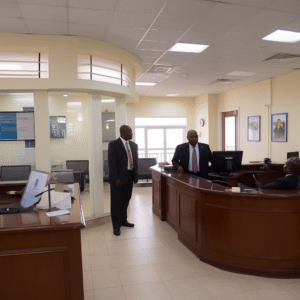
The tourism industry has emerged as a prominent export sector, with West Indian businesses increasingly venturing into the global market. FirstCaribbean will be available to facilitate the achievement of that objective.
FirstCaribbean was established in 2002 through the amalgamation of CIBC West Indies Holdings and Barclays Bank PLC Caribbean operations.
In December 2006, the Canadian Imperial Bank of Commerce (CIBC) completed the acquisition of Barclays’ stake, resulting in CIBC becoming the majority shareholder of FirstCaribbean.
The operations of the present-day FirstCaribbean entity were previously managed as distinct entities under the ownership of Barclays Bank and CIBC West Indies, which formed part of CIBC’s conglomerate, until 2002.
Barclays has maintained a presence in the region since 1836, while CIBC initiated its expansion into the region by establishing branches in Jamaica in 1920.
In March 2006, officials from CIBC made a public declaration of their intention to acquire a majority stake in the FirstCaribbean International Bank, a joint venture that was publicly held in the Caribbean.
The proposed transaction, valued at slightly over US$1 billion (Bds$2 billion), entails the acquisition of the existing 43.7% stake held by Barclays Bank PLC.
This acquisition would result in an increase in CIBC’s ownership from 43.7% to 87.4%. Following the completion of the transaction, the consolidation of the leading Caribbean commercial banks would result in a reduction from four to three major entities.
These entities include Scotiabank, the FirstCaribbean International Bank, and the Royal Bank of Canada. It is worth noting that the identity of the potential fourth-place bank may differ across various territories.
After the agreement, it was anticipated that the regional headquarters of FCIB would remain situated in Barbados, and this regional center would continue to report to the head office of CIBC in Toronto.
On June 20, 2011, it was officially declared that they would establish a co-branding arrangement with the CIBC brand, resulting in the adoption of the branding CIBC FirstCaribbean.
This strategic decision aimed to enhance the alignment with the CIBC brand, while simultaneously preserving the FirstCaribbean name and local identity.
The inclusion of CIBC within the FirstCaribbean brand underscores CIBC’s enduring dedication to the Caribbean region, its workforce, and its clientele.
The Caribbean region will continue to experience ongoing advantages from the substantial investment that CIBC has committed to the area.
This investment has a rich historical foundation, tracing back to the establishment of their initial branches in 1920. The bank primarily derives its revenues from its operations in Barbados, the Bahamas, and the Cayman Islands.
CIBC FirstCaribbean will persist in functioning as a business under Caribbean management within the CIBC conglomerate, and is recognized as FirstCaribbean International Bank Limited on the stock exchanges of Barbados and Trinidad.
Reflexiones finales
There is a wide variety of banking options in the Bahamas available to locals and tourists alike, making it easy to choose the best banks in the Bahamas for your needs.
We have conducted extensive research and analysis to identify some institutions that stand out as leaders in the provision of first-rate banking services.
These financial institutions stand out for their dedication to serving their customers, their sound financial footing, and the variety of services and products they offer.
Clients’ wants and requirements come first at these financial institutions, which is why they offer a wide range of services, from basic banking to gestión de patrimonios in the Bahamas, as well as innovative digital banking solutions and individualized attention.
Keep in mind that the best bank for you could change depending on your individual financial objectives, be they offshore investments, asset protection, or just basic day-to-day banking. It is wise to evaluate your needs thoroughly and get advice from financial professionals before making a final choice.
Although the global financial landscape is always changing, visitors looking for first-rate banking services in the Caribbean still flock to the Bahamas.
The best banks in The Bahamas will be able to adjust to the changing industry landscape brought on by new regulations and technological developments, maintaining their position as market leaders.
¿Le duele la indecisión financiera?

Adam es un autor reconocido internacionalmente en temas financieros, con más de 830 millones de respuestas en Quora, un libro muy vendido en Amazon y colaborador de Forbes.