
In this page, we’ll tackle numerous essentials for living in Cambodia, such as:
- Cost of Living in Cambodia
- Climate in Cambodia
- Culture in Cambodia
- Expat Life in Cambodia
- Expat Communities in Cambodia
- Taxes in Cambodia
- Investing in Cambodia
- Real Estate in Cambodia
Embark on a comprehensive guide to expat life and investments in Cambodia. Discover the affordable cost of living, diverse healthcare options, and top hospitals.
Explore education opportunities in international schools and navigate Cambodia’s transportation, climate, and vibrant culture.
Dive into expat communities, prominent locations, and tax considerations. Uncover work permit processes and coveted job opportunities, and delve into Cambodia’s stock market and real estate investment landscape.
Learn about setting up a business, banking, retirement, pensions, residency, and essential planificación financiera and insurance in Cambodia.
Si desea invertir como expatriado o particular con un elevado patrimonio neto, que es en lo que estoy especializado, puede enviarme un correo electrónico (advice@adamfayed.com) o WhatsApp (+44-7393-450-837).
Vivir en Camboya 101
Cambodia, a Southeast Asian center with three international airports, attracts millions of tourists annually.
The country attracts expats and retirees seeking tropical relaxation or professional success. With over 100,000 expats, Cambodia’s cuisine is diverse and international.
A dynamic economy driven by foreign investments in manufacturing, agriculture, telecoms, banking, and tourism, along with chambers of commerce like Amcham and Eurocham, creates networking opportunities and business opportunities for locals and expats.
Cost of Living in Cambodia
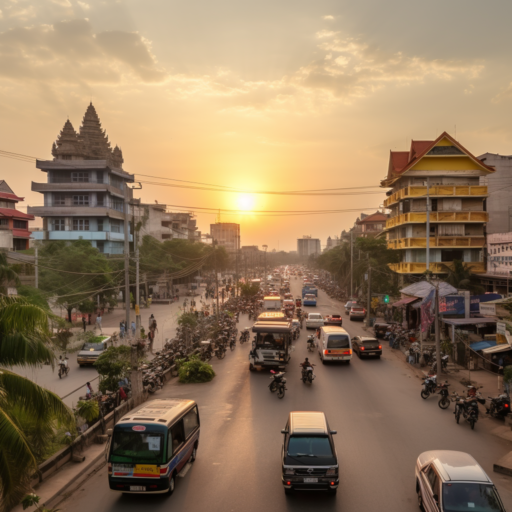
Living in Cambodia proves remarkably affordable for Western expats, especially those employed by international companies, according to Internations.
Luxury is affordable, with 3-bedroom apartments costing 1,209,000 KHR (300 USD) to 4,025,450 KHR (1000 USD).
A nanny or housekeeper costs 150–300 USD while dining out rarely exceeds 16,300 KHR (4 USD).
The easy visa application process attracts expats to Cambodia. Phnom Penh is the most popular expat location, but also the most expensive.
Healthcare in Cambodia
Structural issues hamper Cambodia’s public healthcare quality despite 1990s-era improvements. The 2008-founded National Social Security Fund (NSSF) protects 10% of workers from work-related injuries.
Private hospitals offer better care but lack expertise and equipment, whereas public hospitals are understaffed.
Therapy abroad is recommended for complex medical disorders despite high expenditures.
The state healthcare system’s deficiencies and the possibility of emergency medical evacuation need private health insurance in Cambodia, including evacuation and repatriation.
Education in Cambodia
Education has been hindered by war, gender inequality, and limited access for Cambodia’s youth. French-introduced formal education deteriorated during the civil war and Khmer Rouge dictatorship, leaving a generation unschooled.
Education in Cambodia is poor despite post-1980s rehabilitation efforts. Internations reports that the government invests 1.9% of GDP on education, resulting in a shortage of underpaid teachers who work several jobs.
Remote schools lack basic supplies. These challenges must be addressed to improve Cambodia’s education system and empower its children for the future.
Contenido relacionado: 14 Best International Schools In Cambodia
Transportation in Cambodia
New services are planned for Cambodia’s limited public transportation. Phnom Penh City Bus, established in 2014, has 11 lines around the city.
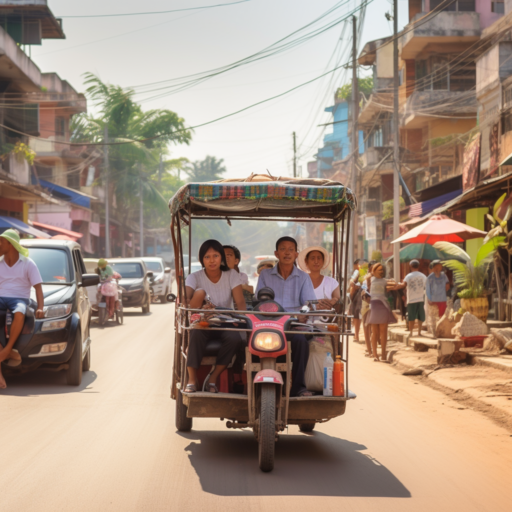
Royal Railway operates regional and airport trains. Tourist taxis face competition from Grab. Safer and cheaper tuk-tuks are preferred. Grab, ExNet, and PassApp simplify transit.
With hopes to attract more airlines, Phnom Penh International Airport’s development, reaching 5 million passengers yearly, improves connectivity in Cambodia.
Climate in Cambodia
Cambodia has two seasons and a tropical climate. The robust northeast monsoon in January and February ensures sunny, dry weather from December to April.
The southwest monsoon (May–November) brings the most rain in September and October. It can reach 40 degrees Celsius in February–April.
Travel is favorable from July to October, despite frequent rain, except in rural places. December and January provide the best weather for Cambodian vacations—dry air and less humidity—but they are also the busiest, so expect to pay more and see more people.
Culture in Cambodia
Khmer culture emphasizes hierarchy, where respect corresponds to age; familial bonds are crucial, with elderly couples often inviting the youngest child’s family to take over the household, granting them elevated status.
Family and friends form a close-knit circle, pivotal for emotional support, economic collaboration, and ceremonial contributions.
Legal roles designate the husband as head, responsible for shelter, and the wife, influential in family economics.
Customs include the sacredness of one’s head, demonstrated through the “sampeah” gesture, while polite behavior involves avoiding eye contact with elders.
Khmer clothing, marked by the “krama” scarf, and cuisine featuring prahok and distinctive flavors showcase Cambodia’s rich cultural tapestry.
Expat Life in Cambodia
The stunning natural beauty, kind hospitality, and relatively inexpensive cost of living in Cambodia make it an ideal destination for foreigners looking to settle in Asia.
About 100,000 foreign nationals already call Cambodia their home, and that number is growing.
Expat Communities in Cambodia
Phnom Penh
Cambodia’s capital city offers a mix of modern amenities and cultural experiences that attract a diverse expatriate community.
Siem Reap
Home to the famous Angkor Wat temple complex, Siem Reap appeals to expats seeking a laid-back lifestyle with easy access to historical wonders.
Sihanoukville
Known for its beaches and coastal charm, Sihanoukville attracts expats looking for a relaxed atmosphere and proximity to the Gulf of Thailand.
Battambang
A picturesque town with French colonial architecture and a slower pace of life, making it popular among expats seeking a quieter lifestyle.
Kampot
Nestled along the banks of the Kampot River, this town is favored by expats for its riverside ambiance, pepper plantations, and nearby Bokor National Park.
Kep
Famous for its seafood and tranquil coastal setting, Kep is a small seaside town drawing expats seeking a peaceful retreat.
Koh Rong
While primarily known as an island paradise, Koh Rong attracts adventurous expats looking for a tropical lifestyle with beautiful beaches and vibrant nightlife.
Expat Taxes in Cambodia
Cambodia’s corruption stems from longstanding tax collection issues exacerbated by widespread tax evasion.
Tax compliance is improving, with mandatory taxation for residents and those spending over 182 days annually.
Non-residents face a flat 20% tax on salaries, while residents encounter a progressive 0-20% scale. Personal services are taxed at 15%, fringe benefits at 20%, and non-salary income at 20%, except for mineral exploitation.
Employers handle tax withholding. Changes loom for self-employed individuals and home-based businesses, reflecting ongoing efforts to address tax-related challenges and enhance fiscal responsibility in Cambodia.
Contenido relacionado: ¿Cuál es el impuesto sobre la renta de los expatriados en Camboya para 2023?
Working in Cambodia
Cambodia offers high-paying positions in business, NGOs, and the private sector, as well as low-paying jobs like bartending for expats.
Expats often volunteer or intern for pay and learn about foreign development. In this cheap country, there are many private sector and English teaching positions with varying salaries, so you may live well.
NGO employees range from entry-level to senior country managers.
Cambodia has many public holidays and easier visas and work permits than other Southeast Asian countries.
Contenido relacionado: Working In Cambodia As An Expat
Work Permit for Expats in Cambodia
In Cambodia, expats often work without the required permits, as the country has lenient visa and employment regulations.
Work permits, either temporary for regular expats or permanent for major investors, are obtained through employer applications to the Ministry of Interior.
The process includes submitting forms, a valid visa, health certificate, work contract, and insurance policy, along with a $100 fee.
Despite regulations, many expats, especially in English schools, lack permits, and enforcement is lax, though occasional crackdowns occur. Non-compliance may result in retrospective fines.
While work permits are currently loosely enforced, future enforcement may become more stringent.
Investing in Cambodia
Cambodia’s economy has been rebounding since late 2021, with a 5.2% GDP increase forecast for 2023 due to resurgent tourism and strong exports, particularly in textile and footwear, according to the US State Department.
Global economic uncertainty and the Russia-Ukraine conflict drove inflation to 5.3% in 2022. Cambodia attracts little US investment because of corruption, labor shortages, infrastructure challenges, and complex regulatory processes, despite 100% foreign ownership and tax breaks.
China accounts for 80% of the $1.2 billion FDI in 2022, mostly from state-owned enterprises, and infrastructure projects are a primary priority.
Recent free trade deals with China, Korea, and the RCEP aim to increase growth. Due to harsh weather, deforestation, and environmental issues, climate change creates concerns.
Investing in the Cambodia Stock Market
The Cambodia Stock Exchange (CSX), founded in 2012 in Phnom Penh, is the country’s sole stock market, with 12 listed businesses worth almost $1 billion. Phnom Penh Water Supply Authority, Grand Twins International, and Phnom Penh Crown are notable stocks.
Over the previous two years, CSX has doubled its listed businesses and quadrupled its market valuation despite its small size.
Due to Cambodia’s strong economic growth, low valuations, and portfolio diversity with lower correlation than other emerging economies, the exchange delivers good returns. Investors should investigate and use a trustworthy broker.
Investing in Real Estate in Cambodia
If considering a long-term stay or permanent settlement in Cambodia, buying a home may seem enticing. However, foreigners are restricted.
Non-citizens can own apartments and condos since 2010 but not land or properties within 30 km of the border.
Local Cambodian-owned enterprises can buy land, while expats secure long-term leases. Despite these restrictions, expats control 70% of luxury real estate, mostly Chinese and South Korean, with North American and European expats entering the market.
Contenido relacionado: Your Guide to Investing in Cambodia Including Property
Starting a Business in Cambodia
Starting a business in Cambodia is complicated and expensive, taking an average of 85 days to register and requiring unofficial payments such as a $20 “facilitation fee” to pay taxes.
Compliance is difficult. Due to the number of processes and requirements for “tea money” to complete, entrepreneurs typically face obstacles.
Despite the hurdles, the Cambodian government supports commerce and allows 100% foreign-owned firms.
Some businesses operate informally, while others acquire established ones. For $500, a local fixer can guide and simplify the procedure.
Contenido relacionado: Incorporating a Company in Cambodia in 2023
Banking in Cambodia
Cambodia relies on commercial banks for finance. The Central Bank (National Bank of Cambodia) and private banks, specialty banks, microfinance institutions, and rural lending NGOs make up Cambodia’s two-tier banking system.
The system has 59 Commercial Banks, 9 Specialized Banks, 5 Microfinance Deposit-Taking Institutions, 82 Non-Deposit-Taking Institutions, 224 Rural Credit Institutions, 16 Financial Leasing Companies, 34 Payment Service Institutions, 6 Foreign Bank Representative Offices, and 2,869 Money Exchange Agents.
Cambodia’s recent liberal investment policies improve economic potential, but legal frameworks and information transparency are needed to boost foreign confidence in the banking sector.
Retiring in Cambodia
In 2023, Cambodia ranked 13th out of 19 in the Asia-Pacific and 73 out of 163 globally for peace, according to the Institute for Economics and Peace.
While safety concerns involve opportunistic theft and traffic accidents, Cambodia remains relatively safe.
As a stable democracy with a longstanding government, the country prioritizes economic development. International Living named Cambodia the cheapest place to retire in 2019, emphasizing its affordability, with monthly costs estimated at $1,200 in Phnom Penh.
The 2021 Global Retirement Index also highlighted Cambodia’s affordability, as the World Happiness Report 2023 positioned the country at 112th globally.
Contenido relacionado: How to Retire in Cambodia
Pension Fund in Cambodia
Retirement planning becomes more important when expats choose Cambodia.
Locals and expats must plan for retirement financial security.
The National Social Security Fund (NSSF) targets citizens, while expats might choose private pensions.
The NSSF’s voluntary pension system is open to expats, however it may have distinct benefits.
Private Cambodian pension firms give expats a variety of investing options for retirement. Expats can join Cambodia’s pension system under certain conditions.
Contenido relacionado: Cambodia Pension Fund in 2023: Top Things You Need To Know
How to Get a Retirement Visa in Cambodia
If you’re 55 or older with a valid passport, particularly from a developed nation, you can now apply for Cambodia’s Retirement Visa (ER visa) upon arrival, initially valid for one month and extendable to twelve months with multiple entries through a travel agency or visa broker for $275.
Though popular and affordable for retirees, the ER visa prohibits work. Cambodia’s low living costs and abundant recreational options may make employment less enticing.
For those seeking work or business opportunities, the Business Visa is the preferred choice.
Contenido relacionado: Cómo obtener el visado de jubilación camboyano
Financial Planning in Cambodia
Expats in Cambodia must plan financially because the public healthcare system may be limited, making health insurance vital for quality care.
Life insurance also protects expat families from unexpected events and ensures their well-being abroad.
Life Insurance in Cambodia
Foreigners starting a family in Cambodia should consider expat life insurance. Because expat families in Cambodia usually have one earner, losing one can be catastrophic.
Cambodian life insurance lets you enjoy your golden years without worrying about your loved ones’ financial security after your death. Life insurance in Cambodia can reassure you as you start a new chapter full of potential and challenges.
Contenido relacionado: Asesores financieros para expatriados en Camboya. ¿Cuáles son las opciones?
Health Insurance in Cambodia
Cambodia’s governmental healthcare system is inefficient, driving private healthcare expansion. As the public system fails, expats use elite private hospitals for better care.
Private medical treatment in Cambodia is cheaper than in many home nations, but the choice is restricted, causing delays and longer wait periods.
Even though Cambodia’s private international hospitals are improving, some expats prefer Thailand for more variety and faster healthcare.
Contenido relacionado: Seguro médico en Vietnam, Camboya, Filipinas, Malasia, España y más allá
Reflexiones finales
Living in Cambodia offers expats a cost-effective lifestyle with a unique blend of rich culture and a warm climate. Healthcare, while improving, may require private options.
International schools cater to expat families, and transportation is diverse. Understanding Cambodia’s culture enriches expat life, with communities forming in popular expat areas.
Navigating expat taxes, working, and investing in stocks or real estate require insights. Retiring here involves pension considerations, residency processes, and financial planning, including life and health insurance.
¿Le duele la indecisión financiera?

Adam es un autor reconocido internacionalmente en temas financieros, con más de 830 millones de respuestas en Quora, un libro muy vendido en Amazon y colaborador de Forbes.
