Tras hablar de asesores financieros para expatriados en Arabia Saudí, Taiwán, Camboya Shanghai, this article will speak about Angola.
We will compare and contrast local options vs a portable and online option like our own.
Ultimately, the biggest positive about doing financial services online is that it is cheaper and you don’t need to change anything if you move home or to a third country.
In comparison, localised solutions often need to be closed down if you move countries.
In this article we will also speak about some of the financial and other considerations for expats in the city, including banking and the benefits of living there.
Para cualquier pregunta, o si desea invertir como expatriado, puede ponerse en contacto conmigo utilizando este formulario, via the WhatsApp function below or email (advice@adamfayed.com).
Introducción
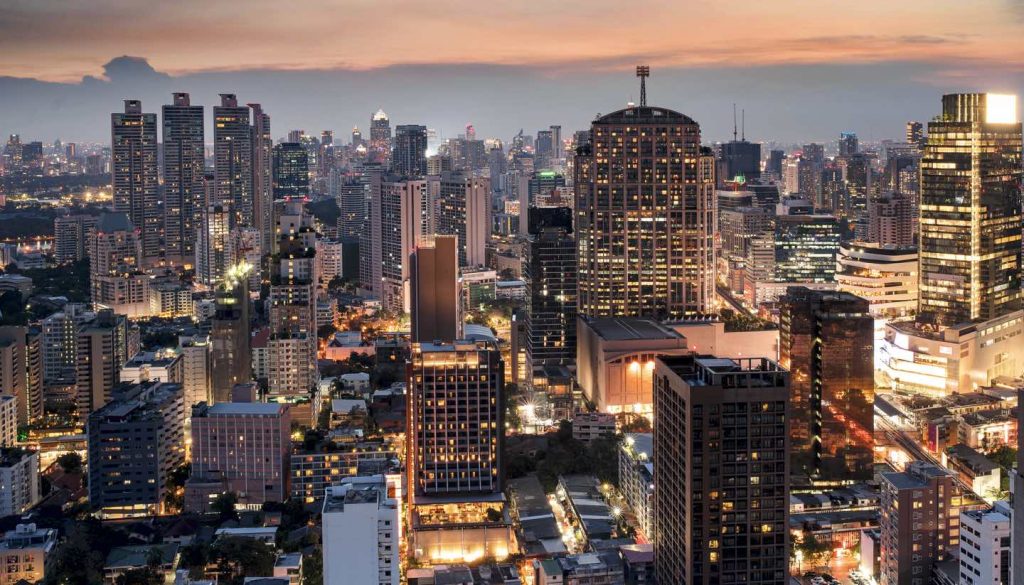
Angola is considered as one of the most favorable African states. Until recent times, its “rival” in terms of development was, perhaps, only the Libyan Arab Jamahiriya. Today, after numerous wars and revolutions, this former Portuguese colony is one of the most attractive corners of the world. The country has huge reserves of oil and diamond.
If the intention of a foreign person is not tourism, but work in Angola, then he or she should brace himself for the specificity of that state. The thing is that today the government of the country has taken a confident direction towards the rehabilitation of agriculture. In particular, the first priority is to restore the production of wheat and coffee. Prices in Angola are very “biting” in this regard.
It is also necessary to note the following: considering the fact that a large part of the population of this nation feeds on subsistence farming, the authorities still cannot boast of their own development. In view of the high cost of imported products, which are important for a comfortable existence, life in this corner of the world requires good material support.
If a foreign person expresses a desire to live and work in the territories of this country, he or she may need a work visa to go to Angola. In order to do this, a sufficient package of documents must be obtained. Below is the list of the necessary documents:
- international passport
- two high-quality photographs
- a completed application form in Portuguese or English (to carry out work activities, you need to fill it out in two copies)
- contract with the employer
- police clearance document
- a certificate confirming the applicant’s relationship with people who are legally in Angola, diploma, or certificate
- a medical certificate confirming that the applicant has been vaccinated against yellow fever, information about previous places of employment (presented upon request)
The Angolan Embassy is responsible for issuing a work visa. A refusal to grant a visa can come only if the applicant has been arrested, is unable to prove his credentials or has renounced his Angolan citizenship.
Many expats who come to Angola to work simply fall in love with it and decide to stay here permanently. This is possible if the foreign person decides to take Angolan citizenship. This can be done in three ways: by birthright and descent, by marriage and by naturalization. Each of these three paths has its own nuances and pitfalls, but for someone who has definitely decided to connect his life with this African country, nothing is impossible.
Today the economy of Angola is characterized by the predominance of agriculture, oil, diamonds, gas, and minerals. The eastern part of the state is developed due to the intensive timber industry. For export, there is the cultivation and manufacture of rare and expensive wood species, including black, yellow, and mahogany, as well as eucalyptus.
The main suppliers of currency in the state are represented by oil, gas, and products of their processing. Angola exports fish, coffee, diamonds, and cotton. The main trading partners are represented by the Benelux countries, the United States of America, China, and France.
Cars, spare parts and components, electrical engineering, medicine, military ammunition, food, and weapons are delivered to the country. In this case, importers are France, Spain, Brazil, Portugal, USA. The mining industry is the backbone of Angola’s economy. A large share of cash receipts to the state budget is provided by oil production and refining.
Angola in Africa has the second largest oil volume. Diamond mining is the main source of budget replenishment. Also, the minerals of Angola include the mining of uranium, phosphates, granite. In the near future, the extractive industry is developing, with the oil and gas industry taking the first place. New deposits are being developed, mines are being drilled, oil refineries and gas liquefaction plants are being built.
In addition, the government has provided for the construction of a steel mill, a conveyor line for the assembly of trucks, a seaport.
Investments in Angola
The state of Angola is located in Southwest Africa and is rightfully considered one of the most developed and richest countries in the sub-Saharan region. A former colony of Portugal, Angola has always attracted Europe for its wealth and variety of natural resources.
Today, investors interest in Angola has grown significantly. Many foreign investors with large and middle incomes wish to invest their capital in Angola.
Angola is a developing country and many of its economic sectors are attractive for investment.
It is rich in high quality oil deposits. The export of oil and oil products brings the Angolan economy about 85% of GDP, and new deposits of black gold are constantly being developed.
The lands of Angola are also rich in diamond deposits, which are famous all over the world for their amazing beauty. You can invest in the world’s largest diamond mine located in Angola.
The lands of Angola contain deposits of uranium, precious and non-ferrous metals, iron, phosphates, and bauxite, as well as many minerals.
In Angola, production and industry, agriculture, fishing, and animal husbandry continue to actively develop. Astrakhan sheep are actively bred, whose skins and wool are of high quality and are highly valued in the world market.
In addition, Angola is a major African supplier of high-quality coffee, fish and seafood, timber, cotton, tobacco, various vegetables and cereals.
With the development of industry, many factories, and plants for the processing of one or another type of raw material are created and strengthened. Foreign investors profitably invest their funds by investing them in the securities of Angola enterprises.
The real estate market in Angola is striking in its stability and active growth. Despite the global financial crisis, demand for real estate in Angola does not lag behind supply. In Angola, you can buy not only a luxurious cottage or villa, but also a quite modest economy class apartment.
Commercial real estate is also in demand in Angola. Investing in real estate in Angola is not only a reliable way of investing capital, but also a reliable way to generate a stable income.
Another advantage of investing in real estate in Angola is the relatively low price of residential and non-residential space.
Spending little money in comparison with European prices, you will not only get your “own corner” in one of the most picturesque countries in Africa, but you will also be able to receive monthly income from your investments.
Investing with a financial advisor
In an unstable economic situation, it is difficult to understand in which direction the financial market is moving. Many entrepreneurs, especially small and medium-sized businesses, have real chaos in their heads. Concepts and trends change almost daily – it is almost impossible to navigate through them without professional training.
Where to invest in order to save money and increase income? How to calculate investment risks correctly? How to draw up a competent investment plan?
The investment consultant will answer all these questions in detail. Moreover, he or she will be deeply engaged in the development and implementation of your investment project.
Even though in recent years the financial capabilities of most enterprises have significantly decreased, the issue of wise capital investment remains relevant. Moreover, in the context of a prolonged crisis, it is vital for companies to receive income from promising cash investments in third-party projects.
Financial consulting is needed for each of us, whether it is for a simple question related to your bank account or whether it’s for a complex investment process requiring months of financial planning and analysis.
Shortly, when implementing any idea, you need a person with a certain set of knowledge who is able to evaluate that idea with a sober look. Sometimes it takes down to the sinful earth, but, paradoxically, makes the dream more of a reality.
- Asesor financiero bancario
When moving abroad, mostly expats start their financial career with opening a bank account. Choosing the right bank and the right account is quite challenging process to deal with on your own. Expats in Angola will need to consult with a bank financial advisor to make sure they have made the right choice.
You may feel safer opening a bank account with an international bank present in Angola. However, this is quite impossible to do seeing as leading international banks such as Citibank and HSBC have recently pulled their branches out of Angola due to money laundering concerns.
The top five banks, based on compound growth rates, control over 80% of total banking assets, deposits and loans and are:
- Banco Angolano de Investimentos (BAI)
- Banco Espírito Santo Angola (BESA)
- Banco de Fomento Angola (BFA)
- Banco BIC Angola (BIC)
- Banco de Poupança e Crédito S.A.R.L. (BPC)
It is advisable to visit a renowned bank and enquire about the types of bank account available there.
When making investments, expats tend to open savings accounts, which allows you to earn on bank interest, but at the same time use your money without restrictions. Let’s see what the main features of savings accounts are.
Ventajas:
- The average level of profitability varies in the range of 4-6% per annum.
- Some large banks offer to accumulate funds in foreign currency (the percentage on such deposits does not exceed 2%).
- Income in the form of a percentage of the amount, as a rule, is credited to the client’s bank account on a monthly basis.
- Opening a savings account is beneficial for those who plan to spend savings on their own needs. There is no link to the timing of receiving money, so savings can always be used.
Desventajas:
- To receive an increased annual rate, you need to deposit a large amount on the balance.
- If there is a requirement for the minimum amount, it is necessary to “freeze” it on the account and make sure that it does not decrease – otherwise the bank will transfer the client to a reduced percentage (up to 0.01%).
- The interest rates on the account depend on the balance: the larger it is, the higher the yield.
- Some banks establish their own rules for using the account, for example, linking a debit plastic card to it, for the maintenance of which you have to pay a commission.
Before opening an account, make a rating of banks that offer favorable conditions. Do not chase an excessively high percentage, but carefully read the agreement (posted on the official website of the bank). There are often cases when significant restrictions are hidden behind the increased profitability, the accrual of interest on the monthly balance and other tricks.
Below are listed a couple of savings accounts you can open in different banks of Angola.
- Children Savings Account – Banco Angolano de Investimentos (BAI)
- Rendimento Crescente (Increasing income) – Banco Económico
- DP New Funds – Banco Comercial Angolano
- BIC Savings – Banco BIC Angola (BIC)
Account opening methods are the following:
- Visit the bank
- Using internet banking or submitting an application through the bank’s website.
- When visiting a bank office, you need to have your passport and the amount of money you plan to deposit. You sign an account service agreement and deposit funds. In addition, the bank often offers a plastic debit card for non-cash payments and cash withdrawals.
- Asesor financiero local
When moving abroad expats deal with another challenge – finding the right method of sending/receiving money. Here are a few examples of when you might need to send money to other countries. If you:
- Are traveling abroad and want to save on exchange rates
- Are studying or working abroad and need to receive/send money to/from your family back home
- Need to send money to yourself because you’re vivir en el extranjero, and your money is in a bank account in another country or your home country
- Have international clients/suppliers and need to receive/send payment from them
- Earn a salary abroad and want to send money to your bank account back home to invest
There are plenty of services of transferring money in Angola but each of them has their own pluses and minuses and if you’re not familiar with the state’s financial structure, commission rate, tax rates etc. the probability of choosing not the best option is high. What expats need to do in this case is to simply turn to the local financial advisor.
The research showed that there are a couple of methods that financial advisors do not recommend using when sending and receiving money abroad.
- Bancos
A lot of people around the world believe using a bank is a simple and inexpensive way to send or receive money overseas. But that is not true.
Making international money transactions is quite expensive. Banks use SWIFT (or BIC) and IBAN codes to allow incoming and outgoing international wire transfers.
Generally speaking, banks charge you a percent of the actual amount transferred plus a fee that is often nearly the amount of the transfer itself, plus the exchange rate they use is terrible.\
So, if you’re going to transfer money to another country through a bank, you’ll actually end up losing a lot of money.
- Western Union or MoneyGram
These are two of the biggest companies for sending money abroad in the world. Which means that, unfortunately, a lot of people are using them and wasting money without realizing it just because they didn’t know there are better options.
Here is why you should not make transfers via Western Union and MoneyGram:
- They are super expensive and take a high percentage of the money you are sending
(MoneyGram, for example, will charge you nearly a quarter of the amount you are sending – or US $22 – for a $100 transfer)
- They don’t let you send or receive money online (you have to go personally to the agency yourself and the person receiving the money has to do the same)
Then what are the cheapest and most practical ways to do international money transfers?
Below are 2 comparably cheap ways to make money transfers in Angola but to be on the safe side you need to consult with your local financial advisor as nothing can guarantee a security of the service you’re using. Below we will list both – pros and cons of each service as there is no perfect one. You should find the best for your financial situation and trust me, only the financial advisor can help you out.
So, have a look at two more money transfer services and their features.
TransferWise is considered as the cheapest and easiest money transfer service in Angola.
Pros:
- Their fee is only around 0.35% of the total transfer value
- They use the official exchange rate which Google uses
- It’s practical – you can do everything online
- There is not a minimum transaction amount
Contras:
- You can’t send money to someone if they don’t have a checking account in your transfer’s destination country
XEMT is another well-known website platform for international transfers.
Pros:
- They don’t charge any fees to send or exchange abroad
- They use a rate close to the official rate
- It’s super practical – you can do everything online
Contras:
- They don’t work with all currencies
- The minimum transaction amount must be USD $50
- You must open an account before getting a quote for the cost of your transfer
To summarize, just as when you spend time choosing the best travel insurance or the cheapest plane tickets, it is also worth spending some time researching the best way to send and receive money in Angola. The money that you can save in this comparison process can make a big difference at the end of the day. So, not to get all confused – local financial advisors are always there to help.
- Asesor financiero en línea
Over the course of weeks, our lives have gone online significantly faster than we ever thought possible. From working from home to now virtual happy hours with friends many have begun to discover that digital relationships could be as successful and fulfilling as our traditional lives. As we all continue to transition living digitally, it’s a good opportunity to evaluate which of your existing relationships can be taken “online.”
A virtual financial advisor is a financial planner or advisor that offers financial services via the internet. They use several methods like phone calls, videoconferences, and texting as well as technological tools to ensure convenience and safety for their clients.
Working with a virtual financial advisor, has various short and long-term benefits.
Location Agnostic
Your virtual financial advisor is just a simple click away.He or she gives you the ability to connect from anywhere. With the flexibility of a videoconference, you can easily use your smartphones, tablets, or laptops to connect with your financial advisor at the click of a button.
Virtual advisors are best able to leverage the power of technology to deliver the personal finances services you need regardless of where you are located.
On your time
A virtual advisor is typically not constrained by “office” hours and is able to connect with you when you need it.
During times of high financial stress, a simple annual plan revise is often not enough. Individuals more than likely prefer that their financial planners or advisors are available throughout the year.
The client/advisor relationship is a continuous dialogue. This includes ongoing text or email conversations that are much more convenient than a once a year set scheduled in-person meeting.
To conclude all the above stated, let’s once more list the benefits of receiving an invaluable financial advice.
- Clear goals – financial advisor will challenge you to assess your goals and help you create a realistic, achievable plan to help achieve your objectives.
- Regular reviews – regular updates that your advisor will make, aim to keep track of your finances and understand changes to your circumstances which may affect your goal or changes to legislation.
- Tax efficiency – Angola’s tax system is complex and difficult to navigate and errors in understanding could cost you unnecessary taxes. A financial adviser will be aware of the traps and will be able to make your finances as tax efficient as possible giving you the best opportunity to reach your goals.
To conclude, the study demonstrated that expert advice provided by professionals delivers real value in improving people’s finances.