Why Investing in Silver is a Bad Idea
Si desea invertir como expatriado o particular con un elevado patrimonio neto, que es en lo que estoy especializado, puede enviarme un correo electrónico (advice@adamfayed.com) o WhatsApp (+44-7393-450-837).
Introducción
Although silver can serve as a less expensive alternative to gold, we will tackle why investing in silver is a bad idea, especially for newbie and conservative investors. Silver carries special dangers and considerations that you should take into account when investing.
Gold frequently receives all the attention in the world of investing. In fact, it is the first thing that you can consider when looking for a different tipo de inversión (vs conventional stocks and bonds). Silver, however, occasionally receives attention from investors and sees a spike in price, sometimes even beating gold.
Let’s further look into the differences of having silver or good as your investment.
Why Investing in Silver is a Bad Idea: Silver vs Gold
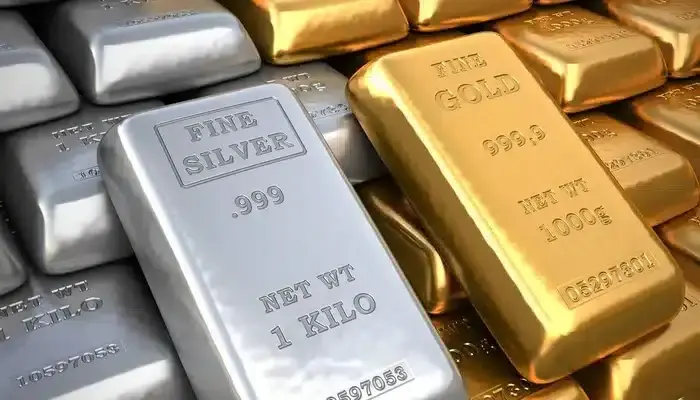
It makes sense to contrast silver and gold as investments. Their strengths as tangible assets are similar as they act as restraints on stocks and stock markets, havens from sociopolitical upsets, and inflation hedges. The two precious metals do differ significantly in a number of ways, though.
Silver costs less than gold
Silver is much less expensive than gold. Its spot price on the financial market has never surpassed $50 per ounce in the twenty-first century, while the price of gold is beyond four digits. Therefore, silver is considerably more accessible: You can purchase a lot more silver than gold for the same dollar investment, and silver has the potential to generate higher returns.
Storage of silver is more difficult than gold
In terms of volume, silver is larger than gold. Since the same amount of money buys significantly more silver than gold, silver holdings will require much more room and will be more expensive to keep and transport. Silver tarnishes as well.
You can say that getting greater value for your money has its own drawbacks.
Silver has higher volatility than gold
Compared to the gold market, the silver market is substantially smaller. Silver can exhibit much greater volatility, or price fluctuations, than gold since silver is more sparsely traded. For instance, silver can increase by 13% in just one day.
Silver has a lower liquidity than gold
Finding a buyer will probably be more challenging for silver sellers than it will be for gold sellers. The gold market is better known and understood and it provides a greater selection of reliable, safe places to invest.
Silver isn’t as good of a hedge as gold
Due to its status as an industrial metal, silver is more susceptible to economic downturns and other pressures on the manufacturing industry. Although these variables can have an impact on gold, which also has industrial use, investor mood is often what drives gold prices. As a result, gold functions as a better, purer hedge against the bolsa de valores and economy.
Silver has kept a relatively low prominence despite its accessibility and industrial applications versus gold. Additionally, silver continues to be reasonably priced, especially in relation to gold, giving investors more opportunity to buy.
However, compared to gold, silver is less liquid and more volatile. These elements, together with the market’s reliance on other businesses, might make it challenging to forecast the silver market’s future, especially long term.
For those reasons, novice investors would be advised to stay away and stick with gold if they seek a safe haven from the ups and downs of the stock market. Investing in silver, though, can be a wise pick if you’re a little more seasoned and have a big appetite for risk.
Now, let’s look into both the pros and cons of investing in silver.
First, the upsides
Silver could provide security
As already noted, when things are chaotic, investors frequently rush to buy precious metals. Legal tender typically becomes secondary to assets like gold and silver when there is a great deal of political and economic instability. Although silver and gold bullion can both be attractive to investors, the former frequently gets disregarded in favor of people who invest in gold, despite the fact that it serves the same purpose.
Silver is tangible
Even if currency, stocks in mining companies, bonds, and other financial items are recognized as sources of riqueza, they are still essentially digital promissory notes. As a result, they are all susceptible to devaluation brought on by things like money printing.
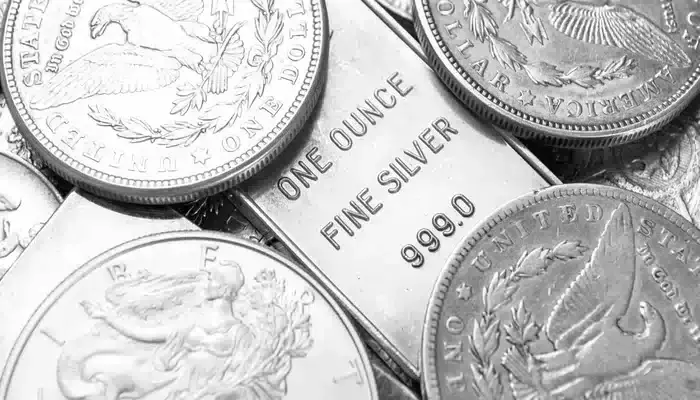
In contrast, a troy ounce of silver bullion is an exhaustible tangible asset. Because of its inherent and genuine value, physical silver is therefore unlikely to entirely crash even though it is susceptible to market swings like other commodities. Market participants have the option of investing in silver in a variety of forms, including silver coins, silver jewelry, and bullion bars.
Lower costs
Silver is more practical than gold bullion since it is more adaptable and less expensive. It follows that because silver is less valuable than gold, if you want to purchase silver in the form of a coin to use as money, it will be simpler to break than a gold coin. Investing in silver thus becomes easier.
Potential for Increased Returns
When the price of gold increases, so does the price of silver, which tends to move in lockstep with gold. Purchasing silver bullion is reasonable and offers a considerably greater percentage gain if the price of the white metal increases. In bull markets, silver has actually performed better than the price of gold. You can protect your bets with investing in silver bullion in your portfolio.
Favorable history
A sense of stability can be found in silver and gold since they have been accepted as legal tender for a very long time. Many people take solace in the knowledge that silver has been valued over a significant portion of human history, and there is an expectation that it will persist in contrast to a fiat currency that may become obsolete.
When people invest in real silver, whether by purchasing a silver bar, pure silver, a coin, or other products, they may be assured that its worth has endured and will do so in the future.
Downsides of Investing in Silver
Sensitivity to economic collapse
Due to its dependence on industrial development, the price of silver is extremely vulnerable to economic downturns, so investing in it can be quite risky.
Vulnerability to tech changes
There is always a chance that another metal will take the place of silver in products that need it for manufacture, or for anything to happen to the sector as a whole as seen with the demise of photographic film – a significant consumer of the white metal.
Limited potential for income or appreciation
Silver does not pay interest like a bond or dividends like a stock because it is a tangible good. Only when you sell it at a higher price will you have a chance to profit. So if you’re eyeing a huge profit off investing in silver, you might get disappointed.
Erratic changes in price
It is common knowledge that precious metals are highly erratic in terms of pricing. This may or may not be to your advantage.
Even if a person has a lot of experience trading in commodities, emotional investing frequently comes into play while buying and selling. You have to deal with the genuine issue of buying high and selling low.
You need to be as certain as you can that you’re buying low and selling high when investing in silver or another commodity which has traditionally been extremely volatile. Although it appears straightforward, it can be difficult to decide when to buy and sell if you invest your money while being too emotional.
Acquiring ETF or coin
Contrary to popular belief, it is possible to invest in silver without actually possessing any. Even while it would seem unlikely, this actually occurs frequently without anyone even realizing it.
Silver exchange-traded fund (ETF)
You can gain market exposure by investing in a Silver ETF, but you aren’t actually buying the actual silver when you do so. Both new opportunities for profit and new risks result from this.
There are expenses related to maintaining the ETF as well. Most costs are negligible, such as the 0.5% annual expense ratio of the SIL ETF. Due to the high level of volatility in the value of silver, there is a danger that an investor could lose money if the price of silver drops and then incur additional costs on top of that.
Silver Coins
Although owning a silver dollar may seem like a wise investment, it is actually based more on the worth of the collector than the value of the silver bullion.
Most silver dollars do not contain 99.99% pure silver; instead, they are typically about 60% silver. It can be difficult to value the coin.
Since silver dollars are a collectible and aren’t made of pure silver, it’s not just the price of silver that determines their worth. It is based on the physical characteristics of the coin as well as its collectible value.
Silver dollars are simple to purchase and could appear to be a good deal because they are a little less expensive than their bullion equivalents. Just be aware that because it isn’t pure silver, the value might be more difficult to determine and that it is more of a collector’s item.
Unreliable businesses
Not all businesses are trustworthy, which is a sad fact. Most of them are, but some are just pure sketchy.
A lot of times, an investor will buy silver from a dealer and then pay the same business for storage since the investment could be made easily and conveniently because of this. However, the very firm you entrusted to store actual silver for you might not be doing that. What they do instead of keeping enormous vaults stuffed with physical bullion belonging to consumers is to keep IOUs (a document that acknowledges the existence of a debt).
This is a very risky position for you as an investor. In most cases, you wouldn’t even be aware of it if you were purchasing silver as a inversión a largo plazo.
At some point, you would request that your investment be sold and handed the proceeds from the sale. But if there is ever a moment when many investors want their silver from the firm, it won’t have enough real silver to meet its obligations.
Storage costs
One of the safest ways to invest in silver is to purchase real silver, but there could be disadvantages too. Although you won’t be paying administration costs like you would with an ETF investment, you still need to store your real silver.
Because many people don’t have a safe at home or a safe deposit box at the bank, this could make your investment more difficult. It takes money to purchase a safe or to rent a safe deposit box from a bank. Depending on the size and location, a safe deposit box might cost anywhere from $20 to $200 per year to rent.
However, the cost to buy and install a reliable secure safe in your home might tap into the thousands of dollars range.
To relieve you of the concern of having to store your bullion yourself, the majority of businesses offer a storage option; nevertheless, this is another ongoing monthly or annual expense that will reduce the profits on your investment.
Deflationary events can significantly depress value
Due to their inverse correlation, gold and silver act as inflation hedges or protection for your money. The price of silver will rise when the purchasing power of each dollar decreases due to inflation.
This is how you get an increase in price per ounce. But inflation needs to be balanced, even if this is a good thing and raises the price of silver and the economy as a whole.
Over time, inflation reduces the value of each dollar, while deflation increases the value of each dollar and trims the value of silver.
This was particularly true during the Great Depression, at which time silver’s price slumped to $4.75 in 1930 from $18.17 in 1919.
Deflation can have a significant impact during market corrections, thus there is always a chance that the price of silver could drop due to external factors.
Possibility of damage, loss, or theft
Since silver is a real commodity, there is a chance that it may be stolen, taking your investment with it. Holding it in a safe or at a bank can lessen this risk, but there are other possible risks, such as damage or loss.
You may have silver bullion in a safe since it may be made into coins or bars, but a fire can do a lot of damage that is difficult to repair.
Purity and authenticity are ingrained directly into the bullion and coins as they are produced. The risk of fire to your investment is quite serious.
Even if your silver doesn’t melt in a home fire, other objects may melt onto it or eat away at the surface. This is more frequently observed with silver items like plates and silverware, among others.
Additionally, even if it is less likely for an investment, you could still lose your coins or bullion.
There is no real weight value
While you may use Google to access the current Silver price in real time, only what people are prepared to pay you for an ounce at that particular time determines the actual price per ounce.
The nature of supply and demand plays a crucial part along with other elements like emotion and leverage. Silver cannot be backed by data as a business can because it is a commodity.
For comparison, a company has an intrinsic worth based on revenue, costs, and the potential for profit, while only external factors can affect the price of silver.
Due to the inability to validate the price of silver using data, such as financial accounts, you must rely on a variety of elements from numerous sources.

Fear has a huge impact on value
The market for precious metals is strongly influenced by fear. Prices can fluctuate sharply, and it can occasionally act real crazily.
But the worst part about market or investor fear is that the price of silver might change either way — up or down.
When people are terrified, they may sell their silver because they need the money to survive or they may start buying the metal in an effort to protect their money from inflation or other causes.
A noteworthy instance just occurred during the COVID-induced pandemic when the price of silver investments fell along with the market as a whole. People sold their stocks and other holdings because they needed their money to survive. They also began selling their actual silver instead of simply their holdings and stocks. On top of that, silver was no longer used to make products since manufacturers had closed and production had stopped.
The result was a glut of silver-based investments, which resulted in a drop in the price.
You don’t get dividends from silver
You won’t receive any money from the physical silver unless you invest in any silver mining companies for dividends.
Having an investment that exclusively depends on appreciation or value growth can make investing less alluring. If this was your retirement money, you will either need to generate a cash flow from somewhere else or sell your silver to do so.
There are many different revenue streams and ways to make money, but if you have to sell your possessions in order to make money to survive, you’ll discover that you’ll eventually just run out of things to sell.
With the volatility that silver has exhibited over many years, you might find yourself having to sell for ever-lower prices in order to survive.
You can certainly expose yourself to alternative investments, such as ETFs or certain stocks in the silver market, but the rise in share price of these investments will always be tied to the spot price of silver.
This implies that even if you invest in silver mining stocks that pay dividends, if the price of silver declines, the miners’ turnover also declines, which in turn causes a decrease in stock price and a reduction in dividend payout overall.
Finding the “perfect” market timing is impossible
If we look back at the silver bull market from 2001 to 2008, the only way to fully profit from that boom is to attempt to time the market and anticipate the top and bottom for buying and selling prospects.
Although there are methods for attempting to determine when to purchase and sell, it is impossible to predict with certainty when the bottom has been reached and a favorable time to buy has arisen.
While using ratios like the Gold to Silver Ratio and the Silver to S&P 500 Ratio can help you predict prospective gains or losses, they are not a foolproof method. Therefore, dollar cost averaging is your best option if you want to avoid timing and keep profiting from price reductions.
Timing the market is a very risky move because it is practically futile to foresee any market. Simply put, there are just too many variables at play to determine when exactly to purchase or sell.
Why Investing in Silver is a Bad Idea: Bottom Line
Investing in silver has some disadvantages that must be understood and balanced out even though it may be a fantastic addition to anyone’s portfolio.
You need to make wise choices about how you start investing in silver to avoid things like market manipulation, shorting ETFs, or storage costs eating away at your income prospects.
Investing in silver isn’t entirely a bad idea, but it definitely isn’t for everyone. If you’re new to investing, you must first research the investing 101s to guide you. If you’ve been investing for a long time, I hope this article can help you make a more informed decision as to whether or not investing in silver is personally bad for your portfolio.
¿Le duele la indecisión financiera? ¿Quiere invertir con Adam?

Adam es un autor reconocido internacionalmente en temas financieros, con más de 830 millones de respuestas en Quora, un libro muy vendido en Amazon y colaborador de Forbes.