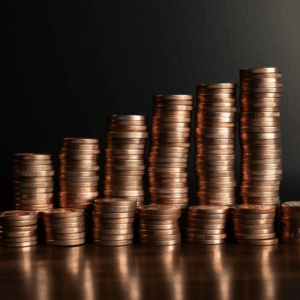
It is a common question for investors just starting on their financial journey. Double a penny every day for 30 days. How many dollars will you have?
What would you do if a genie appeared before you and offered you the choice between receiving $1 million right now or starting with a cent and seeing it double every day for 30 days?
Most people, if given the choice, would use the extra million dollars now. This raises the intriguing question of how much one penny twice each day for a month might amount to.
It’s a trick question at heart. A penny twice every day for the 30 days in a typical month would amount to $5,368,709.12, to put it simply, way more than one million dollars.
It is a lesson about the power of compound interest, which is a concept that is fundamental to investing. In this article, we will discuss it in further detail, and why compound interest is so important to learn.
Si desea invertir como expatriado o particular con un alto patrimonio neto, que es en lo que estoy especializado, puede enviarme un correo electrónico (advice@adamfayed.com) o utilizar WhatsApp (+44-7393-450-837).
What is compound interest?
What do you think you’d have at the end of the month if you started with a penny on the first of the month and doubled it the next day and kept doing it every day until the 30th?
One penny, two pennies, four pennies, eight pennies, sixteen pennies… After 30 days, you will have collected $5,368,709.12!
Do you find that hard to believe? The force of compounding is on full display here, and with a rate of 100%, mind-boggling gains are to be anticipated.
The math works out as follows:
A = P [1 + (rate)] ^ time
P = 1 penny
Rate = 100%
Time = 29 days (because day 1 produced our P, so the compounding starts from day 2)
A = 1 [1 + (1)] ^29
A = 1 [2] ^29
A = 536, 870, 912 pennies = $5,368,709.12
Now you know firsthand how effective compounding can be. Having a single penny that doubles every day for 30 days is preferable to having a million dollars up front because you can watch how the penny multiplied to over $5 million in 30 days.
As can be seen, the rate and length of time are crucial in compounding. Money may not compound to that amount if the rate was any lower than 100% or double what it is, and if the compounding period and duration were not every day for 30 days.
If you were asked to instead enhance the value of a penny by 50% each day for 30 days, for instance, you’d end up with only $1, 278.34. You would only have $5,242.88 after 20 days of daily doubling of a penny.
As you can see, compound interest is a powerful financial tool that can help you achieve financial security and build wealth over time. It’s a simple concept, but one that many people overlook or don’t fully understand.
Compound interest is the interest that is earned not only on the initial principal amount, but also on the accumulated interest of the previous periods. In other words, it’s interest on interest.
For example, if you invest $1,000 at a 5% annual interest rate, you will earn $50 in interest in the first year.
With compound interest, the interest earned in the first year is added to the principal, so in the second year you earn interest on $1,050, not just the original $1,000. This means that in the second year, you will earn $52.50 in interest, and so on.
How does compound interest affect you and your wealth?
Compound interest can work for you or against you, depending on whether you are earning it or paying it. If you are earning compound interest, your money will grow faster over time.
On the other hand, if you are paying compound interest, your debt will grow faster over time.

Here’s an example: Let’s say you have a credit card balance of $1,000 with an annual interest rate of 20%.
If you only make the minimum payment each month, it will take you over 9 years to pay off the balance, and you will end up paying over $2,000 in interest.
However, if you make larger payments and pay off the balance in 2 years, you will save over $1,500 in interest.
The example with the pennies is obviously hypothetical. No investment will provide a daily return of 100%, so do not expect any investment to double your money every day.
Single-digit to low double-digit returns are typical for most investments. If you are curious about the time required to see a 100% return on your money, however, there is the Rule of 72 that provides a straightforward approach for accomplishing this.
72 / Annual Return = Number of Years to Double Your Money
Simply divide your expected annual return on investment by 72 to get your answer. That is how long it will take for your money to grow by a factor of two.
At an annual rate of return of 8%, your initial investment of $20,000 would grow to $40,000 after 9 years.
Investments take longer to grow in the beginning, but as more money is invested, the growth rate increases. The estimated return on this investment is $160,000 after 27 years.
This is how you can accumulate and grow your wealth throughout the course of your lifetime.
Because compound interest accrues at an ever-increasing rate due to the inclusion of interest from prior periods, over time, compound interest can greatly increase investment returns.
A deposit of $100,000 earning 5% simple interest per year for 10 years would generate $50,000 in interest. However, if the identical account accrued interest at a rate of 5% per month, the total amount earned in interest would be around $64,700.
Investors and creditors alike benefit when interest is compounded more frequently. The inverse is true for a borrower. The general rule is that compound interest accrues at a faster rate the longer the number of compounding periods.
The takeaway here is that you need to start investing regularly and early. One more is to remember that the best returns on investments are always made in retrospect. Investing regularly, even if just in passive vehicles like mutual funds or exchange-traded funds, can help you build wealth over time.
What are common examples of compounding interest in finance?
By automatically reinvesting dividends in the account, an investor can take advantage of compound interest over time.
One way for investors to reap the benefits of compound interest is through dividend-paying assets like stocks and mutual funds.
Dividends that are reinvested are utilized to buy more of the underlying asset. Then, the larger investment will accrue interest at a faster rate.
In addition, buyers of zero-coupon bonds receive compound interest on their investment. Interest payments on conventional bonds are made at regular intervals and are determined by the bond’s original terms. When interest is paid out in the form of a check, it does not accumulate.
Investors in zero-coupon bonds are not paid any interest. This bond, on the other hand, is acquired at a discount to its face value and appreciates over time.
To ensure that the face value of a zero-coupon bond is paid in full at maturity, the issuer uses compound interest to boost the bond’s value over time.
Intervals between interest additions are called compounding periods. The frequency of interest compounding might vary from year to year, quarter to quarter, month to month, day to day, or even continuously.
Daily interest accrual is possible, although monthly interest payments are more common. The interest will not accrue any more interest until it is credited to the account.
The following financial instruments typically adhere to the following compounding frequency schedules:
- Banks often utilize a daily compounding schedule for savings accounts and money market accounts.
- Money put aside in a Certificate of Deposit. CDs are compounded on a daily or monthly basis, respectively.
- Series I bonds have a semiannual (every six months) interest compounding frequency.
- Interest on loans is typically compounded once every month. On the other hand, “interest capitalization” is another term for compounding interest that may be used in the context of student loans.
- Credit card interest is typically calculated daily and added to your balance, adding up quickly.
Continuous compounding interest is available at some financial institutions and involves the addition of interest to the principal as frequently as possible.
The difference between this and daily compounding interest is negligible unless deposits and withdrawals are made on the same day, which is highly impractical.
How can compound interest help you as an investor?
Compound interest can help you achieve financial security by allowing your money to grow over time. Here are some tips on how to use compound interest to your advantage:
Start early. The earlier you start investing, the more time your money has to grow. Even small contributions to a retirement account or investment portfolio can add up over time.
Be consistent: Regular contributions to your investments will help you take advantage of compound interest. Set up automatic contributions to your retirement account or investment portfolio to make sure you are consistently investing.
Take advantage of employer contributions: If your employer offers a retirement plan with matching contributions, take advantage of it. This is essentially free money that will grow over time through compound interest.
Avoid debt with high interest rates: If you have high-interest debt, such as credit card debt, focus on paying it off as soon as possible. The longer you carry the debt, the more you will end up paying in interest.
Be patient: Compound interest takes time to work its magic. Don’t get discouraged if you don’t see immediate results. Keep investing consistently and watch your money grow over time.
How can you use compound interest to your advantage?
Compound interest has been heralded as the key to financial security and prosperity in the long run. It’s a potent idea that can have a huge impact on one’s financial future if one takes the time to fully grasp and utilize it.
The full understanding of this concept can completely alter your strategy for accumulating wealth and achieving your financial objectives; its significance cannot be emphasized.
To reiterate, interest that is compounded is interest that is earned not only on the principle amount but also on the interest that has accrued from prior periods.

Simply said, compound interest is the interest on interest, which causes your investment capital to grow at an accelerating rate. The faster your money increases, the more often interest is compounded.
On the other hand, simple interest is computed just on the principle amount invested and remains constant during the investment period regardless of any interest accrued. This implies that the interest rate on a simple loan increases linearly over time.
The main distinction between compound interest and simple interest is in the calculation and accumulation of interest over time.
The compounding effect of interest on an investment allows compound interest to provide much faster and more substantial growth than does simple interest.
Over time, compound interest-based investments tend to outperform their simple interest-based counterparts.
There are a number of reasons why compound interest is so highly regarded for increasing wealth:
Exponential growth over time
Earning interest not only on the principal but also on the accumulated interest from prior periods is what gives compound interest its exponential growth potential over time. Your money will grow considerably more quickly than with simple interest thanks to the compounding effect.
The power of compound interest grows exponentially over time. The value of your investment will rise dramatically over time thanks to the compounding effect.
Earnings with minimal effort
Passive income can be generated by investments that earn compound interest. Interest accrued on an investment can be re-invested, allowing it to become even larger without any new outlay of money or work on your part.
Promotes sound financial planning
When people see the long-term benefits of saving and investing early in life thanks to compound interest, they are more likely to do so.
There are several ways to earn compound interest, including equities, bonds, mutual funds, and even high-yield savings accounts. This paves the way for investors to spread their bets across a variety of assets, reduce their overall risk, and still reap the rewards of compound interest.
By automatically reinvesting dividends in the account, an investor can take advantage of compound interest over time.
One way for investors to reap the benefits of compound interest is through dividend-paying assets like stocks and mutual funds. Dividends that are reinvested are utilized to buy more of the underlying asset. Then, the larger investment will accrue interest at a faster rate.
In addition, buyers of zero-coupon bonds receive compound interest on their investment. Interest payments on conventional bonds are made at regular intervals and are determined by the bond’s original terms. When interest is paid out in the form of a check, it does not accumulate.
Investors in zero-coupon bonds are not paid any interest. This bond, on the other hand, is acquired at a discount to its face value and appreciates over time. To ensure that the face value of a zero-coupon bond is paid in full at maturity, the issuer uses compound interest to boost the bond’s value over time.
What kinds of investments are most effective at taking advantage of compound interest?
You may make the most of compound interest to watch your money increase tremendously over time with a few different investing options. The following are examples of common investments that take use of compound interest:
High-yield savings accounts
These accounts often compound money on a daily or monthly basis and offer higher interest rates than standard savings accounts. The liquidity and minimal risk of high-yield savings accounts make them ideal for short-term goals and emergency funds.
CDs, or certificates of deposit
Banks and credit unions often provide CDs, which are time-bound savings products that pay a fixed interest rate for a set period of time. Daily, monthly, or quarterly interest compounding is the norm. CDs are low-risk investments, making them a good choice for cautious investors or those looking to lock in a rate of return for a set period of time.
Money market accounts
Money market accounts are like high-yield savings accounts, but with potentially higher interest rates and larger required opening deposits. Daily or monthly interest compounding is the norm. Money market accounts are good for achieving medium-term goals because they combine the possibility for development with easy access to your money.
Bonos
Bonds are a type of financial security issued by a company, municipality, or government that pays interest to its investors on a regular basis. Bond interest can be re-invested to maximize the power of compounding. Bonds are low-risk investments, although their exact level of safety depends on the creditworthiness of the issuer.
Dividend reinvestment plans (DRIPs)
Through DRIPs, shareholders can reinvest their dividend payments into more shares of the company’s stock or a mutual fund. The compounding effect of dividends that are reinvested helps investors amass a larger shareholding over time.
Mutual funds and exchange traded funds
Collective investing in stocks, bonds, or other securities allows investors to spread their risk across a larger pool of capital. The compounding effect is enjoyed by the investors as the returns from these assets are re-invested. Fondos de inversión y ETF, depending on the underlying assets, can be used to achieve a wide range of different long-term financial goals with varied degrees of risk.
Growth stocks
The potential of compound interest can be harnessed in a roundabout way by investing in stocks that routinely reinvest earnings for business expansion. Capital appreciation for shareholders may occur if the stock price rises in tandem with the company’s profits growth. The potential reward is greater, but the danger is also higher with this method.
How does the duration of my investment period affect the rate of compound growth?
Your investment horizon is a major factor in the development of compound interest.
In general, compound interest has a larger effect on the growth of an investment when the investor has more time to reap its benefits. This is due to a number of factors:
The exponential growth of your investment is made possible by compound interest, which adds interest to both the principal and the accumulated interest from period to period. A higher growth in your investment’s value can be expected from the compounding effect if you have a longer time horizon over which to invest.

More compounding periods will occur if your investment horizon is greater. This increases the frequency with which the compounding effect can take place, as interest can be added to the principal.
The time value of money principle asserts that because of the possibility of interest, a dollar obtained now is worth more than a dollar received in the future.
If you invest over the long haul, compound interest will help your money grow at a rate higher than inflation, allowing you to keep buying power even as prices rise.
Investors can take on more risk with a longer investing horizon since they have more time to recover from market downturns. Investments with a greater expected rate of return can increase the compound interest’s growth rate.
Dollar-cost averaging is an investment approach that allows investors with a longer time horizon to benefit from investing a certain amount of money at regular periods.
By buying more shares when prices are low and selling more shares when prices are high, investors can possibly increase their investments’ overall worth by taking advantage of compound interest.
The right application of compound interest can speed up your progress toward your goals. Some methods are presented below for taking advantage of compound interest:
Don’t procrastinate and start investing early. Investing early gives compound interest more time to boost your returns. If you start early, compound interest can help you reach your goals much more quickly than simple interest alone could.
To maximize the benefits of compound interest, it is best to reinvest any income (such as interest, dividends, or capital gains) received from an investment. Since you’ll be accruing interest on both your capital and your earnings, your investment will expand at a quicker rate thanks to this strategy.
Focus on the long term. Over extended time frames, compound interest becomes more effective. Don’t sell your investments short or take money out before it’s time. The compounding effect, when applied over a long period of time, can greatly accelerate your progress toward financial goals.
Boost your contributions when you can. Investing more money on a regular basis will allow compound interest to rise at a faster rate. Investing takes time, but even a modest increase in contributions can have a big effect on the end result.
Diversify, diversify, diversify. The best way to maximize profits while minimizing risk is to diversify an investor’s holdings among a variety of asset types and investment vehicles. To increase the likelihood of reaching your financial objectives, a diverse portfolio can help you take advantage of compound interest from multiple sources.
Pick investments with a higher frequency of compounding. If you want to get the most out of compound interest, choose assets that allow you to do so more frequently (daily or monthly, for example). Because interest can be added to the principle more frequently, your investment will increase quicker.
Keep an eye on the costs. It’s important to keep an eye on investing fees and taxes since they can eat away at your returns and dilute the power of compound interest. The use of tax-advantaged accounts such as IRAs and 401(k)s, as well as other tax-efficient investing techniques, should be considered.
How do taxes and inflation affect the benefits of compound interest?
Understanding the impacts of taxation and inflation on compound interest earnings is crucial for prudent investment management.
Taxes can cut into the total return on compound interest, depending on the investor’s tax status and the type of investment. Investments made through various vehicles have varying tax implications:
- Earnings from investments such as savings accounts, certificates of deposit, and bonds are subject to ordinary income taxation at the taxpayer’s top marginal rate.
- Stock and mutual fund dividends are taxed at a lower rate than ordinary income if they are considered eligible, but are taxed at your regular rate if they are not.
- The profits made from selling assets like stocks, bonds, or real estate are considered capital gains and are subject to taxation. Capital gains that are held for more than a year often incur a lower tax rate than those that are realized quickly.
Tax-advantaged investment vehicles, such as individual retirement accounts (IRAs), 401(k) plans, or 529 college savings plans, can help you avoid paying taxes on compound interest returns by allowing your investments to grow tax-deferred or tax-free, respectively.
Inflation meanwhile, might mean that the real value of compound interest profits might decrease as inflation eats away at the purchase power of money over time. It is essential to invest in assets that give returns that outpace inflation if you want to preserve and expand the real worth of your investments.
You can safeguard your savings from the debilitating effects of inflation by purchasing inflation-indexed bonds or Treasury Inflation-Protected Securities (TIPS).
In addition, it is possible to produce long-term returns that exceed inflation by investing in assets with better historical returns, such as stocks or real estate.
How can I use compound interest to reduce debt?
Understanding the impact of compound interest can help you pay off debt faster, even if it is more commonly connected with investment growth. The interest you pay on a loan’s principal can accumulate over time, adding to the total amount you owe. Methods for using compound interest to reduce debt more quickly are discussed below.
Put extra money toward paying off the loan principle whenever you can. The interest you pay on the loan will be reduced as a result of the principal being paid down. Using this method, you can pay off your debt faster and save money on interest throughout the course of the loan.
Consider a biweekly payment schedule in which, instead of making a single monthly payment, you make a payment equal to half of your monthly payment every two weeks. By doing so, you can reduce your main balance and interest costs by the equivalent of an extra monthly payment each year.
Make payments larger than the minimum required by any loans or credit cards you may have. This will lessen the time it takes to pay off the loan and the interest you’ll pay on the principal.
If you have many debts, the ones with the highest interest rates should be your top priority. Using the “avalanche method,” you can pay off your most expensive debt first and reduce your interest payments overall.
Debt consolidation or refinancing can help you save money on interest payments by combining multiple high-interest loans into one manageable monthly payment. By lowering the interest rate, this method can facilitate a more rapid reduction of debt.
While you’re trying to get out from under your current debt load, it’s not a good idea to take on any new loans or credit cards.
Making and sticking to a budget might help you control your spending and put more money toward paying down debt. You may eliminate debt faster and reduce your spending habits by sticking to a budget.
Conclusión
All types of investors can gain from compound interest. By lending money and then using the interest from those loans to make further loans, banks can reap the benefits of compound interest. The interest that depositors earn on their savings accounts, bonds, and other investments is compounded, to their profit.
Compound interest has a dramatic impact on financial security over the long run. Compound interest is crucial to building wealth because it multiplies your initial investment at a significantly faster rate than basic interest. It also helps to reduce the effects of inflation on the expense of living.
Young individuals can take advantage of the time worth of money by investing in compound interest. You should consider the compounding frequency of your investments as much as the interest rate itself.
In conclusion, compound interest is a powerful financial tool that can help you achieve financial security and build wealth over time. By understanding how it works and taking advantage of it, you can make your money work for you and achieve your financial goals.
If you need more financial guidance, consider seeking the services of a professional financial planner.
¿Le duele la indecisión financiera?

Adam es un autor reconocido internacionalmente en temas financieros, con más de 830 millones de respuestas en Quora, un libro muy vendido en Amazon y colaborador de Forbes.