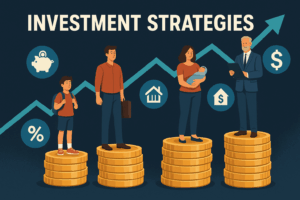
Investment goals and risk tolerance change with age, career, and family responsibilities.
That’s why using investment strategies for different life stages is essential—especially for high-net-worth individuals and expats planning long-term wealth growth and preservation.
This article answers key questions, including:
- What are the stages of the investor life cycle?
- What are life cycle investment strategies?
- What are the 3 major types of investment styles?
- What is the best age to start investing?
- What is the ideal amount to invest?
- What is the risk involved in investment?
Si desea invertir como expatriado o particular con un elevado patrimonio neto, que es en lo que estoy especializado, puede enviarme un correo electrónico (hello@adamfayed.com) o WhatsApp (+44-7393-450-837).
Esto incluye si busca una cartera de expatriados gratuita revise para optimizar sus inversiones e identificar perspectivas de crecimiento.
Algunos hechos podrían cambiar con respecto al momento de la redacción. Nada de lo aquí escrito es financiero, ni asesoramiento jurídico, fiscal o de cualquier otro tipo, ni una invitación a invertir.

What Are the Life Stages of Investing?

Investing isn’t one-size-fits-all. It evolves as you move through different phases of life.
Comprender la life stages of investing helps tailor your strategy to your goals, time horizon, and risk capacity.
1. Early Career (20s–30s)
- Goals: Build savings, repay debt, start investing.
- Risk Profile: High risk tolerance due to long time horizon.
- Strategy: Focus on growth-oriented assets like equities, ETFs, or global index funds.
2. Mid-Career (30s–50s)
- Goals: Grow wealth, buy property, fund children’s education.
- Risk Profile: Moderate risk tolerance; still growth-focused, but more mindful of volatility.
- Strategy: Diversify with a mix of stocks, bonds, and alternative assets. Consider tax-advantaged accounts and international exposure.
3. Pre-Retirement (50s–60s)
- Goals: Preserve capital, maximize retirement contributions.
- Risk Profile: Lower risk tolerance due to shorter time horizon.
- Strategy: Shift towards lower-volatility assets like bonds, income-generating property, or dividend-paying stocks.
4. Retirement (60s+)
- Goals: Income stability, asset preservation, estate planning.
- Risk Profile: Conservative to moderate.
- Strategy: Focus on fixed income, annuities, real estate income, and safe withdrawal strategies to avoid depleting funds.
Best Investment Strategies for Different Life Stages
These investment strategies are commonly recommended by financial professionals to align with typical goals and risk profiles across life stages.
While individual circumstances vary, the following strategies serve as a helpful framework for building, preserving, and transferring wealth.
1. Early Career: Take Smart Risks
- Actionable goal: Maximize growth through aggressive asset allocation.
- Tactics:
- Open a Roth IRA or workplace pension.
- Invest in diversified low-cost ETFs.
- Use dollar-cost averaging via automated monthly contributions.
- Pitfall to avoid: Taking on debt for lifestyle upgrades instead of investing early.
2. Mid-Career: Grow and Protect
- Actionable goal: Scale investments and start protecting gains.
- Tactics:
- Add real estate or sector ETFs for diversification.
- Rebalance your portfolio to include 20–40% bonds.
- Max out employer-matched retirement accounts and HSAs.
- Key strategy: Begin planning for children’s education and increase insurance cover.
3. Pre-Retirement: Lock In Stability
- Actionable goal: Preserve wealth while setting up future income.
- Tactics:
- Shift allocation to 50–60% fixed income or dividend-paying assets.
- Use annuities or REITs for steady cash flow.
- Finalize estate and tax planning tools (e.g., trusts, POAs).
- Critical move:Run retirement income projections now.
4. Retirement: Withdraw Wisely and Plan Legacy
- Actionable goal: Stretch your nest egg and preserve your estate.
- Tactics:
- Use the 4% withdrawal rule or bucket strategies for cash flow.
- Prioritize tax efficiency (draw down from taxable accounts first).
- Gift annually or structure a family trust.
- Legacy tip: Review all beneficiary designations and consider charitable vehicles.
What Is Lifestyle Investment Strategy?
Lifestyle investment strategy is a personalized approach to portfolio management that aligns investments with an individual’s specific financial goals, values, and lifestyle choices, rather than age alone.
Unlike life cycle strategies, which typically follow a predetermined path based on life stage or retirement date (e.g., target-date funds), lifestyle strategies allow for greater flexibility.
Allocation decisions are based on unique factors like risk tolerance, desired retirement age, spending needs, and even personal values such as ESG (Environmental, Social, and Governance) preferences.
Lifestyle Investment Strategy Features
- Customized asset allocation that may remain relatively stable over time unless personal circumstances change.
- Greater investor control, requiring active monitoring and adjustments.
- Tailored goal orientation, ideal for individuals with nontraditional career paths or variable income streams (e.g., entrepreneurs or nómadas digitales).
Trade-offs:
- More flexibility means more responsibility. Investors must be proactive in adjusting their strategy as goals evolve.
- Unlike automated life cycle funds, lifestyle strategies may require professional guidance or advanced financial literacy to manage effectively.
Life Cycle Investment Strategies
Life cycle investment strategies are structured approaches that align your asignación de activos with your age, income level, and evolving financial goals.
These strategies are built around the idea that your ability and willingness to take on investment risk decreases as you approach retirement.
A life cycle strategy adjusts the balance between high-risk and low-risk assets over time.
In your younger years, the portfolio leans heavily toward growth-oriented investments like equities.
As retirement nears, it gradually shifts toward capital preservation assets such as bonds or cash equivalents.
What Are Life Cycle Investment Strategies?
Alignment with Age, Income, and Goals
- Early Life/High Income Potential: Aggressive allocation focused on growth.
- Mid-Life/Peak Earnings: Balanced mix of growth and income, with increasing diversification.
- Retirement Prep: Reduced equity exposure, more income-focused or capital-preserving assets.
This phased approach ensures that your investments stay appropriate for your life stage and reduces the risk of major losses when you’re least able to recover.
Role of Target-Date Funds
Target-date funds are a practical example of life cycle investing.
These funds automatically rebalance over time based on your expected retirement date:
- Hands-off investing: No need for constant adjustment.
- Risk reduction: Asset mix becomes more conservative as the target date approaches.
This makes life cycle strategies ideal for individuals who prefer automated, long-term investing aligned with their financial timeline.
What Are the Three Types of Investment Strategies?
When choosing how to grow and manage wealth, investors often follow one or a combination of three core strategies: growth investing, income investing, and value investing.
Each has a distinct approach to risk, return, and time horizon, and can play different roles depending on your life stage.
1. Growth Investing Strategy
This strategy focuses on companies or assets expected to grow at an above-average rate.
- Typical assets: Tech stocks, startups, emerging markets.
- Ideal for: Early-career investors or those with a higher risk tolerance and longer time horizon.
- Goal: Capital appreciation, even if it means higher short-term volatility.
2. Income Investing Strategy
This strategy emphasizes generating consistent income through dividends, interest, or rent.
- Typical assets: Bonds, dividend-paying stocks, REITs.
- Ideal for: Pre-retirement and retirement stages, when stable income and capital preservation matter.
- Goal: Reliable cash flow, often with lower risk.
3. Value Investing Strategy
This strategy targets undervalued stocks or assets that may be temporarily mispriced by the market.
- Typical assets: Established companies with strong fundamentals trading below intrinsic value.
- Ideal for: Mid-career investors looking for a balanced approach to growth and risk.
- Goal: Long-term gains through disciplined buying and holding.
Each of these strategies can be adjusted or blended over time to match evolving life goals and risk tolerance.
FAQs on Investment Strategies for Different Life Stages
Understanding how your investment strategy should evolve is essential for building long-term wealth.
Below are answers to some of the most asked questions about investing through life’s stages.
When Should I Start Investing?
The best time to start investing is as early as possible.
Starting early allows you to take full advantage of compound interest, where your earnings generate additional returns over time.
Even small, consistent contributions made in your 20s can grow substantially more than larger contributions made later in life.
How much should I be investing?
There’s no one answer, but here are general benchmarks:
- Early career: Aim to invest at least 15% of your income.
- Mid-career: Increase this to 15–25% as income grows.
- Pre-retirement: Focus on maxing out retirement accounts and reducing risky exposure.
- Retirement: Shift to income-generating and capital-preserving assets, drawing down strategically.
How to invest based on age?
Match your strategy with your risk tolerance and time horizon:
- Younger investors can afford to take more risk for higher growth.
- Mid-life investors should prioritize diversification and gradually reduce risk.
- Older investors typically focus on preserving wealth and securing reliable income.
What are the stages of investing and what risks are involved?
- Early stage: Market volatility and poor financial discipline.
- Mid-career: Overconfidence or under-diversification.
- Pre-retirement: Sequence-of-returns risk (market downturns close to retirement).
- Retirement: Longevity risk (outliving savings) and inflation eroding purchasing power.
Tailoring your strategy to your stage helps mitigate these risks and improves the odds of achieving your long-term financial goals.
Conclusión
Estrategias de inversión for different life stages should never be static.
As your income, responsibilities, and goals evolve, so should the way you invest.
Whether you’re just starting out or managing wealth in retirement, your portfolio should reflect your current life stage while preparing for the next.
Periodic portfolio reviews, risk reassessments, and smart rebalancing are essential for long-term success.
Aligning your approach with a life-stage strategy helps you stay on track, minimize avoidable risks, and maximize opportunity at every phase.
When in doubt, consider seeking tailored advice to ensure your investment strategies for different life stages match both your financial goals and personal values.
¿Le duele la indecisión financiera?

Adam es un autor reconocido internacionalmente en temas financieros, con más de 830 millones de respuestas en Quora, un libro muy vendido en Amazon y colaborador de Forbes.