I am often asked my opinions about specific countries stock markets.
Mis seguidores me plantean a menudo las siguientes preguntas:
- Are Chinese stock markets undervalued vs American or global equities?
- Should I buy Chinese stocks and ETFs?
- How can I buy Chinese stocks?
- How to invest in China from outside China – in other words if you are vivir en el extranjero?
I have answered all these questions, on various platforms, in recent years.
En el Adam Fayed Podcast, I made the point that the Shanghai Composite has been one of the worst performing long-term investments on some measures.
On Quora, I have answered many questions down the years, and I will put some of these answers below.
Si desea invertir como expatriado o particular con un elevado patrimonio neto, que es en lo que estoy especializado, puede enviarme un correo electrónico (advice@adamfayed.com) o WhatsApp (+44-7393-450-837).
Esto incluye si busca una segunda opinión o inversiones alternativas.
Algunos de los hechos pueden cambiar desde el momento de la redacción, y nada de lo aquí escrito constituye asesoramiento financiero, jurídico, fiscal o de cualquier tipo, ni una invitación a invertir.
¿Debería comprar acciones chinas ahora que el coronavirus está haciendo bajar los precios?
Fuente: Quora Adam Fayed
I would just invest into a broad index like MSCI, which includes an allocation to China.
Yo evitaría los ETF y acciones específicos de China por:
- Cuestiones de gobierno corporativo
- Riesgos políticos y sociales
- Puede obtener exposición directa e indirecta a China a través de los mercados estadounidenses e internacionales. Fíjate en Alibaba y en otras innumerables OPV chinas en los mercados estadounidenses:
- Muchas grandes empresas estadounidenses como Apple y Amazon, y también europeas, tienen ingresos procedentes de China. Por ejemplo, alrededor de 25% de los ingresos de Apple proceden de China
- El índice chino es mucho más arriesgado que un índice de base amplia como el MSCI World
- Las empresas chinas individuales son aún más arriesgadas que un ETF chino y mucho más que un índice general.
- China tiene profundos problemas económicos que rara vez se mencionan en los medios de comunicación, incluidos los occidentales. Por ejemplo, su crecimiento probablemente no sea 100% exacto. La mayoría de las estimaciones reales sugieren que China sólo crece 3% al año y no los 6%+ que sugiere el PCCh.
- El crecimiento y los mercados bursátiles no siempre están relacionados, pero esto nos lleva de nuevo a la cuestión del gobierno corporativo.
Así que sí, yo añadiría posiciones ahora mismo, pero evitaría una posición específica en China.
Mucha gente ha cometido ese error en los últimos años. Han visto cómo el mercado chino luchaba desde 2006 y han estado esperando a que se moviera al alza.
Algún día lo hará, pero los mercados son estúpidos, aunque no sean eficientes todo el tiempo.
Están incorporando los riesgos de China a la ecuación.
Why should you not invest in China?
Fuente: Quora Adam Fayed
We have to make a distinction between investing in private companies vs the stock market.
For private companies, as Andrew has said below, there is a lot of mercantilism.
That is a huge negative, even though China has a huge market for foreign companies to tap into.
China doesn’t have the rule of law in the same way as a democracy can.
It isn’t a “stable” system either, it is just a “non volatile” system Or at least low-volatility.
Long-term, as Nassim Taleb and other experts on probability have shown, more volatility systems are actually more stable than non or low-volatile systems.
For that reason I would bet on India and its messy democracy more than China, even if it doesn’t do as well short-term.
It is human nature to assume the opposite. That is why people were shocked by events like the collapse of the USSR, or are surprised to know that more volatile assets (like stocks) tend to outperform non-volatile assets (cash) long-term.
Or even that the most volatile stock exchanges, like the Nasdaq which went down about 70% from 2000–2002, has outperformed less volatile ones.
Anyway, getting back to your question, the main reasons not to invest in Chinese Stocks specifically are:
- The way the Chinese Stock Market operates. Normally, the fact that the Shanghai Composite has under-performed long-term (as per the chart below) would be seen as a buying opportunity. The market was at 6,000 in 2006 and is at 3,400 today. In China’s case though, the market is dominated by smaller retail investors, whereas the US and some other markets are dominated by institutional investors like banks and hedge funds. Therefore, the Chinese markets are heavily dependent on smaller retail investors which makes it more risky in some ways. The volatility doesn’t make it risky, but that fact does
2. You can get access to some of the best Chinese firms on the US and Hong Kong stock exchanges.
3. There is little or no correlation between GDP growth and the stock market. People who bought emerging markets in the 2000s, or sold out due to a “coronavirus recession”, made that mistake. China isn’t an anomaly either. If we compare MSCI Emerging Markets to the S&P500 long-term, the S&P500 has actually done better, even though growth has been higher in those markets.
4. China will shortly have an ageing population issue due to the One Child Policy. Now this isn’t automatically an issue for stocks because the best Chinese firms will be international, and as mentioned before, stocks and growth aren’t strongly connected. Therefore, if China’a growth slows a lot, we can’t automatically say that stocks will do badly in the Mainland. Yet it is still a risk and unlike the US and Europe, it isn’t good at attracting a lot of immigrants.
5. There are now more people in China trying to get money out of the country, than those that want to bring money in.
6. Even most Chinese locals prefer to invest in local and overseas real estate, and international stocks, vs the local stock market due to many of these reasons alluded to.
Against that though, the Chinese stocks markets do look undervalued and some of the issues I have identified here (like the lack of institutional investors vs a more developed market like the S&P500) might be addressed in the future.
So, having 10% in China won’t harm you, and you shouldn’t be concerned that China is in MSCI World or MSCI Emerging Markets.
That will give you indirect access to Chinese equities which look relatively cheap.
Furthermore, every dog has its day in investing. In much the same way that the Shanghai Composite outperformed from 2000 until 2008, it will have its period in the sun again.
Could it be in 2021 or 2022, just as it has had a decent 2020? Maybe. Nobody knows for sure.
What we do know, however, is that China’s biggest risk is its one party (and of course corrupt) system.
Many Chinese consumers are actually very savvy and sensible about this.
The majority of wealthier Chinese people own overseas real estate and stocks because they know about the risks associated with putting all their eggs in the Mainland China basket.
Is it a good time to invest in Chinese stocks?
Fuente: Quora Adam Fayed
It might be but who knows. What we do know is:
- The Shanghai Stock Market isn’t the safest in the world
- you can get exposure from MSCI world and even the S&P500 which sells to Chinese consumers
- the virus is unlikely to affect the global economy long term but could impact China a lot in the short term
- the RMB has a lot of downside pressure
- many Chinese firms IPO in the US
- More investors in Mainland Chinese stocks are smaller individual investors rather than bigger institutional ones
- the Chinese state might try to prop up the stock market
Having a small allocation to China is one thing but I would avoid a large one.
I remember in 2015 when Chinese stocks fell from 5,000 to below 3,000, where they remain.
Many people streamed ‘the Chinese stock market was at 6,000 in 2006, and this is a buying opportunity’
Fast forward 5 years and they are still doing worse than their US counterparts.
I am sure that will change one day and you shouldn’t chase returns, but it does show that Chinese stocks have many more risks than some other markets.
Is the Chinese stock market a safe place to invest?
Fuente: Quora Adam Fayed
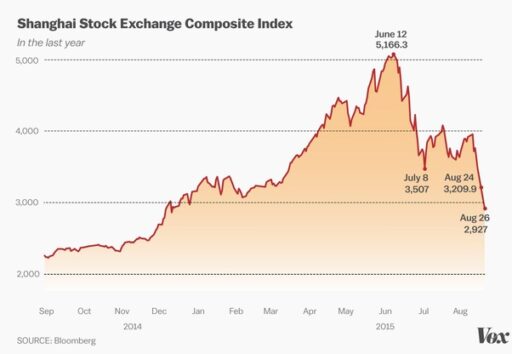
The recent performance has been weak. That does mean Chinese Stocks look undervalued.
However I would be careful. Chinese stocks are riskier than their counterparts in the US and world.
A small allocation to China from MSCI Emerging Markets is fine. No reason for a huge allocation though; 10% in emerging markets which will include 5% in China and Hong Kong.
Firstly, individual stock picking is never safe, in any country, as so many things can go wrong.
In emerging markets, there are additional corruption risks. Moreover, the Chinese market is like the American market in the 1960s…..most of the investors are retail.
Or perhaps the 1920s would be a better example. People want to make a quick buck. The market is prone to speculators mania.
With that being said, there is nothing wrong with having a 10% allocation to emerging markets, which will mean having a 3%-5% allocation to `Great China`, including Hong Kong, which is a more mature stock market.
The Chinese Market looks cheap too, but the market isn’t stupid. The markets may not be efficient, in all circumstances, but they aren’t stupid.
Chinese stocks look undervalued for a reason – the market is taking into account the higher risk.
Emerging markets property is also risky. That isn’t isn’t to mention that many Chinese innovative, like Alibaba, IPO in the US.
Most American firms also make most of their revenue overseas. So no need to invest directly in China to benefit from any growth there.
How can I get started investing in the Shanghai stock market?
Fuente: Quora Adam Fayed
- Find an online broker or DIY platform which can accept you based on your nationality, country of residence and money (account minimums can apply)
- Then you can buy many `Greater China funds` online.
I would avoid Chinese stocks and a high allocation to China because:
- Stock picking doesn’t work in general, not just China
- Growth and stocks are connected- as can be seen in China. The Shanghai market has been down since 2006.
- Many of the best Chinese firms IPO in the US
- China is more risky than the US on many levels
With that being said China is very cheap right now, and emerging markets do perform reasonably enough long-term.
10% in emerging markets, which will mean 3% or so to China at most, should be fine.
Can foreign individuals invest directly in the Shanghai and Shenzhen stock markets?
Fuente: Quora Adam Fayed
Not sure what you mean by directly, but there are loads of ways to buy a Shanghai, Greater China or other Chinese funds and index funds.
If you want to buy individual shares, which doesn’t make sense, only a limited number of brokers offer that, like Interactive Brokers.
With China remember the issues;
- Cuestiones de gobierno corporativo
- Many Chinese firms IPO in the states
- The market is dominated by individual and not institutional investors
- there is no connection between the economy and stock market. All countries are like this, but China’s especially
- The local market isn’t used to long-term investing
- It is the most volatile of all markets arguably, more prone to extreme mores
Not saying don’t have an allocation but 5%-10% is fine, especially in a wider emerging markets fund.
What’s your reaction to the new “tech heavy” Chinese stock exchange where the stock gains have been extraordinary?
Fuente: Quora Adam Fayed
Let’s see how it goes in 10–20 years. Remember the heady days of 2006?
The Chinese Stock Market had beaten the S&P and Nasdaq for years….not just beaten by lapped the US and most Stock Markets.
Fast forward to 2019 and the Chinese Stock market is one of the few in the world to be down over the last 13 years.
Not just down. Halved in value. The point is, every market has its period in the sun.
I have no doubt that the Chinese Market will have its periods of over-performance.
The key things are long-term performance relative to the risk you take as an investor.
The returns of the Chinese Stock Market, even over 30 years, have been very poor compared to the US – extremely poor if you include the risk you are taking.
Say no to this new market or have an incredibly low allocation. Buffett is right with this quote…..be selective.
It isn’t just China either. Even emerging markets that have performed well, like India, are riskier than some developed markets.
¿Le duele la indecisión financiera?

Adam es un autor reconocido internacionalmente en temas financieros, con más de 830 millones de respuestas en Quora, un libro muy vendido en Amazon y colaborador de Forbes.