Recientemente, países como Suecia y Canadá han actualizado sus leyes de ciudadanía, modificando la forma en que las personas pueden obtener, cambiar o mantener la nacionalidad.
Estos cambios reflejan las tendencias mundiales en materia de requisitos de residencia, vías de inmigración de inversores y cualificados y ciudadanía basada en el patrimonio.
Este artículo trata:
- ¿Qué es la estrategia de ciudadanía?
- ¿Hay nuevas normas para la ciudadanía?
- ¿Cuáles son los temas de los cambios en la ciudadanía?
Principales conclusiones:
- Las leyes sobre ciudadanía evolucionan en todo el mundo, favoreciendo a menudo a los emigrantes cualificados y a los inversores.
- La residencia, la contribución económica y los controles de seguridad son fundamentales en las nuevas políticas.
- La ciudadanía por descendencia se está extendiendo en algunos países (por ejemplo, Canadá).
- Las tendencias de la ciudadanía mundial vinculan cada vez más la nacionalidad al valor económico, social y de integración.
Mis datos de contacto son hello@adamfayed.com y WhatsApp +44-7393-450-837 si tiene alguna pregunta.
La información contenida en este artículo es meramente orientativa. No constituye asesoramiento financiero, jurídico o fiscal, ni una recomendación o solicitud de inversión. Algunos hechos pueden haber cambiado desde el momento de su redacción.
¿Qué es la Estrategia de Ciudadanía Global?
Una estrategia de ciudadanía global es la forma en que un país diseña su ciudadanía y naturalización normas para atraer talento, inversión, y residentes de larga duración, protegiendo al mismo tiempo los intereses nacionales.
En 2026, muchos gobiernos se replantean cómo equilibrar la migración cualificada, la afluencia de inversores, la seguridad nacional y el crecimiento económico a través de la política de ciudadanía.
Estas estrategias determinan cada vez más quién puede optar a la ciudadanía y en qué condiciones.
Una estrategia de ciudadanía global suele incluir políticas como:
- Ciudadanía de inversión programas
- Vías de residencia a ciudadanía
- Incentivos para trabajadores cualificados o empresarios
- Revisiones de la normativa sobre doble nacionalidad
Para los particulares, comprender las estrategias de ciudadanía mundial es esencial para planificar la emigración, la expansión internacional de los negocios y la residencia a largo plazo en el extranjero.
¿Hay algún cambio en la ciudadanía?
Sí, varios países están cambiando las normas de ciudadanía en 2026, con Europa, el Caribe, Asia y Norteamérica actualizando las políticas de naturalización, inversión y doble ciudadanía.
1. Cambios en la ciudadanía de la UE
Suecia
Anteriormente, Suecia permitía a la mayoría de los residentes extranjeros solicitar la nacionalidad tras 5 años de residencia, sin necesidad de pruebas formales de lengua o conocimientos cívicos.
En virtud de las reformas que entrarán en vigor en junio de 2026, el periodo de residencia se amplía a 8 años, y por primera vez se exigirá a los solicitantes que cumplan las normas de competencia lingüística y conocimientos cívicos.
También se están introduciendo condiciones adicionales en torno a la autosuficiencia financiera (al menos 20.000 coronas suecas de ingresos mensuales) y la conducta, haciendo de la ciudadanía un paso final de la integración en lugar de un resultado automático de la residencia de larga duración.
Estos cambios suponen un importante endurecimiento de Régimen sueco de ciudadanía que era tradicionalmente liberal.
Portugal
Antes de los cambios, Portugal permitía a la mayoría de los extranjeros solicitar la nacionalidad tras 5 años de residencia legal, y el reloj de la residencia solía empezar a contar desde la fecha de la solicitud de residencia, incluso antes de la aprobación.
En virtud de las actualizaciones de 2026, el periodo de residencia exigido se amplía a 10 años para la mayoría de los nacionales de países no pertenecientes a la UE ni a la CPLP, y a 7 años para los ciudadanos de la UE y de la CPLP, en sustitución de la norma anterior de 5 años.
A partir de ahora, el temporizador de residencia empezará a contar sólo a partir de la fecha de expedición del primer permiso de residencia, no a partir de la fecha de solicitud, con lo que se excluyen del cómputo los largos plazos de tramitación.
Los requisitos lingüísticos siguen siendo el portugués A2, pero el cumplimiento de la integración y la continuidad de la residencia legal es cada vez más estricto.
Estos cambios alargan considerablemente el plazo práctico para Nacionalidad portuguesa para inversores y residentes de larga duración.
España
Anteriormente, España exigía 10 años de residencia legal a la mayoría de los extranjeros para optar a la nacionalidad, con plazos más cortos para determinados grupos como descendientes de españoles nacionales.
Recientemente, España había ampliado brevemente la ciudadanía por la vía rápida para los nietos de exiliados en virtud de la Ley de Memoria Democrática, pero el plazo de solicitud para esta ruta finalizó el 22 de octubre de 2025 y ya no se aceptan nuevas solicitudes.
Vías de residencia para los inversores extranjeros, tales como programas de residencia basados en la inversión, se están reevaluando, pero la inversión por sí sola sigue sin garantizar una ciudadanía más rápida.
La tramitación administrativa sigue siendo lenta, aunque las normas de elegibilidad de los residentes de larga duración están ahora mejor definidas y se aplican de forma más coherente.
Alemania
Anteriormente, Alemania exigía 8 años de residencia legal antes de que la mayoría de los extranjeros pudieran solicitar la nacionalidad, con una opción acelerada de 3 años disponible para personas excepcionalmente bien integradas en virtud de las antiguas reformas.
A partir de la ley de nacionalidad modernizada en junio de 2024, el período estándar de residencia para la naturalización se redujo de 8 a 5 años para la mayoría de los solicitantes, y doble nacionalidad por primera vez.
Sin embargo, la vía rápida de naturalización de 3 años se suprimió en octubre de 2025, convirtiendo el mínimo de 5 años en la norma para casi todos los residentes en 2026.
Los cónyuges de ciudadanos alemanes aún pueden optar a la pensión tras 3 años de residencia y 2 años de matrimonio en virtud de disposiciones matrimoniales independientes.
Los requisitos lingüísticos siguen siendo el B1 de alemán y los solicitantes deben superar la prueba de integración y cumplir los criterios de independencia económica y lealtad cívica.
Estos cambios equilibran un acceso más rápido para los residentes de larga duración con unas expectativas de integración más estrictas.
2. Caribe y América Latina Cambios en la ciudadanía
San Cristóbal y Nieves
Anteriormente, en el marco de la opción del Fondo de Crecimiento Sostenible (FGC), los solicitantes podían optar a Ciudadanía de San Cristóbal y Nieves con una contribución mínima de 125.000 USD para un solo solicitante o de 150.000 USD para un solicitante más su cónyuge.
En 2026, el FGS fue sustituido por la Contribución Sostenible del Estado Insular (SISC, por sus siglas en inglés), elevando la contribución mínima para un solicitante soltero a 250.000 USD, con importes más elevados para cónyuges y dependientes.
Los controles de diligencia debida mejorados se aplican ahora a todos los solicitantes y dependientes, incluida la verificación del origen de los fondos y la investigación de antecedentes.
Estas actualizaciones refuerzan el cumplimiento de las normas internacionales contra el blanqueo de capitales y de transparencia, al tiempo que mantienen el programa como vía para los inversores que buscan la ciudadanía.
Dominica
Anteriormente, Ciudadanía por inversión de Dominica (CBI) permitía aportaciones tan bajas como de unos 100.000 USD en condiciones más antiguas.
Sin embargo, en julio de 2024, la inversión mínima se incrementó a 200.000 USD para un único solicitante y a 250.000 USD para una familia de hasta cuatro miembros en el marco de la opción del Fondo de Diversificación Económica.
La inversión inmobiliaria mínima sigue siendo de 200.000 USD, en consonancia con los esfuerzos de armonización regional entre los países de la OECO para estandarizar los precios y aumentar la integridad del programa.
La nueva normativa de 2024 también establece una Unidad de Inteligencia Financiera (UIF) dedicada a supervisar la diligencia debida y exige entrevistas obligatorias a todos los solicitantes mayores de 16 años, reforzando la investigación de antecedentes y la verificación del origen de los fondos.
Estos cambios reflejan un giro hacia una mayor transparencia, medidas más estrictas contra el blanqueo de dinero y un control más riguroso, al tiempo que se mantiene la posición de Dominica como opción competitiva de CBI.
Panamá
Anteriormente, Ciudadanía panameña Las normas permitían a los residentes de larga duración solicitar la naturalización tras cinco años de residencia permanente (o tres años si estaban casados con un panameño o tenían hijos panameños), con un escrutinio limitado de la forma en que los solicitantes vivían o trabajaban activamente en el país.
En los últimos años, las autoridades han empezado a aplicar normas más estrictas sobre lo que se considera residencia genuina, centrándose más en la presencia física continua, los vínculos económicos y la integración local.
Poseer la residencia permanente por sí solo ya no es suficiente si los solicitantes no pueden demostrar una conexión real con Panamá.
Aunque los plazos de residencia legal no han cambiado, el umbral práctico para la aprobación ha aumentado, sobre todo para los solicitantes que se basan en estatutos de residencia pasiva o de baja presencia.
3. Cambios en la ciudadanía de Asia y el Pacífico
Japón
Japón sigue aplicando su norma de la nacionalidad única, que exige a los solicitantes renunciar a nacionalidades anteriores si se naturalizan.
Según la actual Ley de Nacionalidad, la mayoría de los residentes extranjeros pueden solicitar la nacionalidad tras cinco años de residencia continuada, junto con buena conducta y estabilidad financiera.
Sin embargo, el Gobierno tiene previsto endurecer examen de naturalización en 2026.
En efecto, exige un periodo mucho más largo de residencia estable (más cercano a unos 10 años de residencia real), con controles más estrictos de impuestos, seguridad social y presencia continua, aunque la ley formal no se reescriba inmediatamente.
Estos cambios pretenden ajustar más los requisitos de naturalización a la norma vigente de 10 años para la residencia permanente y dificultar las autorizaciones a los residentes de corta duración.
Australia
Australia sigue exigiendo 4 años de residencia, incluidos 12 meses como residente permanente, para obtener la nacionalidad.
Las recientes reformas de 2025-2026 ajustan el modo en que se aplican las normas de residencia a los inmigrantes cualificados que trabajan en el extranjero, permitiendo al Ministro renunciar al requisito de presencia de 180 días y relajar las obligaciones de residencia tras la concesión de la nacionalidad.
Los procesos administrativos también se digitalizan y racionalizan, lo que facilita el cumplimiento.
Aunque los umbrales de elegibilidad siguen siendo los mismos, estos cambios centrados en la migración afectan directamente a quién puede optar a ella y a la eficacia con que se obtiene la ciudadanía.
4. América del Norte Cambios en la ciudadanía
Canadá
Canadá sigue exigiendo 3 años de presencia física en los últimos 5 años para obtener la nacionalidad por naturalización, y no se han modificado las pruebas estándar de lengua y conocimientos.
La gran actualización de 2025-2026 afecta a ciudadanía por descendencia.
El 15 de diciembre de 2025, Proyecto de ley C-3 eliminó el límite de primera generación (FGL), permitiendo a las personas nacidas de abuelos canadienses -incluso si sus padres eran ciudadanos por descendencia- solicitar una prueba de ciudadanía canadiense.
Este cambio se aplica retroactivamente a cualquier persona nacida antes de la entrada en vigor del proyecto de ley, ampliando de hecho la elegibilidad de miles de descendientes en el extranjero.
Aunque las normas de naturalización permanecen estables, esta reforma centrada en la inmigración amplía significativamente quién puede reclamar la ciudadanía canadiense por herencia.
Estados Unidos
En Estados Unidos sigue exigiendo 5 años de residencia legal permanente (o 3 años para los cónyuges de ciudadanos estadounidenses) para la naturalización.
Aunque los umbrales legales básicos no han cambiado, las actualizaciones recientes han aumentado el escrutinio sobre la residencia continua, la presencia física, el buen carácter moral y el cumplimiento de las obligaciones fiscales.
A nuevo examen de civismo con normas de evaluación más estrictas.
USCIS también ha restablecido la comprobación de antecedentes y las verificaciones de vecindad para garantizar que los solicitantes demuestren vínculos auténticos con el país.
La doble nacionalidad sigue estando permitida, pero los solicitantes deben demostrar lealtad a Estados Unidos.
Estos cambios de aplicación centrados en la migración hacen más riguroso el proceso de naturalización sin alterar los requisitos fundamentales de elegibilidad.
Temas comunes en los cambios de ciudadanía
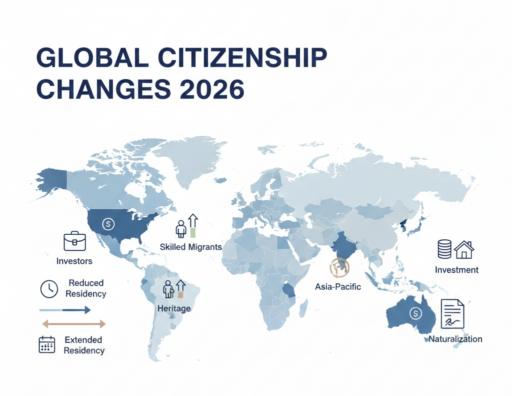
Las normas de ciudadanía mundial en 2025-2026 son cada vez más estrictas, más selectivas y están más orientadas al cumplimiento.
Los gobiernos están endureciendo las vías de inversión, ampliando las reclamaciones basadas en la ascendencia, aumentando las normas de investigación y perfeccionando los requisitos de residencia para dar prioridad al interés nacional a largo plazo sobre los resultados rápidos.
El análisis de los cambios en la ciudadanía revela varios temas recurrentes:
- La contribución económica sigue siendo fundamental - Muchos gobiernos siguen dando prioridad a los inversores, empresarios y emigrantes altamente cualificados a la hora de configurar las políticas de ciudadanía y naturalización. Los programas vinculados a inversiones o vínculos económicos siguen ocupando un lugar destacado, incluso cuando han aumentado los umbrales y los requisitos de diligencia debida.
- Ampliación de la ciudadanía por ascendencia - Algunos países están ampliando el derecho a la ciudadanía por herencia, como demuestra la eliminación en Canadá del límite de la primera generación, lo que amplía el acceso a las personas con vínculos familiares más profundos.
- Se intensifican la seguridad y la investigación - La mejora de la comprobación de antecedentes, la verificación del origen de los fondos y las revisiones de cumplimiento más estrictas se están convirtiendo en norma, especialmente para las rutas vinculadas a inversores y las aplicaciones de gran volumen.
- Retención del talento e integración selectiva - Los gobiernos están perfeccionando las vías hacia la ciudadanía para retener a los residentes cualificados y reducir los incentivos a la migración de bajo impacto, a menudo mediante requisitos de integración y condiciones de residencia.
- Ajustes de la duración de la residencia - Varias jurisdicciones están ajustando los requisitos de residencia, alargando los plazos en algunos casos (por ejemplo, Suecia) y aclarando cómo se calcula la presencia física en otros (por ejemplo, Portugal).
- Restricciones reglamentarias a la ciudadanía inversora - Las presiones legales y reglamentarias (incluidas las sentencias de los tribunales de la UE) han llevado a algunas regiones a recortar o replantearse las medidas tradicionales. planes de ciudadanía por inversión, En la actualidad, la UE está dando más importancia al cumplimiento de las normas y al interés nacional que a las simples transacciones económicas.
Conclusión
El panorama de la ciudadanía en 2026 pone de relieve un creciente énfasis mundial en migración estratégica, contribución económica e integración.
Los gobiernos ya no conceden la nacionalidad automáticamente; en su lugar, la ciudadanía se considera cada vez más una herramienta para atraer talento, asegurar la inversión y reforzar la resistencia nacional.
Para los particulares, esto significa que la movilidad, las conexiones patrimoniales y una planificación cuidadosa son más importantes que nunca a la hora de plantearse una residencia de larga duración u oportunidades internacionales.
La evolución del equilibrio entre apertura y selectividad sugiere que la ciudadanía seguirá reflejando prioridades sociales, económicas y de seguridad más amplias, recompensando a quienes se alineen con los objetivos nacionales y elevando el listón para las vías puramente transaccionales o a corto plazo.
Preguntas frecuentes
¿Aumenta la doble nacionalidad?
Sí, doble nacionalidad es cada vez más frecuente, aunque sea difícil conocer las cifras exactas.
En Peter Spiro, profesor de Derecho de la Universidad de Temple, la mayoría de los países no exigen a sus ciudadanos que declaren varias nacionalidades, pero las tendencias y políticas migratorias muestran que la doble nacionalidad es cada vez más popular para atraer talento, inversiones y mantener los lazos con la diáspora.
¿Es posible cambiar de nacionalidad?
Sí, la ciudadanía puede cambiarse por naturalización, programas de residencia, matrimonio, planes de inversión, o por renuncia a una nacionalidad anterior, según permita el marco jurídico del país.
¿Qué países no permiten la doble nacionalidad?
Países como Japón, Singapur y China suelen restringir la doble nacionalidad, exigiendo a las personas que renuncien a su nacionalidad anterior al naturalizarse.
¿Son diferentes los derechos y deberes de la ciudadanía de un país a otro?
Sí, los derechos y responsabilidades asociados a la ciudadanía, como el voto, la tributación, el servicio militar y el acceso a las prestaciones sociales, varían mucho de un país a otro.
¿Le duele la indecisión financiera?

Adam es un autor reconocido internacionalmente en temas financieros, con más de 830 millones de respuestas en Quora, un libro muy vendido en Amazon y colaborador de Forbes.