Dividend income while living overseas allows expats to generate steady passive cash flow through dividend-paying stocks, ETFs, and income-focused portfolios.
Living off dividends abroad becomes possible when this cash flow is structured to consistently cover everyday expenses without relying on traditional employment.
Este artículo trata:
- What are the advantages and disadvantages of dividends?
- Is dividend income subject to income tax?
- How are foreign dividends taxed?
- How can I avoid paying tax on my dividends?
- Are dividends good for retirement?
Principales conclusiones:
- Dividends are passive income determined by company performance.
- Living off dividends requires a sizable, diversified portfolio and other income streams.
- Tax rules vary by country, so planning can reduce liability and double taxation.
- Some countries, like Singapore, UAE, and Hong Kong, offer low or zero dividend tax.
Mis datos de contacto son hello@adamfayed.com y WhatsApp +44-7393-450-837 si tiene alguna pregunta.
La información contenida en este artículo es meramente orientativa. No constituye asesoramiento financiero, jurídico o fiscal, ni una recomendación o solicitud de inversión. Algunos hechos pueden haber cambiado desde el momento de su redacción.

What qualifies as dividend income?
Dividend income comes from payments made by companies or funds to their shareholders, usually as a share of profits.
It is typically classified as investment or ingresos pasivos, meaning you earn it without actively working.
How dividends are taxed depends on your country of residence: some treat them like ordinary income, others like capital gains, and some even have a separate dividend category.
Foreign dividends may be subject to different rules, so it’s important to understand how your host country handles income from overseas investments.
Do Foreign Dividends Count as Foreign Income?
Yes, most countries treat dividends received from overseas as foreign income.
For instance, US citizens must report foreign dividends to the IRS, and many European countries require residents to declare dividends from foreign sources.
How foreign dividends are taxed depends on:
- Your country of residence
- Doble imposición treaties
- Whether the dividends are reinvested or paid out
Proper reporting ensures you avoid penalties and make use of tax credits.
Is Living Off Dividends a Good Idea?
Yes, living off dividends can provide financial freedom if your portfolio generates sufficient income.
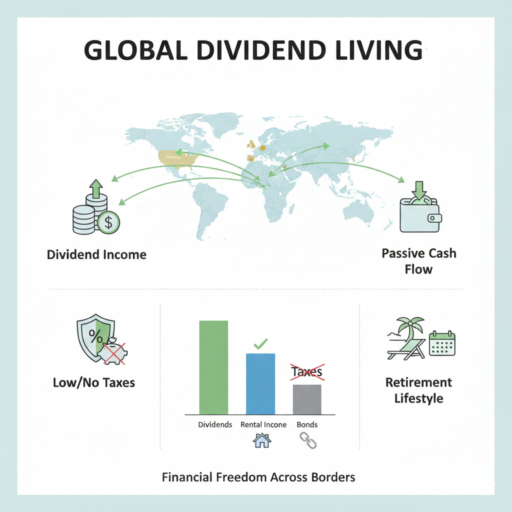
A cartera diversificada with a 3–5% dividend yield can cover living expenses, especially when paired with cost-effective locations abroad.
Advantages of living off dividends abroad include:
- Passive cash flow: Regular income without selling investments.
- Potential tax benefits: Some countries offer favorable tax treatment for dividends.
- Flexibilidad: You can choose where to live based on cost of living and tax efficiency.
Can I Live on Dividends in Retirement?
Yes, many retirees fund their retirement entirely with dividends when their portfolios produce sufficient income.
To make this strategy work, it’s important to focus on a few key areas:
- Calculate expenses – Make sure your dividend portfolio covers your annual living costs.
- Diversify your portfolio – Spread investments to reduce the risk of dividend cuts.
- Consider geography – Choose countries with lower costs of living or favorable tax policies to stretch your dividends further.
For example, countries like Portugal and Singapore are popular among retirees seeking tax-efficient dividend income while living overseas.
What Are the Disadvantages of Dividend Income?
Dividends can be cut or eliminated if a company’s profits decline, making them an unreliable income source.
- Riesgo de mercado – Dividends depend on company profits and can be reduced or eliminated.
- Riesgo de inflación – Fixed dividend amounts may lose purchasing power over time.
- Limited growth potential – Relying solely on dividends may restrict overall portfolio growth compared to reinvesting profits.
- Tax complications – Expats may face taxation in both the source country and their country of residence.
Knowing these risks helps you determine whether living off dividends is realistic for jubilación or long-term planning.
How to Avoid Getting Taxed on Dividends?
You can legally avoid or reduce dividend taxes by using tax-advantaged accounts, investing in tax-efficient funds, and choosing low- or zero-tax countries.
1. Tax-advantaged accounts – Contribute to retirement accounts or special investment vehicles that offer deferred or reduced taxation.
2. Tax-efficient funds – Choose ETFs o fondos de inversión structured to minimize taxable distributions.
3. Low- or zero-tax countries – Invest or reside in jurisdictions that allow non-residents to receive dividends tax-free.
Careful planificación fiscal is essential, especially when moving between countries or earning foreign dividends.
How to Avoid Double Taxation on Foreign Dividends?
You can avoid double taxation on foreign dividends by claiming tax credits, using double taxation agreements, and investing in tax-friendly jurisdictions.
Double taxation occurs when both the country where the company is located and your country of residence tax the same dividend.
- Claim a foreign tax credit – Reduce your home country tax by offsetting taxes already paid abroad.
- Use double taxation agreements – Reside in countries that have treaties with the dividend source to prevent being taxed twice.
- Invest in tax-friendly jurisdictions – Structure your investments in countries with favorable dividend tax rules.
Countries With Favorable Dividend Taxation
Countries like Singapore and the United Arab Emirates (UAE) treat dividend income very favorably, allowing investors to keep most or all of their earnings.
Choosing the right location can help you reduce taxes while enjoying a comfortable lifestyle abroad.
Top countries with favorable dividend taxation include:
- Singapur – No tax on foreign-sourced dividends, making it ideal for global investors.
- Emiratos Árabes Unidos (EAU) – No personal income tax, including dividends, for residents.
- Hong Kong – Dividends are tax-free for individuals, even for foreign investments.
- Portugal – Dividends are generally taxed at a flat rate of around 28%. The former Non‑Habitual Resident (NHR) exemption no longer applies to new residents, though existing beneficiaries may still benefit under transitional rules.
- Suiza – Dividend income is generally taxed as ordinary income, though holders of qualifying participation may benefit from partial taxation, and non‑residents can often reduce withholding tax under double tax treaties.
Comparing Dividend Income With Other Passive Income Options
While dividends can provide steady cash flow for living abroad, they work best when combined with other income streams. Comparing your options helps you balance risk, yield, and stability.
1. Rental Income
- Pros: Can generate consistent monthly cash flow, potential property appreciation.
- Contras: Requires management or hiring property managers, risk of vacancies, local property taxes.
- Best for: Expats who want a tangible asset and can handle real estate logistics.
2. Interest from Bonds or Fixed Deposits
- Pros: Low risk, predictable returns, easy to diversify globally.
- Contras: Lower yields than dividends, sensitive to inflation, may be taxed locally.
- Best for: Investors seeking stability and low-risk income alongside dividends.
3. Business or Royalties
- Pros: Can provide high returns and passive cash flow if well-structured.
- Contras: Higher complexity, potential active involvement, legal and tax planning needed.
- Best for: Expats with entrepreneurial experience or intellectual property income.
4. Dividend Income
- Pros: Passive, predictable if investing in reliable companies, globally accessible through brokerages.
- Contras: Subject to market fluctuations, currency risk, and taxes.
- Best for: Investors seeking moderate-risk, hands-off income that grows over time.
Conclusión
Living off dividends abroad is about strategic planning, risk management, and aligning your portfolio with your lifestyle and location.
Working with a knowledgeable asesor financiero can help expats and retirees structure their investments efficiently, ensuring income streams are reliable and compliant with local regulations.
Success comes from balancing reliable income with diversification, understanding tax implications, and leveraging jurisdictions that optimize your net returns.
For expats and retirees, dividends work best as part of a broader income ecosystem, combined with bonds, real estate, or royalties, allowing flexibility and resilience against market or currency fluctuations.
Ultimately, the goal isn’t just to receive passive income; it’s to design a sustainable, tax-efficient framework that supports financial independence while residing overseas.
Preguntas frecuentes
What is the 25% Dividend Rule?
En 25% dividend rule is a stock-market guideline stating that if a dividend equals 25% or more of a stock’s value, the ex-dividend date is deferred until one business day after the dividend is paid.
This ensures fair pricing and proper settlement for unusually large dividends.
Why Do Investors Not Like Dividends?
Some investors prefer capital gains over dividends because dividends are immediately taxable, reducing the benefit of compounding.
Others may dislike the limited growth potential if relying solely on dividends.
Who is Exempt From Dividend Tax?
Some investors are exempt from dividend tax, including those using tax-advantaged accounts, living in zero-dividend-tax countries like Singapore or the UAE, or covered by tax treaties that reduce withholding.
Exemptions depend on residency, account type, and local laws, so it’s important to confirm rules in your jurisdiction.
¿Le duele la indecisión financiera?

Adam es un autor reconocido internacionalmente en temas financieros, con más de 830 millones de respuestas en Quora, un libro muy vendido en Amazon y colaborador de Forbes.