In today’s audio I discuss the following stories:
- The UK could be going to a negative interest rate environment. Will this mean that you need to pay to keep your money in a UK bank account? With Brexit and a pandemic raging, will the Pound Sterling probably weaken?
- The coronavirus has resulted in more inequalities between rich and poor, those that can work from home and those that can’t, and developed and developing countries. Is this trend likely to continue after the end of the pandemic?
- What does the billionaire investor and “Shark Tank” guru Mark Cuban think is the number one skill to teach our children in the future? Has the pandemic made this skill even more important?
Below I have put links to the articles referred to in the audio, and reproduced the entire pieces for your ease.
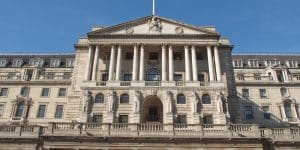
Bank of England Policymaker backs negative interest rates – The Guardian
Negative interest rates in the UK edged closer on Monday after a Bank of England policymaker warned the central bank would need extra firepower to boost the economy following the surge in Covid-19 cases.
In a gloomy assessment of the next few months, Gertjan Vlieghe, who sits on the monetary policy committee, the bank’s interest rate setting body, said the second wave of Covid-19 was holding back consumer spending and suppressing business investment, which would push unemployment higher.
Vlieghe said there was a strong risk that the broad-based recovery since the summer would suffer a setback and that the central bank would need to inject further funds into the economy before the end of the year.
But he warned that the bank’s scope for stimulating lending with cheap credit was beginning to wane and backed the inclusion of negative interest rates in Threadneedle Street’s armoury once technical issues were overcome.
In a speech titled “Assessing the health of the economy”, he cited “growing empirical literature” that suggests negative interest rates have not been counterproductive to the aims of monetary policy in other countries.
But he warned that the bank’s scope for stimulating lending with cheap credit was beginning to wane and backed the inclusion of negative interest rates in Threadneedle Street’s armoury once technical issues were overcome.
“My own view is that the risk that negative rates end up being counterproductive to the aims of monetary policy is low. Since it has not been tried in the UK, there is uncertainty about this judgment, and the MPC is not at a point yet when it can reach a conclusion on this issue.
“But given how low short-term and long-term interest rates already are, headroom for monetary policy is limited, and we must consider ways to extend that headroom.”
Vlieghe, an economist who joined the BoE from a City hedge fund, is one of four external members of the nine-strong MPC from business and academia. The others are Silvana Tenreyro, a professor at the London School of Economics, former investment bank economist Michael Saunders and Imperial College professor Jonathan Haskel. They have all made supportive comments on negative rates, though bank officials have proved to be more circumspect.
An investigation into the impact of negative rates is due to report in December.
Negative rates have been adopted by the European Central Bank and Bank of Japan, mainly to make it unprofitable for corporations to keep cash on deposit.
Evidence to the BoE shows that companies have chosen to increase investment rather than have their cash on deposit decline in value. But UK banks have argued that IT systems are not ready to process negative rate deposits and loans. There are also concerns that if negative rates apply to personal deposits, customers will withdraw funds and keep them outside the banking system.
Vlieghe said an examination of economic trends during the Covid-19 outbreak showed that much of the bounce-back could be attributed to pent-up demand from the lockdown. He warned that job losses could push the unemployment rate beyond the bank’s forecast of 7.5% by the end of the year.
“There is a tremendous challenge ahead. GDP and labour market indicators stand at levels that are below what has historically been the trough of a recession,” he said.
“Given that virus prevalence has been increasing again recently, it is likely to weigh more heavily on economic activity. Indeed, it appears that the downside risks to the economic outlook are starting to materialise. In my view, the outlook for monetary policy is skewed towards adding further stimulus.”
2. How COVID-19 Will Increase Inequality in Emerging Markets and Developing Economies – The IMF
Emerging markets and developing economies grew consistently in the two decades before the COVID-19 pandemic hit, allowing for much-needed gains in poverty reduction and life expectancy. The crisis now puts much of that progress at risk while further widening the gap between rich and poor.
Despite the pre-pandemic gains in poverty reduction and lifespans, many of these countries have struggled to reduce income inequality. At the same time, they saw persistently high shares of inactive youth (i.e., those not in employment, education, or training), wide inequality in education, and large gaps remaining in economic opportunities for women. COVID-19 is expected to make inequality even worse than past crises since measures to contain the pandemic have had disproportionate effects on vulnerable workers and women.
As part of our latest World Economic Outlook we explore two facts about the current pandemic to estimate its effect on inequality: a person’s ability to work from home and the drop in GDP expected for most countries in the world.
The impact of where you work
First, the ability to work from home has been key during the pandemic. A recent IMF study shows that the ability to work from home is lower among low-income workers than for high-income earners. Based on data from the United States, we know that sectors with activities more likely to be performed from home saw a smaller reduction in employment. These two facts combined tell us that lower-income workers were less likely to be able to work from home and more likely to lose their jobs as a result of the pandemic, which would worsen the income distribution.
Second, we use the IMF’s GDP growth projections for 2020 as a proxy for what the aggregate decrease in income will be. We distribute this loss across income brackets in proportion to their ability to work from home. With this new income distribution, we compute a post-COVID summary measure of income distribution (Gini coefficient) for 2020 for 106 countries and compute the percent change. The higher the Gini coefficient, the greater the inequality, with high-income individuals receiving much larger percentages of the total income of the population.

What this tells us is the estimated effect from COVID-19 on the income distribution is much larger than that of past pandemics. It also provides evidence that the gains for emerging market economies and low-income developing countries achieved since the global financial crisis could be reversed. The analysis shows that the average Gini coefficient for emerging market and developing economies will rise to 42.7, which is comparable to the level in 2008. The impact would be larger for low-income developing countries despite slower progress since 2008.
Welfare will suffer
This widening inequality on average has a clear impact on people’s well-being. We assess the progress made before the pandemic and what we can expect for 2020 in terms of welfare using a measure that goes beyond GDP. We use a welfare measure that combines information on consumption growth, life expectancy, leisure time, and consumption inequality. Based on these measures, from 2002 to 2019, emerging markets and developing economies enjoyed welfare growth of almost 6 percent, which is 1.3 percentage points higher than per capita real GDP growth, suggesting many aspects of peoples’ lives were seeing improvement. The increase was mostly due to improvements in life expectancy.

The pandemic could reduce welfare by 8 percent in emerging markets and developing countries with more than half of it stemming from the excess change in inequality as a result of a person’s ability to work from home. Note that these estimates do not reflect any income redistribution measures after the pandemic. This means that countries can dampen the effect on inequality and on welfare more generally by policy actions.
What can we do about it?
In our latest World Economic Outlook, we outlined some policies and measures to support affected people and firms that will be essential for keeping the inequality gap from widening further.
Investment in retraining and reskilling programs can boost reemployment prospects for adaptable workers whose job duties may see long-term changes as a result of the pandemic. Meanwhile, expanding access to the internet and promoting financial inclusion will be important for an increasingly digital world of work.
Relaxing eligibility criteria for unemployment insurance and extending paid family and sick leave can also cushion the impact the crisis is having on jobs. Social assistance in the form of conditional cash transfers, food stamps, and nutrition and medical benefits for low-income households must not be withdrawn prematurely.
Policies to prevent decades of hard-won gains from being lost will be critical to ensuring a more equitable and prosperous future beyond the crisis.
Self-made billionaire Mark Cuban is committed to life-long learning and often says it is key to his success. In fact, Cuban has said time and money spent on learning is “the best investment” he has ever made.
And now, “we’ve got to teach our kids how to learn, because that’s the ultimate skill going forward,” Cuban said during a Q&A session at the George W. Bush Center on Oct. 21.
“My dad always said that you don’t live in the world you were born into, and that’s not going to change. The rate of change is only going to accelerate.”
Rather than reading books like he often did, Cuban says his kids use social media and YouTube to learn.
“My dad always said that you don’t live in the world you were born into, and that’s not going to change. The rate of change is only going to accelerate.”
“The reality is, they learn differently than we used to. With my [10-year-old] son and my 14-year-old daughter, trying to get them to read books is a battle,” Cuban said, adding that his son has surprised him with his understanding of business, learning what a royalty is or what gross margin is, by watching ABC’s “Shark Tank” on YouTube.
Cuban, on the other hand, has said he spends “four to five hours a day” reading, he told CNBC Make It in 2018. “I read everything I can. I don’t care what the source is.”
“The fact that I recognized that learning was truly a skill, and that by continuing to learn, to this day, I’m able to compete and keep up and get ahead of most people,” Cuban told Men’s Health in September. “The reality is, most people don’t put in the time to keep up and learn. That’s always given me a competitive advantage.”
So, going forward, “not only do we have to teach [kids] how to learn, but we as their parents and teachers have to recognize that they’re going to learn differently,” Cuban said at the Bush Center.
To start, Cuban and his fellow “Shark Tank” co-star Daymond John, who also participated in the Bush Center talk, agree that “financial intelligence and coding” should be taught at “a very, very early age,” John said
“Those things should be [taught] in the second grade, third grade, fourth grade, not when you’re 17,” about to graduate high school and enter college with a student loan, John said. “Today, a kid graduating college will end up retiring with a job title that doesn’t exist yet. We have to understand where we’re going and we have to be implementing that at a very young age.”
Lecturas complementarias
In the article below I look at some of my recent Quora answers. This includes a question about covid.
Has covid fundamentally changed the “wealth game” or has it just increased the ferocity of trends that were already there for years?
Also, what are the options for people who want to become very high income?