Buying real estate in Thailand is risky for foreigners primarily because land ownership is restricted and property rights depend on specific legal structures.
The main concerns involve foreign ownership limits, land title security, lease enforceability, and long-term exit planning.
Este artículo trata:
- Can a foreigner own a house and lot in Thailand?
- What are the foreign ownership restrictions in Thailand?
- Is it easy to buy land in Thailand?
- What are the risks in buying Thailand real estate?
Principales conclusiones:
- Foreign ownership restrictions are the core risk in Thailand.
- Condominiums are safer than land for most foreigners.
- Legal structure matters more than location.
- Thailand can work for lifestyle buyers, but requires caution for investors.
Mis datos de contacto son hello@adamfayed.com y WhatsApp +44-7393-450-837 si tiene alguna pregunta.
La información contenida en este artículo es meramente orientativa. No constituye asesoramiento financiero, jurídico o fiscal, ni una recomendación o solicitud de inversión. Algunos hechos pueden haber cambiado desde el momento de su redacción.

Do you have to be a citizen of Thailand to buy property?
You do not have to be a Thai citizen to buy certain types of property in Thailand.
Foreigners are legally allowed to own condominium units outright, provided the building’s foreign ownership quota is not exceeded.
However, non-citizens generally cannot own land directly and must rely on alternatives such as long-term leases, usufruct rights, or Thai company structures, each of which comes with legal limitations and risks that require careful professional advice.
What is the biggest risk of real estate investment in Thailand?
The biggest risk of real estate investment in Thailand is weak long-term ownership security for foreigners.
This risk applies not only to investment properties but also to personal home purchases, because foreigners cannot own land outright, lease rights can be challenged or expire, and illegal nominee structures carry serious legal consequences.
Without proper legal structuring, buyers may face loss of control over the property, unenforceable ownership arrangements, and difficulties selling, transferring, or passing the property to heirs.
That makes both investment returns and personal use uncertain over time.
Why can’t foreigners own land in Thailand?
Foreigners cannot buy land in Thailand because Section 96 of the Thai Land Code restricts land ownership to Thai nationals.
This policy is intended to protect national land resources and prevent foreign control of land assets.
As a result, foreigners must rely on alternative structures such as:
- Condominium ownership (within the 49% foreign quota)
- Long-term leases (typically up to 30 years, renewable)
- Corporate structures (with strict compliance and majority Thai ownership requirements)
Each alternative introduces legal and control risks that must be carefully managed through proper legal advice and due diligence.
What are the pros and cons of buying land in Thailand?
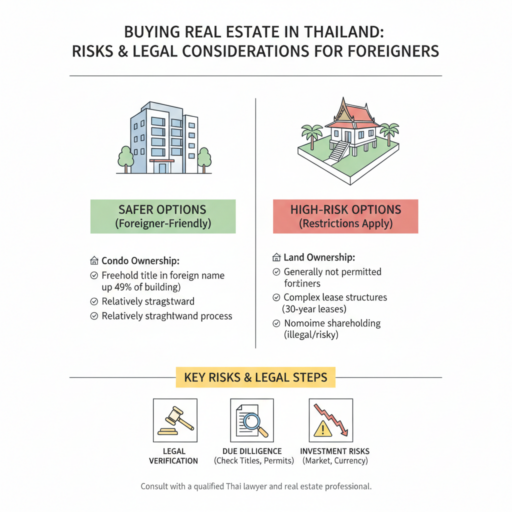
Buying land in Thailand offers greater control over development and long-term use, but it exposes foreign buyers to higher legal and exit risks than purchasing condominiums.
For foreigners, land access is indirect, which shifts the decision from a simple purchase to a long-term legal and risk-management commitment.
Pros
- Lower land prices outside major urban and resort areas
- Freedom to design and build custom properties
- Potential upside if infrastructure or zoning improves
Contras
- No direct land ownership for foreigners
- Dependence on lease terms or corporate compliance
- Higher risk during resale, inheritance, or regulatory scrutiny
In practice, land purchases suit investors with strong legal support and long-term horizons, while condos remain the lower-risk entry point for most foreign buyers.
Is it worth buying property in Thailand?
Buying property in Thailand can be worth it primarily for lifestyle use, long-term residence, or personal enjoyment rather than for maximizing investment returns.
Lifestyle benefits:
- Quality of life: Warm climate, rich culture, excellent healthcare, and well-developed amenities make Thailand attractive for retirees, long-stay residents, and digital nomads.
- Cost of living: Compared with Western countries, expenses for housing, food, and services are generally lower, enabling comfortable living on moderate budgets.
- Rental opportunities: Condominiums in high-demand tourist or expat hubs (Bangkok, Phuket, Pattaya, Chiang Mai) can generate moderate rental income, especially for short-term stays or holiday rentals.
- Community and convenience: Established expat communities, international schools, and access to leisure facilities make integration easier.
Investment considerations:
- Legal ownership limits: Foreigners can fully own only condominiums, and even then, foreign ownership is capped at 49% per building. Land and landed houses require long-term leases, usufruct rights, or Thai company structures, each with compliance obligations and potential risks.
- Resale and appreciation: Capital gains are limited by foreign ownership rules, lease expirations, and market liquidity. Real estate appreciation may be slower than in fully open markets, particularly outside major urban or tourist areas.
- Market concentration: Investment opportunities are concentrated in a few sectors and locations, meaning diversification is harder and market shocks (like tourism downturns) can have a bigger impact.
- Regulatory and exit risks: Missteps in structuring ownership, registration, or foreign funding transfers can complicate resale or inheritance. Professional legal and property advice is essential to mitigate these risks.
Best approach for expats:
- Prioritize lifestyle use and long-term residence rather than speculative investment.
- Opt for condominiums with clear title within the foreign ownership quota to minimize legal risk.
- Treat rental income or resale potential as a secondary benefit, not the main driver of purchase decisions.
- Engage qualified local lawyers and real estate professionals to ensure compliance with Thai property laws and proper registration.
By understanding both the lifestyle and investment aspects, expats can make informed decisions that maximize enjoyment and minimize legal and financial risks.
How can I buy a property legally in Thailand?
Foreigners can legally buy property in Thailand by purchasing a condominium within the foreign ownership quota or using a properly structured long-term lease.
1. Choose the right property type – Condominiums within the 49% foreign ownership quota are the simplest option. Land or landed houses require long-term leases or compliant Thai company structures.
2. Verify the title deed – Confirm that the property has a proper Chanote or equivalent land title. Check for liens, encumbrances, or zoning restrictions.
3. Fund the purchase correctly – Transfer money from abroad in foreign currency and obtain official bank documentation. This is required for legal registration and compliance with Thai law.
4. Engage legal and real estate professionals – Hire a qualified Thai property lawyer and reputable real estate agent to handle contracts, registration, and due diligence.
5. Register the property – Complete registration at the Land Department to secure legal ownership. Ensure all documents are filed correctly to prevent disputes.
Exit Strategies and Long-Term Planning
For foreigners buying property in Thailand, planning ahead for resale, inheritance, and long-term management is crucial. The legal structures available significantly influence your options:
- Condos: Condominiums with clear title deeds are easier to sell and transfer. The foreign ownership quota must be considered, but resale is generally straightforward in popular urban or tourist locations. Condos offer better liquidity compared with leasehold land, making them more attractive for future buyers.
- Leasehold Land: Long-term leases limit your control over the property once the lease expires. Resale depends on the lease terms and the willingness of new lessees or investors to assume the lease. Planning renewal or transfer agreements upfront can reduce future complications.
- Inheritance Planning: Foreign buyers should carefully structure property ownership to ensure smooth succession. Without proper legal arrangements, heirs may face difficulties transferring rights, especially for leasehold land or properties held through Thai companies. Consulting a professional, such as a gestor de patrimonios familiar with inheritance and property law, is essential.
- Risks of Long-Term Holding: Small market size, limited buyer pool, and currency fluctuations (Thai baht) can impact property value and liquidity. Infrastructure changes, zoning adjustments, or regulatory updates may also affect long-term plans. Structured legal and financial planning helps mitigate these risks.
By addressing exit strategies and inheritance considerations from the start, expats can secure both lifestyle benefits and investment stability, minimizing surprises down the line.
Conclusión
Buying real estate in Thailand is not inherently unsafe, but it is structurally different from property ownership in many Western countries.
The real risk lies not in market volatility, but in misunderstanding legal limits and ownership rights.
For foreigners, success depends less on timing the market and more on choosing the right legal framework, property type, and purpose for buying.
When approached as a lifestyle decision rather than a speculative investment, Thai real estate can still offer value, provided the risks are clearly understood and professionally managed.
Preguntas frecuentes
Is $2000 a month enough to live in Thailand?
Yes, $2,000 a month is generally enough to live comfortably in Thailand outside of luxury areas.
This budget can cover rent, food, transportation, and basic healthcare in most cities, though costs rise in Bangkok and resort destinations.
Are property taxes high in Thailand?
Property taxes in Thailand are relatively low compared to Western countries.
Annual land and building taxes are modest, but transfer fees, withholding taxes, and specific business taxes can significantly affect total ownership costs.
How long can you stay in Thailand if you own property?
Owning property in Thailand does not give you the right to live in the country long-term.
Foreign owners must still obtain a visa such as a retirement visa, long-term resident (LTR) visa, or other appropriate visa category, to stay legally.
The length of stay depends entirely on the type of visa granted, not on property ownership.
What is the biggest threat to the real estate industry?
The biggest threat to the real estate industry is regulatory uncertainty combined with economic and demographic shifts.
In Thailand, this includes foreign ownership restrictions, changing visa policies, oversupply in some markets, and reliance on tourism-driven demand.
Is it safe to buy property in Thailand?
Buying property in Thailand is safe for foreigners.
This safety applies only when the purchase follows Thailand’s strict ownership rules, such as buying condominium units within the foreign quota, verifying title deeds, and using proper legal structuring with qualified legal support.
¿Le duele la indecisión financiera?

Adam es un autor reconocido internacionalmente en temas financieros, con más de 830 millones de respuestas en Quora, un libro muy vendido en Amazon y colaborador de Forbes.