Looking to invest your money in one of the safest banks in Europe?
With the uptick in business and the easing of pandemic worries, the banking industry had a strong bounce post pandemic.
Bank profitability and higher earnings were a result of increasing loan demand, enhanced portfolio performance, revitalized consumer spending, and vigorous market activity.
When central banks aggressively raised interest rates to combat inflation in 2022, many international banks reaped the benefits of increasing net interest margins.
Even while margins could still be growing, the chances for profitability expansion are gravely threatened by the growing fears of a recession in many parts of the world especially in Europe.
This list of the safest banks in Europe serves as an invaluable resource by highlighting institutions that have consistently shown resilience across Europe in the face of significant risks.
Si desea invertir como expatriado o particular con un elevado patrimonio neto, que es en lo que estoy especializado, puede enviarme un correo electrónico (advice@adamfayed.com) o WhatsApp (+44-7393-450-837).
We believe that there are better alternatives to the banks when it comes to making investments.
Recomendamos a la mayoría de los residentes y expatriados ricos que inviertan en el extranjero.
16 Safest Banks In Europe
1. KfW (Germany)
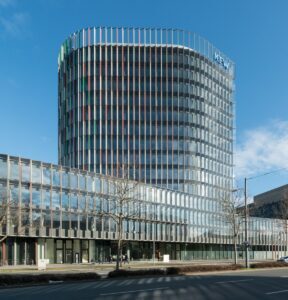
The leading promotional bank is KfW, one of the safest banks in Europe. Since 1948, KfW has made a commitment to enhancing global living circumstances in support of the Federal Republic of Germany and its federal states.
It gave 107 billion euros in funding for this purpose in 2021 alone. The ecology and climate were protected with 33% of this money.
Its financial and marketing services support the attainment of the 17 Sustainable Development Goals (SDGs) in accordance with the United Nations’ Agenda 2030.
No branches exist for KfW, and no client deposits are kept there. It ethically and virtually exclusively uses the global financial markets to support its promotional operations. KfW raised 82.6 billion euros in 2021 specifically for this objective.
More than 7,700 people work for it, including at its headquarters in Frankfurt am Main, its two locations in Berlin and Bonn, and its subsidiaries KfW IPEX-Bank, KfW Capital, and DEG. There are around 80 sites where it is present throughout the world.
KfW helps individuals, nations, and organizations who plan ahead and move our society in the direction of the future as a bank devoted to responsibility. KfW stands out among other commercial banks because of its profile.
2. Zuercher Kantonalbank (Switzerland)
Zürcher Kantonalbank, one of the safest banks in Europe, is the largest cantonal bank in Switzerland and one of the largest Swiss banks, with total assets of CHF 192 billion and 5,145 employees.
In the Greater Zurich Region, the bank is the market leader for universal banking. A variety of goods and services are available to its customers.
From its founding in 1870, the Zürcher Kantonalbank has been a selbständige öffentlich-rechtliche Anstalt (an institution of independent public law) governed by the laws of both Switzerland and the canton of Zurich.
Its public service mandate includes offering financial services to Zurich residents, aiding the canton in meeting its economic, social, and environmental commitments, and taking a responsible stance toward the environment and society.
There are more than 50 branches of the bank, the bulk of which are located in the canton of Zurich. In order to satisfy the cross-border needs of its clientele, it also does business internationally.
3. BNG Bank (Netherlands)
BNG Bank’s history began in the early twentieth century, during a time when numerous social concerns, such as poverty, dominated public discourse.
The Association of Dutch Municipalities (VNG) was established at this time, and as a result, the Gemeentelijke Credietbank (municipal bank) was established in 1914.
Municipalities were given financial assistance from this bank, which enabled them to deal with the social issues of the day. The Gemeentelijke Credietbank is now the BNG Bank, and its goal has not changed.
The bank makes a one-of-a-kind contribution to the Dutch economy. Its very DNA is the Dutch public sector. The public sector is served by this bank, which is motivated by social effects.
The bank seeks to fortify this distinct position. Here is when its “Road to Impact” strategy enters the picture, outlining its course in light of a certain goal and a set of tactical imperatives.
4. Landwirtschaftliche Rentenbank (Germany)
Landwirtschaftliche Rentenbank, one of the safest banks in Europe, is a government-owned development bank. Agriculture and rural regions are refinanced by the bank. Landwirtschaftliche Rentenbank services consumers in Germany.
The bank lends money to financial institutions that support rural communities, upstream and downstream industries, and agriculture. These “promotional loans” come with incredibly low-interest rates.
A public law entity called Rentenbank was created by statute in 1949. Frankfurt am Main serves as its registered office.
The Federal Ministry of Food and Agriculture, which collaborates on decisions with the Federal Ministry of Finance, is how the German federal government carries out its legislative oversight.
Bundesbank and The Federal Financial Supervisory Authority (Bundesanstalt für Finanzdienstleistungsaufsicht, BaFin) are in charge of overseeing Rentenbank’s banking operations.
Many types of agriculture-related projects and rural financing can be funded with its loans.
Agriculture, forestry, winemaking, horticulture, fisheries, manufacture of agricultural supplies, as well as commercial and service enterprises with strong ties to agriculture and forestry, are all included in the scope of its loan activities.
The bank not only supports companies in the food sector but also organizations and enterprises that operate upstream and downstream of agriculture.
Moreover, Rentenbank provides funds for innovative and applied research initiatives, as well as programs and organizations that are particularly important to agribusiness and rural regions.
The Rehwinkel Foundation, a subsidiary of Rentenbank, funds scientific research, promotes activities that encourage interaction between industry and agricultural science, and provides financial aid to students enrolled in pertinent Master’s programs.
Rentenbank concentrates its efforts on supporting innovation, particularly entrepreneurs generating innovative, tech-based business concepts that may play a critical role in advancing agriculture innovation.
5. Nederlandse Waterschapsbank (Netherlands)
On May 5, 1954, the Nederlandse Waterschapsbank was established to assist the water authorities in obtaining the substantial funding required to safeguard the nation against flooding.
Yet, the calamity did not immediately lead to the establishment of the bank. In 1939, preparations were being made to establish a bank for the water authority.
The Association of Dutch Water Authorities’ board made the final decision to establish the bank, which was done in December 1952.
It is paradoxical that the accident in February 1953, at best, only contributed to hasten the bank’s foundation.
The bank’s founders aimed to finance local water agencies without taking any risks.
Self-interest has nothing to do with this project. The bank’s first goal was to get the optimum conditions for the water authority.
The bank was open to conducting business with other semi-public and public organizations, the founders emphasized as well.
Actually, the bank started funding social housing and local governments not long after it opened. As a result, the bank rose to prominence as a major financier in the public sphere.
6. L-Bank (Germany)
Landeskreditbank Baden-Württemberg – Förderbank (L-Bank), one of the safest banks in Europe, is the state-sponsored bank of the state of Baden-Württemberg in Germany. With a branch in Stuttgart, the Bank maintains its main headquarters in Karlsruhe.
Because it is a public law institution and a wholly owned subsidiary of the State of Baden-Württemberg, L-Bank is governed by the federal state government.
The Bank’s operations are controlled by its legislative mandate, which is to assist the Baden-Württemberg state government in carrying out its civic responsibilities.
Support is provided in the form of promotional efforts that are carried out in compliance with the state aid regulations of the European Union. This assistance is in the form of structural, economic, and social policies.
According to the Bank’s statutory public-service mandate, it must work in the long-term best interests of L-Bank and the State of Baden-Württemberg, and this goal must serve as the cornerstone of all of its commercial operations.
The promotional items from L-Bank support this goal. Moreover, L-Bank has a special obligation to safeguard the environment and conduct business in a model manner as a firm controlled by the federal government.
L-Bank has a long history of involvement in sustainability’s social and environmental facets.
From the middle of 2012, L-Bank has been working to create a sustainability management system that will serve as an impartial foundation for the Bank’s sustainable growth going forward.
L-Bank’s sustainability report gives a detailed account of the numerous ways in which the Bank is achieving its corporate obligations in Baden Württemberg. It documents the main effects of the Bank’s operations on the economy, environment, and society.
7. Kommunalbanken (Norway)
Local governments can obtain financing from Kommunalbanken AS. By giving low interest loans to the Norwegian local government sector, the Corporation serves as a state instrumentality for the Norwegian local government. People in Norway can use Kommunalbanken.
Municipal and county governments, intermunicipal businesses, and other organizations that provide local government services are the target customers of Kommunalbanken.

8. NRW.BANK (Germany)
A significant German commercial and investment bank, NRW.BANK, goes by the name WestLB.
Its owners (guarantors) are the North Rhine-Westphalia State, the Rhineland and Westphalia-Lippe Regional Associations, and the Rhineland and Westphalia-Lippe Savings Banks and Giro Associations.
The Rheinische Girozentrale und Provinzialbank, Düsseldorf (1854; “Rhineland National Exchange and Provincial Bank”) and Landesbank für Westfalen Girozentrale, Münster (1832; “Westphalian National Exchange Bank”) merged to become the bank in 1969, at which point the current name was chosen.
In the 19th and 20th centuries, these two banks were crucial in helping to finance the economic growth of the Rhine-Westphalian area.
They united to better successfully compete against the three leading commercial banks in Germany: Commerzbank, Dresdner Bank, and Deutsche Bank.
The most populated state in Germany and home to the Ruhr industrial zone is North Rhine-Westphalia, whose WestLB serves as its central bank.
In addition to offering commercial banking services, trade finance, corporate loans, mortgage loans, leasing, loans to states and municipalities, deposit facilities, overseas commercial transactions, and money markets, the bank also provides export financing to local manufacturers.
The savings associations in the area utilize WestLB as a clearinghouse as well. WestLB has a small branch network because it is a wholesale bank.
The bank separated in 2002 into two separate entities: Landesbank NRW, the surviving parent business, which was renamed NRW.BANK in 2004, and WestLB AG, a public stock corporation in charge of the bank’s commercial operations.
Düsseldorf, Germany serves as the corporate headquarters for NRW BANK.
In order to advance digitization and increase NRW’s environmental and social sustainability, NRW.BANK encourages the necessary investments across all industries.
9. Swedish Export Credit Corporation (SEK)
Sweden’s export credit agency is the Swedish Export Credit Corporation (SEK), one of the safest banks in Europe. In 1962, the Swedish government and major Swedish banks jointly formed it.
The Swedish government has held SEK exclusively since 2003. It was established to provide long-term capital for Swedish exporters.
In addition to loans through banking institutions and loans in local currencies, SEK also offers project financing, customer financing, trade financing, and export credits. 2017 saw SEK accept the Equator Principles.
International buyers can get loans to acquire Swedish products and services with the assistance of SEK’s finance, regardless of the state of the economy.
In order to help Swedish exporters expand their firms, SEK also makes direct loans to them. The Swedish government has charged SEK with providing long-term financial solutions to Swedish exporters, and SEK is only concerned with financing to the Swedish export industry.
The Swedish government owns SEK, an autonomous organization that functions as a supplement to banks.
SEK loaned a total of 55 billion kronor in 2016.
10. Caisse des Depots et Consignations (France)
Caisse des Depôts et Consignations (CDC) is France’s largest state-owned bank and is one of the safest banks in Europe. As a market builder, they have been assisting in the development of the Social Impact Sector on a local level.
The CDC funds social impact Organizations in addition to investing directly in social enterprises and indirectly through Social Impact Funds.
A public organization working for the good of the nation and its economic growth is the CDC and its subsidiaries.
Under the scope of its general interest mission, it supports and finances the French-speaking local ecosystem of NGOs and social businesses under the direction of four broad strategic transitions: territorial, digital, demographic, and ecological and energy.
They want to discuss their interactions with several Ministries, the Senate, the Parliament, and their work on the French Impact Initiative.
They are eager to learn from other European ecosystems and to benchmark the industry internationally.
11. Svenska Handelsbanken (Sweden)
“Stockholms Handelsbank,” which was founded in the spring of 1871 by a number of notable businesses and people in Stockholm’s business community, is where Handelsbanken’s history begins.
The bank opened its doors for business on July 1st, 1871, in rented buildings in Stockholm’s Old Town, which at the time was still the city’s commercial and financial hub.
A universal bank, Handelsbanken provides an extensive array of financial services, including traditional banking to private and business clients, investment banking, financing, cash management, trading, asset management, life insurance, as well as investments in the equities, money, and fund markets.
With 461 locations as of December 31, 2007, Handelsbanken dominates the Swedish market. The other Nordic nations have established universal banking operations during the previous 15 years, and since 2000, Great Britain has as well.
As of December 31, 2007, Handelsbanken has 42 branches in the United Kingdom, 44 in Finland, 39 in Denmark, and 46 in Norway. There are other 28 branches in 16 additional nations.
For the entire year of 2007, operating profit for ongoing businesses and ceased operations was SEK 19.4 billion. Overall assets were around SEK 1 900 billion, of which SEK 1 300 billion was lent to the general population. A total of 10,209 people work for the Bank.
12. Banque et Caisse d’Épargne de l’État (Luxembourg)
The Luxembourgish government founded and owns Banque et Caisse d’Épargne de l’État (BCEE), a bank in Luxembourg.
A full service bank was established by Grand Ducal order on October 25, 1944, after having been established in 1856 as a savings institution.
It now performs all the duties of a commercial bank, including private banking and retail banking.
Currently, BCEE is a full-fledged universal bank that provides all the services a customer on a national and international scale would expect from a financial intermediary.
The bank has a sizable global network of correspondent banks in addition to having the most branch offices in Luxembourg.
It is among the top 15 employers in the Grand Duchy of Luxembourg, employing about 1600 people. The best-rated commercial bank in Luxembourg is BCEE, which has stellar ratings of AAA by Moody’s, and AA+ by Standard & Poor’s.
The needs of its clients and the needs of the national economy have always been Banque et Caisse d’Epargne de l’Etat’s (BCEE) top priorities during the course of its more than 150-year history.
In addition to being well-rated by rating agencies, BCEE is also highly respected by its customers due to the extensive array of goods and services it provides that are tailored to the needs of young people, professionals, and private consumers. BCEE is aware of how to collaborate with you on a daily basis.
13. Banque Cantonale Vaudoise (Switzerland)
The Swiss-based banking firm Banque Cantonale Vaudoise (BCV), one of the safest banks in Europe, offers a variety of services in gestión de patrimonios, retail banking, trade, and corporate banking.
In addition to its wealth management, and savings and loans services, BCV also operates in large-corporate finance and a limited number of commodity trade-financing activities.
The bank also provides a variety of stock exchange services, such as consultancy in financial engineering, trading in equities and derivatives, and interest rate instrument operations.
Together with foreign currency trading, the company is also involved in new issuance of structured products and fixed-income securities.
BCV is the parent corporation of a banking and financial organization. This comprises a private bank, an online trading platform, two fund management organizations, and a private equity firm.
BCV also has a branch in Guernsey that specializes in fiduciary investments and structured products.

14. DZ Bank (Germany)
The second-largest bank in Germany is DZ BANK, one of the safest banks in Europe. It supports over 850 cooperative banks and is the hub of the cooperative financial network (and their 10,500 branch offices). Each of these banks has an interest in DZ BANK AG, and collectively they control the majority of the company.
It operates as a corporate bank under the name “DZ BANK Die Initiativbank” and serves as the holding company for the specialty service providers within the DZ BANK Group:
- DZ HYP (real estate and public sector financing);
- Bausparkasse Schwäbisch Hall (building society);
- VR Smart Finanz;
- DZ PRIVATBANK, R+V Versicherung (insurance company);
- Union Investment Group (asset management);
- TeamBank (consumer finance);
- And various other specialised institutions.
The DZ BANK Group provides the local cooperative banks with support in the areas of transaction banking, capital markets, corporate banking, and retail banking through its broad variety of financial products and services.
15. DNB Bank (Norway)
In terms of market capitalization, DNB, one of the safest banks in Europe, is among the biggest financial services groups in the Nordic countries and Norway.
For retail and business customers, the Group provides a broad range of financial services, including pension products, loans, consulting services, savings, and insurance.
The bank is available where their clients are thanks to DNB’s bank branches across Norway, in-store postal and financial services, mobile services, online banking, global offices, Post Office counters.
In several areas, where the bank also have a Nordic or global strategy, DNB is a significant player. In addition to having a strong presence in the energy sector, fisheries, and seafood industries, DNB is one of the top shipping banks in the world.
16. Banque Pictet & Cie SA (Geneva)
En Pictet Group‘s (Pictet) primary operational bank, Banque Pictet & Cie SA (BPSA), is situated in Geneva, and its ratings are influenced by the group’s solid financial profile, conservative risk profile, and reliable business model, which has expanded in recent years.
One of the biggest asset managers in Switzerland, Pictet, has a stable and diversified business model, and it has fared well during the epidemic.
AUM climbed by 15% in 2021 to CHF698 billion (without double counting), before falling by 15% to CHF610 billion by the conclusion of the first half of 22 owing to market fluctuations.
The asset management division of the business has expanded to be around the same size as the wealth management section, offering profit diversity.
The very low credit risk of Préstamos Lombard, which are backed by customers’ investment portfolios and historically have not had significant credit losses is reflected in the group’s conservative risk profile. This is true even during periods of high market volatility.
The majority of Pictet’s securities portfolio, which made up nearly one-third of the company’s assets at the end of the first quarter of this year, is invested in highly rated sovereign, public sector, and supranational debt. Market risk is controlled within modest boundaries.
¿Le duele la indecisión financiera? ¿Quiere invertir con Adam?
Adam es un autor reconocido internacionalmente en temas financieros, con más de 830 millones de respuestas en Quora, un libro muy vendido en Amazon y colaborador de Forbes.