Blackrock World Technology Fund Review – that will be the topic of today’s article.
Explore the Blackrock World Technology Fund and how it compares to the Bono de reembolso ejecutivo Utmost International.
Nada de lo aquí escrito debe considerarse asesoramiento financiero ni una invitación a invertir.
Para cualquier pregunta, o si desea invertir como expatriado, puede ponerse en contacto conmigo utilizando este formulario, o a través de la función WhatsApp.
Introducción

BlackRock, Inc. Is an American multinational investment management corporation based in New York. Founded in 1988 initially as a risk management and institutional fixed income asset management company, BlackRock is the world’s largest asset manager with $ 9.5 trillion in assets under management as of October 2021. BlackRock operates worldwide with 70 offices in 30 countries and customers in 100 countries.
BlackRock is committed to positioning itself as an industry leader in Environmental, Social, and Corporate Governance (ESG). The company faced criticism for its inaction due to climate change, close ties with the Federal Reserve during the coronavirus pandemic, anti-competitive behavior, and unprecedented investment in China.
With 401 (k) clients and other investments, BlackRock is the largest shareholder in many competing public companies. For example, see the percentage of shares held by BlackRock: Apple (NasdaqGS: 6.34%) and Microsoft (NasdaqGS: 6.77%), Wells Fargo & Co (NYSE: 4.30%) and JPMorgan, Chase & Co (NYSE: 4.41%). This concentration of ownership has raised concerns about possible anti-competitive behavior.
A 2014 study entitled Anti-Competitive Effects of Common Ownership analyzed the impact of this type of common ownership on airfare. The study found that “prices rise and quantity decreases when airlines competing on a given route are more likely to belong to the same set of investors.” common owners, but perhaps these firms are now “too lazy to compete” with themselves.
BlackRock is a shareholder in many institutional investors who own BlackRock shares. This chain of ownership is similar to the cyclical ownership structures that have been identified, for example, in the United Kingdom.
Investing in China
In August 2021, BlackRock established its first mutual fund in China after raising over $ 1 billion from 111,000 Chinese investors. BlackRock became the first foreign-owned company to be authorized by the Chinese government to conduct a wholly-owned business in the China mutual fund industry. In an article for The Wall Street Journal, George Soros called the BlackRock initiative in China a “tragic mistake” that would “harm the national security interests of the United States and other democracies.”
In October 2021, the non-profit group Consumers’ Research launched an ad campaign criticizing BlackRock’s relationship with the Chinese government.
In December 2021, it was reported that BlackRock was an investor in two companies blacklisted by the US government for human rights violations against Uighurs in Xinjiang. In one case (Hikvision), BlackRock increased its investment after the company was blacklisted.
What are technology funds?

As the name suggests, these funds only invest in stocks that are part of tech sector. These funds cannot invest in any sector other than technology. A typical portfolio includes 10-20 of top technology companies.
The proceeds from these funds are driven by the growth in revenues and profits of technology companies. Most of the companies export software and provide services to global clients. Thus, the success of these companies has more to do with economics and regulation in other countries, especially in the US and Europe.
Some of the technology companies are market leaders in certain segments. Most of them have grown primarily on cheap labor, an English-speaking population, and sound technical skills in many countries. More recently, stricter regulations in some countries and a lack of innovation have hurt Indian tech companies.
If you think you have an interest in investing in tech funds and you need professional advisory, check out this formulario and apply, we will be happy to assist you.
Is it worth investing in tech funds?
Technology is a buzzword today and its use is growing in all sectors and aspects of life. Globally, some technology companies rank among the largest corporations in the world and are also among the most profitable stocks.
The NASDAQ, the US tech index, has been one of the best performing indices in the world. This is due to the rapid growth in digitalization and innovation that these companies have made.
On the other hand, most technology companies have followed the business model of providing software and server services to Western corporations. They are quite successful at this thanks to the young English-speaking population and labor arbitration. However, they lacked the innovation to propel them into the big leagues of the world’s best tech companies.
Most tech companies have stable earnings and cash flows, but growth has been sluggish. Profit growth is the most important factor in the success of a stock. Going forward, technology fund returns will depend on the future growth these companies can demonstrate. These funds are also prone to volatility due to currency movements and rule changes.
It is recommended to avoid investing in technology funds for the above reasons. If you are looking to fund the best tech companies, it is advised to invest in multi-cap funds that have funds allocated to the best tech companies/stocks.
Blackrock World Technology Fund
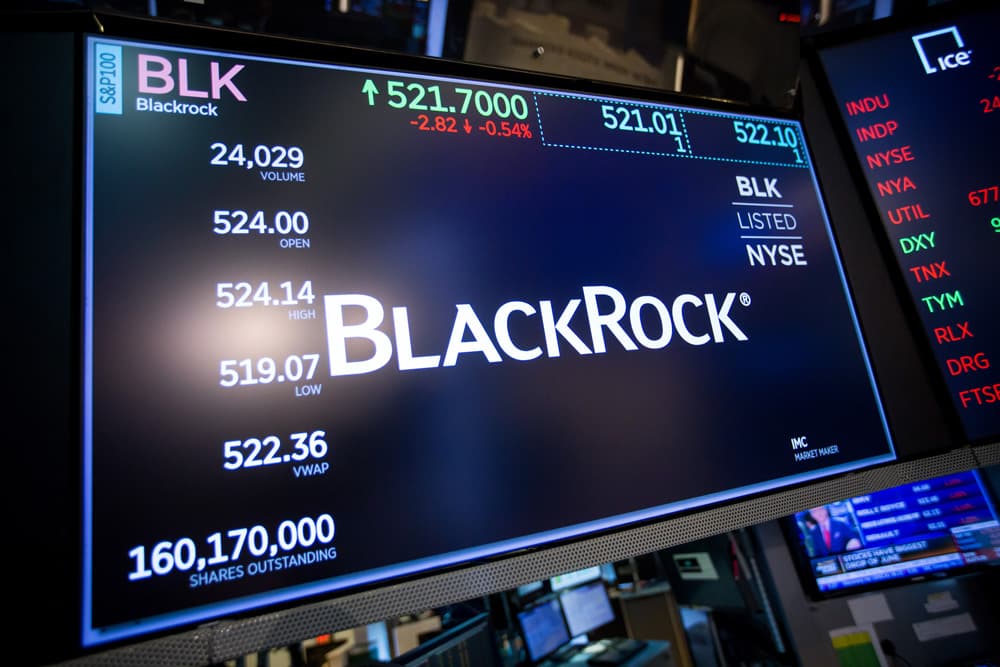
The World Technology Fund strives to maximize overall returns. The fund globally invests at least 70% of its total assets in equity securities of companies whose main economic activities are related to the technology sector.
BlackRock’s business risks, as shown above for steam coal and oil sands, are calculated and reported for companies that generate more than 5% of their revenue from steam coal or oil sands as determined by MSCI ESG Research. For companies that earn any income from steam coal or tar sands (at a 0% income threshold), as defined by MSCI ESG Research, these are thermal coal 0.00% and oil sands 0.00%.
Business Participation Metrics are calculated by BlackRock using data from MSCI ESG Research, which provides each company’s business engagement profile. BlackRock uses this data to obtain a consolidated view of the assets and translates it into the market value of the fund in the business areas listed above.
ESG integration
ESG Integration is the practice of incorporating material environmental, social, and governance (ESG) information or ideas alongside traditional measures into investment decision-making to improve the long-term financial performance of portfolios. Unless otherwise stated in the Fund’s documentation or included in the Fund’s investment objective, the inclusion of this statement does not imply that the Fund has an ESG-focused investment objective, but rather describes how ESG information is viewed as part of the overall investment process.
The fund manager takes ESG considerations into account in combination with other information during the research phase of the investment process. This may include relevant views of third parties, as well as internal communications and comments from the BlackRock Investment Stewardship on governance matters.
The Fund Manager conducts regular portfolio reviews with the Risk and Quantitative Analysis Team and Chief Investment Officers. These reviews include a discussion of the portfolio’s exposure to significant ESG risks, as well as exposure to sustainability-related business borrowings, climate-related metrics, and other factors.
Ventajas de invertir en fondos de inversión
Gestión profesional de carteras
La cartera personalizada está gestionada por profesionales experimentados del sector. Gestionan continuamente su cartera para ayudarle a sacar el máximo partido a su inversión.
Disponibilidad
Puede comprar fondos de inversión de denominaciones más pequeñas, que van de $ 100 a $ 1000. Las denominaciones más pequeñas de fondos de inversión permiten a los inversores hacer inversiones recurrentes como parte de sus planes de compra mensuales regulares. En lugar de esperar a tener suficiente dinero para comprar inversiones más caras, puede invertir en fondos de inversión de inmediato.
Diversificación
Los fondos de inversión pueden invertir en valores de varias clases de activos, como bonos, materias primas o efectivo. Esto ayuda a diversificar la cartera. Si un sector obtiene malos resultados, es muy probable que otros sectores compensen las pérdidas.
Accesible
Invertir en fondos de inversión es muy asequible, ya que un particular puede invertir desde $10 cada mes en un fondo de inversión. No hay una cantidad fija que se pueda invertir. Así, incluso un pequeño inversor puede participar en el mercado invirtiendo en fondos de inversión.
Liquidez
Todo lo que se necesita para salir de un fondo de inversión es una instrucción a su corredor/agente para venderlo. Los fondos se devuelven a su cuenta en 48 horas.
Contras de invertir en un fondo de inversión
Comisiones y gastos
Los fondos de inversión cobran a sus clientes una comisión anual, conocida como ratio de gastos, independientemente del rendimiento del fondo. Puede definirse como el coste de gestión de una empresa. Además, existe una comisión de salida en los planes de fondos de inversión si un inversor desea recomprar las inversiones antes de un determinado periodo de tiempo.
Cláusula de bloqueo
Hay dos tipos de planes de fondos de inversión: uno que permite entrar y salir en cualquier momento se conoce como plan abierto, y el otro tiene un periodo de bloqueo de 3 a 5 años que es cerrado. finalizado el plan. Si un inversor desea recomprar la inversión antes del periodo de bloqueo, tiene que pagar una determinada cantidad en concepto de carga de salida.
No garantizado
No hay ninguna garantía de que su fondo de inversión tenga un buen rendimiento, y técnicamente podría caer a $ 0 si todos los activos subyacentes caen a cero.
Volatilidad
Los fondos de inversión pueden experimentar fluctuaciones del mercado y, en ocasiones, generar rendimientos inferiores a los del mercado general. El nivel de riesgo y rentabilidad depende de en qué invierta el fondo.
Ganancias de capital
Cuando vende una inversión con beneficios, debe pagar impuestos sobre las plusvalías. Con la mayoría de las inversiones, usted controla cuándo las vende, por lo que controla cuándo tiene que pagar impuestos. Los fondos de inversión deben distribuir regularmente las plusvalías que obtienen, lo que le da menos control sobre cuándo paga impuestos sobre las plusvalías. Esto puede dificultar el uso de estrategias de minimización de impuestos, como el cobro de pérdidas fiscales.
Siempre es aconsejable consultar con un asesor financiero y comprender todos los puntos antes de invertir en fondos de inversión. Por eso siempre será bienvenido con cualquier tipo de pregunta, le daremos los consejos adecuados, estrategias y consejos sobre cómo hacer su primera inversión.
¿Le duele la indecisión financiera? ¿Quiere invertir con Adam?
Adam es un autor reconocido internacionalmente en temas financieros, con más de 352,9 millones de respuestas vistas en Quora.com y un libro muy vendido en Amazon.