Brookfield Infrastructure Income Fund (BII) is a $2.3 billion vehicle giving investors access to Brookfield’s global infrastructure platform.
While it offers exposure to essential service assets and stable income potential, it remains limited to accredited investors and carries the risks of illiquidity and private market volatility.
Mis datos de contacto son hello@adamfayed.com y WhatsApp +44-7393-450-837 si tiene alguna pregunta.
La información contenida en este artículo es meramente orientativa. No constituye asesoramiento financiero, jurídico o fiscal, ni una recomendación o solicitud de inversión. Algunos hechos pueden haber cambiado desde el momento de su redacción.

What is Brookfield Infrastructure Income Fund?
BII Fund is a closed, manager-led fund run by Brookfield Infrastructure that invests primarily in private infrastructure equity and debt to generate current income and capital growth.
BII offers monthly subscriptions, monthly distributions, and quarterly repurchase up to 5% of outstanding shares at net asset value (NAV).
The fund launched in 2022 and became available to retail or professional investors across various regions through 2023.
BII Fund Portfolio Allocation, and Sector & Geographic Exposure
- Private Infrastructure Equity makes up the majority at 64%, followed by Private Debt at 14%.
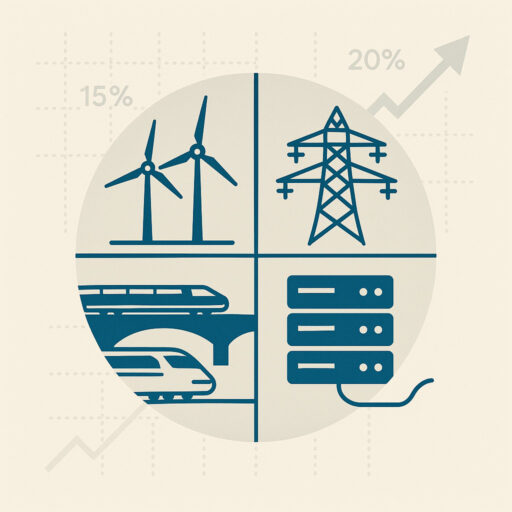
- Diversified across infrastructure, with Renewable Power & Transition as the largest segment at almost 40%.
- Other key areas include Transport and Utilities at 17% to 18% each, Midstream at 14%, and Data Infrastructure at 12%.
- Portfolio is North America–centric at 64%.
- Additional exposure in Global and Europe at 14% to 16% each, with smaller positions in Asia Pacific at 4% and Latin America at 2%.
Brookfield Infrastructure Income Fund Performance
Early period, Jan–Jun 2023, total returns by share class were reported around 2.75% to 4.55%.
As of June 2025, reported performance are as follows:
Class I (11276G306)
- NAV per Share: $10.66
- Distribution Rate (Annualized): 4.25%
- Total Return (Without Sales Load):
- MTD: 0.63% | YTD: 4.66% | 1-Year: 8.18% | Since Inception: 8.25%
- Total Return (With Sales Load): N/A, since there’s no sales load for this class.
Class S (11276G405)
- NAV per Share: $10.63
- Distribution Rate (Annualized): 3.40%
- Total Return (Without Sales Load):
- MTD: 0.57% | YTD: 4.15% | 1-Year: 7.28% | Since Inception: 7.32%
- Total Return (With Sales Load):
- MTD: -2.92% | YTD: 0.48% | 1-Year: 3.54% | Since Inception: 5.07%
Class D (11276G108)
- NAV per Share: $10.54
- Distribution Rate (Annualized): 4.00%
- Total Return (Without Sales Load):
- MTD: 0.71% | YTD: 4.63% | 1-Year: 8.06% | Since Inception: 7.98%
- Total Return (With Sales Load):
- MTD: -1.26% | YTD: 2.54% | 1-Year: 5.87% | Since Inception: 6.48%
BII Fund Investment
Brookfield Infrastructure Income Fund minimum investments are $1 million for class I shares, and $2,500 for both class S and class D shares.
The subsequent investment minimums for these share classes are $500.
BII Fund Fees
Brookfield Infrastructure Income Fund charges a 1.25% annual management fee plus a 12.5% incentive fee on fund income.
Early redemptions, within one year, carry a 2% buyback fee. Distribution fees vary by share class: 0.85% for Class S and 0.25% for Class D.
Pros and Cons of Brookfield Infrastructure Income Fund
Pros
- Access to Brookfield’s global private infrastructure platform.
- Diversified mix of capital riesgo and debt plus a public sleeve for added liquidity.
- Potential for steady income from essential service assets.
- Managed by one of the world’s largest and most experienced infrastructure investors.
Contras
- Limited to accredited and eligible investors, not open to retail.
- Not for short-term investors, people needing highly liquid exposure.
- Liquidity is restricted with quarterly repurchase windows and early exit fees.
- High fees compared to traditional funds.
- Exposure to long-term infrastructure projects can make short-term returns less predictable.
Preguntas frecuentes
Is it safe to invest in infrastructure funds?
Safe is relative. Brookfield’s platform size and track record are positives, but investors must still evaluate credit or leverage, sector concentration, and fund liquidity.
Infrastructure funds are not risk-free but have structural features that can make them lower-volatility and inflation-resistant compared with pure equities: long-duration contracts, regulated cash flows, and high entry barriers.
Safety depends on sponsor quality, asset mix, leverage, and liquidity.
Is an infrastructure fund a good investment?
It can be for investors seeking income, inflation protection, and portfolio diversification —especially if you accept longer lockups or lower liquidity.
Fit depends on your objectives, risk appetite, and whether you prefer private infrastructure or listed infrastructure securities.
Is Brookfield a good long-term investment?
Brookfield Infrastructure is broadly well positioned for long-term investing thanks to its stable, inflation-linked cash flows, diversified global infrastructure portfolio, and consistent history of dividend growth.
But risks like high leverage, rising interest rates, and regulatory exposure mean it may not outperform in volatile markets; it’s more suited for income-oriented investors with patience and tolerance for complexity.
If you’re investing for steady income, capital preservation, inflation protection, and can tolerate modest capital appreciation with lower short-term upside, Brookfield Infrastructure can be an option.
But if you want fast growth, aggressive returns, or highly liquid exposure, then you can explore alternatives, though with potentially more risks.
¿Le duele la indecisión financiera?

Adam es un autor reconocido internacionalmente en temas financieros, con más de 830 millones de respuestas en Quora, un libro muy vendido en Amazon y colaborador de Forbes.