After speaking about the best business accounts for non-UK residents, this article will speak about things from an individual perspective.
This article will, therefore, answer a simple question; what are the best bank accounts, located in the UK, which are good for non-residents?
We will look at things from the perspective of ease of use, fees, security and much else.
Find the best bank accounts for non-UK residents and consider insights from the Revisión del bono de rescate ejecutivo de Utmost International.
Mis datos de contacto son hello@adamfayed.com y WhatsApp +44-7393-450-837 si tiene alguna pregunta.
La información contenida en este artículo es meramente orientativa. No constituye asesoramiento financiero, jurídico o fiscal, ni una recomendación o solicitud de inversión. Algunos hechos pueden haber cambiado desde el momento de su redacción.
Opening a Bank Account
Bank accounts aren’t just for those with wealth to hide – anyone can open them. Basically, the only requirement for opening an account is proof of identity (such as a driver’s license, passport, or government-issued ID).
Some banks accept other forms of identification to open an account, such as a voter registration card from another country.
If you aren’t already using a bank account to manage your finances, there are several good reasons to take this financial step:
- Seguridad: It can be tempting to put money under your mattress, but in the event of a burglary or fire, you are not protected. It is much safer to keep money in a bank account. Even if your bank gets robbed, your bank account is insured, so you won’t lose your money.
- Simplicity: Cash payments may work for you in some cases, but certainly not in all of them. Most standard bank accounts offer the use of a check or debit card in conjunction with opening a new account. By using a checkbook or debit card, you can make a variety of payments and purchases without having to carry around a lot of cash in your wallet.
A bank account can be a great tool for managing personal finances. Account statements can help you determine how and where you are spending your money and set you on the path to a smart savings plan. In addition, there is often interest paid from personal savings accounts, which mostly brings you free money. The interest paid means your money is working more for you.
About UK Banking system
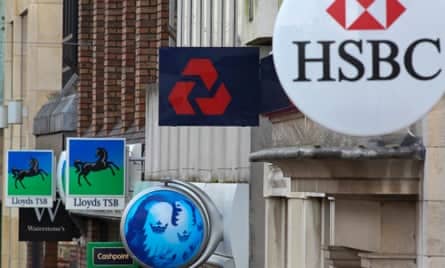
The UK banking sector is comprised of a number of private UK banks, international banks and construction companies.
Several large banks dominate the sector, competing for market position. There are 344 banks and 52 building societies in the UK.
The UK has seen strong growth in online and mobile banking in recent years; about two thirds of the UK adult population use online banking and four in ten use mobile banking. However, physical banking remains popular and there are still around 20,000 branches in the UK.
The country’s central bank is the Bank of England, which has been state-owned since 1946. Banks in the UK are regulated by the Financial Conduct Authority (FCA).
There are several banks in the UK, each offering specific service packages, including services for expatriate residents. Major UK banks have branches on the country’s main streets and offer online and mobile services. Most banks will be open from approximately 09:00 to 17:00. The largest banks in the UK are:
- Barclays
- Halifax Bank of Scotland
- HSBC
- Grupo bancario Lloyds
- Metro Bank
- NatWest
- Royal Bank of Scotland
Opening a UK bank account for non-residents
While living and working in UK as a non-resident, you may need to open a bank account, which can be both saving and checking.
There are no legal barriers to opening a UK bank account as a foreign national, but each bank has its own products that come with different conditions.
Place of residence is usually more important than citizenship, this means that you can open an account if you live in the UK, regardless of your citizenship.
While opening a UK bank account, it may seem easier than a saving account, UK do not put any limits and restrictions for non-residents, it is pretty possible process, but at the same time enough challenging.
To open a UK bank account, no matter it is saving or a checking one, you need two main documents, one to verify your identity and the other to verify your address. This applies both at the branch office and online.
It’s easy to verify your identity. You just need a passport, driver’s license, or ID (if you are an EU citizen).
You will also need to verify your address by providing other documents. Each bank has its own list of documents that are accepted as proof of address. In a broad sense, these include:
- lease agreement or mortgage statement;
- a recent electricity or gas bill (less than 3 months ago);
- a recent bank or credit card statement (less than 3 months old) that is not printed online; or
- current council tax account
But if you are interested in saving some money in the UK but you are not a resident, you may find that you have to look a little harder to find the best savings system for yourself.
But as banks and many other financial institutions strive to meet the financial needs of expatriates, international students and all other non-residents, you will soon find that there are many options for you to try. The only snag, especially in the competitive financial market, is finding the savings account and system that best suits your needs.
Here are some of the things you need to do and consider before setting up a savings account.
- Tipos de interés – Generally, interest rates in the financial arena fluctuate depending on various external factors, which means that you must have an idea of the current rates before you start shopping at banks offering the best savings packages.
- Fines and fees – If you are saving money in a fixed savings account, you should be aware of the applicable fees and penalties, especially if you choose to receive your money before the fixed transaction ends. You will also need to set reminders to make sure your account information is in order and you don’t miss out on some of the benefits.
- Limitations on the number of withdrawals you can make – unless you choose fixed savings accounts, the next best account you choose may have limits on the number of withdrawals you are allowed to make. You may only be allowed to withdraw money a few times during the year or quarter.
- Minimum Deposit – Whether you are a UK resident or not, most, if not all, savings accounts have minimum deposit requirements for savings accounts. Some banks have minimum savings requirements as high as £ 1,000, while other accounts may have minimum requirements as low as £ 1. With these restrictions on the minimum amount of money you can deposit into your account, banks ensure that you don’t miss out on trades or good interest rates. Since banks have a different limit, pay attention to the minimum deposits that work best for you.
- FSCS Protection – There is a limit to how much of your savings will be protected by the FSCS (Financial Services Compensation Scheme). To be precise, only 96% of your savings in the UK will be protected by the FSCS, which means that in the event of bankruptcy, they will only refund 96% of your savings. So, look for stable banks, and also make sure the bank is FSCS authorized.
How to open a UK bank account without proof of address?
Very often non-residents can face such problem called ‘no proof of addresses’. Of course, if you’re new to the UK, you probably don’t have any address.
Fortunately, in recent years, banks have become more flexible about what documents they will accept as proof of address.
For example, if you are visiting the UK to study, many banks will accept a letter from your university’s admissions office confirming your address.
Many banks will also accept a letter confirming your national insurance number, or even a letter from your employer if less than three months old.
Before leaving for the UK, go to your bank and ask to change your mailing address to your UK address, but you can also do this through internet banking.
After the change of address, ask the bank to mail the bank statement to your new address and you will have a document confirming your UK address. This is all, everything is both easy and both difficult.
Large traditional UK banks or online banks, which one?
The largest traditional banks in the UK, that we will discuss in this article are:
- HSBC
- NatWest Group
- Royal Bank of Scotland (RBS)
- En todo el país
Usually traditional are those banks which have real physical branches throughout the country for example, online banks, which provide a UK bank account along with a UK account.
Considering the online bank accounts, they are great if you just need to have a GBP account with UK account number and sort code, and offer debit cards as well. But if you need a bank where you can actually go to a branch, then you should consider a traditional bank.
There are many types of accounts in the UK, but a standard checking bank account is what most people want to use for their day to day use, such as paying bills and getting paid. These accounts usually come with a debit card, checkbook, and overdraft protection. Now let’s see what we found for non UK residents based on our deep researches.
HCBS
HSBC has over 1,100 branches in England and Wales, but fewer in Scotland and Northern Ireland.
The biggest advantage of HSBC is that it operates in approximately 64 countries around the world. If you use HSBC in your home country, they can help you open a UK account before you come here.
A basic checking account is ideal for day-to-day banking. It has no monthly fees and comes with a Visa contactless debit card. You can also rent up to £ 300 per day. However, it is important to note that there is no contractual overdraft on the underlying account.
The student account offers a free overdraft of £ 1000 in the first year of study. For the second year, you can request a £ 2,000 raise. The bank also offers helpful student guides to help you manage your finances more effectively.
There’s no shortage of checking account options with HSBC Bank. Here’s a look at each available account.
Direct checking
The only checking account sponsored by HSBC Direct, Direct Checking, is an online account for day-to-day banking. There is no monthly maintenance fee and only $ 1 is required to open an HSBC account. The debit card comes with a Direct Checking account as well as free use of ATMs at ATMs in the USA on the HSBC network.
Basic banking
For a simple checking account, HSBC offers Basic Banking. This account has no minimum balance requirement and has access to an HSBC debit card. The monthly maintenance fee is $ 1, and after the first eight checks or receipts for withdrawals, HSBC will charge $ 0.35 for each check / withdrawal.
There are also some other checking account options that HSBC offers such as HCBS Advance and HCBS Premier.
Pros:
- No monthly fees on Direct checking or savings accounts
- Competitive rate on the Direct savings option
- Low opening deposit requirements
- No ATM fees charged by HSBC Direct
Contras:
- Less competitive rates on most CDs
- Customer complaints about mobile apps
- Relatively small number of HSBC ATMs
- Hard to find basic information on one of its two websites
NatWest Group
NatWest, founded in 1968, is one of the largest banks in the country with 960 branches across the UK. The bank has been part of the Royal Bank of Scotland group since 2000. In addition to personal checking accounts and banking services, NatWest offers business bank accounts and loans for small, medium and large businesses.
But if you’re just looking for a simple, straightforward, everyday checking account, NatWest might be your place. Its checking accounts can sometimes be offered as joint accounts for you and your partner to make common payments.
Accounts can have several benefits, including an organized overdraft facility, a convenient mobile banking app, and a contactless debit card.
NatWest account was rated as the highest five-star rating in 2018, a testament to the high quality of the account.
Overdrafts can be issued to all NatWest checking accounts. It is a line of credit that allows you to borrow money through your bank account.
So, if you’re a graduate and earning £ 1,000 a month – but due to an emergency, spend everything in your account – you can use your overdraft to keep buying groceries or paying bills. However, as mentioned, this is still a loan and will still need to be repaid.
Pros:
- Online and mobile banking allows you to carry out most of your banking from your computer or phone
- There are no fees charged on many bank accounts, so long as you do not go overdrawn
- Most ATM cash withdrawals are totally free
- Peace of mind as you are banking with one of the largest banking groups in the world
Contras:
- There can be long queues in many banks, particularly at peak times
- High bank charges
- Difficult to speak to your local branch as all telephone numbers take you through to a central number
Royal Bank of Scotland /RBS
The Royal Bank of Scotland was founded in 1727 in Edinburgh and has since merged hundreds of other banks, including NatWest, Child & Co and Drummonds. With subsidiaries in the UK, Ireland, Europe, Asia Pacific and the United States, RBS serves approximately 18.9 million customers.
The Royal Bank of Scotland offers a variety of checking accounts, including:
- Select account – is an everyday current account.
- Foundation account – is a basic account with stripped down functionality.
- Undergraduate and graduate accounts – this is for people who are currently pursuing or have recently dropped out of further education.
- Adept account – for children 11-18 years old.
When sending money overseas, RBS adds margin to the mid-market rate that you see on Google or financial news sites, along with other fees. Here’s what you need to know about the amount it costs to send money via RBS.
RBS exchange rates
The applied margin will be different depending on the currency you are exchanging. That being said, RBS charges high foreign exchange margins across the board and you can expect to pay over 4.5%. Let me give you one example: when exchanging pounds sterling for euros, the margin is 4.58%.
Sending money within the UK using RBS is free of charge using Faster Payment. However, there is a £ 20 charge on CHAPS. When sending money overseas, expect to pay £ 15 online and up to £ 30 when using the phone or branch banking.
Pros:
- RBS is a subsidiary of the NatWest Group – with a total asset base of more than £723 billion.
- Customers can choose between Standard and Urgent money transfers based on how quickly they want their payments delivered.
- Available accounts include Select, Revolve, Student, Graduate, Foundation, Reward, among others.
Contras:
- When making large transfers, RBS’s margins of 4.5% and above can make your transfer expensive.
- Having to pay fees of up to £30 per transfer can prove costly when compared with money transfer companies most of which charge only a fraction of that.
- In a 2019 most users insisted that the bank’s customer service is unsatisfactory
En todo el país
Nationwide offers banking products, but is not technically a bank; its deposit accounts are maintained by Axos Bank.
The Axos Bank and Nationwide partnership offers customers a variety of online options, including a high-yield savings account, an interest check account – no monthly fees – that reimburses up to $ 30 per month at ATMs, and a My Checking account that offers unlimited refunds for internal ATMs.
To qualify for this rate, you need to have direct transfers totaling at least $ 1,000 per month to your My Checking account. Otherwise, you will receive 0.40% per annum.
You can open an account with a minimum deposit of $ 100. There is no monthly fee for this account.
The Nationwide account offers an interest rate of 0.10% per annum for balances up to $ 2,500. This figure is comparable to what you find on some other checking accounts. However, the more money in your account, the more interest you will receive – up to 0.40% per annum with a balance of more than $ 25,000.
There is no monthly fee or minimum balance for this account. The Interest Check Account provides up to $ 30 monthly reimbursement for domestic ATMs – a feature that many checking accounts don’t offer. You can get paid up to two days early using direct deposit and you can ask for free starting checks when you open an account.
Advantage Checking offers tiered interest rates with some requirements. You will receive 0.45% per annum if you set up a direct deposit of at least $ 1,000 per month or if you make at least 10 POS transactions worth more than $ 3 each per month using your account debit card. You can get a highly competitive 0.90% per annum rate by meeting both of these requirements.
There are no monthly fees or minimum balance requirements with this Nationwide account. You can open an account for $ 50. There is no overdraft fee charged on the Advantage Checking account.
Nationwide charges an overdraft fee of $ 25, which is lower than some banks and banking services. This fee can be charged up to three times a day; some companies charge a higher maximum number of times they charge.
There are no fees for overdraft-protected transfers and you will not be charged for a permanent negative balance.
Pros:
- No monthly fees on its Interest Checking and My Checking accounts
- Large ATM network, plus domestic ATM fee reimbursements
Contras:
- Only one branch
- Low rates on certificates of deposit
- $25 overdraft fee can be charged up to three times daily
¿Le duele la indecisión financiera?

Adam es un autor reconocido internacionalmente en temas financieros, con más de 830 millones de respuestas en Quora, un libro muy vendido en Amazon y colaborador de Forbes.