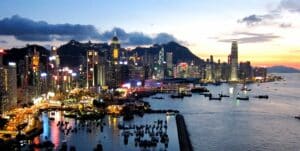
How to buy Hong Kong stocks? That will be the topic of today’s article.
If you are looking to invest in more productive assets, don’t hesitate to póngase en contacto conmigo, correo electrónico (advice@adamfayed.com) o utiliza la función de WhatsApp que aparece a continuación.
Introducción
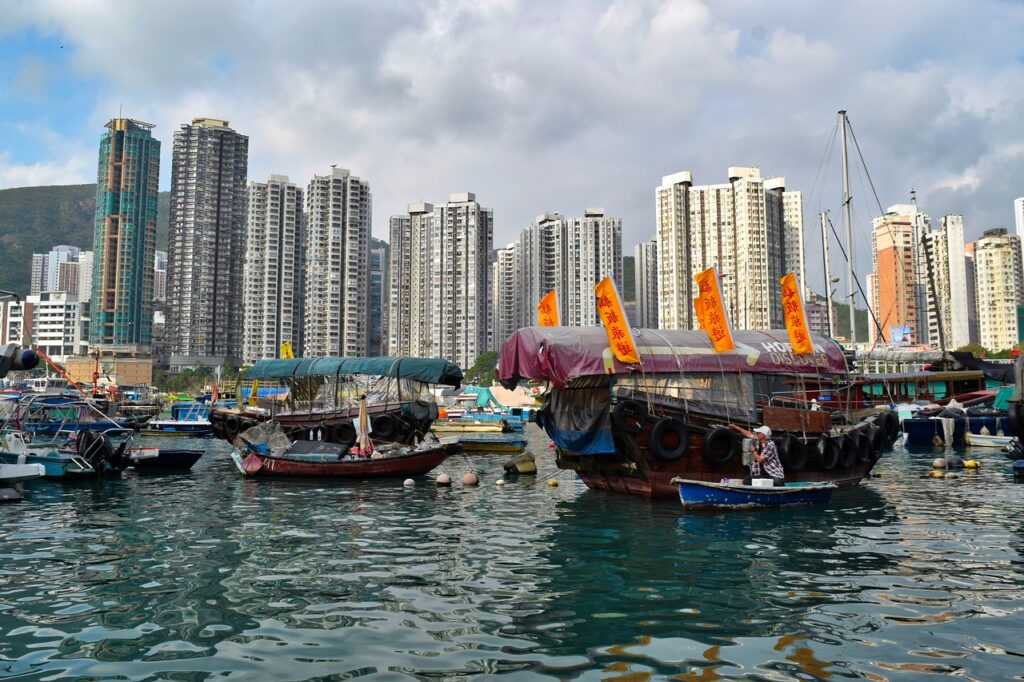
The Qing Dynasty at the end of the First Opium War originally took Hong Kong over by the British Empire in 1842, making the city a colony of the British Crown. After the British won the Second Opium War in 1860, the Qing Dynasty also ceded neighboring Kowloon.
Hong Kong was later leased to the British for 99 years in 1898 and only was returned to Chinese rule in 1997 when it became the Special Administrative Region (SAR) of the People’s Republic of China.
Hong Kong’s financial markets have a long history and began operating with the opening of the first stock exchange in the late 1800s. Since then, Hong Kong has become a leading international financial center with an extremely active and liquid securities market.
The financial sector accounts for almost 19% of the city’s gross domestic product (GDP). In addition, due to the city’s location, strong financial infrastructure and history, it often serves as a gateway for foreign firms seeking access to mainland Chinese markets.
Another important advantage of working in the financial markets of Hong Kong is the lack of capital controls. In Hong Kong, you do not pay local tax on dividend income or capital gains
For those who are ready to invest their money and trade, we will present you a good option -one of the largest stock exchanges and try to explain the systematic process buying stocks. Before that let’s make a quick overview of HKEX.
Honk Kong Stock Exchange (HKEX) Overview
The Hong Kong Stock Exchange (SEHK) was founded in 1891 and is currently the fifth largest stock exchange in the world with a market capitalization of $ 4.4 trillion. In 1999, Hong Kong’s finance secretary announced significant reforms to the stock and futures markets.
These reforms included the merger of the Hong Kong Stock Exchange (SEHK) with the Hong Kong Futures Exchange (HKFE) and the Hong Kong Securities Clearing Company into a single entity that became the holding company of HKEX. The merger of the three companies was announced in 1999 and their operations were merged in March 2000.
The SEHK, Shanghai and Shenzhen stock exchanges represent the lion’s share of the Asian securities market and have a total market capitalization of over $ 10 trillion.
The oldest and main SEHK stock market index is the Hang Seng Index, which includes the 50 largest companies listed on SEHK. The index was launched in 2001 to provide a broader benchmark covering approximately 95% of SEHK’s total market capitalization.
The Hong Kong dollar (HKD) is the currency used in Hong Kong and is currently ranked 14th among the world’s most actively traded currencies by world turnover by the Bank for International Settlements (BIS). The Hong Kong Securities and Futures Commission (HKSFC) is Hong Kong’s primary financial regulator and is responsible for overseeing trading in local equity markets, foreign exchange markets and CFDs.
Since 1993, HKEX has been using the Automatic Reconciliation and Execution System (AMS). The exchange is located in Hong Kong, an autonomous territory of China and one of the world’s leading financial centers.
There are 2,062 companies listed on the exchange with a market capitalization of HK $ 29.42 trillion.
HKEX companies include well-known and actively traded companies such as Tencent, PetroChina, Sinopec, HSBC and The Evergrande Group.
The main index is called the Hang Seng Index (HSI), it tracks the dynamics of the 50 largest companies in 4 sectors of the Hong Kong economy.
Thus, this index is a criterion for evaluating the Hong Kong stock market, the same as the Dow Jones Index for the American market. Another important index is the S&P/ HKEX GEM, representing companies that make up 75% of HKEX’s capitalization.
Stock trading in Hong Kong
In addition to the notable tax benefits of Hong Kong stock trading, the region is also an important place to invest in mainland China stocks. Some of the more recognizable Hong Kong stocks include Baidu (Nasdaq: BIDU), Alibaba (Nasdaq: BABA), and Tencent (OTCBB: TCEHY).
The highest concentration of equity in Hong Kong stocks comes from 539 financial sector stocks with a market cap of over $ 2.3 trillion. The financial sector is followed by technology services, retail, medical technology, and durable and consumer durables.
Since the end of the open trading method in 2017, all trading on the exchange has been carried out electronically through the Automatic Matching and Execution System (AMS). AMS was upgraded in 2000 and can be used to trade warrants, commodities, currency pairs, and fixed income products.
If you are located outside Hong Kong, many of the largest and most capitalized Hong Kong companies listed on SEHK can be traded on major US stock exchanges through American Depositary Receipts (ADRs).
No matter where you trade, you can open an international brokerage account that gives you access to trade Hong Kong stocks directly on SEHK or through ADR on US exchanges.
To start buying Hong Kong stock, you need to take the following steps:
Step 1. Open a trading account.
To trade in any financial market, you need to open a trading account with a trusted broker, whether you are based in Hong Kong or elsewhere. You can sign up for a local brokerage account with a Hong Kong broker as a foreigner, anyways be aware that restrictions and limitations may apply to citizens of certain countries (such as the US).
Stockbrokers based outside the US must be registered with the US Securities and Exchange Commission (SEC) and comply with the Foreign Account Tax Act (FATCA) in order to accept US clients. This is one of the reasons many local Hong Kong brokers refuse to accept US clients.
While there may be significant hurdles for foreigners opening an account with a local Hong Kong broker, the savings on fees can be significant. For example, Fidelity Investments charges HK $ 250 (US $ 32) per trade on SEHK, while a local Hong Kong broker only charges HK $ 8 (US $ 1) per trade.
If you choose to open an account with an international online broker, you will be able to trade some Hong Kong stocks using ADRs listed on US exchanges with no commission. For example, brokers such as Robinhood and E * TRADE offer commission-free trading in US-listed stocks and ADRs, which will include ADRs on some Hong Kong stocks.
Step 2: Fund your trading account.
If you are based in Hong Kong, you probably have a Hong Kong bank account from which you can transfer funds to a brokerage account. For traders based outside of Hong Kong, many brokers will allow you to open an account with no minimum deposit, although once you decide to buy shares, you will have to deposit the appropriate amount into the account.
Some brokers, especially those outside the US, usually ask for a minimum deposit to buy stocks. You will also need to provide proof of your identity and address, and most brokers screen account holders to determine their level of experience in the financial markets using the know your customer (KYC) protocol.
Step 3. Get a trading platform.
After completing the steps above, you will have a funded stock trading account with either a Hong Kong-based stockbroker or an international broker. If you plan to trade online, you need to access a trading platform supported by your chosen broker.
Some platforms run on the Internet, while others need to be downloaded to your desktop or mobile device. Make sure you know how to use the platform correctly before opening a live trade.
Step 4: Buy Hong Kong Stock.
You can now start buying Hong Kong stocks. Your choice of broker will determine whether you can do it directly on SEHK or through ADRs listed on a major US exchange.
What can HKEX offer you?
The Hong Kong Exchange (HKEX) is part of the HKEX Group and offers services to investors in three main markets – securities, futures, metals. The first two markets are traded in Hong Kong, with metals traded on the LME (London Metal Exchange), which is also part of the HKEX Group.
The range of traded securities is very wide: stocks, bonds, ETFs, REITs, structured products are listed. Futures are available for indices, stocks, currencies and commodities.
Metals
The range of available metals is quite extensive: in addition to precious metals (gold, silver, platinum, palladium), rare earth metals (cobalt, molybdenum, lithium), ferrous and non-ferrous metals (aluminum, copper, nickel, zinc, lead, tin) are available.
Each type of metal has its own trading conditions. For some commodities, the spot market is available, and some can be bought exclusively through futures. Deliverable futures are offered for some metals, while only settlement futures are available for others.
The lineup of forward contracts also varies from metal to metal. For example, gold futures are available with delivery in two years, and copper is traded in spot modes, delivery in three months, delivery in December.
Futures and options
In addition to the usual for every futures exchange contracts for indices and shares, the Hong Kong Exchange offers a rather unusual instrument – dividend futures. Traders can use this contract to trade expectations of future dividends on Hang Seng stocks.
In addition to contracts for the index and shares, futures for currencies, interest rates and commodities are available to participants. The currency futures market is represented by seven currency pairs.
Almost all of them are settlement, delivery contracts are provided only for dollars and yuan.
The interest rate futures market is represented by two contracts: one-month and three-month HIBOR – the rate of interbank lending of Hong Kong banks when trading instruments denominated in currencies other than HKD.
Of the goods on the Hong Kong Exchange, only non-ferrous metals and gold are available.
Many contracts are settlement contracts. An exception is made for gold. Each contract has its own trading hours, consider this when making transactions. Nevertheless, almost all futures are traded almost around the clock.
Valores
In total, the exchange has a listing of about 14 thousand securities. This number includes both the usual stocks, bonds, ETFs, REITs, and more complex products.
Derivative warrants. Essentially, there are no ordinary options, buying or selling the underlying asset. The difference is in the form of emission. In the case of an option, any market participant can act as an issuer, for this you need to become a seller of the contract. In the case of derivative warrants, the issuer is a professional market participant, usually an investment bank, and these securities are issued centrally. The circulation period is from six months to two years.
Inline warrants. On the expiration date, the investor receives one Hong Kong dollar for each inline warrant if the price of the underlying asset has remained within a certain price band, and 0.25 HKD if the price goes outside the limits. Due to the nature of the instrument, the price of a warrant should not exceed one Hong Kong dollar. As in the case of derivative warrants, the issuer of these securities is a professional market participant not associated with HKEX. The circulation period is from six months to five years.
Callable Bear \ Bull Contracts (CBBS). When you buy a contract of this type, you are buying an option in the money. The essential difference is that if the price moves against you and reaches the strike, the loss is automatically fixed, the contracts expire ahead of schedule, and trading is terminated. CBBS are issued by professional market participants not affiliated with the exchange. The maturity of such securities is from three months to five years. Contracts are settlement contracts, deliveries of underlying assets are not provided.
Features of listing securities on HKEX
The first thing that immediately catches your eye when you start trading on the Hong Kong Exchange is tickers.
Commonly, stock symbols are used on the stock exchanges around the world, for example, AAPL for Apple stock or V for Visa. In Hong Kong, tickers are exclusively digital. For example, the Hang Seng Bank has a stock ticker of 00011. This can be confusing at first, because with stock symbols, just a glance at the ticker is enough to determine which stock is in front of your eyes.
The next unusual feature of trading on the Hong Kong Exchange is the lot size. At the Moscow Exchange, we are used to the fact that the lot size is a multiple of ten, or the securities are sold individually. The system is roughly the same in the USA. There are lots of 10, 200, and 6,000 securities on HKEX. There are also more exotic lot sizes. For example, Eurobonds of the Bank of China (ISIN: XS2125922349, HKEX: 04619) are traded in lots of 14,033 securities.
Five tips for beginner investors on how to choose a stock to buy
Stocks are perhaps the most common investment tool. And they are great for both beginners and professional investors. Let’s figure out how to choose and buy suitable stocks.
Choose the field of activity of the company
The choice of the industry should be based on your interests and experience. For example, if you’re good at interiors, look at furniture and home furnishings manufacturers.
If you love computer games – take a closer look at game developers and video card manufacturers. It is better to choose not one industry, but several, since you will need to distribute your investments.
You will be better savvy in companies that affect your personal or professional interests. And it will be easier and more pleasant to follow their activities in the future.
Explore companies in your chosen field
Compare companies in the same industry: Maybe dark horses are performing better than established industry leaders right now. To do this, go to the website of the exchange you are interested in (MICEX, NYSE or NASDAQ) and see the list of traded assets. Or, for example, here. Of course, becoming a shareholder in a large company sounds good and is, by definition, more reliable. But the players of the second echelon cannot be deprived of attention either, since their shares can take off at any moment. Such highs can literally make shareholders rich. Make a list of companies that you find interesting. Each of them must be thoroughly studied.
Explore company news
The plans of the company directly affect your income from investing in it. If a company plans to release a new product, if it has made a discovery, this can play into your hands. Anything new generates interest and, therefore, increases the likelihood of a rise in the share price, although it is not a guarantee of quick returns. For example, a change in management can both positively and negatively affect the company’s business, and therefore its value. Nor should you think that companies are always growing rapidly. Many heavyweight corporations are growing slowly but surely.
Explore the dynamics of the company and the industry
Evaluate the dynamics of the company and the industry in which it operates over the past few years. If the growth rates are falling or even worse have become negative, then you should not look in its direction. Buying stocks after a period of sharp growth is like jumping on the last car of a train.
The dynamics of these businesses tend to be healthier and more predictable, and predictability always reduces risks. Based on the financial statements, predict its future and assess whether you are ready to be a shareholder of the company with that future. It is also not necessary to forget about probable negative events, this will help to soberly assess the risks and your attitude towards them.
Collect a portfolio
Some of the companies from the initial list will be eliminated during the detailed consideration of the previous points. Some of them are in economic decline, some are already at the peak of their prosperity, etc. As a result, you will be left with a list of one, two or more market players. Which of them has the greatest prospects, according to the analysis carried out earlier, the shares of that should be purchased. It is not necessary to dwell on one company from the field of activity. You can invest in the shares of two or three competitive companies, and only then monitor whose performance will be better.
Try to have 10-12 stocks in your portfolio so that the possible fall of one asset is offset by others. As we mentioned earlier, you need to invest in different areas of activity.
Is HKEX a stock market to invest?
After a year of massive protests and an economic downturn caused by the global coronavirus pandemic, Hong Kong stocks have plummeted. By the end of 2020, however, mainland investors had bought about $ 86 billion in shares from SEHK, the highest since trading with offshore exchanges began in 2016.
In addition, new Hong Kong companies raised more than $ 51.3 billion in initial and secondary public offerings. This indicates that the recent low performance in Hong Kong stocks may end.
While the prospects for profitable investment in Hong Kong appear promising, the current geopolitical tensions may make many large investors wary of investing in the region. The current economic environment offers cautious investments in reliable companies, but only with high risk tolerance.
We hope this information and tips will help you in your further investment career, and guide you to a successful trading. Considering the fact that China is one of the largest and one of the most powerful countries on his planet, we can conclude that HKEX is enough good stock market to make an investment and never lose.
¿Le duele la indecisión financiera? ¿Quiere invertir con Adam?

Adam es un autor reconocido internacionalmente en temas financieros, con más de 252 millones de respuestas en Quora.com y un libro muy vendido en Amazon.
Lecturas complementarias
En la respuesta que figura a continuación, extraída de mis respuestas en línea en Quora.com, hablo de las siguientes cuestiones y temas:
- Como expatriado británico de veintitantos años, ¿qué consejos puede dar para jubilarse a los cuarenta?
- ¿Por qué los expatriados estadounidenses en el extranjero pueden invertir más (a veces) que cuando viven en Estados Unidos?
- ¿Qué cambios podemos esperar que afronten los expatriados en Oriente Próximo en los próximos años o década?
- ¿Cómo pueden subir las bolsas durante una pandemia?
Para más información, haga clic en el siguiente enlace.