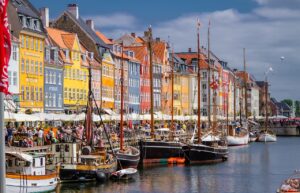
How to invest in stocks in Denmark 2021 – that will be the topic of today’s article.
Nada de lo aquí escrito debe considerarse asesoramiento jurídico ni de ningún otro tipo, pero hemos hecho todo lo posible por garantizar su exactitud.
Si desea invertir, no dude en póngase en contacto conmigo, correo electrónico (advice@adamfayed.com) o utiliza la función de WhatsApp que aparece a continuación.
Many people are especially eager to know how a non-resident can invest into share markets such as Denmark.
Introducción
Favorable geographic location and skilled workforce make Denmark an interesting country for foreign investment.
Assessment of the business environment in Denmark according to economic intelligence is more flattering – “Denmark has the most favorable business climate in the world” (EIU business environment rating 2008-2012) a large share of this location has a high level of integration of information technology, financial services and quality of implementation politicians sustainable development.
Other positive factors are relatively low inflation, high productivity, and reasonable operating costs (rental of premises, communication fees).
Denmark highly values its Doing Business 2010 report the other large institutions – the World Bank, and in terms of market conditions (low administrative burden, use of modern communication technologies, knowledge of foreign languages, etc.).
Of the 183 countries in the world ranked based on the “Ease of Doing Business Index”, the Nordic countries ranked 2nd in European countries and worldwide at 6th place. Out of other countries, the EU ranks among the best in the UK, Ireland, and Finland.
The best way to invest in Denmark is to buy shares of the Copenhagen Stock Exchange, which is enough cheap and income promising.
More about Copenhagen Stock Exchange
The Copenhagen Stock Exchange trades a variety of financial instruments. It trades securities (stocks, bonds), monetary instruments (treasury bills), futures, and options on interest rates and indices, as well as deals on the stock price index.
The Copenhagen Stock Exchange was established by decree of Christian IV in 1625 and for 350 years (until 1974) occupied an elegant building with a spire on the island of Slotsholmen. In 1996, the Copenhagen Stock Exchange was transformed into a joint-stock company.
As a result of the transformation, 60% of the stock exchange’s shares ended up in the possession of the exchange members and 20% each – to the issuers of shares and bonds traded on the exchange.
Since the Copenhagen Stock Exchange is universal, futures and options are traded on it. Among them – futures and options on the KFX index and futures and options on stocks.
The Copenhagen Stock Exchange is the sixth/seventh largest bond market in Europe in terms of transaction volume and market value of bonds traded. This market is characterized by high liquidity due to the presence of government and mortgage bonds.
By the end of 2000, shares of 235 companies (including 10 foreign ones) were listed on the Copenhagen Stock Exchange, which, given the scale of the Danish economy, should be considered a very successful indicator.
The key stock index is OMX Copenhagen 20, which includes 20 of the most liquid securities.
Investing in Copenhagen Stock Exchange
Many people are easily intimidated by the thought of investing in the stock market. Less information, less experience, and the plethora of horror stories we hear from people who have suffered huge losses in the stock market can exacerbate this fear.
While investing in the stock market can be risky, it can be one of the most effective ways to build equity capital if approached in a well-organized manner.
As one of the richest and most innovative countries in the world, Denmark has a foreign exchange market and capital markets that can be enjoyed by indigenous people and people from all over the world. This is made possible by Denmark’s small but open economy, which supports free trade. In addition, the economy is characterized by an impartial circulation of income and a high level of administrative services.
The stock market is controlled by the NASDAQ Copenhagen Stock Exchange, also known as the Copenhagen Stock Exchange, which is Denmark’s main stock exchange headquartered in Copenhagen. The Copenhagen Stock Exchange is one of the eight stock exchanges owned by Nasdaq Nordic.
Nasdaq Nordic is a subsidiary of Nasdaq that operates stock exchanges in the various Baltic and Nordic countries. In addition to managing stock exchanges in these countries, Nasdaq Nordic also provides 80% access to the securities markets.
Let’s make clear some basic things such as stock market, stock exchange or shares.
Bolsa
These are secondary markets where existing shareholders can transact with potential buyers. In Denmark, platforms like Saxo offer you the opportunity to trade the stock market at very reasonable prices. It is worth noting that buying a stake in the stock market means that you are buying it from an existing shareholder, and not necessarily from the company through which you buy it.
Having understood what the stock market entails, let’s now look at some of the most likely terms you might come across in the stock market.
Stock
These financial instruments, also known as shares, are used to represent the ownership of the company and its proportionate asset claims. This gives shareholders the right to vote as well as the right to claim dividends and capital gains from corporate income.
Stock market
Stock markets are platforms where people and savvy investors meet to buy and sell stocks on a public street. Thanks to digitalization, these exchanges are mainly carried out through electronic trading platforms.
Share prices
Stock prices are usually set by supply and demand in the market. This is usually determined during the process of placing buy and sell orders. To ensure a free and fair market, the order and order flows are usually controlled by market makers or specialists.
How are these share prices set? The stock price in the stock market can be set in various ways. However, an auction is the most common way of determining the price of a stock. This is where buyers and sellers usually place bids and offer to buy or sell.
A bid is the price at which a person wishes to buy a stock, and an offer, also known as an ask, is the price at which a seller wishes to sell his stock. When the moment comes when the bid and offer coincide, the deal is automatically executed.
Denmark is known for its low rates when trading stocks and forex. You can never go wrong when investing in the Danish Stock Exchange. The weak Danish krone leads to a decrease in foreign direct investment, which leads to a decrease in demand for the currency
Consequently, a weak currency with low demand is largely in favor of exporting firms as they see their profits increase. Thanks to the greater influx of money from exports, the Danish stock market has shown rapid growth. The Danish krone is currently trading on the weak side of its US dollar, euro and British pound equivalents.
How to invest in the Danish stock market?
The Danish stock market operates outside Copenhagen and is part of the OMX network. Investors in large Danish companies work through the Copenhagen Stock Exchange to invest in the Nordic economy. Your interest in the Danish stock market should motivate you to invest wisely and maintain a tiered portfolio.
Explore brokerage firms that are members of the Copenhagen Exchange. Several dozen brokerage firms have been longtime participants in the Danish stock market. These brokers are listed on the stock exchange, allowing you to move your investments quickly.
Apply conditions when you invest in the Danish stock market. The Copenhagen Stock Exchange allows you to set a maximum price to buy shares, a minimum share to sell shares, and a predetermined time for transactions. These conditions are ideal for the SAXESS trading system due to delays for foreign investors.
Post collateral with your broker or bank when you trade futures and options on the Copenhagen Stock Exchange. Exchange rules require investors to provide stock, money, or property to protect the bank from speculative transactions such as derivatives.
Read the client agreement that your broker provides you for trading Danish stocks. While the Copenhagen market follows international trade rules, foreign investors must comply with certain banking and commercial rules in Denmark.
Increase the strength of your Danish portfolio with Nordic Exchange through OMX. This exchange instantly connects investors across Copenhagen to markets in Scandinavia and the Baltic countries.
Enhance the security of your overseas portfolio by purchasing Danish government bonds. These bonds guarantee income from issuing bodies, which include Danish cities, the federal government and large corporations in need of financial support.
Take advantage of the growing technology market in Northern Europe with the Copenhagen KVX Index. This index includes dozens of medical technology, software and other high-tech businesses that have shown significant growth over the past few years. Use KVX and other indices only after you develop an understanding of the Copenhagen Stock Exchange.
What you need?
For beginners it can be quite complicated the idea of making an investment in a stock market, that is why we will try to make you aware of many things and we’ll start with the main requirements. Let’s first take a look at what you need to start investing.
- PAN card – a PAN card is required to invest in stocks.
- The Demat Account is the account that will hold the stock in the buyer’s name. You can open a Demat account with any member of the depository. Most banks offer Demat account services. Next generation investment platforms also offer hassle-free Demat account opening.
- Trading account – To start investing in the stock market, you will need a trading account with a stock broker. Remember, stock brokers, sign up on exchanges. While most high quality stocks are listed on both primary exchanges (BSE and NSE), some may only be available on one of the two. Make sure you open a trading account with a broker registered on both the BSE and the NSE.
- Tied Bank Account – As you invest in stocks, you will buy and sell over time. Hence, you will need a bank account linked to your merchant account to ensure the smooth flow of money to and from your account when making transactions.
Also some important documents:
- A canceled check from your bank account with your name on it
- Confirmation of address (from the list of documents accepted by the bank / depositary member / broker)
- Prueba de ingresos
- Photos
With these accounts in place, you are ready to begin your investment journey into the stock market.
Things to remember before investing: for beginners
Now that you understand the basics, let’s see what else to consider before investing.
1. Study your investor profile
Each investor is unique. Hence, you must make sure that you are investing based on your investor profile. Here are some points that will help identify your profile:
Financial Goals – Define your financial goals. What are you trying to achieve? Pension Corps? Funding your world tour? Planning a marriage? Thinking about buying a home? These goals will help you understand how and in which stocks to invest.
Risk tolerance – how much risk can you withstand? If you invest in a stock as strong as Tata, the price will not go up or down that much. It will be relatively stable. On the other hand, if you are investing in a small company that looks promising, then every small achievement will drive up the value of the stock, and failure will lead to ruin. You need to determine how much volatility you can handle without panicking or making bad decisions.
Investment horizon. Investing in stocks usually brings good returns over 7-10 years (long term). Based on your financial goals, determine the period during which you want to invest in certain stocks.
2. Study the company before investing
If you don’t trade, don’t make investment decisions based on stock prices alone. Investing in stocks is a marathon, not a sprint. Hence, you need to invest in stocks that can last a long way and also generate good returns.
One of the best ways to find such stocks is to look at the company’s financials. Without complicating matters, just try to assess whether the company is financially sound and can withstand any economic shocks that the future may bring. A strong company usually attracts positive investor sentiment and a higher share price.
3. Choose your strategy and assets
Decide what you will invest in. Stick to a specific strategy, but what is a strategy?
A strategy is unite of investment criteria that help you understand your behavior on the exchange: what assets you trade, how often you sell, what is your guide when making decisions.
The simplest version of the strategy – is up to you:
- assets;
- the period for which you want to invest;
- the maximum amount of losses.
Let’s say the assets are shares of pharmaceutical and chemical companies, the period is 1 year, the amount of losses is 20%. In this case, you immediately sell assets if they have fallen in price by 20%, even if the year has not passed yet.
In case you decided on trust management, then you also have to decide on a strategy. Only in this case you will choose from the offers that are already on the market.
3. Diversification
Since investing in stocks carries market risk, it is important to make efforts to minimize the risk of your stock portfolio. The best way among many others, to reduce risk is through diversification. That’s why:
- If you invest in too many banking stocks and any policy change or international event negatively affects the banking sector, then a huge portion of your investment could be affected. Hence, when investing, make sure you diversify sectors and industries.
- If you invest in stocks of companies headquartered in Mumbai and some incident stops Mumbai from operating, it could affect your bottom line. Remember that diversify across cities, states, and even countries to minimize this impact.
- We all love to bet on the dark horse. In the stock market, small-cap stocks are the proverbial dark horse, and large-cap stocks are defending champions. While choosing any of these is your decision, it is best to invest in any market capitalization.
4. Track your investments regularly.
While many investors believe in the “put and forget” concept, investors should keep track of their investments. The stock market is a volatile place. By tracking your investments, you can identify selling opportunities and rebalance your portfolio to maximize returns. You can also limit your losses by selling non-performing stocks before they bottom out.
Advantages and Disadvantages of Investing in Stocks
Invertir en cualquier activo -ya sean valores, divisas, oro, bitcoins, todo tipo de startups- es un negocio muy interesante y, sobre todo, rentable. Invertir en valores reporta buen dinero a los inversores alfabetizados, pero, como en otros mercados financieros, tiene sus propias ventajas e inconvenientes.
The main advantages of investing in the stock market
Invertir en acciones tiene muchas ventajas. No en vano, el número de clientes crece rápidamente en todo el mundo y los beneficios de las transacciones aumentan mensualmente desde hace bastante tiempo. Pero veamos más de cerca estas ventajas:
- Invertir en acciones es una de las formas más populares de aumentar su capital de forma constante.
- A diferencia de muchos otros instrumentos de los mercados financieros, las acciones son un activo real. Como suele decirse, se pueden tocar con las manos.
- Al comprar acciones, el inversor, de hecho, adquiere una parte del negocio de la empresa que emitió estos valores.
- Con una fuerte subida del valor de las acciones en bolsa, el inversor puede obtener unos ingresos muy, muy sólidos.
- Al invertir en acciones, se puede ganar no sólo por la variación de su valor de mercado, sino también por el cobro de dividendos.
- Al tener un número suficiente de acciones, puede influir directamente en las actividades de la empresa.
- Las actividades del mercado de valores y las bolsas están reguladas por las leyes pertinentes. Además, el Estado protege los fondos de los inversores a nivel legislativo.
- Cada corredor que opera en el mercado de valores está obligado a pasar el control del Banco Central de la Federación Rusa y obtener una licencia bursátil.
- Incluso utilizando los servicios de la gestión fiduciaria, el inversor sigue participando directamente en la gestión de su depósito.
- En definitiva, invertir en bolsa es simplemente interesante y proporciona cierta cuota de implicación en las actividades de las empresas líderes en sus sectores.
The main disadvantages of investing in stocks
But of course, where there are advantages, there are also downsides. Let’s look at the disadvantages of investing in securities.
- El mercado de valores, como cualquier otro, no puede predecirse con antelación. Existe un elemento de riesgo en él: puede aumentar significativamente sus inversiones, o puede perderlas. Además, cuanto mayor sea el beneficio potencial, mayores serán los posibles riesgos.
- Para influir en las actividades de una empresa es necesario tener un número determinado de acciones, es decir, ser accionista mayoritario.
- Alto, en comparación con otros mercados, el umbral de entrada. Por ejemplo, para recibir una cantidad tangible de dividendos, es necesario comprar un número significativo de acciones.
- Es imposible comprar acciones por cuenta propia, todas las operaciones en bolsa se realizan a través de un corredor o una sociedad de gestión.
- Además de los posibles beneficios o pérdidas, el inversor también incurre en costes adicionales. Por cada operación, ya sea reponer un depósito o retirar fondos, comprar o vender acciones, prestar servicios a un depositario, el corredor cobra una comisión.
- Los beneficios en bolsa se gravan en consecuencia.
¿Le duele la indecisión financiera? ¿Quiere invertir con Adam?
Adam is an internationally recognised author on financial matters, with over 262.3 million answers views on Quora.com and a widely sold book on Amazon
Lecturas complementarias
En el artículo que figura a continuación, extraído directamente de mis respuestas en línea en Quora, hablo de las siguientes cuestiones y temas:
- ¿Es el ETF de Vanguard una buena inversión a largo plazo? Teniendo en cuenta que hay muchos tipos de ETF, desgloso la pregunta y comparo Vanguard con competidores como iShares.
- ¿Cuáles son los mejores recursos para comparar las diferencias de coste de la vida para quienes desean vivir en el extranjero? El llamado índice Big Mac, ¿es un buen indicador del coste de la vida si te trasladas al extranjero?
- ¿Qué inversiones, y de hecho qué plataformas de inversión, son globalmente portables para los expatriados y quienes sospechan que podrían jubilarse en el extranjero?
- ¿Cuáles son las desventajas de tener un alto nivel educativo? Analizo muchos de los aspectos positivos y negativos, incluso desde mi propia perspectiva como alguien a quien no le gustaba la escuela de negocios.
- ¿Estamos realmente en una burbuja bursátil? Comparo los mercados bursátiles estadounidenses con sus valores históricos y con los actuales ratios CAPE de Europa y los mercados emergentes. Y lo que es más importante, ¿por qué son tan importantes los tipos de interés para los precios de los activos?
Para más información, haga clic en el siguiente enlace.