Managing wealth across countries means adapting your strategy to local laws, taxes, and financial systems.
There’s no blanket approach. What works in the US might not work in the UAE or Singapore.
From choosing the right banking structure to navigating foreign tax rules, international gestión de patrimonios requires careful planning. Yet, many fail by applying domestic-only thinking to global problems.
In this guide, you’ll learn:
- Cross-border wealth management meaning
- Wealth management importance
- How to manage wealth effectively
- Wealth management challenges
- How wealth management fails
Mis datos de contacto son hello@adamfayed.com y WhatsApp +44-7393-450-837 si tiene alguna pregunta.
La información contenida en este artículo es meramente orientativa. No constituye asesoramiento financiero, jurídico o fiscal, ni una recomendación o solicitud de inversión. Algunos hechos pueden haber cambiado desde el momento de su redacción.

What Is Cross-Border Wealth Management?
Cross-border wealth management refers to organizing and protecting assets held in multiple jurisdictions. It includes banking, investments, estate planning, and tax strategies tailored for international exposure.
Why Wealth Management is Important
Managing wealth globally helps reduce risks, protect assets from political or economic instability, and unlock better investment opportunities. It’s not just about convenience; it’s about smart global positioning.
Why Wealth Management Varies Across Countries
Each country has unique tax laws, investment regulations, and currency risks that shape how wealth should be managed.
Por ejemplo, holding property in Thailand may involve foreign ownership limits, while investing in US markets from abroad may trigger withholding taxes or FATCA compliance.
Managing wealth globally means adjusting for local complexity, not just diversifying assets.
Wealth Management in the UK
The UK is a mature wealth management hub—but one that comes with high taxes and complex inheritance rules.
Inheritance tax (IHT) is 40% above the nil-rate band of £325,000, which makes estate planning crucial.
Investment structures like ISAs offer local tax benefits but aren’t recognized abroad.
Many HNWIs use UK-resident trusts or offshore structures to protect wealth, but these require expert legal coordination to stay compliant with HMRC.
Wealth Management in the US
The US has one of the most powerful financial systems but also the most far-reaching tax rules in the world.
Many underestimate how complex investing as a US expat can be, especially with global reporting obligations and strict tax treatment of foreign assets.
Opciones de inversión may also be limited, as many foreign banks and platforms restrict access due to FATCA and other US regulations.
This makes wealth management particularly challenging abroad.
Some wealthy Americans use fideicomisos irrevocables or private placement life insurance (PPLI) to manage wealth and tax exposure.
How Investors Manage Wealth Effectively Across Multiple Countries
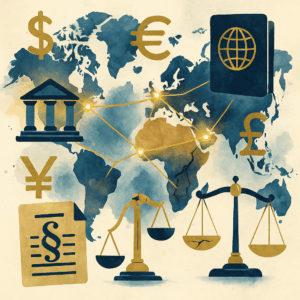
To manage wealth across borders, you need to combine tax awareness, legal compliance, asset protection, and currency diversification.
The most effective strategies involve:
- Understanding the Local Tax and Legal Framework
- Choosing the Right Banking and Investment Structures
- Structuring Wealth Across Jurisdictions
- Using Cross-Border Estate Planning Tools
- Working with Global Advisors
- Staying Compliant With Reporting Rules
- Planning for Currency and Inflation Risks
1. Understand the Local Tax and Legal Framework
Start by understanding local tax laws, inheritance rules, and residency definitions. These will impact everything from your returns to your estate plan.
Most countries tax residents on their worldwide income. Some, like the UAE or Monaco, don’t impose impuesto sobre la renta, making them attractive for tax planning. Others, like the US, tax based on citizenship even if you live abroad.
France and Japan, for instance, have steep inheritance taxes. In contrast, countries like Singapore and Australia impose none. This matters if you plan to pass on wealth or receive cross-border gifts.
2. Choose the Right Banking and Investment Structures
Use local and offshore bank accounts, trusts, or holding companies to structure your wealth legally and efficiently.
Offshore banking in jurisdictions like Jersey or Switzerland offers privacy and tax neutrality, if declared properly. It’s commonly used by global families, but requires transparency and compliance.
Some countries restrict foreign access to local markets. In India, for example, foreign individuals face tight limits. Managed funds or ETFs listed elsewhere may provide better exposure.
How to Structure Wealth
The best way to structure international wealth is through diversification, legal vehicles, and expert coordination.
- Use of Offshore Trusts or Foundations. Fideicomisos offshore protect assets and offer privacy, while remaining tax-compliant if properly set up. Ideal jurisdictions include Jersey, Singapore, and the Cayman Islands.
- Global Investment Accounts. Open multi-currency investment accounts or international brokerage platforms that allow cross-border holdings.
- Consider a Holding Company. A sociedad de cartera can own global assets, simplifying estate planning and tax optimization. This is often used for real estate, startups, or family businesses.
3. Diversify Across Jurisdictions
Diversifying your wealth across countries protects against currency risk, political instability, and overexposure to one economy.
Holding assets in different currencies or owning real estate across markets spreads your risk. But it also increases the complexity of tax reporting, legal ownership, and cash flow management.
4. Use International Estate Planning Structures
International families need wills, trusts, and structures that are recognized across borders.
For example, a UK-domiciled person living in Dubai with heirs in the U.S. will need a strategy that respects UK inheritance laws, Sharia-based succession risks in the UAE, and U.S. tax exposure.
How to Plan Your Estate Globally
- Draft Multiple Wills (if needed). Some countries require local wills for local assets. Coordinate them to avoid conflicting clauses.
- Use International Trusts or Foundations. These offer centralized control over global assets, simplify succession, and bypass probate in many countries.
5. Work With International Advisors
A single-country advisor likely won’t cover your needs. Work with a global wealth manager or cross-border tax advisor.
Look for specialists in international tax planning, expat finances, or offshore trust setup. Coordination between legal, tax, and investment professionals is key.
6. Stay Compliant With Reporting Rules
Many countries now exchange financial information automatically through CRS or FATCA. Non-compliance can lead to fines or frozen assets.
Declare foreign accounts, investments, and trusts according to your home country’s rules. Ignorance is not a defense.
7. Plan for Currency and Inflation Risks
Managing wealth in multiple countries means dealing with currency fluctuations and inflation differences.
Keep part of your assets in stable currencies, and consider inflation-linked bonds or hard assets like gold in higher-risk regions.
What are the common challenges of wealth management?
- Different Tax Laws. Each country has its own rules for income, capital gains, and inheritance. What’s tax-free in one place might be heavily taxed in another.
- Changing Regulations. Laws often change, especially for foreign investors. A strategy that works today may not be valid next year.
- Currency and Inflation Risk. Holding money in one currency can expose you to loss if that currency weakens or inflation rises in that region.
- Conflicting Estate Laws. Some countries apply forced heirship or don’t recognize foreign wills, making inheritance planning tricky.
- Lack of Global Advisors. Most advisors only specialize in one country. Without coordination, your tax, legal, and investment plans may clash.
- Compliance Burdens. Cross-border reporting (like FATCA or CRS) creates paperwork and penalties if you miss something.
Why One-Size-Fits-All Wealth Strategies Fail Abroad
Applying the same wealth strategy across borders often leads to inefficiency or even legal trouble. What works in your home country might violate laws or underperform elsewhere.
- US tax structures don’t always translate. A Delaware LLC may be tax-transparent at home but taxable as a corporation abroad.
- Trusts misunderstood. In civil law countries like France or Germany, trusts are not legally recognized and can be taxed punitively.
- Local investment rules differ. In India or Thailand, direct foreign ownership is limited. Buying local ETFs or real estate might require creative structuring.
- Banking habits don’t scale. A simple joint account in your home country may cause estate issues abroad or even be frozen on death.
Copy-pasting financial habits across borders is risky. International wealth needs jurisdiction-specific thinking.
Principales conclusiones
- Each country’s tax and legal system changes how you manage wealth.
- Use proper structures like trusts, holding companies, and multi-currency accounts.
- Diversify internationally but plan for complexity in compliance and estate planning.
- Work with cross-border advisors to stay legally sound and tax efficient.
- Don’t apply domestic solutions to international problems.
Preguntas frecuentes
¿Qué país es mejor para la gestión de patrimonios?
Switzerland, Singapore, and the UAE are considered top countries for wealth management due to their strong banking systems, political stability, and favorable tax regimes.
The best depends on your goals: privacy, returns, tax optimization, or succession planning.
What is the safest country to keep your money?
Switzerland, Germany, and Singapore rank among the safest countries for holding money due to their financial system stability, low corruption, and strong investor protections.
These countries have historically low banking risks, strong rule of law, and are resilient to political or economic shocks. Safety also depends on how well diversified your money is across jurisdictions and institutions.
Which country is best to live in financially?
Countries like the UAE, Monaco, and Singapore are attractive for high-net-worth individuals due to low or zero income tax, no capital gains tax, and high-quality infrastructure.
However, cost of living, lifestyle, and citizenship/residency rules also factor in. For retirees, Portugal or Thailand may offer a better financial/lifestyle mix. For business owners, the UAE or Singapore may be more suitable.
How do the wealthy manage their money?
The wealthy manage their money through diversified investments, tax-efficient structures, estate planning, and global advisory teams.
How do successful people manage their money?
Successful people manage money by living below their means, investing consistently, diversifying across asset classes, and setting long-term financial goals.
Why might an investor choose to diversify across different countries?
International diversification can reduce risk and improve performance by:
- Spreading assets across uncorrelated markets
- Accessing emerging economies with higher growth potential
- Hedging geopolitical or regulatory risk in any one country
- Capitalizing on currency fluctuations
Why is it important to manage foreign exchange risk?
Currency fluctuations can significantly impact the real return of cross-border investments. For example, a 10% loss in currency value can offset an entire year’s portfolio gain.
Ignoring FX risk can lead to capital erosion and unnecessary volatility.
What is the role of a wealth management advisor?
A wealth management advisor provides holistic financial guidance tailored to an individual’s complex financial situation.
Their role includes:
- Recommending optimal asset structures
- Identifying cross-border tax risks and opportunities
- Assisting with succession planning and inheritance strategies
- Coordinating with international lawyers, accountants, and investment professionals
The best advisors have experience dealing with multiple jurisdictions, understand expat-specific needs, and are familiar with international compliance regimes.
¿Le duele la indecisión financiera?

Adam es un autor reconocido internacionalmente en temas financieros, con más de 830 millones de respuestas en Quora, un libro muy vendido en Amazon y colaborador de Forbes.