Art as investment appeals to investors seeking diversification and long-term value growth.
It offers low correlation with equities, potential long-term appreciation, and unique advantages unavailable in financial-only assets.
Questo articolo tratta di:
- Is art a good alternative investment strategy?
- Is blue chip art a good investment?
- Why should you invest in art?
- Is art investment tax free?
- What are the disadvantages of investing in art?
Punti di forza:
- Art offers diversification and inflation hedging.
- Blue-chip art provides more stable returns than speculative contemporary pieces.
- Art investment has potential tax benefits through donations or estate structures.
- Liquidity, storage costs, and authenticity risks must be managed carefully.
I miei recapiti sono hello@adamfayed.com e WhatsApp +44-7393-450-837 se avete domande.
Le informazioni contenute in questo articolo hanno un valore puramente indicativo. Non costituiscono consulenza finanziaria, legale o fiscale e non rappresentano una raccomandazione o una sollecitazione a investire. Alcuni fatti potrebbero essere cambiati dal momento della stesura.

Why should art be considered an asset class?
Art is considered an asset class because it has distinct financial characteristics: low correlation with equity markets, historical price appreciation, tangible value, and global liquidity among high-net-worth buyers.
It offers diversification benefits that strengthen portfolios during market turbulence.
Additionally, art provides cultural and emotional value, which differentiates it from traditional financial assets.
Its ability to act as a hedge against inflation and currency fluctuations further supports its classification as a viable alternative investment class for sophisticated investors.
How do art investments work?
Art investing works by purchasing artwork with the expectation that its value will rise over time. Unlike stocks or bonds, art does not generate income, so the gain is realized only upon sale.
Investors acquire pieces through galleries, private dealers, auction houses, or online platforms.
Fractional ownership has also grown, allowing individuals to purchase shares of high-value artworks, which are then professionally stored and insured.
Art values depend on factors such as the artist’s reputation, provenance, rarity, and demand trends. Blue-chip pieces tend to appreciate steadily, while emerging artists offer higher but less predictable upside.
Professional appraisals, authentication, and condition reports are essential for securing future resale value.
How good is art as an investment strategy?
Art has historically delivered competitive long-term returns, particularly in the blue-chip segment.
Its performance, however, varies significantly based on the market segment, timing, and the individual works investors choose.
- According to recent data, contemporary art appreciated at an average of 11.5% per year between 1995 and 2023, slightly outperforming a broad equity benchmark over the same period.
- More broadly, one of the widely cited art-market indices (based on repeat auction sales) shows growth of about 8.5% annually from 1950 to 2021 — a long horizon that supports art’s role as a store of value over decades.
- Research also suggests art returns have historically been uncorrelated to traditional financial markets (stocks and bonds).
- However, and importantly, other academic studies find more modest performance: over certain periods, art’s real (inflation-adjusted) annual returns hovered around 4% per year, comparable to fixed-income assets, but with higher volatility than bonds.
Art has, on occasion, outpaced equities and delivered strong gains, particularly in top-tier segments, but also frequently delivered modest, bond-like returns with significant ups and downs depending on market conditions and the artworks selected.
The upshot is that art may be good as an investment especially for those who treat it as a long-term, diversified asset, but it is not a guaranteed high-return strategy; success depends heavily on careful selection, patience, and often a bit of luck.
Is art a speculative investment?
Art is speculative when people buy pieces hoping prices will rise quickly rather than because of the art’s quality or long-term value.
This often happens with new or unknown artists, trendy works, or pieces that gain sudden attention online.
Prices can jump fast but also drop just as quickly, making the investment risky.
In contrast, blue-chip art by well-known, established artists is usually more stable, as demand and prices are supported by a long history of auctions, museum collections, and collector interest.
So, art is speculative when the focus is on short-term gains rather than lasting value.
Why do billionaires invest in art?
Billionaires invest in art because it functions as both a luxury asset and a strategic financial tool.
High-value works often retain or increase in price even in uncertain markets, making them attractive stores of wealth.
Art is tangible, portable, and can serve as a non-correlated asset that strengthens portfolio diversification.
Beyond financial returns, art offers numerous practical and lifestyle benefits:
- Mobility and flexibility: Art can be moved internationally, loaned to museums, or displayed in different properties, giving owners global access and use.
- Estate planning and wealth transfer: Art can be incorporated into fiducia, foundations, or gifting strategies to optimize inheritance planning and reduce estate tax exposure in certain jurisdictions.
- Privacy and discretion: Ownership of high-value art can be structured to maintain confidentiality, unlike some financial assets that require public disclosure.
- Cultural prestige and social capital: Art ownership enhances reputation, signals sophistication, and enables engagement with elite cultural circles.
- Inflation hedge and store of value: Blue-chip works tend to preserve purchasing power over time, providing a partial hedge against currency fluctuations or inflation.
- Legacy and philanthropy: Art can be loaned or donated to museums, leaving a cultural legacy and creating philanthropic recognition.
What are the risks of investing in art?
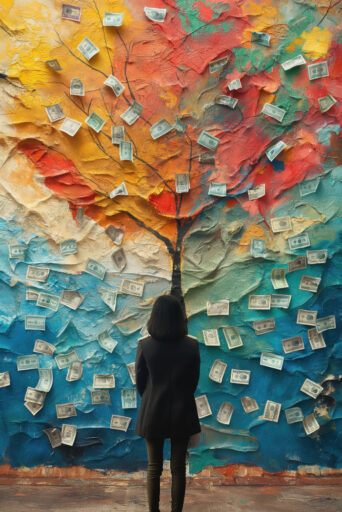
Investing in art is risky due to liquidity, valuation, and ongoing costs.
- Low liquidity: Selling artwork can take months and depends heavily on market demand.
- Subjective valuation: Prices are influenced by trends, collector interest, and market sentiment, which can change quickly.
- Authenticity and provenance issues: Forgery, incomplete ownership history, or disputed titles can reduce value.
- Restoration and condition risks: Damage, improper restoration, or environmental factors can affect an artwork’s worth.
- High ongoing costs: Insurance, climate-controlled storage, transportation, and maintenance can eat into returns.
- Market volatility: Emerging artists or contemporary trends can experience sharp price swings.
What are the tax rules for art investments?
Most countries treat art as a collectible or capital asset, meaning capital gains tax may apply upon sale.
Tax rules vary by residency and jurisdiction.
- Stati Uniti: Capital gains tax applies on sales of art, and artworks donated to museums may qualify for charitable deduction at fair market value.
- Regno Unito: Capital gains tax applies, but artworks donated to public collections can receive tax relief.
- France: Capital gains on art are taxed, but inheritance of artworks can benefit from exemptions or reduced rates under certain conditions.
- Germany: Capital gains tax applies if an artwork is sold within ten years of acquisition; after ten years, it is tax-free.
Cross-border movement may also trigger import duties, VAT, or export restrictions, particularly for culturally significant objects.
High-net-worth individuals often work with advisers to navigate these rules, especially when relocating or holding art in multiple countries.
A clear tax strategy is essential for minimizing costs and ensuring compliance in international art investments.
What type of art is the best investment?
Blue-chip art remains the most reliable category because demand is consistent, auction histories are well documented, and supply is limited.
Works by artists widely represented in museums usually appreciate predictably.
Contemporary and emerging art can deliver higher returns but also greater uncertainty.
Photography, prints, sculpture, and digital art appeal to younger investors and offer lower entry points, though long-term performance varies.
The best investment depends on the investor’s risk tolerance, time horizon, and ability to access expert advice.
How to begin investing in art?
To start investing in art, begin by setting a clear budget and deciding how much you are willing to spend. From there, you can:
1. Research artists and market segments: Study the artists, styles, and periods that interest you, and understand trends and demand in different art markets.
2. Acquire art through trusted sources: Purchase pieces from reputable galleries, established auction houses, or verified private dealers to reduce the risk of fraud or overpricing.
3. Verify authenticity and condition: Work with professional appraisers and conservators to ensure the artwork is genuine and properly preserved.
4. Explore fractional ownership: Consider platforms that allow shared ownership of high-value works, giving exposure to premium pieces without a large upfront investment.
5. Build relationships with art advisers: Seek guidance from experienced advisers, especially if you are new to the global art market or investing from abroad.
Conclusione
Art investing offers more than potential financial returns; it combines cultural value, portfolio diversification, and long-term wealth preservation.
While it carries unique risks and requires careful research, even modest exposure can enhance a sophisticated investment strategy.
For high-net-worth individuals and expats, approaching art with a structured plan, professional guidance, and patience can turn passion into a meaningful and potentially rewarding component of their overall portfolio.
Domande frequenti
Is art a good investment for beginners?
Art can be a good investment for beginners if they start with education, focus on reputable artists, and avoid speculative buying.
Fractional shares offer a low-risk entry point, while physical art requires more research.
What are the tax benefits of buying art?
Tax benefits may include reduced capital gains through long-term holding, deductions for charitable donations, or strategic estate planning using art assets.
Rules vary by jurisdiction and require professional guidance.
What are examples of alternative investment?
Common alternative investments include real estate, private equity, hedge funds, commodities, wine, collectibles, and fine art.
These assets typically offer portfolio diversification.
What is the best alternative investment?
Private equity is widely considered the strongest alternative investment based on historical returns and institutional demand.
Real estate, venture capital, commodities, and fine art also rank among top alternatives, each offering different levels of diversification, liquidity, and risk.
For globally mobile and high-net-worth investors, assets like real estate and fine art provide additional advantages such as portability, inflation protection, and use in cross-border estate planning.
Siete afflitti dall'indecisione finanziaria?

Adam è un autore riconosciuto a livello internazionale in materia finanziaria con oltre 830 milioni di visualizzazioni di risposte su Quora, un libro molto venduto su Amazon e un contributo su Forbes.