Learning how to invest in infrastructure provides insights into top global infrastructure investment opportunities for long-term financial growth.
If you have any questions or want to invest as an expat or high-net-worth individual, you can email me (advice@adamfayed.com) or use these contact options.
To get familiar with the various methods of investing in infrastructure, let us see what exactly infrastructure means.
“Infrastructure” is the term used to describe the fundamental physical systems of a business, area, or country. Investments related to infrastructure usually require a lot of capital and are considered high-cost investments.
Infrastructure plays a key role in the prosperity and development of a country’s economy. If we discuss this economically, infrastructure is responsible for the production of public goods or the processes Supporting monopolies.
Some good examples of infrastructure include transportation systems, telecommunication systems, and water supplies.

Various infrastructure projects are projects related to the improvements in infrastructure that are either funded publicly, made available to private investors, or funded by public-private partnerships.
Investments that are made in infrastructure are considered to be less volatile in comparison with various other asset classes, and because of that reason, infrastructure investments are considered robust investment opportunities.
Various types of technical systems are often described as infrastructures, and such infrastructures include networking equipment, servers, etc.
Such infrastructures come under the category of IT infrastructure. In the absence of information technology infrastructure, it becomes hard for various businesses to transfer and share data that improve efficiency within their workplaces.
When there is a failure in the IT infrastructure, most business operations cannot be performed.
When we talk about infrastructure as an asset class, we should remember that this specific sector is rather low in terms of volatility in contrast to equities, especially for the people who want to invest for the long term while getting higher yields.
Because of this specific reason, many companies and individuals often opt for investing in infrastructure funds because of their secure characteristics, and that too, funds related to transportation and water infrastructure are mostly preferred.
In certain situations, even private companies decided to invest in a country’s infrastructure development as a part of their business expansion.
To start an example of this situation, a company belonging to the energy sector might invest in the infrastructure related to pipes and railways in a country where it intends to refine petroleum.
By doing so, both the company and the country can see development while mutually benefiting each other.
Investors can also opt for investing in various types of public infrastructure such as improvements made to hospitals, schools, and other public places.
Infrastructure can further be classified into various categories depending on the type let us have a few examples to understand various types of infrastructures.
First, we can discuss the soft infrastructure that comprises institutions or organizations that are responsible for the maintenance and development of an economy.
A few examples of soft infrastructure include hospitals, government buildings, financial institutions, educational organizations, etc.
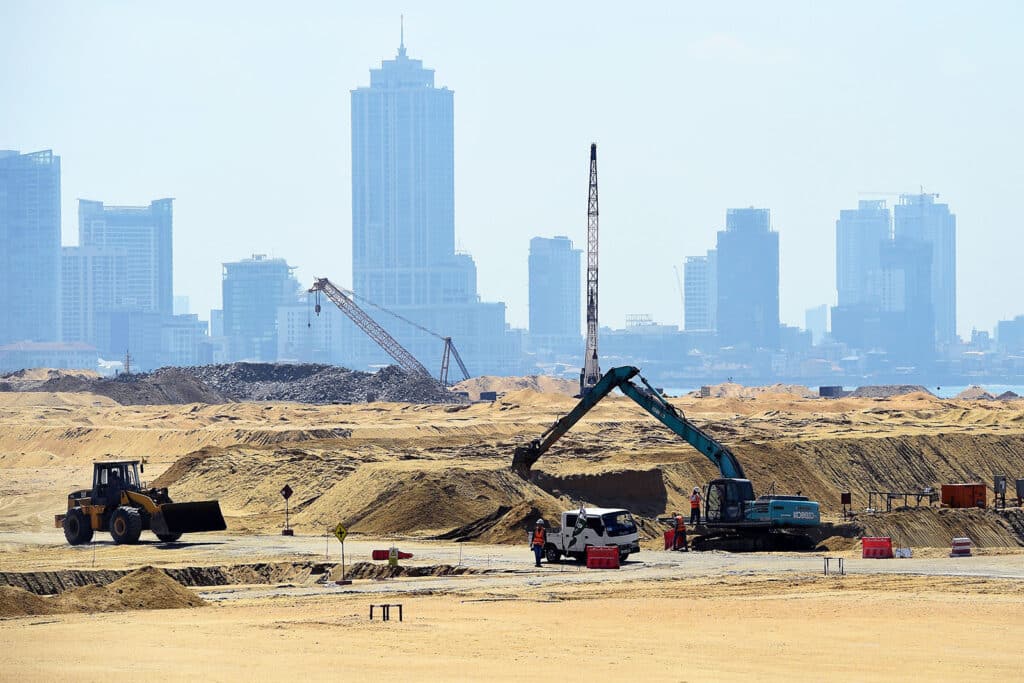
Then, there is the category of hard infrastructure which comprises institutions are organizations required for advancement and industrialization in a country.
A few examples of hard infrastructures include roads, bridges, highways, and other similar physical systems, and not only that but even the capital or assets required for operating such physical systems also come under the category of hard infrastructure.
Finally, we can also see critical infrastructure which is very essential for the well-being of a society or an economy, and a few good examples include facilities required by telecommunication services, public health services, agriculture, etc.
If you are talking about the United States, some agencies are accountable for these critical infrastructures and a few examples of such agencies are Homeland Security, the Department of Transportation, the Department of Energy, etc.
Alternatively, infrastructure assets can also be categorised based on the underlying assets such as economic infrastructures or social infrastructures.
For example, economic infrastructure assets are responsible for the growth of a country and include assets such as railways, airports, bridges, highways, etc.
Social infrastructure assets include assets like schools, hospitals, etc.
This classification has not been done by following any rules, and we just wanted to let you know about the categories of various types of infrastructures to let you have a better understanding of the topic.
Having known about the definition of infrastructure in general, now let us have a look at various types of investments that are made in infrastructures.
Things to consider while Investing in Infrastructure:
As the name itself suggests, the investments that are made in infrastructure are known as infrastructure investments.
These investments are considered to be precise, good for the long term, and capital intensive assets (especially the investment opportunities that are made available to the public).
Investments made in infrastructures can be of various forms suggesting infrastructure stocks, infrastructure bonds, infrastructure funds, infrastructure REITs, and so on.

Stages of Development – Infrastructures are called by different names depending on the stages of development, which have been discussed below.
First, there is the Greenfield (Early Stage), which refers to the stage of development where the developers have decided to go ahead with the project, yet the plans for the development are very fundamental.
These projects come with a lot of risk in terms of construction, regulations, and execution. Particularly in this stage, it is important to come clean with the relationships and agreements with partners and investors.
Next, there is the Greenfield (Late Stage), where the developers are a step ahead and have developed all the necessary plans.
At this stage, all the necessary relationships and agreements with partners and investors have been confirmed. Relatively, the risk is also lower, yet there is a possibility for risk in terms of construction as well as CAPEX overruns.
Finally, there is the Brownfield stage, where the assets are already operational and are providing profits. An appropriate example would be a highway that has been completed and vehicles running on it.
Such assets are the least risky as they already have an established revenue stream.
Evaluating infrastructure – Because stable cash flows are an important feature of infrastructures, the discounted cash flow (DCF) valuation method is primarily used while evaluating an infrastructure asset.
The factors that are to be taken into consideration while implementing a DCF for infrastructure investments are as follows.
In most cases, individuals often use discounted rates that reflect the average life span of an asset. When it comes to infrastructure, most assets are built to last for a long time, and because of that, a 30-year treasury bond is used.
This discount rate must also reflect the risk related to illiquidity which is associated with the investment made in the asset.
Commonly, unlevered free cash flow is used to determine the value of infrastructure because most infrastructure assets have the financial characteristic of having high leverage.
While opting for this method, an individual should make sure that the weighted average cost of capital is used for the discount rate and it should reflect the debt as well as equity related to the capital structure.
Most investors show a lot of interest in infrastructure investments because they are known to be non-cyclical, and provide stability as well as free cash flows.
While you are investing in infrastructure, it is better to have a general understanding of the financial characteristics of infrastructure investments.
Given below are some of the features, which include the pros and cons, of investing in infrastructure.
- Stability and consistent cash flows
One of the major features of infrastructure investments that seems quite lucrative for most investors is that infrastructure investments come with the potential for steady cash flows.
Not only the cash flows are steady, but they are also anticipatable, which makes these assets offer a regulated as well as a contract revenue model.
For instance, a sewage system that has been constructed recently will be provided along with government contracts that ensure the operational procedure of the sewage system for the next few years.
Therefore, unless the government goes bankrupt (for which, chances are unlikely), anybody can be able to predict smooth and consistent cash flows.
- Non-cyclical nature
If you invest in commercial properties such as restaurants or hotels, then there is a good chance that the business might go bankrupt, especially during an economic recession.
However, when you choose to invest in infrastructure investments, then this risk can be avoided.
Like we said before, most types of infrastructure assets are very important for the development of an economy, and because of that reason, they would be utilised irrespective of the current economic situation.
- Lower costs
While you are investing in infrastructure, there is no need for you to get involved with hefty fees. You would have to pay marginal costs that are considered to be extremely low.
- Leverage
As infrastructure investments come with stable and predictable cash flows, they can take on high levels of leverage, which in turn, lead to high-interest costs.
Leverage is a characteristic of infrastructure investments, which can also be considered a potential risk because a higher amount of leverage leads to higher interests (that are to be paid).
- ESG
There is a risk of ESG, i.e., environmental, social, and governance, and this risk should be taken into higher importance while investing in infrastructure.
For instance, Building infrastructure such as roads or highways might cause a lot of disruption in the social community of that specific area.
Not only that, but the process of construction would also result in the creation of pollution along with other environmental hazards, and this might be against the people who are in accordance with ESG principles.
- Politics
Politics also influence infrastructure as different governments come up with different strategies for developing the infrastructure and regulating it.
Infrastructure assets in emerging markets such as India, Brazil, etc., are subject to higher risk in terms of politics when compared to developed countries such as the United States.
Different forms of infrastructure investment:
Most people might assume that making a direct investment into infrastructure assets offers them control over the asset along with the ability to get hold of its full value.
However, to get directly involved with infrastructure investments, individuals are required to concentrate on the asset, take care of the illiquidity issue, manage the asset, and operate it.
Because of these reasons, indirect investments in infrastructure assets are a more common form of investment among individuals.
Indirect investments include:
- Shares/stocks of the companies that own infrastructure assets
- ETF
- Listed funds
- Private Equity funds
- Unlisted mutual funds
Infrastructure investment funds that are publicly traded comprise a small portion of the total infrastructure investments, yet they offer a lot of liquidity, transparency, and portfolio diversification advantages.
Similar to Real Estate Investment Trusts (REIT), Master Limited Partnerships (MLPs) are exchange-traded investment vehicles.
Just like any other asset in the realm of investments, and I said that comes with a lower amount of risk offer very few opportunities to gain profits or grow capital.
In the same way, when it comes to infrastructure investments, nutrients made in the brownfield projects come with a steady cash flow, while the growth potential is also low.
People who want to gain more profits by investing in infrastructure assets usually have to go with the riskier alternative investments namely the Greenfield projects, which are made available by Private Equity funds.
There are some risks while you are investing in Greenfield projects which have been given below.
- Unexpected changes in the revenue
- Financing risk because of the utilization of leverage
- Operational risk
- Construction risk
- Regulatory risk
- Currency, political, and profit repatriation related risks when it comes to global investments.
Infrastructure ETFs – Coming to the “Infrastructure exchange-traded funds”, which are also known by the name “Infrastructure ETFs”, offer broad exposure to the entities that are involved with building and managing projects and systems related to infrastructure I said such as roads, bridges, highways, electricity, systems, etc.

In the United States, some of the major companies that are involved in the infrastructure sector are Dominion Energy Inc. (D), Fortis Inc. (FTS), and Consolidated Edison Inc. (ED).
Infrastructure ETFs are particularly advantageous for people who are looking for a diversified basket of infrastructure companies instead of just focusing on an individual stock.
If we focus on the past performance in the United States, the infrastructure sector dark performed on a large scale in contrast to The US stock market when compared with the performance last year.
However, past performance should not be taken as an indicator for determining the performance of an asset regardless of the sector, asset class, or any other matter.
Infrastructure Private Equity – As the name itself suggests, these infrastructure assets allow an individual to gain ownership and control over the investors.
The majority of the financial institutions that offer infrastructure investments related to Private Equity are Private Equity firms, which are known by the name “Infra Private Equity Firms”.
Nevertheless, other financial institutions such as banks, sovereign wealth funds (SWFs), etc., also offered the opportunity of investing in terms of infrastructure Private Equity.
Infrastructure Funds – There is nothing complex to understand about infrastructure funds as the name itself explains a lot about them.
Infrastructure funds are the type of funds where the assets are mainly comprised of shares/stocks/companies that are involved with infrastructure.
In contrast to various other sectors such as banking, technology, pharmaceuticals, etc., infrastructure is a sector that comes with various subsectors.
Most of the infrastructure funds are invested in the stocks are companies that are listed in these sub-sectors, which have been listed below.
- Power
This is an infrastructure sub-sector that is involved with companies that focus on power generation or power transmission businesses.
- Immobili
Companies involved with businesses related to the real estate commander the sub-sector.
- Construction
Companies that are engaged with the construction business commander this subsector of infrastructure funds.
- Energy
Not to get confused with power, energy is the sub-sector that deals with energy-related businesses such as oil or gas.
- Engineering
This sub-sector deals with companies engaged in businesses related to engineering.
- Metals
Sub-sector that is involved with companies related to metals related businesses.
While investing in infrastructure funds, you should always consider the fact that most of the companies in this sector are still not fully developed.
Especially considering the situation of the COVID-19 pandemic, underdeveloped countries are slowing down in terms of growth and therefore do not prioritize spending a lot of money in such sectors.
That doesn’t mean that the same scenario would apply to all the countries in the world because there might be countries that find this sector to be quite lucrative.

Listed funds vs Unlisted funds – As discussed earlier, investors usually have the opportunity to invest in infrastructure assets by opting for investing in securities listed on global exchanges or they can invest directly in the assets by themselves if they have an opportunity to do so, and/or they can gain access to infrastructure assets with the help of pooled investment vehicles such as infrastructure funds.
Most people often come to confusion when they’re not sure about investing in listed funds or unlisted funds, especially when investing in the infrastructure sector.
However, investors can choose whether they can invest in listed funds are unlisted funds depending on their circumstances in the factors influencing their financial goals.
For an experienced investor, it is essential to maintain a balance between listed funds and unlisted funds equally depending on the asset allocation process.
When choosing between these 2 types, some factors are to be weighed in such as fees, portfolio requirements, rebalancing process, risk tolerance, diversification, etc.
Most people assume that the listed funds are completely different from unlisted funds, however, that’s not entirely true.
Although it may seem that the listed funds and unlisted funds in terms of infrastructure are relatively distinct asset classes, there are some characteristics of these assets which are quite similar.
Let us have a look at a few characteristics that are the same for listed infrastructure funds as well as unlisted infrastructure funds.
Both types of funds have accessibility to similar assets. For instance, the airport is an infrastructure asset that can be considered a good example of which is accessible by both listed and unlisted markets.
To state a real-life example, the Melbourne airport in Australia is owned by unlisted investors, whereas, the Sydney airport in Australia is owned by listed investors.
The same is the scenario in various airports across the world that are located within the same country. And we’re not just talking about airports, we can see a similar situation when it comes to tollgates, water systems, and so on.
The next similarity is that some assets have equity stakes made available in both listed and unlisted markets at the same time.
A few examples of such infrastructure opportunities are Vienna airport, Heathrow airport, Ontario’s 407 express toll route, Aleatica (Mexico), APRR (France), and many more.
Even though there are similarities in the types as well as characteristics of both listed unlisted markets when it comes to infrastructure assets, it is not possible to classify infrastructure based on ownership.
However, one major difference that needs to be taken into consideration is that listed unlisted infrastructure businesses are treated differently by regulators.
The regulators that are dealing with infrastructure businesses all over the world are the same for both listed and unlisted businesses regardless of who owns them.
By being monopoly providers of such crucial services, infrastructure businesses are required to ensure certain outcomes like being able to provide fair and transparent prices while abiding by the rules around service quality, capital expenditure, maintenance, etc.
Investing in unlisted infrastructure assets is just like buying Private Equity as the investors possess ownership as well as the ability to manage those assets.
Nevertheless, it should be duly noted that infrastructure assets that are available in the unlisted market might find it impossible to outperform the purchase price or the general market performance.
Not all the infrastructure assets would come with accessibility for private investors because some assets are only available in the listed infrastructure market.
To state an example of this situation, we can consider regulated utilities such as the city gas line, electricity distribution networks, long-distance pipeline infrastructures, etc., because they cannot be accessed by unlisted investors.
Anyhow, there is no denying the fact that unlisted infrastructure assets outperform listed assets in most cases. At the same time, the volatility that comes with the unlisted infrastructure assets is higher than that of listed assets.
Bottom Line:
Infrastructure investments can prove to be quite lucrative forms of investment that are made available for individual investors.
Nonetheless, without proper guidance and knowledge, most individuals tend to settle for fewer profits rather than getting the best they can.
Instead of focusing on a specific sector, it would be wise to have a diversified portfolio that has capital invested across various types of asset classes as well as sectors. Any sector-specific investment portfolio might not perform as good as an investment portfolio that comes with a good amount of diversification among various sectors.
Having said that, all the information provided within this article is just for educational purposes and none of these should be taken as actual investment advice.
Siete afflitti dall'indecisione finanziaria?

Adam is an internationally recognised author on financial matters, with over 383.8 million answers views on Quora.com and a widely sold book on Amazon.