
+44 7393 450837
advice@adamfayed.com
Segui su

What is ​​the difference between domicile and residence and can it affect expat investing?

This article was last updated on September 18, 2019

Many investors, and expats more generally, are confused by domicile and residency.

This might seem like such a boring topic, but it can affect capital gains and inheritance taxes.

This article will explain the differences between residency and domicile and answer some frequently asked questions (FAQs).

The article will also discuss new issues for “nomadi digitali” and tackle how you can invest in a tax advantageous manner as an expat.

Is domicile important?

It is. It can determine taxes from your income tax, to inheritance and capital gains taxes.

It can also affect inheritance tax planning.

What does domicile mean?

The country you are domiciled in, is the place where you have your permanent home, or have a big connection with.

When you are born , you are usually assigned your parents domicile. If your parents were not married, you are typically given the same domicile as your mother, although this depends on each situation.

Even when you move abroad, your domicile doesn’t usually change, unless you take specific action to change it.

What is deemed domicile?

For British expats who emigrate, there is such a thing as deemed domicile. This can impact your inheritance taxes when you die.

Deemed domicile means that even if you are not domiciled in the UK according to HMRC law, you can be treated as domiciled in the UK at the time of transfer in two situations.

Namely, you were domiciled in the UK within 3 years immediately before the transfer or you were tax resident in the UK in at least 17 of the last 20 tax years, before making the transfer.

How about non-doms in the UK?

There are about 4-5m non-UK domiciles living in the UK, which can bring tax benefits.

However, in recent times, the UK Government has made significant changes to non-com status, after a populist backlash.

The number of wealthy UK residents who pay no UK tax on their offshore earnings has hit record lows.

There are many reasons for this, including political worries around Brexit, and the relatively new “non dom” levy.

This is charged at 30,000-60,000GBP a year, in return for no tax on overseas income.

What does country of residency mean?

Your tax residency is the country you are supposed to pay tax to. It is a misconnection that if you spend less than 183 days a tax year, you are automatically considered tax non-resident.

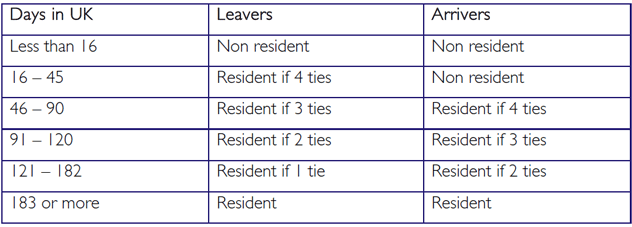
Many tax authorities, like HRMC in the UK, have residency tests like the one below, available online;
a1

It is always important to remember that rules about residency, including what defines ties, can always change.

So how would you summarize residency vs domicile?

Domicile means a legal residency where a person intends to make it their permanent home.

Residency is a more temporary thing in many cases. People can move with their expats job every 2-3 years, and change their residency in the process, without changing their domicile.

What is the difference between ordinary and multiple residencies?

To be an “ordinary resident” , the country has to be your ordinary home. You spend the majority of your time here and don’t take long trips home.

As an example, let’s say you are a British person living in the UK, but you take 2 holidays per year. You are an ordinary resident of the UK.

It is possible to be resident in two countries or more, although it can lead to tax issues.

Can people legally reduce their taxes by changing their residency?

Yes. If you get a job offer in Saudi Arabia, Kuwait or a country with 0% income tax, you are of course not taxed on your income unless you are American.

Americans are taxed on overseas income, even if they haven’t lived in the US for years.

There are also contactless countries that only tax locally sourced income. Singapore, Hong Kong, Malaysia and around 40 other countries fall into this category.

How about for digital nomads?

a1 29

Many young nomads have this ideal life, where they are working on the beach from their laptop, moving from country to country.

Indeed, that is possible, and becoming easier, but that doesn’t mean you don’t have to be careful with your tax residency.

It is a misconception that you can just move from country to country, never spending more than 90 days a year in that place, and that means you automatically pay 0% tax worldwide.

Many people think that the “183 day rule” is simple. In fact, due to the rise of digital workers, many courts are asking expats to prove their residency.

There was a ruling in Australia, where an expat had to pay more tax, as he couldn’t prove where he paid his taxes, as he didn’t have a tax identification number (TIN) due the frequency of his movements.

Going forward, it will be safer for nomads to have at least one tax base, so you can answer the question “where do you pay your taxes” if it comes up.

I have personally seen a few nomads I know, have 2-3 years of “tax free income”, only to be stung by an unexpected tax bill.

Can you buy residency if you are a digital nomad or entrepreneur?

Countless countries do have residency programs, where you can get residency in return for making real estate and other investments, as outlined in the article at the bottom.

Some of these programs also offer citizenship, as well as residency.

Can this affect bank accounts and investments?

Yes, it can. Almost all financial institutions now, ask for TINs when opening up banks and brokerage accounts, although some will accept your old TIN, if you have just moved to a new country.

What tends to be the most tax-advantageous investments for expats and nomads then?

For Americans, it can depend on several factors, as outlined in more detail qui.

For British and many other expats, tax-efficient portfolio bonds have numerous tax benefits.

How can you lower your risks of unexpected tax bills?

In general, having expat banking and investments, lowers your risks of tax bills.

The reason is simple. If you are from country A, and live in country B, but keep your investments in country C, there are clear demarcations there.

In other words, if you are a British person living in Thailand, but your investments are held in Singapore or British Overseas Territory, you are keeping less ties to back home compared to if you send back substantial amounts of money every month.

In comparison, if you send money home to the UK every month, have 3 properties and 2 investment accounts held in onshore UK and so on, you are keeping a lot of ties to your home country.

Are changes likely in the future?

The last 5 years have been a period of change, with FATCA, CRS and various new laws coming into play.

There is no reason to believe the next 10 years will be any different, which is why it is important to work with somebody who is on top of changes.

What are your contact details?

My email address is hello@adamfayed.com.

Further reading

For people interested in second residencies, the following article might be interesting:

Lascia un commento

Il tuo indirizzo email non sarà pubblicato. I campi obbligatori sono contrassegnati *

Questo URL è solo un sito web e non un'entità regolamentata, quindi non dovrebbe essere considerato come direttamente collegato a qualsiasi società (comprese quelle regolamentate) di cui Adam Fayed potrebbe far parte.

Il presente sito web non è rivolto e non deve essere consultato da persone in qualsiasi giurisdizione - compresi gli Stati Uniti d'America, il Regno Unito, gli Emirati Arabi Uniti e la RAS di Hong Kong - in cui (a causa della nazionalità, della residenza o di altro tipo di tale persona) sia vietata la pubblicazione o la disponibilità del presente sito web e/o dei suoi contenuti, dei materiali e delle informazioni disponibili su o attraverso il sito web (insieme, i “Materiali“).

Adam Fayed non garantisce che il contenuto di questo Sito web sia appropriato per l'uso in tutti i luoghi, o che i prodotti o i servizi discussi in questo Sito web siano disponibili o appropriati per la vendita o l'uso in tutte le giurisdizioni o paesi, o da parte di tutti i tipi di investitori. È responsabilità dell'utente essere a conoscenza e osservare tutte le leggi e i regolamenti applicabili di qualsiasi giurisdizione pertinente.

Il sito web e il materiale sono destinati a fornire informazioni esclusivamente a investitori professionali e sofisticati che conoscono e sono in grado di valutare i meriti e i rischi associati a prodotti e servizi finanziari del tipo descritto nel presente documento e nessun'altra persona dovrebbe accedervi, agire o fare affidamento su di esso. Nulla di quanto contenuto in questo sito web è destinato a costituire (i) consulenza sugli investimenti o qualsiasi forma di sollecitazione o raccomandazione o un'offerta, o sollecitazione di un'offerta, per l'acquisto o la vendita di qualsiasi prodotto o servizio finanziario, (ii) consulenza sugli investimenti, legale, commerciale o fiscale o un'offerta di fornire tale consulenza, o (iii) una base per prendere qualsiasi decisione di investimento. I Materiali sono forniti solo a scopo informativo e non tengono conto della situazione individuale dell'utente.

I servizi descritti nel Sito Web sono destinati esclusivamente ai clienti che si sono rivolti ad Adam Fayed di propria iniziativa e non in seguito a un'attività di marketing o sollecitazione diretta o indiretta. Qualsiasi impegno con i clienti è intrapreso rigorosamente sulla base di una sollecitazione inversa, il che significa che il cliente ha iniziato il contatto con Adam Fayed senza alcuna sollecitazione preliminare.

*Molti di questi beni sono gestiti da entità in cui Adam Fayed ha partecipazioni personali, ma per le quali non fornisce consulenza personale.

Questo sito web è gestito per scopi di personal branding ed è destinato esclusivamente a condividere le opinioni personali, le esperienze e il percorso personale e professionale di Adam Fayed.

Capacità personale
Tutti i punti di vista, le opinioni, le affermazioni, le intuizioni o le dichiarazioni espresse in questo sito web sono fatte da Adam Fayed a titolo strettamente personale. Non rappresentano, riflettono o implicano alcuna posizione ufficiale, opinione o approvazione di organizzazioni, datori di lavoro, clienti o istituzioni con cui Adam Fayed è o è stato affiliato. Nulla di quanto contenuto in questo sito web deve essere interpretato come fatto per conto o con l'autorizzazione di tali entità.

Approvazioni, affiliazioni o offerte di servizi
Alcune pagine di questo sito web possono contenere informazioni generali che potrebbero aiutarvi a determinare se siete idonei a richiedere i servizi professionali di Adam Fayed o di qualsiasi entità in cui Adam Fayed è impiegato, ricopre una posizione (anche come direttore, funzionario, dipendente o consulente), ha una partecipazione azionaria o un interesse finanziario, o con cui Adam Fayed è altrimenti affiliato professionalmente. Tuttavia, qualsiasi servizio di questo tipo - sia esso offerto da Adam Fayed a titolo professionale o da qualsiasi entità affiliata - sarà fornito in modo del tutto separato da questo sito web e sarà soggetto a termini, condizioni e processi di assunzione formali distinti. Nulla di quanto contenuto in questo sito web costituisce un'offerta di servizi professionali, né deve essere interpretato come la formazione di un rapporto di clientela di qualsiasi tipo. Qualsiasi riferimento a terzi, servizi o prodotti non implica l'approvazione o la partnership, a meno che non sia esplicitamente indicato.

*Molti di questi beni sono gestiti da entità in cui Adam Fayed ha partecipazioni personali, ma per le quali non fornisce consulenza personale.

Confermo di non risiedere attualmente negli Stati Uniti, a Porto Rico, negli Emirati Arabi Uniti, in Iran, a Cuba o in altri Paesi sottoposti a pesanti sanzioni.

Se vivete nel Regno Unito, confermate di soddisfare una delle seguenti condizioni:

1. Patrimonio netto

Dichiaro di voler ricevere le comunicazioni promozionali che sono esenti

dalla restrizione alla promozione di titoli non prontamente realizzabili.

L'esenzione riguarda gli investitori certificati di alto valore netto e dichiaro di essere qualificato come tale in quanto almeno uno dei seguenti elementi si applica a me:

Ho avuto, per tutto l'esercizio finanziario immediatamente precedente la data sotto indicata, un reddito annuo

per un valore pari o superiore a 100.000 sterline. Il reddito annuo a questi fini non include il denaro

prelevare dai miei risparmi pensionistici (ad eccezione del caso in cui i prelievi siano utilizzati direttamente per

reddito da pensione).

Ho detenuto, per tutto l'esercizio finanziario immediatamente precedente la data sotto riportata, un patrimonio netto pari al

valore pari o superiore a 250.000 sterline. Il patrimonio netto a questi fini non include la proprietà che è la mia residenza principale o qualsiasi somma di denaro raccolta attraverso un prestito garantito su tale proprietà. O qualsiasi mio diritto ai sensi di un contratto qualificante o di un'assicurazione ai sensi del Financial Services and Markets Act 2000 (Regulated Activities) order 2001;

  1. c) o Qualsiasi prestazione (sotto forma di pensione o altro) che sia pagabile in base alla

cessazione del servizio o al mio decesso o pensionamento e a cui io sono (o il mio

persone a carico hanno o possono avere diritto.

2. Investitore autocertificato

Dichiaro di essere un investitore sofisticato autocertificato ai fini del

restrizione alla promozione di titoli non prontamente realizzabili. Sono consapevole che questa

significa:

i. Posso ricevere comunicazioni promozionali da una persona autorizzata da

Financial Conduct Authority che si riferiscono all'attività di investimento in titoli non prontamente

titoli realizzabili;

ii. Gli investimenti a cui si riferiscono le promozioni possono esporre il sottoscritto a una significativa

rischio di perdere tutto il patrimonio investito.

Sono un investitore sofisticato autocertificato perché si applica almeno una delle seguenti condizioni:

a. Sono membro di un network o di un sindacato di business angels e lo sono da

almeno negli ultimi sei mesi precedenti la data indicata;

b. Ho effettuato più di un investimento in una società non quotata in borsa negli ultimi due anni

prima della data indicata di seguito;

c. Sto lavorando, o ho lavorato nei due anni precedenti alla data sotto riportata, in una

capacità professionale nel settore del private equity, o nella fornitura di finanziamenti per

piccole e medie imprese;

d. Sono attualmente, o sono stato nei due anni precedenti alla data sotto riportata, amministratore di una società con un fatturato annuo di almeno 1 milione di sterline.

Adam Fayed non ha sede nel Regno Unito, né è autorizzato dalla FCA o dalla MiFID.

Adam Fayed utilizza i cookie per migliorare la vostra esperienza di navigazione, offrire contenuti personalizzati in base alle vostre preferenze e aiutarci a capire meglio come viene utilizzato il nostro sito web. Continuando a navigare su adamfayed.com, acconsentite al nostro utilizzo dei cookie.

Se non acconsentite, sarete reindirizzati fuori da questo sito, in quanto ci affidiamo ai cookie per le funzionalità principali.

Per saperne di più, consultate il nostro Informativa sulla privacy e termini e condizioni.

ABBONARSI A ADAM FAYED CONGIUNGERE SENZA CONTEMPORANEA ABBONATI DI ALTO VALORE NETTO

ABBONARSI A ADAM FAYED CONGIUNGERE SENZA CONTEMPORANEA ABBONATI DI ALTO VALORE NETTO

Ottenete l'accesso gratuito ai due libri di Adam sugli espatri.

Ottenete l'accesso gratuito ai due libri di Adam sugli espatri.

Ogni settimana vi forniamo ulteriori strategie su come essere più produttivi con le vostre finanze.

