In general, we don’t suggest trading futures for most non-professional investors.
Find out if trading futures aligns with your financial goals.
Most of you out there reading this would definitely have heard the term “Futures Trading” or “Futures Market”. Some of you might already have had a taste of it, some might still be into it, and some might never have heard of it.
Today, we will focus on all the aspects related to futures.
Se volete investire come espatriati o individui con un alto patrimonio netto, che è ciò in cui sono specializzato, potete inviarmi un'e-mail (advice@adamfayed.com) o utilizzare WhatsApp (+44-7393-450-837). Questo contenuto non è una consulenza finanziaria, legale, fiscale o di altro tipo, né una sollecitazione a investire.
Trading Futures: What are Futures Contracts?
Think of it like this. Let us assume a contract. You all know that a contract binds a buyer and a seller into an agreement where the seller and buyer are bound to certain terms.
Futures are contracts, which are of the same type, where you are the main party in the agreement.
This contract is mainly based on whether you buy or sell an asset at a certain price on a certain date in the future.
Let us talk about stocks for example, and as you might know, the stock value usually increases or decreases on a regular basis.
If you are trading futures in the stock market, you will speculate whether or not the value of a stock would increase or decrease at a particular date in the future.
Just like that, futures trading can involve a wide range of asset classes given below (but are not limited to):
— Le scorte
— Indices
— Currency Pairs
— Materie prime
— Tassi di interesse
— ETF
— Criptovalute
When talking about buyers, the buyer would purchase a financial instrument or a commodity (without the underlying asset).
The buyer doesn’t immediately buy the aforesaid asset, but instead, agrees to buy it at a later date and time.
Similarly, the seller would agree to sell an asset at an agreed-upon date and an agreed-upon price.
Originally, the main objective of futures contracts was to assist businesses in dealing with unexpected costs. Don’t understand? Let us see an example.
For instance, imagine a food processing company that produces wheat-related food products, let’s say, cereals.
Now, when the company assumes that there is going to be a hike in the price of wheat, that company would use a futures contract.
Upon that, even when the prices of wheat increase, the company can still offset the increased prices.
Futures contracts may be done in the form of cash or commodities or other financial instruments.
Different types of individuals such as investors as well as speculators get involved with futures contracts.
To state an example of commodities, oil can be the best example, and for financial instruments, S&P 500 futures contract can be an example.
For investors and traders, futures contracts are helpful when the price of a commodity or a financial instrument decreases/increases in value.
Through speculation, investors are able to profit from unexpected circumstances. Through hedging, traders can take care of their trading positions.
What is a Futures Market?
The futures Market is a place where all the futures contracts take place.
This market handles the balance between the surges in an asset’s price and the price which the investors are paying.
The futures market is also responsible for handling the contracts while allowing the investors to trade them.
Upon signing a futures contract, the buyer, as well as the seller, enter into a binding agreement at an agreed-upon price.
Once the time and date come in the future, the buyer and seller are obliged to abide by the agreement.
This means that they would have to buy or sell the commodity or financial instrument on that date irrespective of the market fluctuations.
For example, let’s imagine an oil producer that has enough oil to cover the market.
Usually, the producer would like to sell their product at a higher price, and at the same time, a consumer such as an airline company would like to buy it for a lower price.
Both parties are facilitated by a financial exchange, which allows for trade between the parties.
Now, the oil producer and the airline company would enter into a futures contract while agreeing on a certain price and a certain date.
As a circumstance of this, either an increase or a decrease in the market price value would not affect the buyer or seller.
This means the seller won’t be affected when there has been a significant drop in the value of the product.
Simultaneously, the buyer won’t be affected when there is a significant surge in the value of the product.
For instance, if a barrel of oil costs $70 now, and by the end of the contract it is $90, the price would still be $70.
The buyer would purchase the product at $70 regardless of the market price of $90.
As futures contracts are exchange-traded derivatives, the value is usually based on the value of the underlying asset.
By the time the contract ends, the futures contract is said to have reached the expiration date, while the price remains the same.
Futures Trading
Futures are known as Derivative Products, and this name is because they derive their value from the underlying asset, index, or instrument.
Futures are dissimilar to traditional investment assets such as stocks.
Apart from speculation, some investors go ahead with futures trading as it allows access to some other benefits which are not provided with stocks.
For instance, the trading hours of futures contracts are different compared to the stock market.
This means, rather than 9:30 a.m. to 4 p.m. ET, the futures market is usually open 24/6.
Some other benefits of futures trading are the short-selling requirements and tax advantages.
If you don’t know what short selling means, it is the process of selling assets that have been borrowed. This is done with the intention of buying it back in the future for less money.
While talking about stocks, people who opt for short selling have to deal with higher margin requirements.
Whereas futures contracts usually come with the same margin requirement on long and short positions.
This is beneficial for traders who are willing to go ahead with the high-risk high-reward tactic.
Coming to the taxes, in some cases, futures trades are eligible for preferential tax rates.
In general, profits obtained from short-term stock trades are considered ordinary income and are taxed in the same way.
Yet, profits obtained from futures contracts are taxed at a 60/40 rate, which refers to a 60% long-term and a 40% short-term.
Futures also assist investors in the process of diversification and provide more access to certain asset classes.
To state an example, sometimes, a company such as Exxon Mobile (XOM) has its stock value dependent upon the price of crude oil as is the nature of the company as well as other factors such as management and competitors.
A futures contract, simultaneously, can be based directly on the value of crude oil. This can be done without the additional risk factors that are involved with the company.
It doesn’t imply that futures contracts come with a lower amount of risk because they are deemed highly complex financial instruments.
Major risk factors related to futures are margin requirements and price sensitivity.
Futures contracts are highly leveraged as the underlying asset’s valuation is very sensitive to the invested amount in terms of margin or collateral.
Margin refers to the activity, where money is borrowed from your brokerage in order to invest.
In general, the margin requirements for futures contracts vary between 3% and 12%.
This would imply that an investor could spend $10,000 out of their pockets to get into a $200,000 position while paying only 5%.
When the trade moves favorably to the investor, there would be a significant profit.
Vice versa, a negative direction could result in greater loss. Therefore, prior to using debt to enter a trading position, it is suggested to understand and act according to your risk tolerance.
Types of Futures
There are different choices available when it comes to futures contracts.
As each market can vary from the other, a futures trader focuses on one or two areas in most cases.
By doing this, the trader would be able to have a deeper understanding of that particular market(s) and this allows them to make efficient trading decisions.
The types of futures contacts can mainly be categorized into distinctive types namely:
— Financial Futures
— Physical Futures
Beginner-level traders usually start trading futures with financial futures.
Why? Because it is the mainstream option for traders who are already familiar with stock trading.
Getting involved with financial futures can be a lucrative choice among traders and investors who’ve already been involved with the equity markets.
Futures have their own exchanges depending on the region, for instance, the Chicago Mercantile Exchange Group (CME Group) and the Intercontinental Exchange (ICE) are in the US.
Such exchanges allow traders and investors to get into futures trading with the help of electronic trading platforms.
If you are opting for the financial futures, you can utilize margin to lower your initial deposit.
As I already said, the margin is something similar to making a deposit in terms of collateral for a loan.
The initial deposit amount for the financial futures is generally around 5% to 10% of your futures contract.
For instance, when it is 10%, you can just deposit $10,000 and get into a contract of $100,000.
The most common types of financial futures include:
— Treasury bills
— Certificates of deposit (CDs)
— Currency pairs
Physical futures are deemed to be apt for investors who are seeking an advanced and risky market.
Physical futures, as the name itself suggests, refer to the physical assets that are usually extracted from the earth.
Since it is a product that has a physical presence, several factors can contribute to the impact on the physical futures market, which in turn, lead to price changes.
A few factors that affect the price changes in the physical futures market are as follows.
— Climatic conditions
— Economic events
— Political turmoil
— Transportation difficulties
— Diseases that impact the sustenance of crops or livestock
Having said about the broad types of futures contracts, let us now have a look at some of the common types of futures contracts.
Metalli preziosi
This falls under the category of physical futures as metals such as gold and silver have a physical presence.
Why did refer to gold and silver? This is because they are among the most popularly chosen metals in this category.
Investors who get into such types of futures contracts have an intent of hedging against aspects such as inflation or financial uncertainty.
At the same time, precious metals futures contracts can also come in handy for practical uses like platinum for semiconductor chips.
Stock index
These fall under the category of financial futures contracts as they do not have a physical presence.
These contracts derive their value from a stock index, let’s say, S&P 500, Nasdaq, Dow Jones, etc.
Investors go ahead with these types of futures contracts in order to take advantage of anticipated movements or announcements from financial authorities.
Energy
These come under the category of physical futures contracts because they are based on the energy that includes oil and natural gas.
Apart from the futures contracts, these can act as a benchmark for oil prices all over the world.
Agricoltura
Agriculture contracts, another physical futures contract, are based on agricultural products such as soybeans, corn, wheat, etc.
These contracts are in contrast to traditional contracts as aspects such as weather and seasonality play a crucial role in affecting the prices as well as the risk.
Investing Strategy
Different types of investing strategies are available for investors to choose from.
In general, a trader gets familiar with one or two contract types, and following that, specializes in a particular strategy.
Such a strategy would primarily be based on an individual’s investment goals, risk tolerance, and other financial conditions.
Given below are the common types of investing strategies for futures trading.
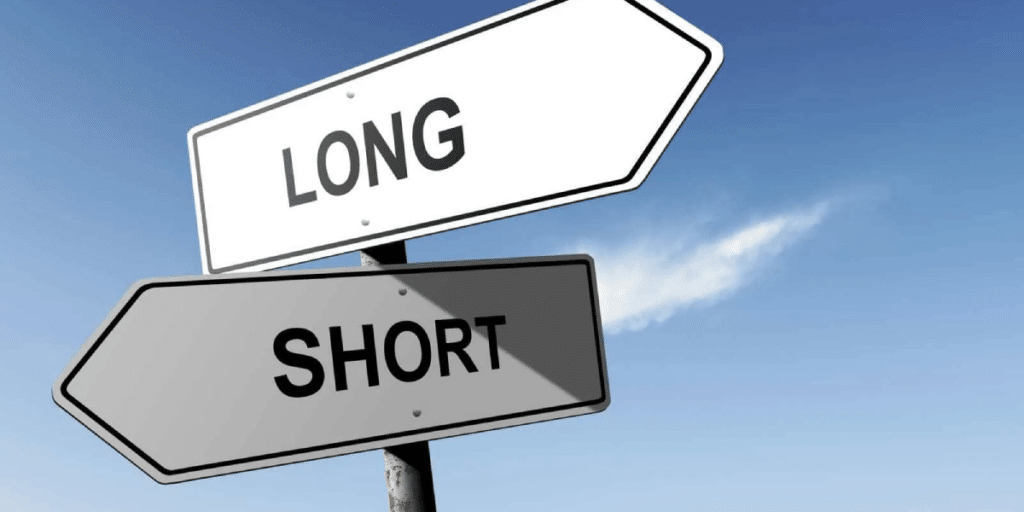
Going long
This means an individual is buying a futures contract with speculation for the underlying asset to increase in value.
The risks with this strategy occur when the underlying asset decreases in value.
Going short
This is the exact opposite of going long, where an individual sells the contract expecting that the underlying asset will decrease in value.
This type of investing strategy is deemed risky as losses can occur heavily when the underlying asset increases in value.
This is because there is no actual limit to how high prices can rise and not all anticipations may come true.
Calendar spreads
This strategy requires the trader to take both a long and short position on the same asset or security except with two different expiration.
In this case, the profit is generated through the spread, which is nothing but the profit between the contract sold and the contract purchased.
These are of two types namely, Bull Calendar Spread and a Bear Calendar Spread.
Talking about the bull calendar spread, the trader will go long on the shorter expiration date and at the same time go short on the contract with the longer expiration.
When it comes to the bear calendar spread, the positions are reversed where the trader sells the shorter expiration contract and purchases the longer one.
Pro e contro of trading with futures contracts
Pro
The major advantage of futures contracts is the leverage, which allows investing through borrowed money.
Futures are traded with leverage, where investors are only required to trade with the margin amount.
All the profits that are obtained through leverage trading are magnified, which indicates that even if you trade with 10% of the actual amount, you get profits equivalent to the total amount.
Futures contracts allow an individual to access a wide range of diversification which ranges from stock indexes to commodities like wheat.
With the diversification that is obtained by investing in multiple asset classes, one can offset the losses they experience in a single asset class.
Unlike mainstream assets such as stocks, futures contracts are available for extended periods as long as 23 hours a day and 6 days a week.
This is particularly advantageous for traders who would like to get some action after the markets close.
One of the main advantages of futures contracts is that they can be used efficiently for hedging purposes.
The availability of a wide range of products lets traders hedge against market-specific or sector-specific assets and commodities.
Having discussed the advantages, let us now take a look at some of the disadvantages of futures contracts.
Contro
To begin with, futures contracts are very complex instruments and therefore they are not apt for all traders or investors.
Adding to that, individuals are required to dedicate a lot of time and effort if they want to come up with an effective strategy.
Leverage, as useful as it is, has the downside of magnifying the losses that can be obtained by an individual.
When the markets are not in your favor, you will end up having to pay a hefty sum as the losses are for the total amount.
When the futures contract is nearing the expiry date, there might come a situation where the contracts might depreciate in value against the individual.
Sometimes, the contracts may even become worthless. To avoid such circumstances, an investor or a trader must keep on rolling forward their contracts to an extended date when the expiry date is nearing.
When you don’t roll over your contracts or close your position, you are obliged to take the physical delivery of the underlying asset.
Conclusione
Remember that an efficient portfolio should not be comprised of a single investment vehicle.
If you are a full-time trader with a ton of experience, then it is understandable if you get fully immersed in such investments.
However, if you are a beginner (trader or investor) then you must make sure that your investment strategy is not going to affect your financial situation.
Most people who invest in highly aggressive investments such as futures contracts usually lose a lot of money.
Yes, all investments come with a risk of losing money, but with such instruments, you’ll experience way more risks.
I suggest that people should focus on a balanced portfolio where they should limit aggressive investments to a smaller portion of their portfolios.
There are certain benefits of getting into futures contracts such as low margins, special tax treatment, longer trading hours, etc. At the same time, you are also putting yourself at risk of having to deal with disadvantages such as magnified losses, complexity, and so on.
Whether or not they are suitable for you would be dependent on factors like your risk tolerance, knowledge about futures, financial situation, etc.
Siete afflitti dall'indecisione finanziaria?

Adam è un autore riconosciuto a livello internazionale in materia finanziaria con oltre 830 milioni di visualizzazioni di risposte su Quora, un libro molto venduto su Amazon e un contributo su Forbes.