A growing number of expats move abroad chasing higher income, better lifestyles, or a sense of adventure—only to discover that the emotional and financial realities are very different from expectations.
In many cases, the pull of home, rising living costs, or tax complexity eventually brings them back.
This situation mirrors a recent example I shared on how expectations can change after moving abroad.
It was based on a real relocation experience previously featured on Business Insider, where long-term plans abroad shifted and ultimately led to a return home.
Punti di forza
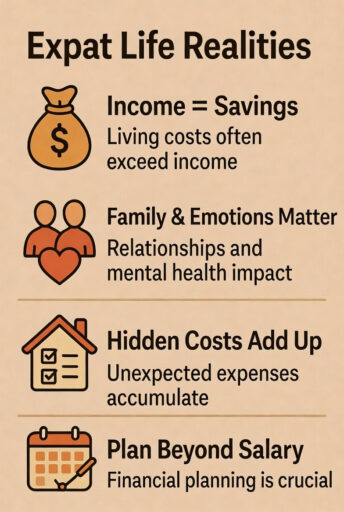
- Higher income abroad doesn’t always translate into higher savings
- Emotional and family ties often become stronger over time
- Cost of living and tax exposure are frequently underestimated
- Sustainable expat life requires planning beyond salary alone
I miei recapiti sono hello@adamfayed.com e WhatsApp +44-7393-450-837 se avete domande.
Le informazioni contenute in questo articolo hanno un valore puramente indicativo. Non costituiscono consulenza finanziaria, legale o fiscale e non rappresentano una raccomandazione o una sollecitazione a investire. Alcuni fatti potrebbero essere cambiati dal momento della stesura.

Why the Expat Dream Often Changes Over Time
Relocating overseas is often framed as a bold, life-upgrading move. Higher income potential, new experiences, and a fresh start are powerful motivators. But not every move abroad unfolds the way people expect.
That’s something we don’t talk about enough.
In this case, the move was made with long-term intentions. Over time, however, the pull of family, familiarity, and home became stronger than the appeal of expat life.
There was no single trigger; it was a gradual reassessment of priorities. This kind of outcome is more common than many realize.
The Hidden Costs Most Expats Underestimate
In some cases, expats return home for emotional reasons, such as missing family milestones, ageing parents, or simply wanting to feel rooted again. In others, the trigger is financial.
Living costs can turn out to be far higher than expected, particularly in major global cities.
Rent, healthcare, schooling, and everyday expenses can quickly erode the income gains that motivated the move in the first place.
Moving abroad isn’t just a lifestyle decision but a financial one.
Too often, people focus on what they might earn overseas without fully accounting for what they’ll spend.
Taxes, currency fluctuations, social security obligations, emergency funds, and long-term pianificazione finanziaria are frequently afterthoughts.
That’s when an exciting relocation can quietly become a source of stress.
Planning properly doesn’t mean being pessimistic. It means making sure your move is sustainable.
The most successful expats aren’t necessarily the highest earners. They’re the ones who understand their full financial picture before they go.
If you’re considering a move abroad, it’s worth asking:
- Have you realistically mapped out your cost of living?
- Do you understand your tax exposure?
- Are you financially resilient if plans change?
Answering these questions early can make the difference between choosing to return home on your own terms or being forced to.
Domande frequenti
Is moving abroad stressful?
Absolutely. Even when it’s exciting, relocating involves emotional ups and downs—new routines, cultural differences, paperwork, and the pressure to make it all work can be surprisingly exhausting.
What does no one tell you about moving abroad?
Most people don’t mention the small, cumulative surprises: missing family milestones, navigating confusing bureaucracy, or realizing that daily life abroad isn’t always glamorous.
What is the best age to move abroad?
There isn’t a single best age. Younger adults often adapt quickly and take career risks; older movers may prioritize stability, finances, and family considerations.
Each stage comes with its own challenges and advantages.
What is the nicest but cheapest country to live in?
It varies based on what you value. Some expats find Eastern Europe, parts of Southeast Asia, or Latin America offer a high quality of life at a fraction of Western costs.
Just remember that nice often comes with trade-offs: language barriers, different healthcare standards, or slower infrastructure.
What are the disadvantages of moving abroad?
Homesickness, culture shock, hidden expenses, tax complexities, and the effort required to integrate socially are all common pain points that newcomers underestimate.
In which country can I live permanently?
Several countries have accessible long-term or permanent residency programs. Portogallo, Mexico, and Costa Rica are popular options.
Rules differ and careful planning is needed to maintain compliance.
What’s the hardest country to move to?
What is the easiest country to move to?
Places with simple residency rules, friendly immigration policies, and moderate living costs—Portugal, Panama, e Thailandia—make the transition smoother for many expats.
Siete afflitti dall'indecisione finanziaria?

Adam è un autore riconosciuto a livello internazionale in materia finanziaria con oltre 830 milioni di visualizzazioni di risposte su Quora, un libro molto venduto su Amazon e un contributo su Forbes.