
Mappa del sito: Vivere all'estero > Living in Indonesia
Investing and living in Indonesia offers expats a vibrant mix of cultural richness and economic promise.
Discover the ins and outs of investing in Indonesia’s diversified terrain with this comprehensive guide that tackles important points pertinent to our topic, including:
- Cost of Living in Indonesia
- Culture in Indonesia
- Expat Life in Indonesia
- Expat Communities in Indonesia
- Taxes in Indonesia
- Investing in Indonesia
- Retirement visa in Indonesia
Learn about the top banche per espatriati, immerse yourself in local culture, and take advantage of emerging industries.
Explore booming markets, immerse yourself in daily living, and learn to mix the pull of Indonesia’s natural beauty with smart financial methods.
Travel from bustling metropolises to peaceful islands. Whether you’re thinking about investing in real estate or just want to brush up on the local business etiquette, this guide has everything an expat needs to live the good life in this Southeast Asian treasure.
Se state cercando di investire come espatriati o individui con un alto patrimonio netto, che è ciò in cui sono specializzato, potete inviarmi un'e-mail (advice@adamfayed.com) o un messaggio WhatsApp (+44-7393-450-837).
Vivere in Indonesia as a foreigner
Although Indonesia has modern, technologically proficient cities like Jakarta, a world financial center, 10% of the population lives in poverty.
Even though the economy is faltering, Indonesia is known for its kind locals and genuine friendliness. Indonesia has about 17,000 islands, with Java, Borneo, and Sumatra being the largest.
Indonesia, the world’s largest archipelago, offers expats a variety of cultural and urban experiences.
Cost of Living in Indonesia
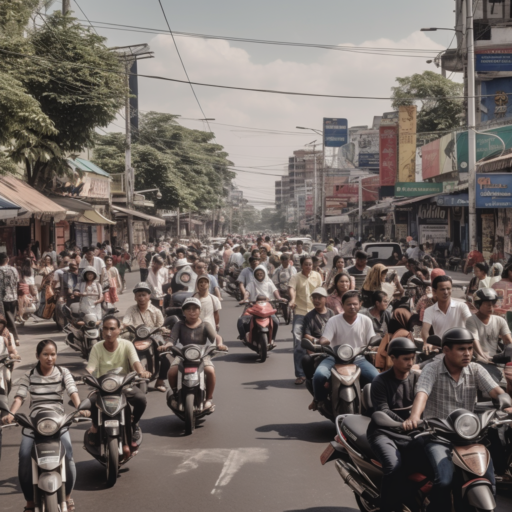
Living in Indonesia generally offers a lower cost of living than in Western countries, particularly in major cities.
Jakarta, the capital, is about 60% cheaper than London or New York.
Outside Jakarta, places like Bandung and Denpasar are even more affordable.
Eating out is inexpensive, but alcohol, imported goods, and luxury items can be costly.
Public transport is cheap but crowded.
Electricity can be expensive, and the supply is somewhat unstable. International education for children is a significant expense. Negotiating a relocation package covering schooling can be beneficial for expat parents in Indonesia.
Contenuti correlati: 2023 Cost of Living in Indonesia, Other Basics
Healthcare in Indonesia
Indonesia’s healthcare system is one of the worst in the developed world. However, the government has spent a lot more on healthcare, and in 2014, a national healthcare system was put in place.
And yet, a lot of Indonesians still depend on private health insurance, especially for services like mental health care that aren’t covered by the country’s normal health insurance.
Foreigners vivere all'estero need to have international health insurance. This is because it helps them get the most medical services available, and it’s also a requirement for getting a work visa.
Education in Indonesia
Indonesia starts schooling with non-compulsory preschool (Taman Kanak-Kanak) at four to five. Six years of primary education (Sekolah Dasar), three years of junior high (Sekolah Menengah Pertama), and three years of senior high are required.
Sekolah Menengah Kejuruan is a vocational high school. There are public, private, and international schools in Indonesia. In 2014, the government restricted local students’ access to international schools.
Major cities hire teachers with Bachelor’s degrees and TEFL/TESOL certification. Private and international schools charge IDR113,135,000 to IDR306,500,000 per year, whereas public schools are free.
The Ministry of Education and Cultural Development oversees education, whereas the Ministry of Religious Affairs oversees religious institutions.
Contenuti correlati: 25 Best International Schools In Indonesia
Transportation in Indonesia
Indonesia’s public transit is limited and unreliable, making travel difficult. Bike rentals are popular, but crowded highways make customers nervous.
Without scooter experience, you may be better off with a driver, cab, or ridesharing. Living in a rural region may require cars, making planning even more crucial.
There are few train options, so study your destination. When buying a bike, prioritize safety with a helmet and an international driver’s license.
Following traffic laws is crucial since police often punish non-compliant drivers. Planning ahead ensures a safe and enjoyable Indonesian vacation.
Climate in Indonesia
Indonesia has a tropical climate near the Equator with significant heat and humidity. A wet season from October to April (changing in some parts) with afternoon rain and a dry season from May to September with tropical showers alternate.
Island temperatures remain consistent, with coastal parts at 28˚C (82.4˚F), inland/mountains at 26˚C (78.8˚F), and higher mountain ranges at 23˚C (73.4˚F). However, rainy evenings in the wet season may cause temporary.
Culture in Indonesia
Indonesia’s rich culture and active customs entice visitors to its tasty food and magnificent temples. Dressing modestly is crucial to local customs.
Friendly greetings and introductions are crucial. Though certain dishes are spicy, Indonesian food is noted for its spices and variety.
Follow temple and holy place standards, including speaking quietly and dressing correctly. Bali is culturally distinct from Muslim Indonesia due to its Hindu influence. This illustrates Indonesia’s cultural diversity.
Expat Life in Indonesia
There are only about 350,000 foreigners living in Indonesia, and most of them live in Jakarta. Foreigners like living in the capital’s Sudirman, Kuningan, and Menteng neighborhoods the most because they are close to the city’s culture and business hubs.
Expat Communities in Indonesia
Bali
Known for its vibrant culture and scenic landscapes, Bali attracts expats seeking a relaxed lifestyle and diverse community.
Related Contents:
Moving to Bali Guide for Expats
Expats in Bali: Top 7 Practical Tips Before Making the Move
Jakarta
As the capital city, Jakarta is a hub for business and employment opportunities, drawing expats looking for urban living and career prospects.
Surabaya
Indonesia’s second-largest city, Surabaya, appeals to expats with its industrial and economic activities, coupled with a growing expat community.
Bandung
Recognized for its cool climate and creative atmosphere, Bandung attracts expats interested in education, arts, and cultural experiences.
Yogyakarta
A cultural and educational center, Yogyakarta appeals to expats seeking a rich historical and artistic environment in a more relaxed setting.
Medan
Serving as the gateway to North Sumatra, Medan attracts expats with its economic opportunities and diverse cultural influences.
Semarang
With its strategic location in Central Java, Semarang is gaining popularity among expats for its economic growth and historic charm.
Contenuti correlati: Best Places to Live in Indonesia
Expat Taxes in Indonesia
Indonesians must self-assess and pay their Annual Individual Income Tax Return (AIITR). Tax ID holders, whether they live in the country or not, are charged depending on their overall income.
However, the new Indonesia Income Tax Law allows expatriate residents with specified vocations and abilities to apply for a territorial base for up to four fiscal years.
Foreign expats may have to share data and track their tax obligations with tax treaty partners like Indonesia under bilateral and multilateral agreements.
Contenuti correlati: Expat Income Tax in Indonesia – 2021 – how much might you pay?
Working in Indonesia
Even though it doesn’t look like a typical business environment, working in Indonesia is a unique mix of natural beauty and job possibilities.
The country has beautiful scenery, and its jobless rate of 6.6% shows how strong its economy is. It quickly recovered from the Asian financial crisis in 1997.
With over 259 million people living in Indonesia, it may be hard to find a job. However, the country’s strong economic growth shows that people who are looking for work or who are already working should have good luck.

Contenuti correlati: Working In Indonesia As An Expat
Work Permit for Expats in Indonesia
Obtaining a work permit in Indonesia involves a complex process due to recent legislative changes.
Two primary work visas, Work Permit (IMTA) and Business Visa, cater to different needs.
The application process demands compliance with the Expatriate Placement Plan and various approvals, requiring a detailed report of foreign expertise necessity.
Small firms face restrictions on hiring expats, and medium to large firms must adhere to employee caps.
The process includes obtaining sponsorship, applying for a Temporary Stay Work Visa, and subsequent steps like obtaining a police report, registering at the municipality and addressing the Skill & Development Fund Fee.
Investing in Indonesia
Businesses are considering Indonesia as a second Asian investment destination, especially for retail, health, and financial services.
Indonesia is a leading China+1 candidate due to global supply chain disruptions and rising labor prices. A large labor force, a growing middle class, and natural resources make the country appealing.
Standard Chartered Bank expects Indonesia’s GDP to grow from US$4.2 trillion in 2020 to US$10.1 trillion by 2030, making it the world’s fourth-largest by purchasing power parity, attracting foreign investors looking beyond China.
Investing in the Indonesia Stock Market
Indonesian citizens and expatriates with resident permits can create a securities account at an Indonesian broker by submitting a passport copy, agreement form, $5,000 deposit, and account approval.
Opening an account is difficult for overseas investors without a KITAS and Indonesian tax number. Some brokers permit expat accounts without an NPWP but need a KITAS.
Due to occasional embezzlement, the Indonesia Stock Exchange lists active brokers but warns investors about dangers.
Investing in Real Estate in Indonesia
Foreigners cannot own freehold land in Indonesia; only citizens can. “SHP,” or “right-to-use titles,” are leaseholds accessible to foreigners for 25 years with a 70-year option.
Indonesia’s property laws are improving, but high levies like 20% on luxury homes make it difficult.
Secondo Invest Asian, sellers in Indonesia pay a 2.5% transfer tax, while non-resident landlords pay a 20% flat tax on rental revenue. Property values determine taxes, which range from 0.1% to 0.3%.
Contenuti correlati: Buying Property in Indonesia Guide for Expats
Starting a Business in Indonesia
In Indonesia, foreigners can’t own 100% of a business; therefore, they partner with a local company. The government wants foreign money to create jobs and improve infrastructure with simplicity of use, certainty, efficiency, and openness.
To start a firm, you must obtain company registration paperwork. As a foreigner starting a business in the US, you must first research the market and then choose a business structure such as a Limited Liability Company.
To circumvent Indonesia’s laws, you need funds, licenses, permissions, and visas. Compliance with labor laws and recruiting expatriates are crucial to corporate success.
Banking in Indonesia
If you live in Indonesia, you need an ITAS (Izin Tinggal Terbatas) to create a bank account. You must then bring a copy of your passport and visa documents to your local financial institution.
As proof of employment, you may need a letter from your employer and a supervisor’s endorsement. Some banks require recent pay stubs to be photographed.
Banks often have minimum payments. This item typically costs £350/£250 however, for high-value accounts, it can cost £35,000/£25,000.
Contenuti correlati: Best Banks in Bali: Top 5 Choices for Expats
Retiring in Indonesia
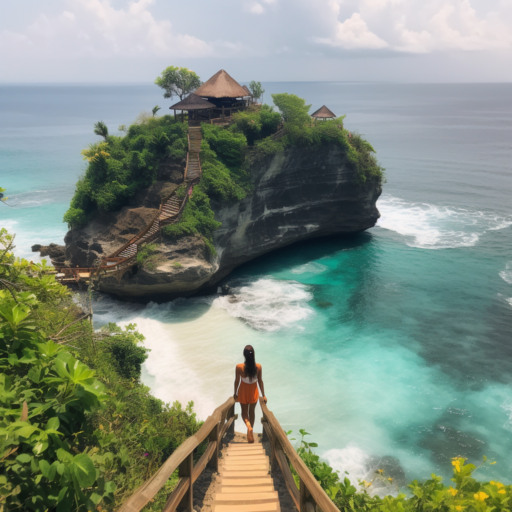
Expats are looking forward to retiring in Indonesia because it has a perfect way of life, luxurious amenities that aren’t too expensive, and beautiful scenery.
But a long-term move that goes well needs careful planning, especially when it comes to visa standards. The Retirement Visa, which is only given to people from certain countries, is the most important document for a dream retirement in Indonesia.
Even though it doesn’t cover the whole retirement period, it can lead to the coveted KITAP or permanent residence permit, which can open up more chances for expats who can figure out how to work within Indonesia’s complicated administrative system.
Related Contents:
Pension in Indonesia
Indonesia mandated universal healthcare and pension schemes for citizens and expats in 2014.
Over 246 million individuals participate in the world’s largest healthcare program.
Participants, including foreigners, receive free dental, medical, and exercise treatment.
Emergency and long-term treatment, like organ transplants, is also provided. Employees abroad must register their families. Benefits include job advice and a monetary stipend.
This benefits them financially and professionally. The ambitious initiative aims to provide full social security to all Indonesians.
How to Get a Retirement Visa in Indonesia
Indonesia lets people 55 and older get a retirement visa, but they need a local supporter and proof that they can afford to pay at least $1,500 a month.
Agencies can help retirees find sponsors, but they need to make sure they have enough money to cover the $18,000 annual limit because they are not allowed to work with this visa.
These visas cost less than $1,000 and can be renewed for an additional $800. They are good for one year and can be extended for up to five years, which leads to permanent status.
People who are retired can also get a multiple exit/reentry permit, which gives them more freedom to move within the country.
Financial Planning in Indonesia
Life Insurance in Indonesia
Life insurance returns in Indonesia are good due to industry stability and 1.5% life insurance coverage, according to McKinsey & Company.
This allows market segment and region-based rivalry, not price. Indonesia’s penetration rate is 3%, lower than India’s.
The country has room to grow. Consumer brand loyalty stabilizes markets. Studies show that up to three-quarters of various customer groups have a preferred brand. This keeps life insurance stable and competitive nationwide.
Health Insurance in Indonesia
The 2014 Jaminan Kesehatan Nasional (JKN) initiative, which mixes private insurance with public care, intends to create a universal healthcare system in Indonesia.
Patients must navigate multiple institutions due to hospital participation issues. Community health centers, sub-centers, and village-level integrated posts comprise the tiered system.
Most expats seek foreign health insurance since public healthcare is substandard. They can visit private hospitals and clinics with advanced equipment and English-speaking staff.
In an emergency, private insurance provides air evacuation to Singapore and other faraway areas.
Contenuti correlati: Financial advisors for expats living in Bali, Indonesia – What are the best options?
Pensieri finali
Investing and living in Indonesia presents a unique blend of opportunities and challenges. With a thriving economy, diverse culture, and picturesque landscapes, the archipelago is enticing.
However, navigating regulatory nuances and understanding local markets is key. For those seeking adventure and growth, Indonesia can be a rewarding destination, but a well-informed investment strategy is paramount for a successful expat journey.
Siete afflitti dall'indecisione finanziaria?

Adam è un autore riconosciuto a livello internazionale in materia finanziaria con oltre 830 milioni di visualizzazioni di risposte su Quora, un libro molto venduto su Amazon e un contributo su Forbes.
