
Do you think about living in Taiwan? In this page, we’ll go through certain vital points to know before you relocate to this Asian country. Specifically, the topics include:
- Taiwan Visa and Residency
- Living in Taiwan 101
- Taiwan Culture and Environment
- Cost of Living in Taiwan
- Taiwan language
- Taiwan weather
- Can foreigners acquire Taiwan real estate?
Se state cercando di investire come espatriati o individui con un alto patrimonio netto, che è ciò in cui sono specializzato, potete inviarmi un'e-mail (advice@adamfayed.com) o un messaggio WhatsApp (+44-7393-450-837).
People leave their home countries for various reasons. Whatever yours is, this page should help you get to assess whether Taiwan could be your new dwelling place.
Taiwan Visa and Residency
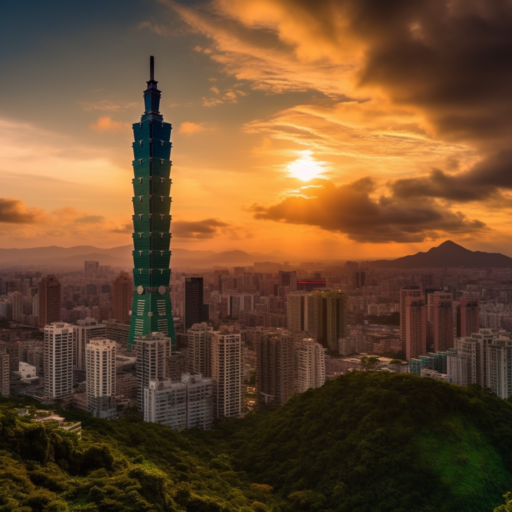
Important Taiwan entry requirements and paperwork required for permanent residency must be obtained by non-Taiwanese citizens.
Foreign nationals seeking entry to Taiwan can pick diplomatic, courtesy, working holiday, visitor, or resident visa. Since the working-holiday program is only open to inhabitants of certain countries, most expats opt for the latter two alternatives.
There are numerous mandatory Taiwan visa requirements one must meet in order to qualify for a resident visa:
- Intention to work, invest, or reunite with relatives in Taiwan for more than six months.
- Two passport-sized photos included in application.
- Any documentation or approval letters required by the visa category, such as a work permit, in order to obtain the visa.
- A Health Certificate, if necessary.
Within 15 days of arriving in Taiwan, all foreign nationals are required to apply for an Alien Resident Certificate.
White-collar workers have the option of entering Taiwan on a visitor visa and converting to a resident visa later, but the process is simplified by applying for a resident visa immediately at your home country’s embassy, mission, or representation office in Taiwan.
Expats in Taiwan rely heavily on the Alien Resident Certificate (ARC) as their primary form of identification. A valid resident visa, a completed application form, two passport-sized photos, a letter of permission from the appropriate government, any additional documentation, and the annual cost of 1,000 Taiwan dollars must all be presented in person to a National Immigration Agency service center.
Depending on the purpose of your stay, spouses must produce an authenticated marriage certificate, and foreign laborers must submit their work permit and other appropriate documents. You can get help applying through your employer or your local Service Center.
On average, it takes 10 business days to complete the processing phase. Please remember to renew for your Alien Resident Certificate if you move within Taiwan. Note that the 15-day window following your move stays unchanged from the original application. You must also apply for a re-entry permission for Taiwan in addition to your ARC if you plan to leave the country.
Overall, the Taiwan visa application duration depends on the type of visa being secured.
Living in Taiwan 101
Taiwan Culture and Environment
Taiwanese culture is a complex mix of influences that is now recognized as a distinct identity, even by locals. Many religious and cultural practices that were on the verge of extinction in mainland China flourished on Taiwan, which was unaffected by the Cultural Revolution.
Taiwan language
Taiwan has four official languages: Taiwanese, Mandarin, Hakka, and Formosan as a group. Though widely used, English is not official.
Mandarin is more common in Taipei and major urban centers than rural areas, younger people than elderly people, and northern Taiwan than the south. It’s the de facto international language of trade, diplomacy, and learning. Therefore, studying Mandarin benefits any resident.
Taiwanese, a regional dialect of Chinese, is more common in rural areas, the elderly, and the south.
Taiwan Currency
The official currency of Taiwan is the New Taiwan Dollar (TWD), abbreviated as NT$ or NTD.
Taiwan Weather
Despite its small size, Taiwan has distinct climatic patterns that vary greatly from north to south. The northern portion, including Taipei, has a subtropical climate with different seasons. In contrast, the south of the country is characterized by a constant tropical temperature that ranges from mild to scorching.
Taipei’s winters are typically mild and wet, with snowfall relegated to the city’s higher elevations. In contrast, summers bring oppressive heat and stifling humidity. There is a small rainy season in the spring, but rain is a continuous companion all year. As a notable meteorological feature of the region, the island experiences around six typhoons between the months of July and October.
Getting Around Taiwan
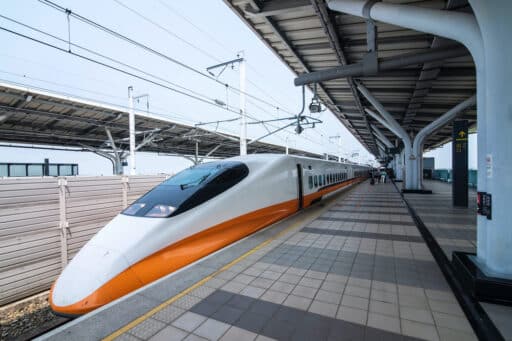
Public Transport in Taiwan
The MRT system in Taipei is the city’s lifeblood, making private automobiles essentially superfluous. Because driving is usually slower due to traffic and difficulties finding parking, the MRT has become the preferred means of transit because of its remarkable efficiency and vast coverage.
The most convenient way to get around Taiwan is with an EasyCard. It is a reusable transport card that can be used on the MRT, buses, taxis, and even in convenience stores across Taipei and the rest of Taiwan.
There are a numerous options for getting from one city to another within Taiwan, such as long-distance buses, ordinary trains, and the High-Speed Rail. The HSR primarily links the developed western coast, while the trains travel in a complete circle around Taiwan.
Taiwan Healthcare for Foreigners
Public Healthcare in Taiwan
Public healthcare in Taiwan is provided through the National Health Insurance (NHI) scheme that aims to make medical treatment more accessible. Everyone living in Taiwan, locals and expats alike, must have this public health insurance. Taiwan has a number of top-notch medical facilities, but visitors may have trouble getting prompt care, which makes the NHI significant.
Alien Resident Certificate holders and foreign nationals who have been living in Taiwan for more than two months are required to sign up for NHI.
Applying for NHI coverage is mandatory within four months of gaining residency status for dependents, students, or self-employed residents.
Private Healthcare in Taiwan
Those pursuing private healthcare in Taiwan should be aware of the high costs involved and shop around extensively for private health insurance policies.
Is Taiwan safe?
Taiwan is a very safe country that a solitary female tourist in Taipei can confidently navigate most districts at night. Frauds targeting tourists are extremely rare, and violent crimes against international visitors are almost unheard of in Taiwan.
However, foreigners living in Taiwan’s major cities, notably in Taipei, should take basic safety measures similar to those used in any significant metropolis. In busy places like markets, this means keeping a close eye on one’s things.
Another thing that has become a major issue for Taiwan is air pollution.
Are there international schools in Taiwan?
There are, especially in Taipei. International students can choose from different universities that offer scholarships and reasonable tuition fees. In total, there’s about 60 international schools across the nation.
Can foreigners work in Taiwan?
Teaching English is the most common profession chosen by native English speakers in Taiwan.
While some expats do find work in non-traditional sectors, many more are thwarted by a number of obstacles. There is an abundance of qualified local applicants across different businesses in Taiwan, salaries are low by international standards, and Mandarin is the de facto business language in the country.
It takes a lot of work, but Taiwan also offers the possibility of an entrepreneur visa. Many people from Southeast Asia travel to Taiwan in search of lower-paying manual labor, fishing, and caretaking jobs.
Contenuti correlati: Working In Taiwan As An Expat
Cost of Living in Taiwan
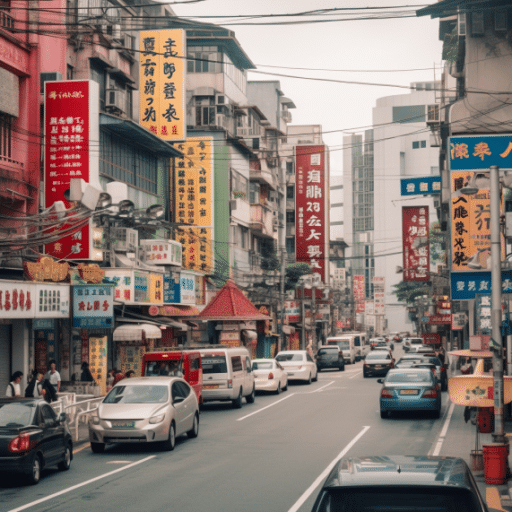
Is Taiwan a good place to live? Many would measure this in terms of cost.
Renting an apartment could set you back 10,000 to 13,500 Taiwan dollars depending on the location. A fast street-side dinner costs 100, while an all-you-can-eat buffet with drinks costs about a thousand. A local beer costs 60 dollars, while imported ones cost 80.
A trip to the doctor could cost roughly 150 dollars, while a month of MRT commute costs could run around 2,000 dollars. A High-Speed Rail ticket across the country may cost nearly 1,500 dollars.
If you’re moving to Taiwan alone, you need about 25,000 dollars to cover your monthly expenses besides rent. But if you’re moving with your family, of course that amount is far from being sufficient to live comfortably.
Overall, the living costs in Taiwan will greatly differ based on your lifestyle, the place you’re going to settle in, plus other factors. Taiwan is somewhat in the middle amongst its Asian neighbors.
Expat Taxes
The length of a non-resident alien’s stay in Taiwan affects their tax liability.
Salary payments from a Taiwan-registered firm are subject to an 18% withholding tax for anyone living in Taiwan for fewer than 90 days. However, payment from an entity registered outside of Taiwan is tax-free, as per PwC.
If a non-resident immigrant lives in Taiwan for more than 90 days but less than 183 days in a calendar year, their Taiwan taxable salary income is taxed at 18%, regardless of the source.
Expats staying in Taiwan for 183 days or more in a tax year are considered tax residents in the country and must pay 20% Individual Income Tax. If certain conditions are met, foreign-sourced income is included in the IBT calculation:
- Taiwan tax residency applies to the individual.
- Foreign-sourced income reaches 1 million Taiwan dollars, while basic income exceeds 6.7 million dollars.
Contenuti correlati: Expat Taxes in Taiwan
Best cities in Taiwan to live
Taipei
The pluses of living in Taipei include having more sidewalks than most Taiwan cities, making it pedestrian-friendly. Expats can find housing more easily because many landlords speak English, plus the efficient transportation makes getting around easier too!
In addition, Taipei now has more foreign schools to meet the demands of expat families with children of different ages.
One potential negative is the price, particularly for real estate. Expenses for basic necessities can also add up quickly while you’re living in Taipei.
New Taipei
Living costs in New Taipei is lower than in central Taipei, so it’s a good choice for those on a tighter budget. The city comforts offered by New Taipei is still notable.
While New Taipei City is affordable, certain sections lack well-developed sidewalks, which may affect pedestrian accessibility. For easy movement, inhabitants in some city fringes may need a vehicle or motorbike.
Tainan
Tainan has a noteworthy selection of traditional foods, albeit restaurant dining choices are limited when compared with larger cities.
The main issue of Tainan is air pollution, as it is more alarming than other parts of the country.
Since transportation isn’t very efficient, residents may find that owning a scooter or automobile is necessary for convenience.
Kaohsiung
Kaohsiung’s atmosphere is noticeably more laid-back than that of other major areas, which is perfect for those who wish to slow down. The beach resorts of Kenting, a nearby hotspot, are within easy reach. Rent is also cheaper in Kaohsiung vs other Taiwanese cities.
On the flip side, there is cause for concern about the city’s air quality and its possible impact on the health of residents, good dining and craft beer selections are limited amid the number of restaurants, the summer months can be too hot, plus commuting around the city can be challenging.
Taichung
Taichung City’s climate is more agreeable than that of Taipei’s. The former also provides a fair amount of amenities for convenience. In addition, in comparison to other cities outside of Taipei and New Taipei, the presence of a relatively higher number of foreigners gives opportunities for cultural exchange and social interactions.
However, unlike Taipei, public transit choices in Taichung City are limited, making the use of a personal vehicle or scooter desirable for moving around. While there are opportunities to go cycling in the city, there may be fewer designated bicycle paths than in other cities.
Chiayi
Head to Chiayi if you wish to be surrounded by stunning and relaxing scenery, on top of lower living expenses.
If you’re the type who need many places to go out and have fun, this might not be the best place for you.
Living in Chiayi can also be more difficult due to a lack of handy services and public transit. Having access to a private automobile can make up for it though.
Yilan
Yilan’s housing market is affordable, apartments and residences are more spacious, and there’s cleaner air too. Outdoor enthusiasts may also like Yilan’s more arable land.
Do note that the region unfortunately suffers from frequent earthquakes. Expats seeking specific services or comforts may find Yilan lacking and one should definitely own a car in this area for ease of travel.
Investing in Taiwan
Taiwan, an Asia-Pacific hub with a strong industrial ecosystem, leads in electronics and semiconductors with USD 162.3 billion in semiconductor output in 2022, according to TWSE.
Most businesses are SMEs (98%), which are crucial to the stability of Taiwan economy. Foreign exchange reserves of USD554.9 billion placed the nation 6th in the 2023 World Competitiveness Rankings.
With 979 listed businesses and a market size of over USD 1.7 trillion, Taiwan’s securities market is active. The Taiwan Innovation Board diversifies investment options to support government innovation goals.
The Taiwan Stock Exchange’s intraday odd-lot trading and shorter matching period demonstrate its dedication to efficiency and inclusivity in the changing financial world. Taiwan’s strategic location, technological prowess, and growing capital market attract investors.
Contenuti correlati: How to invest in stocks in Taiwan?
Can foreigners acquire Taiwan real estate?
Foreign nationals are allowed to purchase real estate in Taiwan, albeit doing so involves certain challenges.
- Normally, 30% of the property’s value is expected as down payment.
- Without the ability to communicate in Mandarin, conducting business in the Taiwanese banking system might be difficult.
- There must be an agreement between your home nation and Taiwan allowing citizens of Taiwan to purchase real estate in your country.
- Obtaining a loan to finance the purchase of real estate requires proof of a stable income.
- Deed registration with the Land Registration Office is required to establish legal ownership.
- Real estate in Taipei may be quite expensive, as evidenced by the city’s reputation for having extremely high sales prices (though rent is reasonable).
Siete afflitti dall'indecisione finanziaria?

Adam è un autore riconosciuto a livello internazionale in materia finanziaria con oltre 830 milioni di visualizzazioni di risposte su Quora, un libro molto venduto su Amazon e un contributo su Forbes.
