
Mappa del sito: Vivere all'estero > Living in the Philippines
Embarking on the journey of investing and living in the Philippines as an expat is a multifaceted exploration into the heart of Southeast Asia’s vibrant archipelago.
This guide is your key to unlocking the rich tapestry of opportunities, challenges, and vibrant experiences awaiting expats in the Philippines.
Se state cercando di investire come espatriati o individui con un alto patrimonio netto, che è ciò in cui sono specializzato, potete inviarmi un'e-mail (advice@adamfayed.com) o un messaggio WhatsApp (+44-7393-450-837).
In particular, the topics covered include:
- Local Culture in the Philippines
- Cost of Living in the Philippines
- Expat Life in the Philippines
- Cities in the Philippines Where Most Expats Live
- Investing in the Philippines as an Expat
- Economy in the Philippines
Vivere nelle Filippine
Accommodation in the Philippines
Expats in the Philippines often reside in Metro Manila, particularly in Makati City, the hub of international corporations and the diplomatic community.
Housing options range from luxury condos to homes in gated communities, with furnished apartments readily available.
Newer buildings are more likely to have air conditioning, which is essential in the tropical climate. Some properties lack Western-style toilets.
Local Culture in the Philippines
Adapting to Filipino culture, influenced by European and American traditions, requires adjustment for expats.
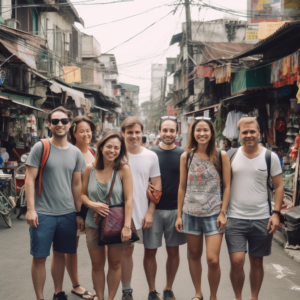
Understanding cultural nuances, such as avoiding offensive gestures and respecting dining etiquette, is crucial.
Gift-giving is a common practice, and presenting gifts elegantly is valued. Filipinos often mask emotions and prioritize harmony, manifesting in behaviors like smiling in challenging situations.
The concept of “utang na loob” (debt of gratitude) is significant, emphasizing the appreciation of even small gestures.
Education in the Philippines
The Philippine education system, shaped by colonial history, mirrors the US model. Public schools, funded by the government, may lack quality and resources.
Many expats prefer private or international schools, with the latter offering diverse curricula.
International schools in the Philippines cater to various nationalities, with admission often requiring a personal interview and high fees.
Contenuti correlati: 16 Best International Schools In The Philippines
Telecommunication and Internet in the Philippines
Major mobile providers include Globe, PLDT, Smart, and Sun, offering both contract and prepaid options.
Internet services from providers like PLDT, Converge, Globe, and SKYcable are accessible. English-language newspapers like the Manila Bulletin and the Philippines Daily Inquirer are popular.
Healthcare in the Philippines
Healthcare quality varies, with major city hospitals generally of high standards. Expats aren’t covered by the government’s health scheme, necessitating private health insurance.
Private hospitals in major cities provide good care at relatively low costs.
Prescription medicines have strict controls, and local approval is required for foreign prescriptions. Mosquito-borne diseases are a concern in certain regions.
Public Transportation in the Philippines
Public transport is crowded, prompting many expats to drive or use taxis. Chaotic city roads may require adaptation, and obtaining a local driver’s license is necessary for stays exceeding 90 days.
Taxis are metered, and ride-hailing apps are prevalent. The national railway service covers most of the country, while buses, jeepneys, boats, and ferries are popular modes of transport between islands.
Cost of Living in the Philippines
The cost of living in the Philippines is lower than in many Southeast Asian countries. Manila is more affordable than cities like Singapore and Bangkok.
Local produce markets offer reasonably priced food, and dining out is common among expats. Imported Western goods and cars may be expensive due to high import duties, but public transport remains an economical option.
Nightlife in the Philippines
The nightlife in the Philippines is vibrant and diverse, offering a range of entertainment for locals and expats alike.
Metro Manila, particularly areas like Makati and Bonifacio Global City, boasts lively nightclubs, bars, and rooftop lounges with music ranging from local tunes to international hits.
Popular beach destinations like Boracay and Cebu also feature beachfront parties, while cities like Angeles are known for their dynamic bar scenes.
Expat Life in the Philippines
Expat communities in the Philippines thrive with a diverse mix of individuals from around the world, fostering a sense of camaraderie and mutual support.
These communities often organize social events, cultural exchanges, and support networks, providing expats with a welcoming environment as they navigate the challenges and enjoy the enriching experiences of living in the archipelago.
Cities in the Philippines Where Most Expats Live
City of Manila
The capital city, Manila, is a bustling metropolis with a vibrant cultural scene and numerous employment opportunities, making it a popular choice for expats seeking an urban lifestyle.
Cebu City
Known for its beautiful beaches and a growing economy, Cebu City attracts expats with a mix of a relaxed lifestyle and business prospects, offering a balance between work and leisure.
Davao City
As one of the safest cities in the Philippines, Davao City appeals to expats seeking a peaceful environment, complemented by its proximity to natural attractions like Mount Apo, the country’s highest peak.
Taguig City
Home to the Bonifacio Global City (BGC), Taguig is a rapidly developing business district, drawing expats with its modern amenities, international schools, and diverse dining options.
Makati City
Known as the country’s financial hub, Makati City is a magnet for expats working in finance and commerce, offering a sophisticated urban lifestyle with upscale shopping and dining.
Quezon City
With a mix of residential and commercial areas, Quezon City provides expats a diverse living experience, along with proximity to entertainment hubs and educational institutions.
Pasig City
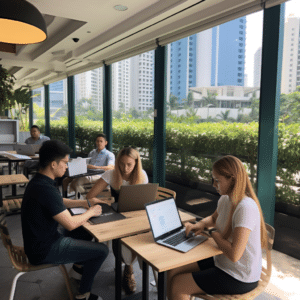
Positioned as a growing business and residential hub, Pasig City is attractive to expats for its modern infrastructure, shopping centers, and proximity to Ortigas, a major business district.
Iloilo City
Recognized for its rich cultural heritage and friendly locals, Iloilo City offers expats a more relaxed pace of life, coupled with historical sites and a burgeoning food scene.
Angeles City
Known for its vibrant nightlife and entertainment options, Angeles City is a popular destination for expats seeking an active social scene and proximity to Clark Freeport Zone.
Baguio City
With a cool climate and scenic landscapes, Baguio City is a favorite among expats looking for a refreshing escape, offering a laid-back lifestyle amidst picturesque mountains and pine forests.
Working in the Philippines as an Expat
Working Conditions in the Philippines
The Philippines, known for its warm hospitality, provides expats with friendly workplace conditions. In provinces, expats often experience celebrity-like status due to the welcoming nature of Filipinos.
With millions of expats residing in the country, many find the working conditions comfortable and choose to settle in the Philippines, reflecting the affordability of living and the welcoming atmosphere.
Contenuti correlati: Working In The Philippines As An Expat
Work Visa Requirements in the Philippines
Permit for Alien Workers
To work legally in the Philippines, expats need an Alien Employment Permit (AEP), obtainable from the Department of Labor and Employment (DOLE).
The AEP, valid for one year (or the employment period not exceeding five years), legitimates foreign nationals’ employment.
While an AEP is crucial, additional documentation, such as a work visa (9G), is required. Efforts to streamline the process and reduce requirements are underway.
Pre-Arranged Visa
The Pre-Arranged Employee Visa or 9G Visa enables employers in the Philippines to hire expats with specific skills.
This visa, lasting one to three years, can be extended based on the employment contract.
Expats must secure employment in a local company that petitions and secures the 9G Visa. This process aims to simplify expats’ entry but is subject to the company’s efficiency.
Temporary Work Permit in the Philippines
If a foreign national requires immediate work while the 9G Visa is pending, a temporary work permit can be issued by the Bureau of Immigration, allowing legal employment for three months.
Additionally, the Special Employment Permit enables legal work for expats temporarily, lasting three to six months.
AEP Exemptions
Certain foreigners are exempt from obtaining an AEP, including those in diplomatic services, accredited foreign government officials, international organization workers, certain corporate board members, and those here for teaching or research exchange programs.
Investing in the Philippines as an Expat
Investing in the Philippines presents opportunities in diverse sectors, from the rapidly growing digital economy to established industries like manufacturing and agriculture.
With a strategic location, a young and skilled workforce, and ongoing government initiatives, the Philippines remains an attractive destination for foreign investors seeking growth and a foothold in the Southeast Asian market.
Economy in the Philippines
The Philippines, a dynamic force in the East Asia Pacific, sustained impressive economic growth with a 6.4% average annual GDP increase from 2010 to 2019, according to Asia Fund Managers.
However, the pandemic-induced 2020 lockdowns led to a record 9.6% GDP contraction, impacting consumption, investment, exports, and remittances.
In 2021, the economy rebounded, registering 5.7% growth and surpassing pre-pandemic levels at 7.6%. With a population of 112 million and a median age of 25.7, the Philippines targets 6–7% GDP growth in 2023 and 2024, yet the IMF predicts 5%.
Unemployment rates improved, reaching 4.3% in December 2022, a significant decline from the pandemic peak and pre-pandemic levels.
Investment Sectors in the Philippines
In 2022, the Philippines emerged as one of the fastest-growing economies globally, achieving an impressive GDP growth rate of 7.6%, according to ASEAN Briefing, marking its swiftest economic expansion since 1976.
To lessen dependency on overseas remittances, the Southeast Asian nation has strategically bolstered its domestic industries, aiming to ascend global value chains in specific sectors.
This strategic shift provides foreign investors with fresh prospects.
Notably, industries such as business process outsourcing and semiconductor manufacturing stand out as dynamic contributors to the country’s GDP, showcasing their increasing significance in the Philippines’ economic landscape.
Agriculture Sector in the Philippines
In 2022, the Philippines’ top 10 agricultural exports, totaling US$6.49 billion, constituted 95% of the overall earnings.
Key crops include rice, coconuts, sugarcane, corn, bananas, pineapples, and mangoes. Despite contributing 8.9% to GDP and employing 24% of the workforce, the sector’s growth lags at 2% annually. Challenges include low mechanization and an aging farmer population.
The Philippines is shifting to high-value crops, employing AgriTech for enhanced productivity. A three-year agriculture development initiative targets rice, corn, high-value crops, poultry, fisheries, and animal productivity.
By 2025, the goal is rice self-sufficiency, allowing non-competitive rice areas to diversify. Investor support in logistics, R&D, and postharvest processing can amplify these efforts.
Infrastructure in the Philippines
The Philippines has the highest logistic costs in ASEAN, with Manila traffic costing $17.5 billion yearly due to poor infrastructure for its 113 million people.
President Duterte’s ‘Build, Build, Build (BBB)’ initiative sought to usher in a ‘golden age of infrastructure,’ raising expenditure from 3.9% to 5.3% of GDP by 2022.
Foreign infrastructure corporations can profit from 3,700 projects worth $372 billion until 2028, including airports, trains, hydropower plants, and digital infrastructure.
Business Process Outsourcing in the Philippines
In 2022, the Philippine BPO sector significantly boosted the economy, contributing US$32.5 billion, a 10% rise from 2021.
Expanding beyond traditional call centers, the industry now encompasses diverse outsourcing services, attracting investments in KPO, including IT, game development, financial research, software development, and data analytics.
As it approaches the record US$36 billion remittance mark, BPO revenue comprises 11% of GDP, surpassing the 10% from overseas Filipinos during the pandemic.
With a global market share of 10-15%, the industry is set for ongoing growth, projecting a robust US$59 billion in annual revenues by 2028, further reducing dependence on remittances.
Contenuti correlati: Best BPO Companies in the Philippines
Renewable Energy Sector in the Philippines
The Philippines is a renewable energy powerhouse with 246,000 MW untapped. It has 1,900 MW of geothermal capacity, third internationally behind the US and Indonesia.
The present renewable energy mix includes 4.3 GW hydropower, 896 MW solar, and 427 MW wind. The Philippines wants 35% renewable power by 2030 and 50% by 2040.
This includes a 75% increase in geothermal capacity, 160% in hydropower, 2,345 MW in wind power, and 277 MW from biomass. Foreign investors have promising potential, with $120 billion in needed investment by 2040.
Knowledge Process Outsourcing in the Philippines
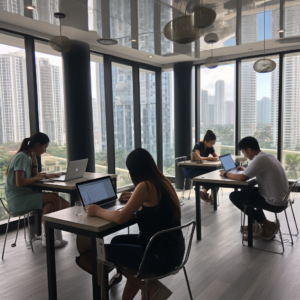
The Philippines’ KPO sector is vital for elevating the broader BPO industry, capitalizing on special economic zones (SEZs) for remote work.
BPO companies, leveraging SEZ flexibility, diversify into high-value KPO sub-sectors like game animation, IT services, banking, legal services, and data analytics.
Digital Economy in the Philippines
The Philippines’ digital economy reached $20 billion GMV and 22% CAGR in 2022. By 2030, it might reach $100-150 billion, up from $35 billion in 2025.
Lazada and Shopee achieved $14 billion GMV with over 100 million visits in 2022. Internet connectivity is 68-72%, and 86 million people utilize smartphones, offering significant economic possibilities.
By investing in FinTech, cloud computing, the Internet of Things, and big data, foreign investors can help 30 million unbanked Filipinos.
The startup environment, especially in digital payments, lending, and remittances, meets significant demand for novel financial accessibility and inclusion solutions.
Electronics and Semiconductors in the Philippines
The Philippines’ electronics industry, a manufacturing pillar, is dominated by 73% semiconductor manufacturing services and 27% electronics manufacturing.
Predictions foresee exports hitting $50 billion in 2023, up from $45.92 billion in 2022, with semiconductors contributing significantly at 47%, totaling $29.2 billion.
To boost global value chain participation, the Philippines seeks increased foreign investments in sectors like consumer electronics, power electronics, medicinal electronics, and auto electronics.
Key players include Fastech Synergy Philippines Inc., Amkor Technology, and Megachip Semicon Electronics Corp.
Investing in the Philippine Stock Market
In the Philippines, investing in publicly listed companies on the Philippine Stock Exchange (PSE) involves opening a stock trading account with a PSE-accredited stockbroker.
The PSE serves as a marketplace for buying or selling stocks. To initiate transactions, investors can choose between traditional and online stockbrokers, each with varying commission rates. It’s essential to note that not all stockbrokers provide both traditional and online services.
Contenuti correlati:
Top Companies in the Philippines to Invest Stocks In
How to Invest in Stocks in the Philippines – Part 1
How to Invest in Stocks in the Philippines – Part 2
Investing in Real Estate in the Philippines
Before venturing into real estate investment in the Philippines, it’s crucial to assess your financial readiness.
Ensure you have adequate funds, at least 20% for a down payment, and consider having an emergency fund for unforeseen challenges.
Enhancing property value through upgrades can be advantageous, and starting with Real Estate Investment Trusts (REITs) is a prudent way to enter the market.
Contenuti correlati: Conviene investire in immobili nelle Filippine nel 2023?
Can Foreigners Own Land in the Philippines?
Foreigners are restricted from owning land in the Philippines; however, they can legally possess a residence.
The Philippine Condominium Act permits foreign ownership of condo units, provided at least 60% of the building is owned by Filipinos.
For those desiring to buy a house, entering a long-term lease agreement with a Filipino landowner is an option.
Alternatively, property acquisition through a corporation is allowed as long as 60% or more of the corporation’s ownership belongs to Filipino citizens.
Contenuti correlati: Buying a condo in Manila (Philippines) – how to do it/is it a good idea?
Financial Planning in the Philippines
A financial plan outlines earnings, expenses, and savings allocation. Before planning, identifying needs is crucial to forming the foundation.
Yet, many Filipinos, including OFWs, lack pianificazione finanziaria awareness. OFWs often exhaust savings on consumption upon return.
Promoting financial education is essential, encouraging saving for unforeseen challenges. Financial planning ensures meeting current needs while securing a prosperous future.
Life Insurance in the Philippines
Life insurance in the Philippines provides financial security for families. Notable providers include Sun Life, Philam Life, and Pru Life U.K.
Policies offer coverage for death, disability, and opportunità di investimento, contributing to long-term financial planning.
Health Insurance in the Philippines
Health insurance safeguards against medical expenses.
Top providers include Maxicare, Medicard, and PhilHealth. Plans cover hospitalization, preventive care, and outpatient services, ensuring access to quality healthcare without excessive financial burden.
Contenuti correlati: Assicurazione sanitaria in Vietnam, Cambogia, Filippine, Malesia, Spagna e oltre
Banking in the Philippines
The Philippines’ banking, under Bangko Sentral ng Pilipinas, propels economic growth. With 45 commercial and universal banks dominating 90% of the market share, they offer diverse services. Meanwhile, 406 Rural and Cooperative banks foster rural development.
Thrift banks, numbering 43, specialize in deposits, investment, and trade.
Emerging trends encompass Bancassurance, Mobile/Branchless banking, Retail Gestione patrimoniale, and rapidly growing Microfinance, scrutinized for potential predatory lending during the COVID-19 challenges.
Contenuti correlati:
Best Wealth Management Banks in the Philippines
Best Banks to Open a Savings Account in the Philippines
Pensieri finali
The Philippines stands as an undeniable expat destination. Its warm people, affordable living, thriving job market, natural beauty, cultural diversity, and expat-friendly amenities create an ideal environment for living, working, investing, and enjoying life.
Expats find themselves captivated by the charm of the Philippines, creating lasting memories in this tropical paradise.
Whether it’s the stunning sunsets, festive celebrations, business ventures, or genuine friendships formed, the reasons for expats to fall in love with the Philippines are as abundant as its diverse islands.
Siete afflitti dall'indecisione finanziaria?

Adam è un autore riconosciuto a livello internazionale in materia finanziaria con oltre 830 milioni di visualizzazioni di risposte su Quora, un libro molto venduto su Amazon e un contributo su Forbes.
