
Mappa del sito: Vivere all'estero > Living in Vietnam
Expats investing and living in Vietnam enjoy a rich culture, active communities, and numerous investment options.
Adapt to the various environments, explore Vietnam’s rich culture, and embrace expat life to uncover vibrant communities and understand taxation and working relationships.
This thorough expat guide covers everything from cost of living to healthcare and hospitals to education and international schools.
Se state cercando di investire come espatriati o individui con un alto patrimonio netto, che è ciò in cui sono specializzato, potete inviarmi un'e-mail (advice@adamfayed.com) o un messaggio WhatsApp (+44-7393-450-837).
For individuals entering Vietnam’s dynamic and culturally rich landscape, this guide covers everything from expat jobs and investments in the booming Vietnamese market to real estate, banking, and retirement.
Specifically, the topics included in this page are:
- Vivere in Vietnam 101
- Costo della vita in Vietnam
- Culture in Vietnam
- Expat Life in Vietnam
- Expat Communities in Vietnam
- Tasse in Vietnam
- Investing in Vietnam
- Vietnam Stock Market
Vivere in Vietnam 101
Vietnam’s 1980s Doi Moi reforms boosted its economic rise from traditional to contemporary. Tourism, telecommunications, exports, and banking attract expats.
Despite the challenges of moving, Vietnam’s dynamic lifestyle offers expats many chances.
Expats must traverse the peculiar cultural context of a one-party communist regime, yet the country is normally protected from catastrophic natural calamities.
Liberal Westerners may find Vietnam’s limited freedoms, poor press freedom ranking, and government-suppressed religious acts difficult.
Related Contents:
How to Get Permanent Residency in Vietnam
How to Get Temporary Residency in Vietnam
Costo della vita in Vietnam
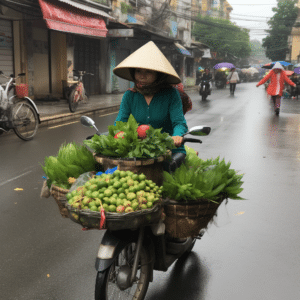
Vietnam is an economical expat and foreign destination with a good economy. Foreign workers, especially in high-growth industries or multinationals, earn an average of US$78,000/£55,000.
Even in Hanoi and Saigon, where a small family’s monthly rent and dining out expenses rarely exceed US$1,500/£1,100, William Russel states the cost of living is low.
This affordability lets expat families with sufficient incomes live a luxurious city lifestyle with extra cash.
Contenuti correlati: 2022 Cost of Living in Vietnam
Assistenza sanitaria in Vietnam
Vietnam responded fast to the COVID-19 pandemic due to its expanding preventative healthcare infrastructure.
The country’s mixed public-private healthcare system provides advanced services in cities and is spreading to rural areas as it becomes public. Immunizations and preventative treatment are largely free.
Expats prefer private clinics in big cities like Hanoi or Saigon, emphasizing the importance of private medical insurance and medical evacuation coverage for specialized treatments abroad.
Education in Vietnam
Vietnam has five public school tiers: kindergarten, elementary, middle, and high. The public school system, while not the worst in Asia, has underpaid teachers and a curriculum that doesn’t represent modern life.
Many expats send their children to private or international schools in Vietnam because they believe the Vietnamese public education system is flawed.
Contenuto correlato: 21 Best International Schools In Vietnam
Transportation in Vietnam
Vietnam, shaped like a ‘S’ and over 1,700 kilometers long, has two main transportation choices. Domestic flights from Vietnam Airlines, VietJet, Bamboo Airways, Vietravel Airlines, and Pacific Airlines provide low prices and daily connections to key locations, making flying the fastest and most convenient option.
A 2,600-kilometer rail ride from Ho Chi Minh City to the northern Chinese border is slow. Vietnam Railways operates the rail system, offering soft seat, hard seat, soft sleeper, and hard sleeper tickets at stations, travel agencies, and online with kid discounts.
Climate in Vietnam
All of tropical and temperate Vietnam is affected by the annual monsoon. The northern and southern hemispheres encounter significant rains during the monsoon season (May–October) and the central region’s rainiest months (September–January).
The North has summer highs of 22-27.5 °C and winter lows of 15-20 °C, whereas the SouthSouth has 28-29 and 26-27. ENSO affects Vietnam’s climate by modifying monsoonal circulation and rainfall patterns at the sub-national level.
Culture in Vietnam
Vietnamese culture is one of the world’s oldest, stretching back four millennia. Research shows Vietnam’s uniqueness and parallel evolution, not Chinese influence.
With roots in ancient Nam Viet and the Dong Son Culture, its history includes Han Chinese influences. Over 1,000 years of Chinese influence shaped Vietnamese culture with Confucian philosophy and arts. After independence, dynasties pushed south, incorporating Champa and Khmer influences.
French colonialism brought European components and post-French socialist influences. Since the 1986 reforms, Vietnamese culture, based on ancestor veneration and community values, has absorbed global influences.
Expat Life in Vietnam
Natural calamities are infrequent in Vietnam, making expat life safe. For Westerners, the one-party communist country’s agrarian economy may cause culture shock.
Press and religious freedoms are minimal in Vietnam. Despite good security, expats may face government limitations in less liberal countries.

Expat Communities in Vietnam
As of 2019, Vietnam hosts approximately 83,500 expats within its population of 98,186,856.
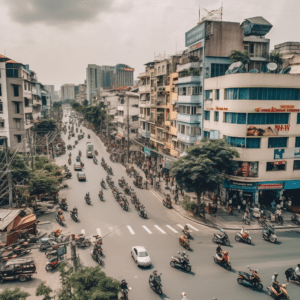
For first-time expats, proximity to major metropolitan areas like the 5-million-strong Hanoi in the North and the 9-million-strong Ho Chi Minh City (Saigon) in the South is advisable.
Life in these cities mirrors that of large Western counterparts, offering abundant access to food, leisure, entertainment, and transportation.
Notable neighborhoods for English-speaking expats include Tay Ho in Hanoi and Binh Thanh in Ho Chi Minh City.
As you settle, exploring quieter coastal cities like Da Nang and Nha Trang becomes appealing, although adjusting to Vietnam’s vibrant and noisy atmosphere may take some time.
Some of the Places in Vietnam with Most Expats
Ho Chi Minh City (Saigon)
The bustling economic hub offers a dynamic lifestyle, diverse job opportunities, and a vibrant expat community.
Contenuti correlati: Living in Ho Chi Minh City as an Expat
Hanoi
The capital city attracts expats with its rich cultural heritage, historical charm, and growing business scene.
Contenuti correlati: A Guide for Living in Hanoi Vietnam as an Expat
Da Nang
Known for its beautiful beaches and a more relaxed pace of life, Da Nang is appealing to expats seeking a balance between work and leisure.
Nha Trang
A coastal city with a tropical climate, Nha Trang is popular among expats for its picturesque beaches and affordable living.
Hoi An
Famous for its well-preserved ancient town, Hoi An appeals to expats with its unique charm, cultural attractions, and slower pace of life.
Vung Tau
A coastal city known for its oil industry, Vung Tau attracts expats seeking employment in the energy sector and a seaside lifestyle.
Phu Quoc Island
As a rapidly developing island destination, Phu Quoc offers expats opportunities in tourism, real estate, and a laid-back island atmosphere.
Can Tho
Situated in the Mekong Delta, Can Tho is a key economic center and attracts expats involved in agriculture, trade, and related industries.
Bien Hoa
Proximity to Ho Chi Minh City and industrial opportunities make Bien Hoa a choice for expats working in manufacturing and logistics.
Tonalità
The former imperial capital, Hue appeals to expats interested in history, culture, and a more tranquil living environment in central Vietnam.
Dalat
Nestled in the picturesque Central Highlands, Dalat is emerging as an expat hub with its temperate climate, lush landscapes, and a serene atmosphere, attracting residents seeking a tranquil lifestyle.
Contenuti correlati: Guide for Living in Dalat Vietnam for Expats
Expat Taxes in Vietnam
Vietnam’s double tax agreements with 70 nations help temporary residents. However, expats in Vietnam for more than 183 days pay the same tax rate as ordinary citizens.
British expat taxes in Vietnam are unaffected by Brexit. General income tax returns are due March 30 for Vietnamese residents.
The tax year runs from January 1–December 31. Income-based taxes are 5%–35%. Individuals can pay taxes for businesses, property sales, and investments through bank transfers, with some utilizing professional accountants to reconcile before March 30.
Corporations manage employees’ monthly income tax.
Contenuti correlati: A Complete Guide to Navigating Vietnam Income Tax System in 2023
Working in Vietnam
The average salary for Vietnamese nationals is $2,100, but expats earn $90,000. Even in major cities, expats can live comfortably due to low costs.
Vietnam has a 5%–35% progressive tax rate. Legal working hours are eight per day and 48 per week. In a social workplace, politeness, punctuality, and respect are essential.
Handshakes or bows and presents and bilingual cards are welcome. Work clothing varies, with formal wear in the North and casual in some areas.
Contenuti correlati: Working In Vietnam As An Expat
Work Permit for Expats in Vietnam
Expats in Vietnam must apply for a working visa, temporary residency permit, and permanent residency permit under strict immigration laws.
A working visa requires proof of age, employment offer, excellent health, a clean criminal background, and professional qualifications or five years of industry experience.
The 2-year work permit must be obtained at least two weeks before starting work. Five-year temporary residency visas require government approval to work, operate a business, or be a professional.
Due to paperwork, a local law firm is best. Vietnam requires solid income and 10-year renewals for permanent residency after 3 years.
Investing in Vietnam
Investing in Vietnam’s thriving stock market, buoyed by robust economic growth and strategic relocations by major corporations, offers potential returns.
Additionally, the real estate market, driven by urbanization, presents opportunities. Setting up a business benefits from Vietnam’s growing middle class and favorable economic conditions.
Investing in the Vietnam Stock Market
Vietnamese stocks thrive due to economic growth of 6% annually from 2012 to 2022, exceeding global rates. Asia Fund Managers attribute economic prospects to record $22.4 billion FDI in 2022 and strategic relocations by Samsung, Google, Microsoft, and Apple.
A fast-increasing middle class is expected to quadruple by 2025, and a $7,500 per capita income by 2030 signals a viable market.
Asset managers expect valuation growth in real estate and retail banking in the coming year due to the discounted stock market.
Contenuti correlati: The Vietnamese Stock Market – How Can You Invest In Vietnam in 2021?
Investing in Real Estate in Vietnam
Foreigners can buy real estate in Vietnam but with restrictions: land can only be leased, not owned, with a 70-year lease; foreigners can’t own more than 30% of units in a condo or 250 houses in a ward.
Taxes include a 5% VAT on property transfer and a 0.15% capital gains tax on profit from sales. Rental income is taxed at a 20% flat rate.
Vietnam’s property market is generally safe, with a well-documented land registry, but due diligence is crucial to avoid issues with sellers, especially small developers.
Related Contents:
How To Buy A Property in Vietnam
10 Best Property Developers in Vietnam
Why shouldn’t you invest in Vietnamese real estate as a foreigner?
Setting Up a Business in Vietnam
Vietnam allows expat business ownership. The process requires investment and business registration certificates.
Business structures include limited liability companies and joint-stock companies. Foreign investors usually need a local partner or representative office.
Compliance with Vietnam’s company regulations, including capital requirements and legal representation, is required to traverse the complex procedures. Understanding cultural and legal differences is essential for business success in Vietnam.
Il settore bancario in Vietnam
Vietnamese credit cards and bank accounts require a temporary residency card and employment proof, such as a contract, to prove residency for over 12 months.
Your Vietnam stay may require address verification. After meeting these requirements, the bank’s application process is simple, with a minimal deposit.
For a business bank account, a legal representative must co-sign the application and provide proof of business validity, such as a registered address, operational license, and tax return papers.
Contenuti correlati: Best Banks in Vietnam
Retiring in Vietnam
Vietnam, renowned for its scenic coastline and cultural richness, attracts retirees seeking budget-friendly tranquility.
Although lacking a specific retirement visa, options exist for those wanting to retire in Vietnam. Americans can obtain a visa through a Vietnamese embassy, valid for six months to one year, with a three-month stay limit.
Embracing the nation’s natural beauty and cultural charm, retirees find solace in Vietnam’s diverse landscapes and historical sites.
Expats who want to retire in Vietnam should consult the Vietnamese embassy and adhere to visa regulations for a fulfilling retirement experience.
Contenuti correlati: Come andare in pensione in Vietnam 2023
Financial Planning in Vietnam
Life Insurance in Vietnam
The Insurance Supervisory Authority under the Ministry of Finance oversees 18 foreign life insurance businesses in Vietnam.
Mortality rates affect life insurance prices. Life insurance premiums are affected by Vietnam’s 6.418% mortality rate, which is lower in Hanoi and Ho Chi Minh City, according to i-brokers.
Vietnam’s Ministry of Health estimates a newborn girl’s life expectancy to be 70 years, similar to Indonesia, the Philippines, and Thailand.
Contenuti correlati: Expat financial advisor in Vietnam
Health Insurance in Vietnam
Vietnam plans to create a universal health plan like Thailand’s, providing basic medical treatment to all legal residents.
Under the Master Plan for Universal Coverage, out-of-pocket costs should be below 40%. Local enterprises are responding slowly due to shortages of healthcare partners for staff cover.
Many expats choose private hospitals with English-speaking personnel since public hospitals are cheap but lack privacy and sophisticated equipment.
Although rural-urban healthcare differs, expats don’t need international health insurance for work permits but must be healthy.
Contenuti correlati: Liberty Insurance Vietnam Review 2023
Pensieri finali
For expats considering Vietnam, embrace the vibrant culture, explore cost-effective living, and choose reliable healthcare and education options.
Engage with expat communities, understand tax implications, and explore job opportunities. Invest wisely, be informed about the stock market, and navigate the real estate market.
Whether retiring or working, Vietnam offers a unique blend of opportunities and experiences, making it an enriching destination for expats.
Siete afflitti dall'indecisione finanziaria?

Adam è un autore riconosciuto a livello internazionale in materia finanziaria con oltre 830 milioni di visualizzazioni di risposte su Quora, un libro molto venduto su Amazon e un contributo su Forbes.
