I often write on Quora.com, where I am the most viewed writer on financial matters, with over 384.1 million views in recent years.
In the answers below I focused on the following topics and issues:
- Do you expect the S&P 500 to continue to rise for the next 10 years? Why or why not?
- How can you become a millionaire in ten years?
- What are some habits to become a good investor?
If you want me to answer any questions on Quora or YouTube, or you are looking to invest, don’t hesitate to contact me, email (advice@adamfayed.com) or use the WhatsApp function below.
Some of the links and videos referred to might only be available on the original answers.
Source for all answers – Adam Fayed’s Quora page.
Do you expect the S&P 500 to continue to rise for the next 10 years? Why or why not?
In any 10 year period, the chances of the S@P500 going up are very high, especially if you adjust to dividend reinvestment.
Historically, there is over a 95% chance of the market being up over a ten-year period, especially adjusted for dividend reinvestment.
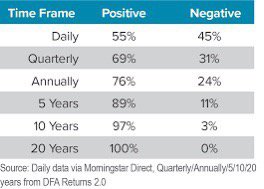
However, in the stock market there are two kinds of returns:
- Investment returns. This is usually dividend and earnings growth. Over long periods of time, the cream of the crop gets more profitable. As an example Apple today make GE in the 1950s look backward.
- Speculative returns. How much are people willing to pay for earnings per share? This speculative return can be positive or negative.
For example, in the 1962–1982 period, the ‘real’ investment fundamentals were slightly better than in 1982–2000.
Yet the returns were lower. Why? Well, the speculative return in the first time period was -4% per year, bringing down the total returns.
In comparison, from 1982–to 2000, the total returns were about 16% per year.
Did dividend and earnings explain this full 16%? No. About half the return was speculative.
So, let’s look at today’s market. The S@P500 is paying around 1%-2% in dividends, with markets like the FTSE paying 2%-3%.
Earnings growth is 6%-7% per year. If this follows through until the end of the year, the real (investment fundamental) growth of the stock market should be 7%-9% in most markets.
However, the speculative return could enhance those returns or be negative.
In the long term, the real investment returns do match the fundamentals.
That is to say that markets can be under and overvalued in the short or even medium-term.
Over 40–50 years, that usually changes. For example, from 1961–to 2000, the total return of most major stock markets was almost identical to the dividend and earnings growth.
Therefore, I would definitely expect the markets to rise in the next 25–30 years because dividends will be paid and (the best) firms in the index will become more profitable over time.
How can I become a millionaire in just 10 years? I’m 18 year old, from a low class family.
We live in a time of influencers, where some imply that it is easy to get rich fast. It isn’t. If it was, everybody would do it.
Making $1million after 10 years is much more difficult than 3million after 40 years, due to compounding and the fact you can’t rely on markets as much.
What do I mean by that? $10,000 invested in the S&P from 1941 until now would be worth $51million today, which is huge even adjusted for inflation, but the growth rate from 2000 until 2011 was 0%.
So longer-term, passive investing works and has always produced the goods over any long period of time.
In the medium-term (10 years in this case) all you can do is give yourself the best chance by:
- Taking many calculated risks, which will be the commonality in the list below. The harder you try, and the more risks you take, the luckier you will get. You only need to be right once.
- Get a job, get good at it, and then start your own business after 5 years+ of experience in the domain. This will be especially great if you are lucky enough to get a job in a high-paying industry like technology in Silicon Valley but can work in any industry.
- Watching your spending habits relative to your income. Once you are established, it is easier to spend more without constraining your dreams. If you are 25 and looking to start a business, every $1 you spend could be invested into your business or personal investments.
- Looking at any way of earning more money. Try multiple streams of income or go into a high-risk business like recruitment where 80% fail, and 20% succeed, with 10% earning a lot.
- Try to emigrate to lower-cost countries if you can earn an online income
- Reinvest any unexpected money you get, for example from bonuses, inheritances, etc.
- Continuously read and improve and cultivate your network.
- Avoid high-risk activities which are unlikely to work. Calculated risks are great, but not stupid ones.
- Only focus on what you can control. The above is no guarantee but that shouldn’t stop you.
- Break industry norms. The money is in doing things differently, and being ahead of your time.
- Focus on solving other people’s problems. A lot of wealthy people didn’t start out with the intention of getting super-rich, but they got there by solving issues and problems for others.
- Also, focus on what is motivating you – in other words, the emotional reason for wanting to get rich. Is it to help charities, your parents, or to prove others wrong? If you know the answer to that question, you are less likely to give in.
- Get good at marketing, sales, finance, negotiation, and any other skills which really matter.
Remember also that wealth is just income-expenditure x compound returns. Look at all three parts of the equation.
But, honestly, you need more luck over a ten-year time horizon versus thirty years.
I would, therefore, just focus on merely giving yourself a fighting chance of achieving what you want.
Even better, just put yourself in a good enough position in ten years to be doing well in 5–10 years after that.
What are some habits to become a good investor?
I watched a very astute video a few days ago from the renounced YouTuber Graham Stephen.
He looked at five habits that have changed his life. As somebody who has spoken to people about their finances for so long, I can confirm that these habits make sense:
Habit 1 . Invest now/asap. As he says, those who delay once, tend to always delay.
They wait until that upcoming crash that they have been predicting for years, and when there is finally a decline, they wait for an even bigger decline.
Then they reach 30 or 40 and regret procrastinating.
Habit 2. Don’t market time. At the opposite end of the spectrum to the procrastinators are those who try to find the best time to get in, and out, of the market.
These tend to be active traders. We have seen a big increase in this due to the rise of DIY investment platforms.
As he says, the evidence shows most of these people either lose money or at least lose to the market.
There have been many times when the market has been up 10% per year and the average investor has struggled.
The reason
Habit 3. Understand your investments. If you aren’t a professional investor or don’t have an advisor to guide you, you really need to understand what you are getting into.
Habit 4. Don’t invest short-term. If you invest long-term, and you lose money, you have either:
- Speculated included market timed
- Or been part of the first generation in history where buying and holding the market for decades has lost you money
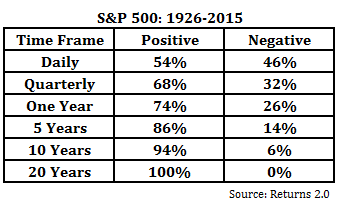
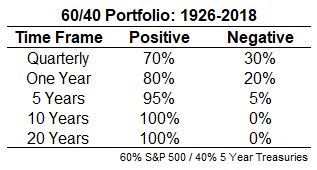
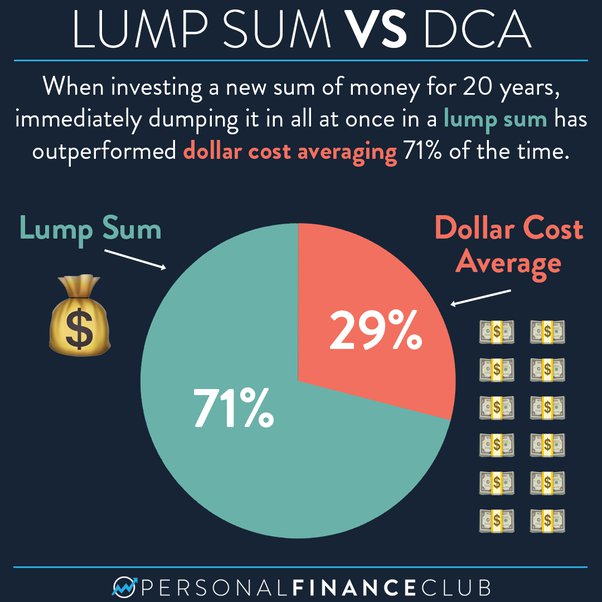
5. Investing consistently. If you have a lump sum, it is better to put it in, rather than putting the money in as months’ injections (called dollar-cost averaging).
Dollar-cost averaging has only defeated lump-sum investing on 30%-34% of the occasions, depending on which time frame you look at, as per this analysis from the Personal Finance Club:
However, most of us have a salary or business income, and therefore we need to dollar cost average up to a point, as we can’t get ten years of income forwarded to us in advance.
Investing a lump sum + injecting new money further decreases risk.
The commonality? Key it simple and consistent. Once the basics have been achieved, then you can focus on more sophisticated ideas.
Do any of you know any “Riches-to-Rags” stories?
We all hear about the extremes, such as the former billionaires like Chuck Feeney, who went from having billions to just over $1m.

Or high-profile people like Simon Jordan, who didn’t go to “rags” but certainly lost a lot:

The media loves speaking about extremes. What we hear much less about, however, are less extreme cases.
Such as former multi-millionaires, or those who merely had high incomes (but low wealth) who ended up very poor.
Here are some examples from my network
- A man who was making hundreds of thousands of USD a year, after tax, in South East Asia, when it was dirt cheap. He always had issues with spending habits, and divorced numerous times. He is now about 80 and very poor.
- A much younger man who was making more money than the first person but only for a few years, starting from age 26. He made some bad business decisions and is now broke. He is in his early 30s, so can recover.
- Numerous upper-middle/higher wage earners, such as dentists and doctors, who are now broke due to multiple divorces.
- After the 2014 coup in Thailand, numerous people in my network saw their business go to zero.
- Countless people struggled, or even went out of business, during the Covid-19 lockdowns, especially if the business relied on face-to-face interaction.
- A recruiter who was doing very well in the Japanese market in the early 2000s, but is now struggling badly.
- In 2011, a gentleman I know in Egypt claimed he didn’t want to invets overseas because of all the advantages of the local economy – until all the instability.
None of these people went broke due to breaking the law or ill health, which are two leading causes of such cases.
All of these people could have been worth $5m-$10m + if they had have invested more, been careful about multiple marriages and/or watched their spending habits better, because good decisions compound.
And that is just in my network. Statistics show that up to 78% of former professional footballers go bust, with many lottery winners and inherited wealthy going the same way.
The commonality between the above people is that they put all their eggs into one basket, spent too much and/or did too little planning.
This is foolish because the good times don’t always last, and can end tomorrow due ill health or another reason.
Success can lead to complacency and complacency can be your downfall.
A healthy degree of paranoia helps.