How to get Polish citizenship by descent? That will be the topic of today’s article.
With countless developed Western countries bringing in new taxes, more people are looking at second residencies and citizenships.
If you are looking to invest in expat-specialised solutions or have any questions, don’t hesitate to contact me, email (advice@adamfayed.com) or use the WhatsApp function below.
It is usually better to sort out residencies, new citizenships and tax-efficient investments at the same time, because many of the opportunities available in your home country or current jurisdiction won’t be available in the next destination.
Setting up something which is internationally portable makes sense.
Introduction
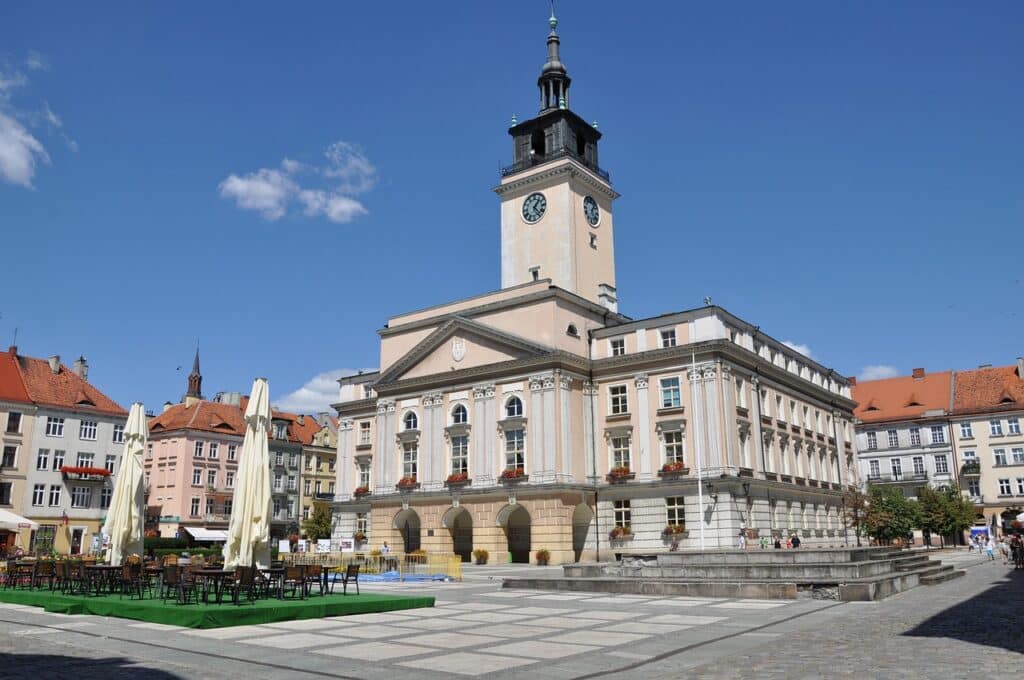
The number of people who receive Polish citizenship is growing every year – 2018 was a record year in this respect: almost 5.2 thousand people became citizens of Poland, which is a thousand more than a year or two years ago.
After Poland liberalized the rules for granting Polish citizenship to foreigners, the number of people who received Polish citizenship doubled in the first four years. 4.5-5 thousand foreigners receive Polish passports every year. For comparison: from 2002 to 2011, more than 24.5 thousand people received Polish citizenship.
Most often, foreigners apply for Polish citizenship for family reasons, on the basis of long-term residence in Poland, sometimes with Polish roots, and on the presence of a Pole Card.
In addition, it happens that foreigners associate their professional future with Poland as entrepreneurs or workers in a narrow field of activity. Most foreigners apply for citizenship through the President of the Republic of Poland, whose decision is not limited by any legal requirements, for example, the number of years of uninterrupted stay in Poland or knowledge of the language.
So, in 2016, by the decision of the President, 2,735 people received citizenship – twice as many as through the recognition of citizenship by voivods. However, in 2017, the President reduced the number of happy holders of Polish passports to 1,640 people. In 2018, 1973 foreigners received citizenship from the President.
Also, Poles, who have renounced it, are increasingly applying for Polish citizenship, but today they have the right to restore it. These are mainly emigrants who left Poland after March 1968, for example, as part of a family reunification campaign.
The Polish Citizenship Law of 1951 did not allow obtaining citizenship of another country. Today, 350-500 people return Polish citizenship every year.
Why is the number of foreigners receiving Polish passports growing? Firstly, Poland does not have the highest requirements for foreigners applying for citizenship.
The second reason is the low fees for an application for recognition as a Polish citizen, which are returned in case of rejection of the application. The most difficult stage for a foreigner applying for citizenship today is the exam in the Polish language.
And you can study it only on a paid, and not always cheap, basis. Add to this 600 PLN for the exam itself at the State Certification Commission. Moreover, in large cities of Poland there are often not enough places for those wishing to take Polish. All this makes it extremely difficult to collect documents for obtaining Polish citizenship.
Let’s now discuss all the available options of obtaining Polish citizenship, including all the necessary information such as what documents you need to present, what kind of examines you have to pass and how much it will cost you to apply for Polish citizenship in general. So read on to find out more.
How to get Polish citizenship?
First of all let’s get a general idea of who can be considered as Polish citizen and after discuss all the possible ways of getting it.
Who is considered as Polish citizen?
- a foreigner who has been staying continuously in Poland for at least 3 years on the basis of a permanent residence permit in Poland or a residence permit for a long-term resident of the European Union, who has a stable and regular source of income in Poland and a legal title to the occupied dwelling;
- a foreigner who has been continuously staying in Poland for at least 2 years on the basis of a permanent residence permit or a long-term EU resident permit, who has been married to a Polish citizen for 3 years or has no citizenship;
- a foreigner who has been continuously staying in Poland for at least 2 years on the basis of a permanent residence permit, which he received in connection with the recognition of refugee status in Poland;
- a minor foreigner staying in Poland on the basis of a permanent residence permit or a long-term resident of the European Union permit, one of whose parents is a Polish citizen, and the other of the parents, who does not have Polish citizenship, has given his consent to the child’s citizenship recognition;
- a minor foreigner, one of whose parents has been restored Polish citizenship, if the minor foreigner is staying in Poland on the basis of a permanent residence permit or a long-term resident of the European Union permit, and the other parent who does not have Polish citizenship has given his consent to the child’s citizenship recognition;
- a foreigner staying continuously and legally on the territory of Poland for at least 10 years who meets the following conditions:
- holds a permanent residence permit or a long-term EU resident permit;
- has a stable and regular source of income in Poland and a legal title to the occupied dwelling in Poland;
So Polish citizenship can be obtained:
- according to law
- through the granting of Polish citizenship
- through recognition as a Polish citizen
- through the restoration of Polish citizenship
According to law
A minor child acquires Polish citizenship if:
- At least one of the parents is a Polish citizen at the time of the child’s birth (principle of the right of blood).
- The child was born on the territory of Poland, and his parents are unknown, do not have any citizenship or their citizenship has not been established (principle of the right of the soil).
- A child acquires Polish citizenship if he was found in Poland and his parents are unknown.
- If a minor foreigner, under the age of 16, has been adopted by a person or persons holding Polish citizenship, it is assumed that the foreigner acquired Polish citizenship from his birth.
Granting Polish citizenship
As already mentioned above, Polish citizenship is granted by the President of the Republic of Poland. In his decision, the President is not limited by any conditions that a foreigner must fulfill in order to obtain Polish citizenship. This means that the President can grant Polish citizenship to every foreigner, regardless of, for example, how long he has been in Poland.
The granting of Polish citizenship takes place at the request of a foreigner. An application for Polish citizenship is submitted by persons legally residing in Poland to the President through the voivode at the place of residence of the person concerned. If the foreigner is abroad, the application must be submitted to the consul at the place of residence.
The application must be submitted in person or by mail. Documents issued in a foreign language must be submitted together with their translation into Polish, certified by a sworn translator or consul of the Republic of Poland.
It is worth knowing that the procedure for granting citizenship by the President can take a long time, because in its case the provisions of the Administrative Procedure Code do not apply. This means that even if the case can be decided on the basis of the evidence presented by the applicant, it should not be considered immediately, as in the case of the procedure for recognition as a citizen of Poland. Individuals applying for citizenship must substantiate their application and must provide an important reason why they should be granted Polish citizenship.
Refusal to grant Polish citizenship does not require substantiation and cannot be appealed.
Recognition of an applicant as a citizen
This option applies to the majority of immigrants who would like to permanently stay in Poland, namely persons with permanent residence or a Resident Card.
To be recognized as a citizen, you need more than 3 years (or 1 year if you received permanent residence with a Pole Card or have origin) to live in Poland with a Resident Card, which you receive after living for 5 years with a residence permit.
About residence cards
For the legal and uninterrupted stay of a foreign citizen in Poland, there is a special permit document – a card to stay in Poland (residence permit in Poland). This ID card not only certifies the identity of the owner, but also allows you to use a whole range of privileges: get a job, take free training in government agencies, receive medical care without payment in the country, travel to European countries, and much more.
Visually, the residence card is identical to the European passport, that is, it is made of plastic, on which there is a photograph of the holder and his biometric data are recorded: PESEL number, registration address at the place of residence, information about parents and fingerprints. A temporary or permanent residence card does not regulate (unlike a work or Schengen visa) the number of visits to the EU countries and the length of stay in Poland until the expiry of the permit.
Residence card categories
Residence permit in Poland (temporary residence permit, Karta czasоwego pоbytu). An hourly residence card allows the holder to live and work in the country for 1-3 years.
The grounds for obtaining may be: enrollment in a cohort of persons with especially valuable professional, scientific or cultural experience; contract with a Polish employer; matriculation; marriage with a citizen / citizen of the Republic of Poland, etc. The temporary residence permit can be extended for another 3 years at the request of the customer.
Permanent residence in Poland (permanent residence, Karta stałego pobytu). A residence card is issued by the regional administration of the country to those citizens who meet the following requirements: they have a Pole card, have lived in the country for more than 5 years on the basis of a Polish temporary residence permit (sentry card) or can confirm the presence of Pole blood ancestors (one of the parents , grandparents or two grandparents).
The validity period of the document is unlimited, after 10 years, if the holder has not received Polish citizenship, it is extended for a similar period. Polish permanent residence gives the holder the right to work and reside in other Schengen countries. The main advantage of this type of card is the ability to obtain citizenship of the country one year after obtaining the status.
Blue Card (resident status of the European Union, zezwolenie na pobyt rezydenta długoterminowego Unii Europejskiej) – valid for 5 years, can be issued to applicants who have resided in the territory of the Polish Republic for at least 5 years and are ready to confirm their regular income for the last 3 years. A resident card is an analogue of Polish citizenship.
What privileges does a residence card give?
Having a residence card will give you a lot of privileges such as:
- Purchase of real estate with subsequent registration;
- Purchase of vehicles with subsequent registration;
- Multiple border crossings with the Polish Republic without restrictions;
- Opening and conducting business on a legal basis;
- Unimpeded travel to all European states;
- Official employment in the country, including for students undergoing training (full-time students work only during vacations, part-time students – no more than 6 months during one year);
- Assistance in obtaining national types of visas for close relatives.
Requirements for candidates
- Marrying a citizen of the state or giving birth to a child on the territory of the Republic of Poland;
- Signing an employment agreement with a Polish organization (the card will be valid for the same period as the work contract);
- Start of entrepreneurial activity on the territory of the state;
- Training at a higher educational institution of the country;
- Pole’s card.
A negative answer about the issuance of a card by the way of Poland can be received by the applicant if: he initiates obtaining refugee status without reason, refused to submit biometric data (for people who cannot do this due to physical disabilities, tolerant procedures are provided), is absent on the territory republic or is in custody.
Also, the reason for the refusal may be the negative tax history of the applicant or the employer with whom the contract is concluded.
Residence permit for minors and students
Full-time students of higher educational institutions, regardless of the period of study, also have the right to legally work in the country without restrictions on the type of activity.
At the same time, persons who are studying in the evening or part-time department (on the basis of a residence card for study) can also find employment in Polish companies – the format and place of work is determined in each voivodeship on an individual basis.
The Polish residence card for minor children gives their parents (or guardians) the opportunity to renew it without leaving the country.
After 5 years in the status of a residence permit and 1 year in the status of permanent residence (also for Pole card holders), the applicant can apply to obtain EU citizenship and passport.
Required documents
Applicant’s questionnaire: filled in according to the regulated form in two copies, necessarily in Polish. A sample is provided to the Voivodship Uzhond at the place of submission of documents;
- The document that is the basis for the application: marriage certificate, certificate of enrollment in a higher educational institution, a contract with an employer, etc.
- A valid foreign passport with photocopies of all pages;
- Photos taken no earlier than six months before the application, in the amount of 4 pieces. Size – 35 x 45 mm;
- Receipt for payment of the state duty (payment of goods);
- Medical insurance policy valid throughout the entire period of stay in the country;
- Confirmation of material solvency;
- Rental agreement for the lease of housing or documents on ownership of real estate (only housing stock);
- Registration at the place of residence (zameldоwanie);
- For university students – a receipt for payment of tuition (minimum – 1 year) or a certificate of admission to the budget department.
- Also, the applicant provides biometric data at the time of submission of documents. The forms are translated into Polish and certified by a sworn translator. All of these services are included in the cost of our company.
Registration price
Residence permit card:
standard registration for 6-8 months – 1200 euros.
Permanent residence card:
standard registration for 5-8 months – 800 euros;
urgent registration in 3-4 months (if you have a Pole card) – 700 euros.
Residence card for children (up to 18 years of age) – 500 euros.
Restoration of Polish citizenship
Here is the last option to obtain Polish residence. Foreigners can apply for the restoration of Polish citizenship if they had Polish citizenship in the past, but lost it before January 1, 1999. For this, a foreigner applies to the Minister of the Interior with a corresponding statement.
A foreigner residing outside Poland submits an application for the restoration of Polish citizenship through the consul of the Republic of Poland at the foreigner’s place of residence.
The application for the restoration of Polish citizenship must contain: data of the foreigner, address, statement of the presence of Polish citizenship in the past, information about the circumstances of its loss and biography.
The application for the restoration of Polish citizenship is also accompanied by:
- identity documents and citizenship;
- documents confirming the change of name and surname, if any;
- documents confirming the loss of Polish citizenship;
- applicant’s photo
Forms, applications and documents in a foreign language must be submitted together with their translation into Polish prepared or certified by a sworn translator or consul.
The granting of Polish citizenship takes place on the day when the decision to restore Polish citizenship becomes final.
Duration of the procedure
The case should be tried immediately if possible on the basis of the evidence presented by the applicant. In the case of a case requiring a clarification proceeding – no later than one month.
In the case of particularly difficult cases, a decision must be made within two months (the above time limits do not include delays due to the fault of the party or for reasons beyond the control of the authorities).
Q&A
- On what basis can a permit be issued?
A Polish residence permit for temporary residence is issued to those citizens who:
- Undergo an internship in accordance with the regulations of the European Union;
- They study in educational institutions of the state or are trained in Polish language courses;
- Are officially employed or have a work permit (sanctioned or allowed), which has been issued but not yet implemented. *
- Are married to a local citizen or foreigner who has Polish permanent residence;
- Registered and successfully conducts its own entrepreneurial activity, which the state authorities considered useful from an economic point of view (the business must operate for at least one year);
- Can confirm close or blood family ties with a citizen of the European Union or the Republic of Poland;
- They are a person whose stay and activity on the territory of the state is beneficial and interesting (scientists, artists, athletes, etc.).
*Citizens who have a Pole card do not need to obtain an additional work permit in the country.
- Where to go to get a card? How to get a residence permit? How to get Polish citizenship?
Residence card can be issued only at the place of residence in a certain voivodeship in Poland. It is important to remember that the entire documentation package submitted by the applicant must contain translations of the information into Polish (only a sworn translator has the right to transliterate).
- How long does the procedure for consideration of documents take?
According to the official regulations, the period for consideration of documents is up to 3 months with the right to renew for every next 3 months.
In practice, the period for considering a case, from the moment of filing an application (filling) to the moment of receiving the card, is from 4 to 10 months, this is the average waiting time for readiness.
It is important to remember that there should not be a break between the expiration date of the Schengen visa (or work visa to Poland) and the date of submission of documents, otherwise this period will be interpreted as an illegal stay in the state.
- Is it possible to leave the territory of the state before applying for a residence card?
There is no legal requirement for foreign citizens to prohibit leaving the country. At the same time, the migration services of the state always take this point into account, moreover, migration inspectors have a positive attitude towards persons who have lived in the country for a long time and do not leave it without good reason. This factor can be decisive when applying for a residence permit or obtaining EU citizenship.