I often write on Quora.com, where I am the most viewed writer on financial matters, with over 429.4 million views in recent years.
In the answers below I focused on the following topics and issues:
- Why is Warren Buffett not buying stocks anymore in 2020?
- Why would I invest in an index fund, when I can invest in the stocks that comprise them, separately?
- Which bonds should I invest in?
If you want me to answer any questions on Quora or YouTube, or you are looking to invest, don’t hesitate to contact me, email (advice@adamfayed.com) or use the WhatsApp function below.
Some of the links and videos referred to might only be available on the original answers.
Source for all answers – Adam Fayed’s Quora page.
Why is Warren Buffett not buying stocks anymore in 2020?
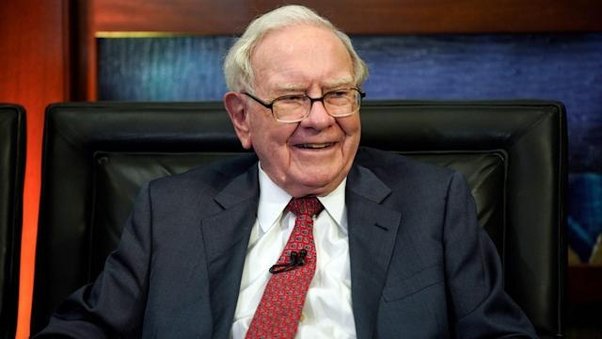
I wouldn’t read too much into what he is, and isn’t, buying.
There is this misconception out there that Buffett buys individual stocks and is a stock picker due to his relationship with the late Benjamin Graham.
He wrote this classic on finding undervalued stocks:
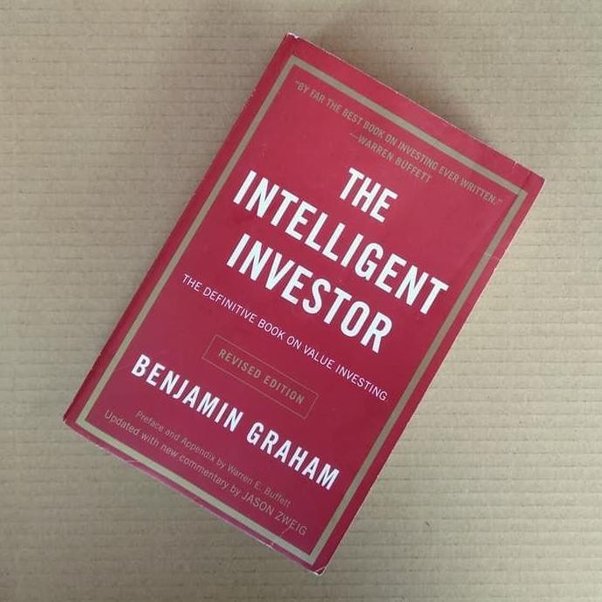
That might have been the case early in his career, but Berkshire Hathaway has been focused on buying complete businesses for quite some time.
That is much more difficult. It takes time, in many cases, to find the right valuation point.
In all his public messages, he has made clear that:
- He thinks stocks are a better asset class than bonds, cash and almost everything else
- It is best to invest long-term, in the entire stock market, rather than to try to time the stock market
- He, and most people, can’t predict where the S&P500, or any market, will be in a year or two. However, in 20-30 years, it should be massively up.
You can see some of his views here:
So, Berkshire Hathaway’s buying, and selling, isn’t an indication of Buffett’s view of the market. Berkshire Hathaway has just bought more Occidental Stock.
That doesn’t mean he is even more or less, optimistic about the US stock market than before. Likewise, if they hold a lot of cash, that doesn’t mean he thinks most everyday investors shouldn’t buy stocks.
It is also essential to make a distinction between company and individual assets. Even plenty of people who hold very little cash like the idea of their company having liquidity, especially if they are looking to make an acquisition.
I kept more cash than usual in my company account a few months ago, to make a small acquisition after I contacted an advisor I know who wanted out. That doesn’t mean I become pessimistic about stocks!
In conclusion, it is a huge mistake to try to keep cash (time the market in anticipation of future falls) based on “news” like this.
I have never met anybody who has (consistently and not just once) timed the market. I don’t know anybody who knows anybody who has done this.
Even when I interviewed the investor Kevin O’Leary, who is worth about half a billion, he admitted that he tried and failed to time the market.
If he and Buffett, say don’t do it, it is doubtful you will do well with this strategy.
The market ended up close to 20% up in 2020. Nobody predicted that after the vast Covid-19 falls.
Which bonds should I invest in?
That depends on what you want to achieve. Short-term government bonds are best if you are looking for more safety and an uncorrelated return – meaning they can sometimes rise if stocks fall.
However, they pay very little now. They are a guaranteed loss to inflation and often no better than cash or marginally better at most.
If you are looking for a higher potential return but with slightly higher risk, then A-rated corporate bonds and good quality emerging market bond fund have their place.
The issues and risks are:
- What I will call “relative risk”. This is the risk of losing more money than you could have gained by investing with alternative assets. Even the best bond funds won’t beat the markets over a 30-40 years. That isn’t the reason to own bonds. Bonds are more of a diversification tool. If you can deal with high volatility, it makes sense to have a more significant allocation to markets when you are young and then increase that allocation as you age.
- Currency risks – this is more if you invest with quality bonds in other markets than your own. For instance, getting 8% in Euros isn’t a good return if the Euro has fallen 9% against your currency.
- Inflation risk. A 6% fixed-return sounds good until it doesn’t.
- Credit risk. Even some of the best institutions, which are very safe now, can sometimes go out of business. Look at Lehman. It was very safe to buy their bonds for decades before they started to take undue risks.
- Some of the risks are mentioned below. Liquidity is one such risk. Even if the bond is an excellent investment, it might be locked in for several years, meaning you need to manage your cash flow.
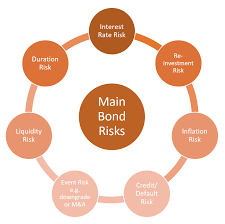
6. What is backing the asset. If the debt is backed by collateral, the risks are uncertainly lower than with unsecured debt.
7. Most people struggle to understand the risks themselves, unless they have an advisor or legal representation.
The bottom line is that bonds have their place, but they shouldn’t be the majority of the portfolio unless you are very old.
Even then, 50% should be the maximum, especially in today’s environment where quality bonds, which pay well, are difficult to find.
Why would I invest in an index fund, when I can invest in the stocks that comprise them, separately?
The main reasons are:
- Costs. Most brokerages have a cost per share. So, even if you achieve your index, you won’t get it as cheap as doing it through a fund.
- Convenience. If you do this, you will regularly have to update the index as smaller firms become bigger and vice versa. For example, you would have needed to eliminate Lehman Brothers from your index in 2008, and add in countless firms since then, such as Facebook and Netflix.
- Taxes. Doing the above and “cleansing” your index will result in capital gains and, therefore taxes in some jurisdictions.
- Time. Adjusting your index to account for weightings will take up your time every year, and time is money.
- Risk. If you have your index, and something like Lehman happens, you will lose 100% on those positions. Of course, something like Lehman doesn’t happen every day, and it would be less than 1% of your portfolio, so it’s not the end of the world. However, most index funds and ETFs will cleanse the index naturally. It is also more likely that these positions take up a more significant percentage of your portfolio than through an index if you haven’t rebalanced correctly.

You also have to factor in simplicity. The best investors, long-term at least, invest and keep it simple. They don’t overanalyse things.
We see that with investors who “do their research” and decide they want thematic ETFs or whatever else they are interested in.
People like that seldom do as well as “set and forget” investors.