
Updated February 29, 2021
30 Best Investing Books for Beginners and Intermediate Learners – that will be the topic of this article. You can also see my best financial books of all time for more choices.
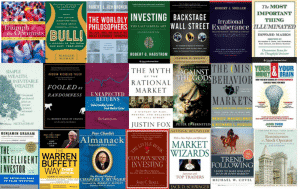
I am often asked which investing books investors members of the public should read, so I have copied the list below, of the best investment books of all time, for beginners.
For those that don’t like reading, I would suggest trying the free trail on Amazon Audible (audio books) and listening to them on your way to work or at home. Usually you can listen to 2 books for free.
Before beginning, I would say I have read a lot of questions on Quora, Reddit and Medium that focus on nationality or year.
However, it is irrelevant whether you live in UK, US, Singapore, India, Dubai , Canada or Australia. It is also not important whether you are reading these books in 2017, 2018 or 2019.
The fundamentals of good investing remains the same. The best investment books of all time don’t change very easily; few world class investment books are made every year.
It also doesn’t make much difference if you are old, middle-aged or a millennial. A college student, a teacher or lawyer. 20 something, 30 something or 60 something.
Living at home or as an expat. Reading a wide selection of the books below will cover asset allocation for all ages, and situations.
In terms of the specifics, I would recommend starting with a 2-3 books as explained in the video below.
For those interested in investing, you can email me at advice@adamfayed.com or use the chat function below.
The full list
Explore the best investing books for beginners and intermediate learners and make informed decisions about different prodotti di investimento available that is suited for you.
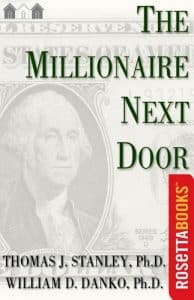
1.The Millionaire Next Door, Thomas Stanley
- A great book for beginners as Stanley will challenge a lot of your misconceptions about who the rich really are. They probably don’t earn as much as you think they do.
- They may be living in the same street as you.
- Not the most academic book, but very accessible and even handed.
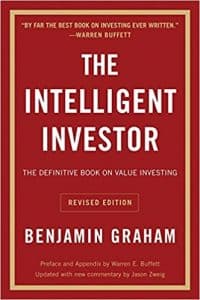
2. Benjamin Graham’s “Intelligent Investor.”
- As per the title on the book, Warren Buffett believes this book is by far the best book on investing ever written.
- It is a bit outdated from the point of view that it was written before index funds. It was written before institutional investors and robots made it so hard to beat the market. It was written before value investing become so hard – but still a great read.
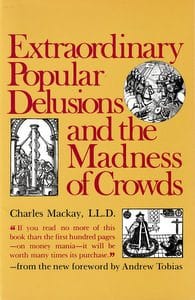
3. Extraordinary Popular Delusions and The Madness of Crowds, Charles Mackay.
- A great book on human nature and investing, even though only 1-2 chapters focus on investing.
- There are many fat doctors in the world. And there are many financial experts who speculate too. This book examines some of the reasons why human nature contributes to bad investment outcomes.
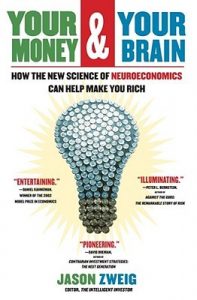
4.Your Money and your Brain – Jason Zweig
- Why do even smart people do stupid things with their money. That is the topic of this excellent book
- Like the last pick, it merges investing and topics surrounding human nature
The following books are also excellent:
The Essays of Warren Buffett - Buffett speaks about some of the lessons he learned from Benjamin Graham , his mentor, and from all the years in business. He speaks about knowing businesses well, a circle of competence and other key ideas in the book.
A Random Walk Down Wall Street – Burton Malkiel – Burton speaks about how some popular investment techniques, such as technical analysis and fundamental analysis, don’t work long-term.
Paul Farrell – The Lazy Person’s Guide to Investing: A Book for Procrastinators, the Financially Challenged, and Everyone Who Worries About Dealing With Their Money -One of the best books for understanding how to invest safely, with little time commitment, and productively.
Philip Fisher Common Stocks and Uncommon Profits – One of Buffett’s favorite books. In fact in the late 80s, Buffett identified this book as being one that influenced his investment strategy. Buffett claims he is 85% Graham Graham and 15% Fisher. Like Graham’s books, however, this book was produced in 1958. So many of the teachings are outdated. For example, index funds weren’t available at that point.
Burton Malkiel and Charles Ellis. The Elements of Investing - Another excellent book for beginners. They teach about how to focus on the long-term and not short-term. They show how discipline is one of the keys to success
Larry Swedroe. The Only Guide to an Investment Strategy You’ll Ever Need – Larry Swede explains the differences between active and passive investments and the studies that show why passive investments can outperform active.
Larry Swedroe. The Quest For Alpha: The Holy Grail of Investing – Explains in more details how most people who try to outperform markets, fail
John Bogle, The Little Book of Common Sense Investing : Only Way to Guarantee Your Fair Share of Stock Market Returns (Little Books. Big Profits) – Arguably Bogle’s most famous book. He speaks about costs, being long-term, what drives markets long-term, compounding returns and so on.
William Bernstein. The Four Pillars of Investing: Lessons for Building a Winning Portfolio – A down to earth books that looks at the 4 keys to a good investment portfolio . Importantly the books speaks about the dangers of actively picking stocks, as opposed to investing in the whole market and the behavioral finance and how state of mind can adversely affect decision making
John Bogle – Common Sense on Mutual Funds: New Imperatives for the Intelligent Investor – Bogle speaks about the main pillars of indexing in this book
John Bogle’s “The Clash of the Cultures” – Bogle speaks about how the rise of ETFs has lead to many so-called passive funds being used to speculate. He notes how high frequency trading has lead to extra income streams of financial institutions. Most interesting about this book is how he notes that, in the 90s and 2000s, most banks lobbied to prevent trading costs going down. They stopped lobbying! And the reason is that they realized that traders and speculators, trade more, if trading costs are lower.
David Swensen, Unconventional Success: A Fundamental Approach to Personal Investment – Swensen challenges some of the widely held beliefs people have in this book. He also looks at some of the evidence on mutual fund performance.
Security Analysis” by Benjamin Graham –Buffett’s mentor Graham produced another classic with securities analysis. Arguably a better book for intermediate learners, as opposed to beginners
Carl Richards, The Behavior Gap, Simple Ways to Stop Doing Dumb Things with Your Money.Richards speaks here about some of the behavioral reasons investors fail. Too many people assume that lack of knowledge is why investors fail, when behavior is usually number 1.
Adam Fayed- 6 passi verso la libertà finanziaria: I segreti che i marketer e Wall Street non vogliono che tu sappia In this book, I summarize some of the evidence for beginners and intermediate learners. I practically focus on the importance of spending and investing habits, financial advice for expats and getting wealthy on a middle-income.
All the books above are available on Amazon or, in some cases, by PDF. Audiobooks and reviews are widely available online as well.
For more academic work on how the 4% rule works in practice, I would recommend the following:
Sustainable Withdrawal Rates From Your Retirement Portfolio, by Philip L. Cooley, Carl M. Hubbard and Daniel T. Walz – https://afcpe.org/assets/pdf/vol1014.pdf
Other academic books to look at include:
Bengen, W. P. (1994). Determining withdrawal rates using historical data. Journal of Pianificazione finanziaria, 7(1), 171-180.
Bengen, W. P. (1996). Asset allocation for a lifetime.Journal of Financial Planning, 9(3), 58-67.
Bengen, W. P. (1997). Conserving client portfolio during retirement, part III. Journal of Financial Planning, 10(5), 84-97.
Bierwirth, L. (1994). Investing for retirement: using the past to model the future. Journal of Financial Planning, 7(1), 14-24.
Cooley, P. L., Hubbard, C. M. & Walz, D. T. (1998). Retirement spending: choosing a sustainable withdrawal rate. Journal of the American Association of Individual Investors, 20(2), 16-21.
Ferguson, T. W. (1996). Endow yourself. Forbes, 157(12), 186-187.
Ho, K., Milevsky, M. & C. Robinson. (1994). Asset allocation, life expectancy, and shortfall. Financial Services Recensione., 3(2), 109-126.
Ibbotson Associates (1996). Stocks, bonds, bills, and inflation yearbook. Ibbotson Associates, Chicago, IL.
Ibbotson Associates (1998). Stocks, bonds, bills, and inflation yearbook (CD-ROM V ersion). Ibbotson Associates, Chicago, IL.
Lynch, P. (1995). Fear of crashing. Worth 2(1), 79-88. Scott, M. C., (1996). Assessing your portfolio allocation from a retiree’s point of view. Journal of the American
Association of Individual Investors. 18(8), 8-11.
For some non-investing books that I have found useful to understand human behavior, which indirectly affects investing choices and often leads to bad choices, I would suggest the following books:
Dale Carnegie, How to Win Friends and Influence People – In Carnegie’s books, he speaks about how people need to feel important. That is usually. It is human nature, and isn’t always a bad thing. It can be a bad thing, however, because investors with bigger egos take more risks. They speculate more. They stock pick. So even though this isn’t an investing book, it does have many warnings for the average investor
Nassim Taleb, Fooled by Randomness Doesn’t talk about investing, but does show that volatility and stability aren’t linked
The 7 Habits of Highly Effective People: Powerful Lessons in Personal Change- A good book for productivity and getting things done.
For some people who don’t have time to read most of these books, I will cover some frequency asked questions about investing:
Domande frequenti
Are many of these books translated into other languages?
Many of the books above have also been translated into Spanish, Hindi, Tamil, Arabic, Gujarati, French, Japanese, Korean and numerous other languages.
Is Intelligent Investor Still Relevant?
Yes and no. It is probably the best investment book ever, but it was written before index funds. It was also written before institutional investors made stock picking difficult. Still worth a read.
Is Intelligent Investor for beginners?
Many beginners can read it. I would start with something like the Millionaire Next Door. It isn’t hard to read, in large parts.
Is the millionaire next door still relevant?
More relevant than ever. Most millionaires come from middle-income households. Since the book has been written, there has been more and more millionaires created in China and India. Some of these millionaires are middle-income, as they come from cultures that delay gratification.
Is Rich Dad Poor dad a good book?
It is very entertaining but not very academic. A personality cult has developed around Robert Kiyosaki, with board games such as cashflow quadrant and other marketing becoming popular. There are some good things in the book, about the importance of mentality, and many other things, which undoubtedly contributes to wealth.
However, some aspects of the book are factually wrong, for example suggesting that gold can be a good investment and you should never work for others. Therefore reading a summary of the book is fine.
How about expat books, investing and tax?
Some of the books listed above do cover expats, and people vivere all'estero. The fundamentals of good investing remain the same. Tax efficiency is one part of the equation, and for expats, that means investing offshore when you are living offshore.
With the exception of American expats, it doesn’t make any sense to send money back to your home country.
Offshore investing just means to invest outside your country of residence. So if you are a British expat in Shanghai, Hong Kong or Bangkok, for example, you are investing offshore if you send back back to UK (mainland or overseas territory) or any other country, apart from the country you are living in.
Sending significant amounts of money home can bring unforeseen tax consequences, and you aren’t allowed to have ISAs when you move abroad.
How about after I read the books?
Reading books is just step 1. Many doctors are fat, smoke and over-drink, despite having the knowledge. Some lawyers have gotten into legal trouble and many teachers don’t learn well.
I have many friends who went to business school, and studied finance, who are broke. I know countless wealth managers and financial advisors who don’t have much wealth.
So the most important step is putting the reading into practice, consistently. In many ways it is human nature to speculate, be greedy, egotistical and think you can see the future.
Good investing, in many ways, goes against human nature. So traits such as controlling emotions, self-control and self-discipline, are just as important as knowledge in investing.
Is investing safe?
Questions such as is investing worth it, is it safe and is it gambling are frequently asked. Investing is safe, if you do it in the right way; long-term and not based on speculation.
$10,000 invested in the S&P in 1942 would be worth $52 million today as Warren Buffett recently pointed out, but there has been many -50% falls in the last 70 years. Just see the long-term.
What will be the best investments of 2019?
None of the books listed above can answer that question. Anybody attempting to answer that question is a charlatan; nobody can see the future. The books above focus on the academic evidence related to investing, and what is the best way to invest money for the long-term.
What is the best way to invest money for the long-term?
The academic evidence shows that the best way to invest money for the long-term is to focus on low-cost index funds. Well-diversified and low-cost, and increasing your government bond allocation as you age. Model portfolios are contained in many of these books.
Is CNBC and Bloomberg reliable?
There are some good guests, but the news media is sensationalist and does propagate some less than academic sentiments, and factually incorrect statements.
Is Bitcoin a good investment?
Anything can go up or down, because of the laws of supply and demand. That doesn’t make it a good investment. Bitcoin is supposed to be a currency, not an investment. The price of Bitcoin is determined by whether the person sitting next to you wants it, and not by business earnings or a yield. So it is best avoided.
Will the stock market crash in 2019?
Nobody knows when a crash will happen. What we do know, is that far more money has been lost preparing for crashes, than the crashes themselves, as Peter Lynch once remarked.
What’s a share, an index and an index fund?
Apple has shares. So does Microsoft. An index is simply the biggest shares in a category. So the FTSE100 is the biggest 100 firms in the UK. Dow Jones is the biggest 30 firms in US. S&P500 is the 500 biggest firms in US.
What’s an ETF?
An exchange traded fund work similarly to mutual funds, but they can be daily traded – in other words you can sell and buy within seconds.
Does market timing work?
No. As per Peter Lynch’s quote above, buy and hold works. There are too many unknown unknowns and known unknowns to time markets. Who could have predicted the US Markets would have done so well after Trump’s election victory? Even his supporters didn’t expect that!
Or in 2008-2009, hardly anybody expected 50% falls, and most who did, didn’t see the huge recovery after 2010 coming. Timing, and getting lucky once, can work. You can beat the market over 1, 5 or even 10 years market timing. Over 50 years, it is next to impossible.
Do I need to pay taxes on money earned from stock markets?
It depends where you live. In many countries there are tax efficient ways to save and invest, like ISAs in the UK. Typically tax is capital gains, and that tax only applies at the end of your investing life, because capital gains only applies once you sell a gain. That is yet another reason why market timing doesn’t work; it leads to higher taxes.
What happens if I want my money back?
Typically you can sell your investments relatively quickly, on most online platforms. But as the books make clear, just buying and holding for 50 years, makes more sense than asking for your money back. This should only be done in a true emergency.
How do I start investing in stock markets?
Find an online broker or DIY platform. Opening an account is easy. You just need supporting documents like ID and proof of address.
What are dividends?
Most publicly listed companies pay yearly dividends, or income, to shareholders. The S&P Index and UK FTSE typically have historically had a dividend rate of around 2%, although dividends in the UK FTSE is now at around 4.5% per year.
Cosa sono i fondi comuni di investimento?
Funds are selections of stocks and other assets. A technology fund may be made up of technology companies, whilst a US fund will have US stocks.
What are government bonds and do I need them?
Governments get into debt, and they need to sell this debt to fund the deficit. They pay investors a small amount of money to lend to them. Traditionally bonds in the US have been an asset which have underperformed markets, but go up during periods when markets go down, such as in the Great Depression of the 1930s. Younger investors don’t need many bonds, but closer to retirement, having more bonds in your portfolio makes sense.
What is FATCA for American expats?
FATCA – This stands for Foreign Account Tax Compliance Act. FATCA requires all foreign financial institutions (banks, investment brokers, etc) to report to the US tax authorities on financial accounts held by US citizens, or by foreign entities in which US taxpayers hold a substantial ownership interest. Many Americans now can’t open bank account and broker accounts easily in foreign countries, especially investment accounts.
What are the best online brokers in 2019?
Too many people get into analysis paralysis, and overanalyze things like the online brokerage. Most brokerages in UK, Canada and elsewhere offer similar investor choices and access to index funds . What matters is the investment choices you are making, and whether the brokerage house can accept you.
What are the best online brokers for expats?
Once again, don’t overanalyze. However, what is true, is that many brokers can’t accept American expats and some others.
Therefore, the most important thing is whether the brokerage can accept you, how easy it is to open an account, fees and so on.
Contact details


Thank you so much , I want to read or get messages from you on mail always .
Grazie mille
Olayinka Babatunde adewuyi
Grazie
Thanks for this piece
Hi Adam,thanks for the insights with alot of information. I’m interested to learn more in investment with your guidance and mentorship. Many thanks and appreciate much.