Options Trading 101 – Everything you need to know - che sarà l'argomento dell'articolo di oggi.
Se state cercando di investire come espatriati o individui con un alto patrimonio netto, che è ciò in cui sono specializzato, potete inviarmi un'e-mail (advice@adamfayed.com) o un messaggio WhatsApp (+44-7393-450-837).
In general, we don’t recommend option trading.
Introduzione
Today I will be discussing one of the popular investments these days, i.e., options trading.
This article will include all the necessary information regarding options trading.
By the end, you will be able to find out whether or not they are advantageous for you.
Kindly note that all the information provided within this article is provided for educational purposes and this should not be considered actual investment advice.
Having said what needed to be said, let us now begin our topic for today, which is Options Trading.
Let us start by discussing some of the basic information regarding options trading so that even beginners can be able to understand the topic.
What is Options Trading?

Options trading is the investment vehicle, where investors are allowed to make speculation on the direction of the underlying security.
The securities that we can observe during options trading are stocks, bonds, etc.
In layman’s terms, options are the contracts that investors use to speculate the direction of an asset in the future.
For instance, an investor can speculate whether an asset is going to experience a fall or rise in terms of price at a future date.
In futures contracts, an individual is obliged to buy or sell the asset on the given date, which is not the case with options contracts.
Options do not mandate an individual to buy or sell the asset at the specified price on the agreed-upon date.
To state an example, the S&P 500 options allow an individual to speculate the future direction of the benchmark index, which is the S&P 500.
When hearing for the first time, options might seem extremely complex, but it is just a misconception.
Trading options is a complex process but understanding them is not as complex as you might think.
To have a better understanding of options, let us have a look at some of the important terms involved with them.
Derivative
Options, just like futures, are derivative contracts that might seem new to people who are hearing them for the first time.
However, the term derivative is used because options derive their value from the underlying asset.
For example, if we are talking about stock options, the options derive their value from the underlying stocks.
Call Option
With a call option, you will be allowed to buy an asset on a specified date at an agreed-upon price.
Put Option
With a put option, you will be allowed to sell an asset on a specified date at an agreed-upon price.
Strike Price
As we discussed for both call and put options, you will be allowed to buy or sell at an agreed-upon price.
This price, which is predetermined for options is known as a strike price.
Expiration Date
As I said, the strike price is the predetermined price at which the individual is allowed to buy or sell an asset.
Now, individuals have time until a certain date to utilize these call or put options, which is known as the expiration date.
Premio
The price at which you purchase an option is called a premium, and this is calculated based on the price and value of the underlying asset.
Intrinsic Value
Intrinsic Value refers to the price difference between the strike price of an options contract and the price of the underlying asset.
Extrinsic value
Extrinsic Value refers to the factors that affect the premium but are not involved with the intrinsic value. For example, an extrinsic value may refer to how long an options contract is good for.
In-the-money and out-of-the-money
Based on the price of the underlying security as well as the time remaining until the expiration date, an option can be profitable or non-profitable.
If the option is profitable, then it is called in-the-money, whereas if it is not profitable, then it out-of-the-money.
Come funziona?
Investors are allowed to deploy a range of options trading strategies, which range from a straightforward approach to intricate or complicated trades.
Generally speaking, trading call options is the process of how you place your bets on rising prices.
On the other hand, trading put options is the process of how you place your bets on falling prices.
With options contracts, investors are provided with the right of buying or selling a minimum of 100 shares of a stock or any other asset.
You should remember that you are not obliged to buy or sell, even when the options didn’t prove to be in your favor.
When you are not going to exercise options, the losses you’ll have to deal with are the premiums that you’ve paid.
In this way, options trading can be an efficient and cheap way of speculating on a wide range of asset classes.
Through options trading, you will be allowed to speculate on whether an asset’s price will rise or fall from the current price.
You will also be allowed to speculate on how much an asset’s price is going to rise or fall.
Finally, you can also speculate the date by which the price changes regarding the respective asset will occur.
Through the call and put options, the underlying asset’s price would either have to rise or fall for you to break even in the contract.
This is equal to the premium that you have paid and the strike price as well. The profits earned from options contracts are earned in this way.
Profits through Call Options
After the underlying asset went more than the break-even price, you will be allowed to sell your option.
This process is known as closing your position, and you will be paid the difference amount between the premium you paid and the current premium.
Instead, you can exercise the option of purchasing the underlying asset as per the predetermined strike price.
Profits through Put Options
After the asset’s price fell below the break-even level, you will be allowed to sell your options contract.
This process is also known as closing your position and you will be paid the difference between the premium you paid and the current premium.
Instead, you can exercise your option to sell the underlying asset as per the predetermined strike price.
What happens if the assets move in the opposite direction? I’m coming there.
When the assets move in the opposite direction compared to what you’ve expected for a call or put option, you allow the contract to expire.
Here the only losses you would have to deal with are the trading fees involved as well as the premium.
Options trading can become extremely complex when a trader gets involved with two or more call/put options at a single time, i.e., with different strike prices and different expiration dates.
How to trade options?
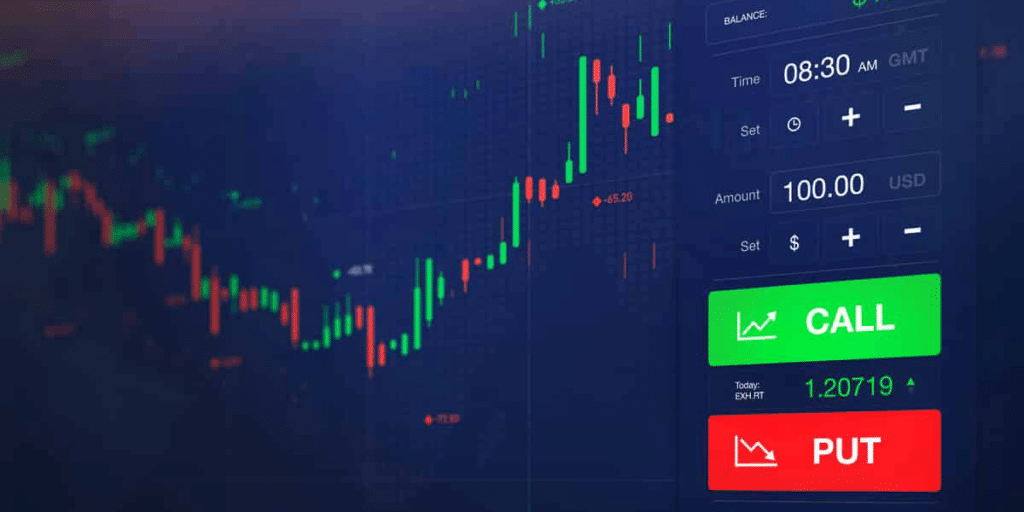
Given below is the simple process of how one can start trading with options, given that you have the knowledge required.
Trading Account
Just like stocks are traded using a brokerage account, options are traded using an options trading account.
However, opening an options trading requires a trader to put in a lot of capital, unlike most other types of investments.
As options trading can become a complex activity, the broker would usually require an individual to have a certain level of knowledge regarding options trading.
This is strictly necessitated by the broker before allowing them to start options trading.
According to some experienced financial planners, options trading is apt for people who are knowledgeable about the aspect and have plenty of time at hand.
These financial planners also state that options trading is not suitable for busy and beginner-level investors.
As these are complex investment vehicles, one must always be able to carefully monitor the trading activity throughout the day.
The assessment of a trader on whether or not they are ready for options trading is done on the basis of the following aspects.
— Trading experience
— Understanding the risks involved
— Financial knowledge
Such details would be documented within an options trading agreement, which is used to request approval from the selected broker.
Let us have a brief insight into the requirements before an individual would be allowed to have an options trading account.
First of all, the investment objectives of an investor are taken into consideration, which includes:
— Income
— Growth
— Capital preservation
— Capital speculation
The trading experience also plays a key role while determining whether or not an individual is eligible for opening an options trading account.
The trading experience comprises the following aspects.
— The time for how long the individual has been trading stocks or options.
— The number of trades the individual usually makes per year.
— The size of trades.
The personal financial information of the trader would also be taken into consideration. This includes:
— Liquid net worth or investments that can easily be sold for cash
— Annual income
— Total net worth
— Employment information
Following that, the trader would also be required to provide information related to the types of options they want to trade.
For example, the trader’s choices such as calls, puts or spreads would have to be provided.
The seller of the writer of the stocks must deliver the underlying stock when they exercise their option.
However, if the writer also owns the stock, then the options position will be covered. When the option is left unprotected, then that option is said to be naked.
Upon providing all the necessary information, the broker would assign a trading level that is based on the trader’s level of risk.
This is usually represented from 1 to 5 where 1 refers to the lowest risk and 5 refers to the highest.
This is crucial while you are getting involved with certain types of options trades.
You should also make sure that you have chosen the right type of broker as they are going to be your investing partner.
Usually, it is a best practice to go ahead with a broker offering the necessary tools, research, guidance, and support.
These aspects are very important in a broker, especially if you are new to the realm of options trading.
Picking the options
I have already shed some light on the call and put options, and therefore, you should pick the option you want.
If you want to buy an underlying asset at a predetermined price and time, then you go ahead with the call option.
However, if you want to sell an asset at a predetermined price and time, then you go ahead with the put option.
When you are expecting an asset’s price to increase, then buy a call option or sell a put option.
When you are expecting an asset’s price to remain stable, then sell a call option or sell a put option.
When you are expecting an asset’s price to decrease, then sell a call option or buy a put option.
Prediction of the strike price
When you are buying an option, it is deemed valuable only up to a period when the stock price closes the asset’s expiration period “in-the-money”.
For call options, it should be above the strike price, whereas for put options it should be below the strike price.
Always try to buy an option having a strike price that is near your prediction of the asset regarding where it will be during the option’s lifetime.
For instance, let us assume that you are involved with a company being traded for $100 and you anticipated the price to reach $120.
Now, it is suggested wisely to buy a call option for less than $120 and when the stock does not strike above the strike price, then your option is in-the-money (profitable).
At the same time, imagine that you anticipated the stock price to go below $80.
In such a circumstance, the strike price should be above $80, and again your option would be in-the-money.
You cannot go ahead and randomly choose a specific strike price by yourself.
Option quotes usually consist of a range of available strike prices, which is called an option chain or matrix.
The increments between the option prices are normalized and are based on the asset’s price. For example, $1, $2.50, $5, $10, etc.
Therefore, these are the aspects that are needed to be taken into consideration while predicting the strike price.
Evaluation of the option time-frame
As I said while discussing the general information, every option comes with an expiration date. This is the last date within which you should exercise your option.
Just like the strike price, the expiration date is something that you cannot select on a random basis.
The choices for the expiration date are those offered when you call up an option chain.
In general, there are two types of options namely, American and European, and these differ based on when the options can be exercised.
With an American option, holders can be able to exercise their option at any point up to their expiry date.
On the other hand, with a European option, holders are only allowed to exercise their option on the date of expiry.
As American options come with flexibility compared to European options, they cost more.
Expiration dates for options can range between days, months, or even years.
However, the daily and weekly options are deemed riskier and more apt for experienced options traders.
Long-term investors usually go ahead with expiration dates ranging from months to years.
During longer expiration periods, the assets are allowed more time to move up or down based on your investment strategy.
You should also take this into careful consideration that the longer the expiration date, the higher the costs involved with it.
Usually, longer expiration dates are also advantageous as the option can be based on the time value.
Advantages of Options Trading

Having discussed all the necessary information required to understand options contracts, let us now look at the advantages and disadvantages of options trading.
Let us begin by discussing the advantages of options trading.
Precision and Flexibility
To begin with, options trading is a combination of precision and flexibility, which is rarely seen in an investment vehicle.
Traders are allowed to choose a particular strike price and an expiration date. This locks the speculation of the trader regarding the price direction of the asset in a certain timeframe.
At the same time, they also get the flexibility of checking how favorable things are for them during that timeframe.
When they are proved to be wrong, i.e., related to their trading strategy, it is mandatory to execute the trade.
Expiration Date
As options come with an expiration date that ranges from a couple of days to many months, traders get flexible timeframes.
This is ideal for traders who want exposure to assets at a lower limit for a shorter timeframe.
However, traders need to be on the active lookout for price changes to check whether they are in-the-money or they intend to exercise their options.
Hedging
Options trading, if done properly, can be a great hedging instrument.
For instance, let us say that you own shares in a certain company.
You could buy put options so as to mitigate the losses which may occur when the price goes down.
This is one of the major reasons why broad market indexes such as the S&P 500 are used as a hedge for declines that may occur in the short term.
Based on this, options trading can be effective while making speculation with a lower amount of risk involved.
At the same time, it also offers a higher potential for gains as well as a systematic approach to investing.
Disadvantages of Options Trading
Having discussed the advantages, now let us have a brief look at the drawbacks of options trading.
Complessità
First of all, you should always remember that options trading is not suitable for all types of investors.
It is particularly ideal for investors who have an excellent amount of knowledge and expertise related to it.
The three major aspects related to options trading are the direction, price, and timeframe, which may become complex for beginner-level investors.
Trading requirements
Unlike most other mainstream investments, options trading comes with a lot of hurdles regarding the acceptance of an options trading account.
I’ve already discussed the hurdles one must go through before successfully getting an options trading account.
Active monitoring
Options trading is not a passive investment where you just invest and forget about it.
Not only does it require a lot of knowledge and relevant skills, but it also requires a lot of time from the trader.
Risks and fees
There are trading fees that are generally charged by the options broker, which may be more depending on your preferences.
Additionally, there may be certain risks involved with the process based on your options trading strategy, which may lead to substantial losses.
Commissioni
Options also involve a commission, which can either be a flat rate or a per-contract fee depending on the amount being traded.
This is usually applied for both the buy and sell options, and because of this reason, you should be attentive to all the fees involved with trading.
Guadagni in conto capitale
Mostly, options are short-term in nature, and therefore, they result in capital gains. Depending on the country from where you are trading, they can eat up a significant amount of your profits.
Linea di fondo
Options contracts do come with a potential set of benefits such as hedging, flexibility, precision, etc.
At the same time, one should also pay attention to the negative aspects of these financial instruments such as fees, complexity, account opening requirements, and so on.
If you have the necessary trading skills, knowledge, and trading skills, options trading can be a great endeavor.
You should also try to remember that investment vehicles such as options usually come with a lot of risks involved.
Therefore, it is an investment opportunity suggested for people who have higher risk tolerance.
If you are a beginner-level investor with very little knowledge about this instrument, then I suggest you search for alternative investment options.
This is because options trading requires an immense amount of expertise, trading skills, and time (to monitor your options).
If you fall short on any of these aspects, it is wise to contact your financial advisor or investment manager before getting into them.
That being said, I strongly hope that the information presented within this article was proven to be helpful.
Are you a high-net-worth individual looking for an efficient financial expert to cater to your gestione patrimoniale needs?
(or)
Are you looking for a top-notch financial expert who can help you with your investment needs?
I’m here to help. I’ve helped many of my clients with their wealth management and investment needs.
Not just that, most of my clients were able to attain financial freedom through the best-in-class services that I offer.
If you think that you might benefit from the financial services I offer, feel free to contact me.
Siete afflitti dall'indecisione finanziaria? Volete investire con Adam?

Adam è un autore riconosciuto a livello internazionale in materia finanziaria con oltre 830 milioni di visualizzazioni di risposte su Quora, un libro molto venduto su Amazon e un contributo su Forbes.