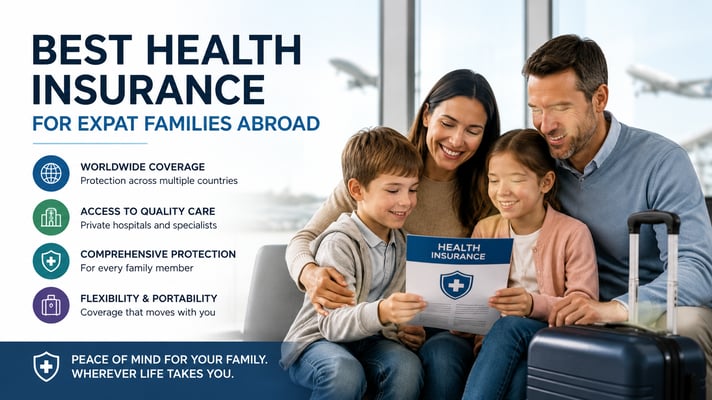
International health insurance is generally the best choice for expat families because it offers comprehensive medical coverage across multiple countries, access to private healthcare, and continuity of care if you relocate.
While some countries offer public healthcare to expatriates, eligibility, coverage, and access vary widely, making private international coverage an important consideration for many families living abroad.
This article covers:
- Which health insurance is better for expat families?
- What should I look for in a health insurance policy?
- What factors do you consider most when choosing an insurance provider?
- What are the 4 types of insurance plans?
Key Takeaways:
- International health insurance is generally the best option for families living abroad or relocating between countries.
- Choosing the right policy involves balancing coverage, hospital access, premiums, and long-term flexibility.
- Employer-sponsored health insurance may not fully protect spouses, children, or healthcare needs outside the host country.
- Purchasing health insurance before relocating can help avoid waiting periods and unexpected coverage gaps.
My contact details are hello@adamfayed.com and WhatsApp +44-7393-450-837 if you have any questions.
The information in this article is for general guidance only. It does not constitute financial, legal, or tax advice, and is not a recommendation or solicitation to invest. Some facts may have changed since the time of writing.
Which health insurance is best for an expat family?
The top health insurance for a whole expat family is typically a comprehensive international family health insurance plan that covers both routine and major medical care while remaining valid across multiple countries.
This type of policy is designed for families living abroad and generally offers greater flexibility than local health insurance if you relocate or travel frequently.
International insurers such as Cigna Global, Bupa Global, Allianz Care, AXA Global Healthcare, and GeoBlue are among those commonly considered by expatriates because they offer family plans with varying levels of worldwide coverage and benefits.
Comparison of international health insurers
| Provider | Best For | rawback |
|---|---|---|
| Cigna | Flexible customizable plans | Can become expensive |
| Bupa | Premium private healthcare | Higher premiums |
| Allianz | Broad international coverage | Less customizable |
| AXA | Global medical network | Pricing varies |
| GeoBlue | US-connected families | Limited availability |
Rather than choosing an insurer based on its name alone, compare the scope of coverage, hospital network, exclusions, claims process, and overall value for your family's needs.
Health insurance types for expat families
| Insurance Type | Generally Best For |
| International health insurance | Expat families living abroad long-term, relocating between countries, or wanting access to private healthcare. |
| Local health insurance | Families settling permanently in one country and primarily using its local healthcare system. |
| Employer-sponsored health insurance | Employees receiving comprehensive family benefits through their employer. |
| Public health insurance | Families eligible for government-funded healthcare in their country of residence. |
| Hybrid approach | Families combining local insurance with international coverage for broader protection. |
The ideal policy should protect every family member while balancing affordability with comprehensive benefits. Healthcare needs often differ between adults and children, making family-oriented coverage particularly valuable.
What cover to look for
- Inpatient and outpatient treatment
- Emergency medical care
- Prescription medications
- Pediatric care
- Vaccinations and preventive healthcare
- Specialist consultations
- Diagnostic testing
- Maternity and newborn care (if applicable)
- Mental health services
- Emergency medical evacuation
- Worldwide emergency assistance
Many insurers also offer optional benefits such as dental care, vision coverage, wellness programs, and annual health screenings, allowing families to customize their coverage based on their healthcare priorities.
Another important consideration is portability.
A portable international policy provides continuity of coverage and may reduce the risk of new waiting periods or exclusions when moving between countries.
How to choose the best health insurance for expat family?
Selecting the best health insurance for expat families starts with understanding your healthcare needs, destination country, and long-term relocation plans.
Rather than focusing solely on premiums, families should compare the scope of cover, policy limits, exclusions, and whether the plan matches their family's healthcare needs.
Some of the most important factors to consider include:
Where you will be living
Healthcare systems vary significantly from one country to another.
In countries where private healthcare is commonly used by expatriates, comprehensive international health insurance may provide broader access to medical treatment.
The size of your family
Larger families generally require broader coverage and may benefit from family plans that offer discounted rates compared to purchasing individual policies.
The ages of your children
Young children typically require more frequent doctor visits, vaccinations, and pediatric care, while older children may have different healthcare priorities such as sports-related injuries or orthodontic treatment.
Future family plans
If you are planning to have children abroad, carefully review maternity waiting periods, prenatal care, delivery coverage, and newborn benefits before purchasing a policy.
Existing medical conditions
Some insurers fully underwrite applicants before issuing coverage, while others may apply exclusions, premium adjustments, or waiting periods for pre-existing conditions.
Cost-sharing arrangements
Review deductibles, co-payments, and coinsurance requirements to understand your family's potential out-of-pocket expenses.
Long-term flexibility
If international relocation is likely, choose a policy that remains valid across multiple countries and can adapt as your family's circumstances change.
Because policy features, exclusions, and pricing can vary significantly between insurers, using a comparison service such as insurance.adamfayed.com can help expats compare international health insurance plans, evaluate coverage differences, and identify a policy that best suits their healthcare needs, destination, and budget.
The right health insurance policy should provide the level of cover your family needs today while remaining flexible enough to support future moves, changing healthcare needs, and long-term life abroad.
What is the major consideration when choosing a health insurance provider?
The major consideration when choosing a health insurance provider is the insurer's ability to consistently deliver reliable coverage, efficient claims handling, and access to quality healthcare wherever your family lives.
Even the most comprehensive policy has limited value if the insurer cannot deliver efficient claims handling, quality customer support, and access to trusted healthcare providers when you need them most.
Several factors deserve careful evaluation before selecting an insurance provider.
Financial strength
An insurer with strong financial stability is generally better positioned to meet long-term claims obligations and continue supporting policyholders over many years.
Global hospital network
A broad network of hospitals, clinics, and specialists gives families greater flexibility when seeking medical treatment, particularly during international travel or future relocations.
Claims reputation
Research how efficiently the insurer processes claims, approves treatments, and reimburses medical expenses.
Delayed or difficult claims handling can create unnecessary stress during medical emergencies.
Claims process
Families often benefit from insurers that offer direct billing, cashless treatment, online claims submission, and responsive customer support.
Customer support
Healthcare issues rarely occur during convenient business hours. Providers offering 24-hour multilingual customer service and emergency assistance are often better suited for expatriate families.
Guaranteed renewability
Long-term health insurance becomes increasingly valuable as family members age or develop medical conditions.
Policies that offer guaranteed renewability provide greater security by allowing continued coverage regardless of future health changes, subject to the policy terms.
International experience
Insurers with extensive experience serving expatriates are generally more familiar with cross-border healthcare systems, international billing arrangements, and the administrative challenges associated with overseas medical care.
Digital services
Modern insurers often provide mobile applications for locating hospitals, submitting claims, accessing digital health cards, scheduling telemedicine appointments, and managing policy documents.
These features can simplify healthcare management for busy families.
Reputation among expatriates
Independent reviews, professional recommendations, and feedback from other expatriate families can provide valuable insight into the insurer's overall service quality and customer satisfaction.
While policy features determine what is covered, the insurer determines how smoothly those benefits are delivered.
Choosing a financially strong provider with a proven international track record can make a significant difference when your family needs medical care abroad.
What are the factors that affect insurance premiums?
Health insurance premiums for expat families are primarily affected by the insurer's assessment of medical risk, the countries where coverage is needed, and the scope of benefits included in the policy.
Families with broader coverage needs or higher expected healthcare costs generally pay higher premiums.
Several factors commonly influence the cost of international health insurance.
Destination country
The country where your family lives is one of the biggest pricing factors.
Premiums are generally higher in destinations with expensive private healthcare, such as the United States, than in countries with lower medical costs.
Family size and ages
Premiums increase as additional family members are added to the policy.
The ages of insured adults and children also influence pricing, as healthcare needs typically change over time.
Level of medical coverage
Comprehensive plans that include outpatient care, specialist consultations, prescription drugs, maternity benefits, and emergency medical evacuation usually have higher premiums than more basic policies.
Pre-existing medical conditions
Depending on the insurer's underwriting process, pre-existing medical conditions may increase premiums or result in exclusions, waiting periods, or special policy terms.
Optional family benefits
Adding benefits such as dental care, vision care, wellness programs, or enhanced maternity coverage generally increases the overall premium.
Deductibles and co-payments
Selecting a higher deductible or larger co-payment usually reduces annual premiums because the family agrees to pay more of the medical costs before insurance benefits apply.
Lifestyle and travel patterns
Frequent international travel, participation in high-risk activities, or other lifestyle factors may affect premiums under certain policies.
Although premiums are an important consideration, the least expensive policy is not always the best value for an expat family.
Balancing cost with adequate protection across the countries where your family lives and travels is generally the better long-term approach.
Should you buy health insurance before moving abroad?
Yes. Buying health insurance before relocating overseas helps ensure continuous medical coverage from the day you arrive and may reduce the risk of waiting periods or coverage gaps.
Purchasing a policy before moving offers several advantages:
- Coverage can begin as soon as your policy takes effect, reducing the risk of being uninsured during your move.
- Some benefits, such as maternity care or certain pre-existing conditions, may be subject to waiting periods, making early enrollment advantageous.
- Proof of health insurance may be required for visa or residency applications in some countries.
Waiting until after relocating may leave your family temporarily uninsured or with fewer coverage options if medical care is needed before your policy becomes effective.
Common Mistakes Expat Families Make When Buying Health Insurance
The most common mistakes expat families make when getting health insurance are choosing policies based only on price, overlooking coverage exclusions, and failing to consider their long-term international healthcare needs.
Lower premiums often come with higher deductibles, lower coverage limits, or important exclusions for benefits such as maternity care and pre-existing medical conditions.
Many families also assume employer-sponsored health insurance or travel insurance provides sufficient long-term protection, when these policies may offer limited overseas coverage or end with employment.
Another common mistake is failing to review the insurer's hospital network, waiting periods, and whether the policy remains valid if the family relocates again.
Carefully comparing coverage, exclusions, and long-term flexibility before purchasing a policy can help avoid costly surprises after moving abroad.
Conclusion
Health insurance becomes increasingly important as an expat family's life abroad becomes more established.
Children's healthcare needs evolve, careers change, and international relocations can introduce new medical and financial risks.
Choosing a policy that remains suitable over the long term, not just one that meets your family's immediate needs, can provide greater stability and peace of mind wherever your journey takes you.
FAQs
Are pre-existing medical conditions covered?
Sometimes. Many international health insurers cover pre-existing medical conditions only after medical underwriting, while others may apply exclusions, waiting periods, additional premiums, or modified policy terms depending on the condition and the insurer.
Can I pause my health insurance while overseas?
Usually not. Most international health insurance policies require continuous premium payments to maintain coverage, although some insurers may allow policy changes or adjustments in specific circumstances.
Always check your policy terms before assuming coverage can be suspended.
Does family travel insurance cover parents?
Usually not. Family travel insurance typically covers the policyholder, their spouse or partner, and dependent children.
Parents generally require their own travel insurance policy unless they are specifically included under the insurer's eligibility rules.
Does travel insurance cover illness of relatives?
Generally, travel insurance covers your own medical emergencies rather than illnesses affecting relatives at home.
However, many policies provide trip cancellation or interruption benefits if an immediate family member becomes seriously ill, suffers a medical emergency, or dies before or during your trip, subject to the policy's terms and conditions.
Related Articles:
- How International Health Insurance For Expats Works
- International Health Insurance Cost
- What is Group Health Insurance for Expats and How Plans Work
- Top 10 Best Countries for Expat Families
- Health Insurance for Retired Expats: Best 8 Options for Expats Over 60
- Canadian Expat Health Insurance: A Guide
- Australian Expat Health Insurance: A Guide
- International Health Insurance for Expats in Panama: Coverage, Costs & Providers