In questo blog elencherò alcune delle mie migliori risposte su Quora degli ultimi giorni.
Se state cercando di investire come espatriati o individui con un alto patrimonio netto, che è ciò in cui sono specializzato, potete inviarmi un'e-mail (advice@adamfayed.com) o un messaggio WhatsApp (+44-7393-450-837).
Questo vale anche per chi è alla ricerca di un secondo parere o di investimenti alternativi.
Alcuni fatti potrebbero cambiare rispetto al momento della stesura del presente documento e nulla di quanto qui scritto rappresenta una consulenza finanziaria, legale, fiscale o di qualsiasi tipo, né una sollecitazione a investire.
“S&P 500 always goes up in the long term. Is it a good idea to invest in a 3X bull ETF based on S&P 500?“
Fonte: Quora Adam Fayed
I wouldn’t do this for a number of reasons:
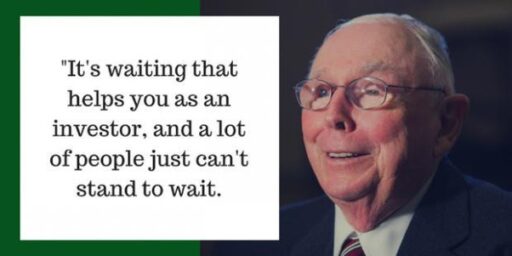
- Complexity is your enemy in investing and simplicity is your friend. Leverage increases risk. Most people don’t fully understand this risk unless they are an investment professional. This quote is one of the most important in investing but few listen to it:
2. It hasn’t necessarily beaten a regular S&P500 ETF long-term. In fact, I would be willing to bet that whilst people 100% of people who have bought and held an S&P500 ETF for decades have made money, quite a few people have lost from either panicking or going into complex positions like leveraged ETFs.
3. The S&P500 has always gone up long-term, that is for sure. However, it can be stagnant for 5, 10 or even 15+ years sometimes. People, moreover, can’t know for sure which years and decades will be better than others. Very few people thought 2009–2020 would be so good. Now, with hindsight, they tell themselves all these stories about the market going up for X or Y reason. Often they cite QE and 0% interest rates. Yet at the time, in 2009 and 2010, few people foresaw these things affecting the market. Headlines are written after the event, not before it! This means that the easiest way to reduce your risks is to be diversified into stocks and bonds
4. Following on from number 3, if you are in the S&P500 index + a bond index + an international one, you can rebalance if an extreme event happens like in February-March this year.
5. The average investor gets much below the market average. That has been seen in reports like Morningstar’s “mind the gap”. The reasons for this is precisely because people either time the market, or engage in complicated strategies that they later regret.
6. If the S&P500 goes down by 25%, your investment would go down by 75% with a leveraged ETF. Yes, that also means that you are leveraged on the upside. The point is, this strategy will bring about a lot of risks. In times of high volatility, you could get hammered.
I would just keep it simple. People tend to lose when they overcomplicate and overthink things.
“What are some advantages to living in the UK rather than the US? I can’t see how the UK could offer me anything that the US doesn’t already.”
Source: Quora Adam Fayed
I will answer this from a financial perspective considering that is my area of expertise.
I am from the UK but have lived overseas for over 9 years. So, I am not the kind of person to only look at the bright sides when it comes to the UK.
Nevertheless, there are quite a few financial benefits to the UK vs the US.
Those include
- You avoid the complexity of the US taxation system and it’s spiders web. Due to rules such as FATCA, if you live in the US, you will sometimes be considered a “US specified person”, even if you don’t become a citizen. I have lost count of the number of American expats that have had their bank and investment accounts closed down in their home country (and third countries) due to FATCA and other rules. To give you some perspective here, 5,000+ US expats are giving up their citizenship every year due to these issues and that figure is rising – American expats renouncing US citizenship in record numbers . If you settle in the US, gain citizenship and then move overseas again, you will have a lot of hassles potentially.
- The US is no longer a low tax country, at least in most parts of the country, if you include all taxes (local, state and property taxes). Those states that have no local taxes, often have higher property taxes (Texas as an example).
- The cost of living is now higher if you include like for like. So NYC is more expensive than London according to Numbeo – Cost of Living Comparison Between. The cost of healthcare and education is also high. Therefore, you have to make sure that the higher pay (if applicable) is worth it.
- Traveling to Europe, Asia and Africa is cheaper and more accessible.
Of course, there might be social and other benefits of moving to the US, which I can’t reply to based on your question.
As an aside, I wouldn’t just consider the UK vs the US. If you can work from anywhere in the world, or want to start an online business, I would consider some lower tax and cost of living places.
You could live and work in places like Dubai and pay 0% tax, or 0% on overseas income in places like Singapore, Thailand, Hong Kong and Malaysia.
And if you did that, you could still spend 1–2 months a year in both places, without becoming a tax resident.
Moving yourself to the US physically will only work out financially if you want to be a salaried employee.
In the online and digital economy which we are now in, you don’t need to be personally present in the UK or US to gain access to the market. Although that partly depends on the industry you are in.
That is one reason why many more countries are now bringing in nomad and entrepreneur visas.
We are moving into a completely different world from the one where you needed to be in location A to get an income from an employer or clients from the same location.
“What is the true wealth?“
Source: Quora Adam Fayed
Passive wealth, which is liquid enough, to use. So many people come out with statements like:
- I have made 200k on my house
- I have made 300k on land
- My business is worth $1M
- My art collection is worth 100k.
- My luxury watch has doubled price.
These statements forget something obvious: a valuation is pointless unless you can find a buyer.
I have met countless people who have boasted about their `returns`, only to be in a position where they ca’t find a buyer.
Business valuations are another classic. Many people live in a world of inflated valuations.
Anybody who has ever watched Shark Tank or Dragons Den in the UK, can see some of the wishful thinking some businesspeople get into.
I was watching an episode a few days ago, where some former management consultants thought their business was worth $3M after $30k worth of sales, based on the fact they have secure money from some friends, family and strangers.
So, for me, the greatest form of wealth is that which is liquid, and can be sold with a click of the button.
That is the biggest reason why close to 100% of my investments are in liquid positions.
Not to mention that markets perform better than illiquid investments long-term.
Apart from that point, obviously knowledge and health are very important sources of indirect wealth, as long as knowledge is used correctly.
This is also a great quote:
I am not implying that illiquid wealth is useless. Merely, having a house (a primary residence( that has gone up in value by 200k isn’t as useful as a rental property producing cashflow or a liquid stock market investment.
“Why don’t US investors borrow from the banks in US at near 0% interest rates and save it at banks abroad where the interest rates are higher?“
Source: Quora Adam Fayed
This strategy has been used by individual and institutional investors for decades.
The problem right now is that there are three types of countries
1.Those countries where the interest rates are the same as the US or lower. Examples include the EU, UK, Japan and most developed countries.
2.Those where interest rates are higher but not in USD terms. This brings about currency risks. For instance, interest rates in South Africa and Egypt have been higher than the US for ages……yet you would have made more getting 1% in USD terms given the depreciation!
Even if this depreciation didn’t happen, the risks of currency falls and even collapses is huge in developing markets.
3. A few countries do have high USD rates. Georgia, Cambodia and even India. However, in general, the returns are 4%-6% a year max and lower after covid. Moreover, the risks aren’t low. Take Cambodia banks as an example. They get those higher interest rates by lending to farmers and other high risk groups and the fact it is an economy which uses the USD together with the Cambodian Riel.
The bottom line is this. Cash, as Ray Dalio and others have said, is arguably the riskiest asset, or one of the riskiest assets.
Just because it is less volatile, doesn’t mean it is less risky. The Venezuelan Bolívar wasn’t that volatile at one stage!
So, your long-term returns will be much lower compared to investing it in markets, and you are indirectly taking a lot of risk.
That is why more money goes into stock markets, property and even bonds during periods like this.
If you hold a diversified portfolio your risks are far lower than holding cash provided you are long-term, and you will get higher average returns almost for sure.
Cash has never beaten assets like the stock market long-term, even in the days of high interest rates.
The only time investing money is riskier, or just as risky as cash, is if you hold just a small number of stocks or speculate (market timing and so on).
If getting 4%+ in the bank in Cambodia, Georgia or India, or 10%+ in local currency, was such a great deal, then Buffett, Soros and all the institutional players would be in the market right now.
“I am making 12% returns annually by lending to private people by keeping their assets as security. Will I be able to make more percentage annual returns by investing in shares and what’s the risk?”
Source: Quora Adam Fayed
Consider a number of things for a moment. Firstly, risks. What you are doing is riskier than holding onto a broadly diversified portfolio for a number of reasons.
The person might die, become disabled or refuse to pay. Now sure, you have lowered your risk by keeping their assets as security.
However, logically speaking, why would somebody pay you 12%? It is because the banks won’t lend to them as they consider it too risky.
Those people could offer the banks those assets. It is commonplace for business owners to put their house and car up as collateral to get lending.
Therefore, unless these people or the banks are stupid which is unlikely, it is fair to assume that the assets they have put as security aren’t worth as much as the loans you are giving them.
If you are holding assets worth $4,000 for every $10,000 you lend out, as a pure example, that is still a risk.
This is especially the case if they are illiquid assets. You might value their watch at $1,000, but that doesn’t mean you will find a buyer who is willing to pay $1,000, especially in extreme economic times.
Second, scaling is an issue. If you lend to 1, 2 or 3 people, risks can be managed and you can find these people.
It is much more difficult to get 10% or 12% if you have $1m or $5m. It is possible, but much more difficult.
With the stock market, your percentage returns are the same regardless of whether they are investing $1, $100,000 or 1 billion.
It is also less time intensive as you don’t need to chase people up for payments.
A lot of the risks of investing in the stock market can be mitigated by having broad diversification and being long-term.
Let’s not forget another thing as well. If it was easy to scale this in a relatively risk-free way, then why wouldn’t all wealthy people and institutions move the trillions of dollars, Euros and Pounds they have invested into this method?
Two firms, BlackRock and Vanguard, have 14 trillion of AUM invested in the stocks and bond markets.
I am not saying what you are doing doesn’t have its place, but the market also isn’t stupid even if it isn’t always efficient.
There is a reason so much money is in the US and other major stock markets.
People in the know realise that for all the volatility, it offers a great risk-adjusted return, if you are willing to hold it for decades.
Siete afflitti dall'indecisione finanziaria?

Adam è un autore riconosciuto a livello internazionale in materia finanziaria con oltre 830 milioni di visualizzazioni di risposte su Quora, un libro molto venduto su Amazon e un contributo su Forbes.