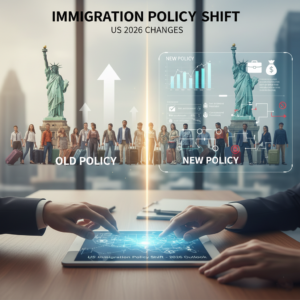
Recent US immigration policies have tightened visa screening, expanded enforcement, and altered how legal residency is granted, directly affecting travelers, workers, and families.
These immigration changes in the US are reshaping how the country manages work visas, family reunification, deportations, and humanitarian programs.
This article covers:
- What is the immigration plan for 2026?
- What are the big changes in the US visa process?
- How many people have been deported from the US so far?
- What are the immigration protests about?
Key Takeaways
- New US immigration rules increase visa scrutiny and documentation requirements.
- Presidential Proclamation 10998 expands travel and visa restrictions for multiple countries starting January 2026.
- Around 600,000 immigrants were deported within 2025 and 2026 under intensified enforcement efforts.
- Visa appointments and processing are paused or delayed due to expanded security vetting and operational constraints.
My contact details are hello@adamfayed.com and WhatsApp +44-7393-450-837 if you have any questions.
The information in this article is for general guidance only. It does not constitute financial, legal, or tax advice, and is not a recommendation or solicitation to invest. Some facts may have changed since the time of writing.

Recent Policy Shifts and Immigration Processing Changes
US immigration in 2026 has seen significant shifts affecting visas, work authorization, and residency pathways, reflecting tighter security, economic priorities, and selective humanitarian measures.
Key updates include:
- Enhanced vetting: More detailed background checks, social media reviews, and documentation requirements for many visa categories.
- Targeted country restrictions: Full or partial visa suspensions for certain nations, plus temporary pauses for others while processing reviews are conducted.
- Family and humanitarian programs: Programs like family reunification and humanitarian parole remain active, though some applications now face longer wait times.
- High-skilled labor focus: Policies prioritize critical sectors such as technology, healthcare, and renewable energy.
- Mandatory interviews and additional verification: Many work, student, and family-based visa applicants must now attend interviews even if previously waived, and provide extra documents to satisfy compliance and security checks.
- Flexible implementation: Most changes are introduced through executive actions or proclamations rather than formal laws, so applicants and employers must stay updated.
These updates increase scrutiny, extend processing times, and raise preparation requirements, aiming to make US visa issuance more secure and ensure applicants meet eligibility standards.
What is the new immigration law in the USA?
There is no single comprehensive new immigration law passed in 2026, but a series of major policy changes and presidential proclamations in late 2025 and early 2026 are shaping US immigration rules this year.
One of the most significant is the expanded travel and visa restrictions taking effect January 1, 2026, under Presidential Proclamation 10998, which suspends or limits visa issuance and entry for nationals of multiple countries deemed security or vetting concerns.
For example:
- Nationals from Afghanistan, Iran, Somalia, Yemen, and Libya face full suspensions on both immigrant and many non-immigrant visas.
- Immigrant visa processing is paused for citizens of around 75 countries, including Brazil, Russia, Pakistan, Bangladesh, Nigeria, Egypt, Colombia, and Haiti, starting January 21, 2026, as officials reassess screening and public charge criteria.
These restrictions do not affect all visa types or all countries, and people who already hold valid US visas or green cards can generally continue to enter the US.
Most changes are implemented through executive actions and proclamations rather than a standalone law passed by Congress.
Together, these updates tighten how visas are reviewed, who can enter or obtain residency, and increase vetting requirements for applicants worldwide.
Who will be affected by new immigration rules?
The 2026 immigration rules primarily affect non-US citizens applying for work, student, or family-based visas, especially nationals from countries subject to suspensions or enhanced vetting.
Employers sponsoring foreign workers and individuals with pending immigrant visa applications may also face added compliance requirements and processing uncertainty.
While green card holders are generally unaffected, new applicants and temporary visa holders face greater scrutiny and less predictability under the updated policies.
Why is the US Embassy cancelling visa appointments?
The US Embassy is cancelling or rescheduling visa appointments because of expanded security and vetting procedures, operational constraints, and local conditions that limit consular capacity.
One major factor has been the rollout of enhanced screening especially social media and online presence reviews for certain visa categories like H‑1B and H‑4, which reduces the number of interviews consular staff can conduct daily and forces posts to adjust appointment schedules.
Other reasons for cancellations or interruptions include:
- Security and public safety protocols that require posts to pause routine services or reschedule interviews while ensuring visa processes meet new standards.
- Operational and administrative constraints, such as staffing shortages, limited consular capacity, or transitions to new appointment systems.
- Local conditions, like severe weather or temporary closures, which can force appointments to be called off for safety.
These factors have led to longer wait times and widespread rescheduling notices for applicants around the world, particularly in high‑volume markets.
How many immigrants has Trump deported in 2025?
In 2025, under President Donald Trump’s second term, federal data analysis shows approximately 540,000 people were deported or removed from the US between January 20, 2025 and January 20, 2026.
This figure includes about 230,000 deportations of people arrested inside the country and about 270,000 deportations of people at the border, plus roughly 40,000 who voluntarily returned home through government programs.
The Trump administration’s own Department of Homeland Security (DHS) data has also reported higher totals, more than 622,000 deportations since January 2025, though that number may include a broader set of repatriations carried out by different agencies.
Despite aggressive enforcement efforts, these deportation figures are below the administration’s stated goal of 1 million removals per year, reflecting both logistical limits and a sharp drop in border crossings during that period.
Why are people protesting for immigrants?
People are protesting for immigrants largely in response to heightened immigration enforcement, deportation raids, and policies seen as undermining immigrant rights and due process.
Critics of current US immigration actions argue that aggressive enforcement including expanded Immigration and Customs Enforcement (ICE) operations and expedited removals, creates fear, disrupts families, and targets communities long established in the US, prompting widespread demonstrations.
Activists and demonstrators often demand:
- Opposition to mass deportations and ICE raids, arguing such practices break up families and harm communities.
- Fair treatment and legal protections for migrants, including respect for due process and asylum rights.
- Access to work permits and pathways to legal status for immigrants and their families.
- Protection for vulnerable groups, such as refugees, DACA recipients, and long‑time residents facing removal.
These demonstrations have taken place in multiple states and cities, often involving local communities, clergy, unions, and immigrant advocacy organizations responding to federal policies they see as unjust or harmful.
Is immigration good or bad for the United States?
Immigration has both benefits and challenges for the US.
It brings labor, innovation, and cultural diversity, contributing to economic growth, entrepreneurship, and technological advancement.
At the same time, high levels of immigration can strain public services, housing, and local infrastructure, requiring careful policy management.
Overall, most economists agree that controlled immigration benefits the US economy, particularly when skilled and semi-skilled workers complement the existing labor force, and immigration policies are aligned with integration and workforce needs.
What These US Immigration Changes Mean for Expats
The 2026 immigration crackdown increases uncertainty for expats and foreign professionals living in or planning to move to the United States.
For internationally mobile workers, entrepreneurs, and families, the main issue is reduced predictability.
Because many of the changes are implemented through executive proclamations rather than permanent legislation, policies can shift quickly.
This creates planning risk for those relying on US visas for employment, study, or long-term residence.
Some expats are now considering contingency plans, including alternative jurisdictions, delayed relocations, or restructuring employer sponsorship arrangements.
Businesses are also reassessing global mobility strategies, particularly in sectors dependent on international talent.
Increased enforcement intensity and heightened scrutiny raise compliance costs and may slow cross-border hiring decisions.
At the same time, the measures have sparked strong opposition.
Immigration advocates argue the policies disrupt families and long-standing communities, while critics in parts of the business sector warn about potential competitiveness and labor supply implications.
Legal challenges and public protests in several cities reflect broader political divisions over enforcement priorities.
Supporters, however, maintain that stricter controls strengthen national security and restore order to immigration systems.
As a result, US immigration policy in 2026 remains not only stricter, but more politically and economically contested than in recent years.
Conclusion
US immigration in 2026 reflects the nation’s struggle to balance rising security concerns, economic needs, and social cohesion.
With visa restrictions, deportation policies, and family reunification delays, the system highlights both the pressures on borders and the demand for skilled labor.
How the US navigates these changes will define its ability to remain competitive, protect vulnerable communities, and uphold its identity as a country shaped by immigration.
FAQs
Why did Democrats vote against the Border Bill?
Democrats opposed the Border Bill because they argued it focused heavily on enforcement spending without offering sustainable immigration reforms or protections for migrant families.
They criticized the bill for relying on strategies they considered ineffective or insufficient to strengthen border security while supporting economic and humanitarian priorities.
Why did Republicans reject the immigration bill?
Some Republicans opposed the immigration bill because they argued it weakened enforcement, could incentivize illegal immigration, and reduced funding or resources for border security and national security measures.
Can you live in the US permanently without citizenship?
Yes, through visas, green cards, or other residency permits. However, these options may have limitations on work, travel, and voting rights compared to full citizenship.
What countries do not allow immigrants?
No country completely bans immigration, but some maintain extremely restrictive policies that make permanent residency nearly impossible.
Examples include North Korea and Bhutan, where entry and settlement are tightly controlled.
Certain Gulf nations such as Saudi Arabia, UAE, and Qatar, which rely on temporary foreign workers offer very limited paths to citizenship or long-term residency.
Pained by financial indecision?

Adam is an internationally recognised author on financial matters with over 830million answer views on Quora, a widely sold book on Amazon, and a contributor on Forbes.