For expats living in South Africa, having a properly drafted will is critical to ensure your estate is handled according to your wishes.
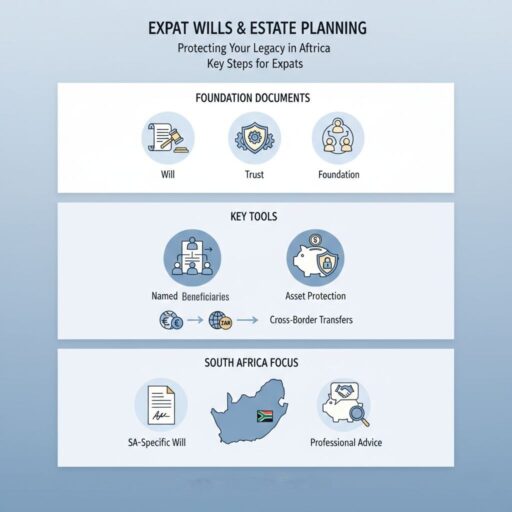
Wills form the foundation of any estate plan, but for complex estates or international assets, complementary structures like trusts, foundations, and named beneficiaries are often necessary to provide full protection and control.
This article covers:
- What are the formalities of a valid will in South Africa?
- What are the rules for intestate succession in South Africa?
- How to draft a will in South Africa
- What can I use instead of a will?
- What serves as a complement to a will?
Key Takeaways:
- A will alone may not be enough; consider trusts, foundations, and insurance beneficiaries.
- South African law requires specific formalities for a will to be valid.
- Expats must plan cross-border transfers to comply with South African exchange control and tax rules.
- Regular updates and professional advice are crucial for complex estates.
My contact details are hello@adamfayed.com and WhatsApp +44-7393-450-837 if you have any questions.
The information in this article is for general guidance only. It does not constitute financial, legal, or tax advice, and is not a recommendation or solicitation to invest. Some facts may have changed since the time of writing.

Why is it important to have a will in South Africa?
Having a will ensures your assets are distributed according to your wishes, avoiding family disputes, delays, and confusion.
For expats, a will also clarifies how foreign assets interact with South African law and reduces the risk of unintended taxation.
Without a will, your estate falls under South Africa’s Intestate Succession Act, which dictates how assets are distributed when someone dies intestate.
Key points of the Act include:
- Spouses and children inherit first: If you are married in community of property, your spouse is entitled to a portion of the estate, and children share the remainder equally. If there are no children, the spouse may inherit everything.
- Extended family steps in if no spouse or children exist: Parents, siblings, grandparents, or more distant relatives may inherit, which can result in outcomes very different from your intentions.
- Foreign assets are included if located in South Africa: Property, bank accounts, and other assets in South Africa will be distributed under the Act, even if you have a will elsewhere.
- No consideration for charitable or special intentions: The Act does not account for gifts to charities, friends, or non-family members unless specified in a valid will.
A properly drafted will ensures your estate is handled according to your personal wishes, including provisions for foreign assets or specialized structures like trusts and foundations.
What are the requirements for a will to be valid in South Africa?
To be legally valid in South Africa, a will must comply with both the formal requirements set out in the Wills Act and the substantive requirements relating to intent and capacity.
South African law requires that:
- The will is in writing (handwritten or typed)
- The testator is 16 years or older
- The will is signed by the testator in the presence of two competent witnesses
- Witnesses may not be beneficiaries under the will
In addition to these formalities, a valid will must also demonstrate that:
- The testator had testamentary capacity and understood the nature and effect of the will
- The will was signed freely and voluntarily, without pressure or duress
- The testator’s intentions are clear, particularly regarding beneficiaries and asset distribution
Meeting both the formal and substantive requirements ensures the will is accepted by the courts and reduces the risk of it being challenged or declared invalid.
Even where these requirements are met, expats often complement wills with trusts, foundations, or named beneficiaries on insurance and retirement policies to streamline inheritance and manage cross-border assets more effectively.
How to draw up a will without a lawyer in South Africa?
You can draw up a will yourself by clearly listing your assets, naming beneficiaries, and signing it in the presence of two witnesses.
1. Identify yourself and assets – Clearly state your full name, ID number, and list all significant property, bank accounts, investments, and personal belongings.
2. Name beneficiaries – Specify who will inherit each asset and in what proportion.
3. Appoint an executor – Choose someone responsible for administering your estate according to your will.
4. Sign with witnesses – Sign the will in the presence of two competent adult witnesses who are not beneficiaries, and have them sign as well.
5. Store safely – Keep the will in a secure, fireproof, and accessible location. Consider informing your executor and close family where it is kept, or register it with a recognized repository to ensure it can be retrieved when needed.
Even when following these steps, complex estates particularly those involving international assets, trusts, or multiple beneficiaries, should always be carefully reviewed.
Working with a qualified estate planning advisor ensures your wishes are fully protected and legally enforceable.
How much does a will cost in South Africa?
A professional will in South Africa ranges from 3,000 rand to over 10,000 rand, based on estate complexity and special provisions.
- Lawyer-drafted will – R3,000–R10,000+ for estates with multiple assets, beneficiaries, or international considerations.
- Trusts and foundations – Additional setup and ongoing administration fees when used alongside a will.
This ensures your estate is legally sound, avoids disputes, and accounts for both South African and foreign assets.
How to get inheritance money out of South Africa?
To transfer inheritance abroad, expats start by obtaining the executor’s letters confirming their entitlement, then follow South African Reserve Bank rules and tax obligations.
Process to transfer inheritance:
- Obtain the executor’s letters – The estate’s executor provides official documentation confirming you are a beneficiary.
- Open a South African bank account (if needed) – Funds typically pass through a local account before transfer abroad.
- Apply for SARB approval – Large transfers exceeding exchange control limits require formal Reserve Bank approval.
- Submit tax clearance – Settle any estate duty or capital gains tax obligations before transferring funds.
- Initiate the transfer – Once approved, the bank executes the transfer in compliance with exchange control and foreign banking rules.
Strategies to simplify cross-border transfers:
- Trusts or foundations – Holding assets in these structures can reduce paperwork and streamline transfers.
- Insurance policies or named beneficiaries – Certain payouts bypass the estate process and transfer directly to beneficiaries abroad.
This approach ensures inheritance funds are moved legally, efficiently, and with minimal delays.
Single Will vs Separate Wills for Expats
A single will can cover worldwide assets if it is carefully drafted to address multiple legal systems. Separate wills are commonly used to cover assets in different countries, such as one will for South African assets and another for foreign assets.
Expats with assets in more than one country must decide whether to use a single global will or separate wills for each jurisdiction.
Single will approach:
While this may seem simpler, a single will can create administrative delays if foreign authorities require local recognition or if legal concepts conflict between jurisdictions.
Poorly drafted global wills may also unintentionally revoke local planning structures or create ambiguity during estate administration.
Separate wills approach:
Having separate wills allows each will to comply fully with local laws, speeds up estate administration, and reduces the risk of cross-border legal complications.
Each will must be drafted carefully to avoid revoking the other.
Which approach works best for expats:
For most expats with property, bank accounts, or investments in South Africa and abroad, separate wills provide greater clarity, faster administration, and fewer legal risks.
Single wills may work in limited situations, but they require advanced cross-border planning and professional coordination to avoid unintended consequences.
What are the disadvantages of having a will in South Africa?
Disadvantages of having a will in South Africa include slow probate, potential disputes, and the need for frequent updates to keep the will effective.
- Time-consuming probate – The estate must pass through the Master of the High Court, which can take months and is a public process.
- Contestation by heirs – Dissatisfied family members may challenge the will, causing disputes and additional legal costs.
- Need for regular updates – Expats with changing residency, assets, or family situations must revise their will to ensure it reflects current intentions.
Even professionally drafted wills are best complemented with trusts, foundations, or named beneficiaries to minimize risks and streamline estate administration.
How to protect your assets in South Africa?
Expats in South Africa protect their assets by properly registering property, diversifying investments internationally, and using legal structures to safeguard wealth from disputes, creditors, and taxes.
Key asset protection strategies:
- Ensure property is correctly registered – Properly registered real estate, vehicles, or other assets prevents ownership disputes and strengthens legal protection.
- Diversify assets internationally – Spreading investments across multiple countries reduces exposure to local economic, legal, or tax risks.
- Set up trusts or foundations – Holding assets in these structures shields wealth from creditors and allows controlled distribution to beneficiaries.
- Keep named beneficiaries on insurance and retirement funds – Ensures funds transfer directly to intended recipients, bypassing probate and simplifying inheritance.
Combining these strategies helps expats secure their wealth, streamline inheritance, and maintain full control over asset distribution.
What is a better alternative to a will?
A trust, foundation, or named beneficiary on insurance/retirement funds is often a better alternative to a traditional will for expats in South Africa.
These structures provide more control, faster access to assets, and protection from probate or unintended tax consequences:
- Trusts – Legal structures that hold and manage your assets for the benefit of your chosen beneficiaries. Trusts provide flexibility in distribution, protect assets from creditors, and can reduce estate duty. They are particularly useful for minors, heirs with special needs, or expats who want to manage foreign and local assets in a single structure.
- Foundations – Often used for wealth preservation or charitable purposes, foundations allow you to control how assets are managed and distributed over time. Unlike trusts, foundations may have more formal governance structures and can serve philanthropic goals while also securing family wealth.
- Named beneficiaries on insurance policies or retirement funds – Designating beneficiaries allows certain assets to bypass probate entirely, meaning funds are paid directly to the intended recipient. This method is simple, fast, and legally recognized, making it an effective complement to a will.
- Combined approach – Many expats use a combination of these tools alongside a will. For example, a will can address general estate matters, trusts can manage complex or long-term distributions, and named beneficiaries can secure immediate liquidity for heirs.
These alternatives and complements give expats more control, legal protection, and flexibility than relying on a standard will alone.
Conclusion
Planning your estate as an expat in South Africa is as much about control and foresight as it is about legality.
A well-structured approach combining wills with trusts, foundations, and beneficiary designations, does more than distribute assets; it reduces uncertainty, protects wealth across borders, and preserves family harmony.
The most effective estate plans are proactive, regularly reviewed, and tailored to both local regulations and the realities of international living.
In essence, estate planning is about ensuring your intentions are carried out efficiently, securely, and with minimal disruption.
FAQs
Is a UK will valid in South Africa?
Yes, but only for assets located in the UK. South African assets need a local will or must be included in a cross-border estate plan.
Can a foreigner inherit property in South Africa?
Yes, foreigners can inherit property, but transfer requires compliance with exchange control regulations.
What would be a valid reason for naming a trust as the beneficiary?
Trusts are useful to protect minors, manage assets over time, minimize estate duty, or provide for heirs with special needs.
What are the different types of trusts in South Africa?
The main types of trusts in South Africa are inter vivos trusts, testamentary trusts, discretionary trusts, and special-purpose trusts for charity or special-needs beneficiaries.
What is the best way to amend a will?
You may amend a will via a codicil or by drafting a new will, ensuring proper witnessing and clear revocation of the old will.
What is the most important thing to put in a will?
The most important elements are clearly identifying your beneficiaries, specifying how assets should be distributed, appointing an executor, and including provisions for minor children or dependents.
How long does it take to receive inheritance from a will in South Africa?
Receiving inheritance from a will in South Africa typically takes 6–12 months for straightforward estates, and longer if the estate is contested or complex, especially with cross-border assets.
Pained by financial indecision?

Adam is an internationally recognised author on financial matters with over 830million answer views on Quora, a widely sold book on Amazon, and a contributor on Forbes.