Inheritance in Thailand is governed by strict local laws that affect property, marital assets, and foreign ownership.
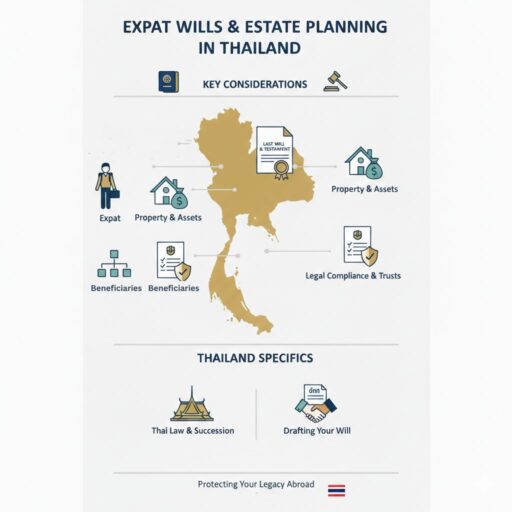
Expat wills in Thailand ensure your Thai-based assets are distributed according to your wishes, protecting your spouse, children, and other heirs from unexpected outcomes.
This article covers:
- What happens without a will?
- What are the inheritance rules in Thailand?
- How to make a will in Thailand?
- What are the options instead of a will?
Key Takeaways:
- A Thai-compliant will ensures your estate is distributed according to your wishes.
- Foreign wills often do not cover assets located in Thailand.
- Alternatives like insurance beneficiaries or trusts can simplify inheritance.
- Without a will, Thai intestacy laws decide, which may not match your intentions.
My contact details are hello@adamfayed.com and WhatsApp +44-7393-450-837 if you have any questions.
The information in this article is for general guidance only. It does not constitute financial, legal, or tax advice, and is not a recommendation or solicitation to invest. Some facts may have changed since the time of writing.

How does inheritance work in Thailand?
Inheritance in Thailand is governed by the Thai Civil and Commercial Code, which sets strict rules for distributing assets when someone dies without a valid will.
If no will exists, assets are distributed according to intestacy law, which prioritizes certain relatives in a fixed order:
- Spouse and children – The spouse and children share the estate first. Typically, the spouse is entitled to half of the jointly owned property, while the other half is divided equally among the children. If there is only a spouse and no children, the spouse may inherit the entire estate.
- Parents – If there are no children, parents inherit the estate along with the spouse. Each parent usually receives an equal portion of what remains after the spouse’s share.
- Siblings and other relatives – If there are no spouse, children, or parents, siblings may inherit, followed by more distant relatives according to Thai law.
Important for foreigners: Assets located in Thailand, including property, bank accounts, and investments, are subject to these rules, regardless of the deceased’s nationality.
Foreigners may also face additional complications, such as restrictions on land ownership, which can affect how their estate is distributed.
Is my Thai wife entitled to half of everything?
Under Thai law, a spouse is generally entitled to a share of the marital property. However, this does not automatically mean half of all assets.
The distribution depends on whether assets are considered jointly owned or personal property, and certain gifts or inheritances may be excluded.
Without clear documentation, disputes can arise over what counts as marital property, especially for assets acquired before marriage or from foreign sources.
Having a properly drafted will helps ensure your spouse receives their fair share and avoids lengthy legal complications.
What happens when an expat dies in Thailand?
When an expat passes away in Thailand, their assets located in the country are immediately subject to Thai inheritance law, regardless of their nationality.
This includes real estate, bank accounts, investments, and personal belongings.
Thai law does not automatically recognize foreign wills for property in Thailand, which means that without a valid Thai will, assets are distributed according to intestacy rules, potentially resulting in outcomes the expat did not intend.
The process can be complicated and time-consuming: the estate must go through probate in a Thai court, which verifies heirs, confirms debts, and oversees the legal distribution of assets.
Foreign heirs may face additional challenges, such as proving their relationship to the deceased and navigating language or documentation requirements.
Key considerations for expats:
- Property restrictions: Foreigners cannot directly own land in Thailand, so land owned by an expat may require special arrangements, such as long-term leases or corporate structures, to be inherited.
- Bank accounts and investments: Financial institutions generally require official Thai documentation and probate approval before releasing funds to heirs.
- Coordination with foreign assets: Assets held outside Thailand are typically governed by the laws of the country where they are located. This can create a situation where heirs must deal with multiple legal systems.
Without proper planning, the combination of Thai intestacy rules, property restrictions, and cross-border legal issues can cause delays, disputes, and unintended distributions.
Probate and Estate Administration in Thailand for Expats
Probate in Thailand is the court-supervised process used to confirm heirs and authorize the transfer of assets such as bank accounts, investments, and property.
For expats, this process is often more complex due to foreign documents, overseas heirs, and Thai language requirements.
Assets are commonly frozen until a Thai court appoints an executor or estate administrator.
Probate timelines for expats typically range from several months to over a year, depending on the clarity of the will and the availability of required documentation.
Foreign heirs may need to submit certified translations, notarized identification, and proof of relationship that meet Thai legal standards, which can cause delays if anything is missing or disputed.
Advance planning can significantly reduce these complications.
A Thai-compliant will helps streamline court procedures, while assets with named beneficiaries, such as insurance policies, may bypass probate entirely.
In Thailand, effective estate planning focuses on minimizing delays and administrative burdens for surviving family members rather than eliminating probate altogether.
Can you write your own will in Thailand?
Yes, you can write your own will as a foreigner in Thailand, but it must meet Thai legal requirements to be valid.
Wills must be signed in front of two witnesses, with optional registration at the local district office for added certainty.
A valid will lets expats clearly specify who inherits their assets in Thailand and appoint an executor to manage the estate.
Done correctly, it can also reduce court involvement, speed up estate administration, and minimize disputes, particularly where foreign heirs or restricted assets are involved.
Is a written will legally valid?
Yes, a written will can be legally valid in Thailand as long as it meets Thai formal requirements. Thai law recognizes two main types of wills:
- Holographic (handwritten) wills: These must be entirely handwritten by the testator, dated, and signed. They do not require witnesses, but unclear wording can lead to disputes in court.
- Formal typed wills: These must be typed or printed, signed by the testator in the presence of at least two witnesses, who also sign the document. Registration at a local district office is optional but provides added legal security.
Even if a will meets formal requirements, mistakes such as vague instructions, incomplete asset listings, or failure to account for foreign assets can render it invalid or difficult to enforce.
Why expats should seek legal guidance:
- Thai inheritance law is strict, and foreign assets may complicate estate planning.
- Certain assets, like land, have ownership restrictions for foreigners, so specifying how these should be handled is crucial.
- A lawyer familiar with Thai law can ensure the will is clear, enforceable, and compliant, avoiding costly probate disputes.
How to write a will in Thailand?
To write a Thai will, you must first clearly identify yourself and your beneficiaries, ensuring the document reflects your legal identity and who should inherit your assets.
Here are the essential steps to writing a will in Thailand:
1. Identify beneficiaries: List everyone who will inherit, including family, friends, or charitable organizations.
2. Detail your assets: Include all property, bank accounts, investments, and valuables located in Thailand, specifying how each should be distributed.
3. Appoint an executor: Choose someone you trust to manage your estate and carry out your instructions after your death.
4. Sign with witnesses: Execute the will in the presence of at least two witnesses who also sign the document. This is required for formal validity.
5. Optional registration: Consider registering the will at your local district office to provide extra legal certainty and reduce the risk of challenges.
Following these steps ensures your Thai will is clear, enforceable, and tailored to local inheritance laws, giving peace of mind that your estate will be handled according to your wishes.
What is the most common inheritance mistake?
The most common inheritance mistake expats make in Thailand is assuming a foreign will automatically controls Thai assets.
In reality, Thai courts may not recognize or easily enforce a foreign will, especially for property and bank accounts located in Thailand.
Another frequent error is failing to update a will after major life changes, such as marrying a Thai spouse, having children, divorcing, or buying property.
Outdated wills often conflict with Thai intestacy rules and marital property laws.
Finally, many expats leave unclear or incomplete instructions, such as vague beneficiary designations or no executor.
This forces heirs into lengthy court proceedings, increases costs, and can lead to disputes that delay access to funds and property.
In Thailand, small planning mistakes can turn a simple estate into a complex legal problem for surviving family members.
What is a better alternative to a will?
In Thailand, there are two primary alternatives to relying solely on a traditional will: named beneficiaries on insurance companies and trusts or foundations.
These options can reduce dependence on Thai probate courts and speed up asset transfers.
- Named beneficiaries on insurance companies: Life insurance and similar policies allow you to name beneficiaries directly with the insurer. Upon death, payouts are made straight to the beneficiary, often bypassing probate and court delays altogether.
- Trusts or foundations: These structures provide greater control over how assets are held and distributed, especially for expats with larger or cross-border estates.
While these alternatives can work independently, they are most effective when used alongside a Thai will, creating a smoother and more predictable inheritance outcome.
Proper structuring is essential to ensure they function as intended, and we can assist in designing arrangements that align with your assets, residency status, and family objectives.
Conclusion
Inheritance planning for expats in Thailand requires an understanding of how local law reshapes otherwise familiar estate plans.
The greatest risks come from untested assumptions particularly the belief that foreign wills, marital status, or informal arrangements will automatically be honored under Thai law.
Effective planning focuses on local enforceability and practical execution, not just intent.
When Thai-compliant wills are combined with tools like insurance beneficiaries or structured arrangements, heirs face fewer delays, lower costs, and less uncertainty.
In Thailand, thoughtful planning is what turns legal entitlement into a smooth and predictable outcome.
FAQs
Is a UK will valid in Thailand?
A UK will is not automatically valid for assets in Thailand. It must comply with Thai legal requirements to be recognized.
Is an Australian will valid in Thailand?
Similar to a UK will, an Australian will must meet Thai legal standards to be enforceable for Thai assets.
Can foreigners inherit property in Thailand?
Yes, foreigners can inherit property in Thailand. However, they cannot own land outright in their name, so legal structures like leases or companies are often used.
What are the three types of beneficiaries?
Beneficiaries generally fall into three categories: primary, contingent, and charitable.
• Primary beneficiaries receive the assets first.
• Contingent beneficiaries inherit only if the primary beneficiaries cannot.
• Charitable beneficiaries are organizations designated to receive specific gifts or donations.
Do you pay inheritance tax in Thailand?
Thailand imposes inheritance tax on amounts exceeding 100 million THB per beneficiary, not on the entire estate.
The tax rate is 5% for ascendants and descendants (such as parents or children) and 10% for other heirs.
Can foreigners be buried in Thailand?
Yes, foreigners can be buried in Thailand, but arrangements must follow local regulations.
Cremation is more common and may require specific documentation.
Pained by financial indecision?

Adam is an internationally recognised author on financial matters with over 830million answer views on Quora, a widely sold book on Amazon, and a contributor on Forbes.