Digital nomad visa countries like Portugal and Thailand let remote workers live and work abroad legally, with some visas offering paths to residency or citizenship.
These programs vary widely in income requirements, duration, and the possibility of converting a temporary stay into long-term residency or citizenship.
This article covers:
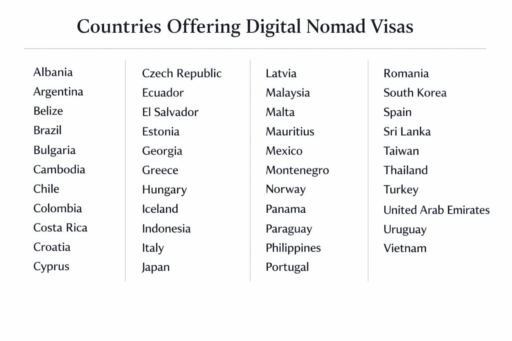
- What are the countries that offer Digital Nomad Visas?
- What countries have Digital Nomad Visas that lead to permanent residency?
- Which Digital Nomad Visa leads to citizenship?
- Which Digital Nomad Visa is best?
Key Takeaways:
- Europe has the most developed digital nomad visa programs, some leading to citizenship.
- Asia and Latin America offer emerging options with generally lower income thresholds.
- The best visa depends on your goals: lifestyle, tax optimization, or permanent residency.
- Choosing the right visa shapes long-term flexibility, financial efficiency, and future residency options.
My contact details are hello@adamfayed.com and WhatsApp +44-7393-450-837 if you have any questions.
For digital nomad or residence visas that require income, assets, or qualifying investments, we can help structure suitable investment solutions that may align with those requirements, depending on your circumstances.
The information in this article is for general guidance only. It does not constitute financial, legal, or tax advice, and is not a recommendation or solicitation to invest. Some facts may have changed since the time of writing.

What is the purpose of a digital nomad visa?
A digital nomad visa lets remote workers live and work legally in a foreign country while remaining employed by a foreign company or running their own business abroad.
- Allow remote workers to live legally in a foreign country
- Attract foreign income without competing in the local labor market
- Boost local economies through housing, tourism, and spending
- Provide tax clarity for location-independent professionals
Unlike tourist visas, these programs formally authorize remote work for foreign employers or businesses.
What qualifies you for a digital nomad visa?
To qualify for a digital nomad visa, applicants must demonstrate stable remote work or foreign business income and meet legal, financial, and health requirements.
Most programs require:
- Proof of remote employment or foreign business ownership
- Minimum monthly income (varies by country)
- Health insurance coverage
- Clean criminal record
- Proof of accommodation
- Passport validity
Some countries also require background checks, tax registration, or proof that income originates outside the host country.
What is the lowest income requirement for a digital nomad visa?
Some of the lowest minimum income thresholds for digital nomad visas start at around USD 900 per month and are found outside Europe, with countries like Colombia and Ecuador offering some of the most accessible requirements globally.
- Colombia – approx. USD 900–1,450/month (3× Colombian minimum wage)
- Ecuador – approx. USD 1,425/month
- Argentina – approx. USD $2,000–$2,500/month
While a few European programs have relatively lower thresholds, most require €2,000+ per month, which is generally higher than the lowest thresholds in Latin America.
Top Digital Nomad Visa Countries
Portugal, Spain, Thailand, Costa Rica, and Estonia are some of the most popular destinations for digital nomads, offering dedicated remote-work visas that allow foreigners to live and work legally while earning income abroad.
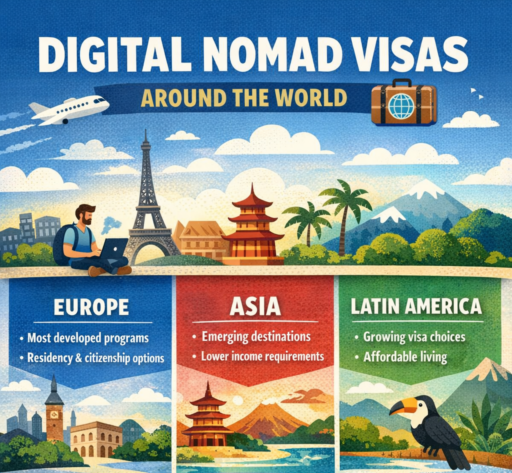
These countries stand out for their combination of easy visa application processes, reliable internet, and strong expat communities that make long-term remote living feasible.
Many also provide pathways to extended stays or permanent residency, giving nomads the option to transition from short-term work to longer-term relocation.
Additionally, they offer vibrant local cultures, good quality of life, and access to international travel hubs, making them ideal bases for remote professionals seeking mobility and lifestyle flexibility.
Countries With Digital Nomad Visas in Europe
Europe digital nomad visas are of the most established , with countries like Portugal and Spain requiring proof of remote work and offering pathways to residency or citizenship.
Western & Southern Europe
- Portugal – Requires proof of remote work or business income (approx. €3,800/month). Leads to permanent residency; citizenship possible after 5 years.
- Spain – Requires remote employment or self-employment, minimum income ~€2,400/month. Leads to permanent residency; citizenship possible after 10 years (2 years for Ibero-American nationals).
- Italy – New digital nomad visa requires foreign income proof and health insurance. May lead to permanent residency after 5 years; can be a stepping stone to citizenship after 5 additional years as a permanent resident.
- Greece – Requires minimum monthly income of €3,500 for individuals (€5,000 for families). Residency possible; citizenship after 7 years.
- Malta – Nomad Residence Permit; requires remote work or business ownership, minimum income between €2,700 – €3,000/month. No direct path to permanent residency or citizenship.
- Cyprus – Requires proof of remote income (~€3,500/month) and accommodation. Digital nomad visa is valid for up to 1 year (renewable); does not lead to permanent residency or citizenship.
- Croatia – Requires proof of remote work and health insurance. No direct permanent residency or citizenship pathway.
Central & Eastern Europe
- Estonia – Remote work or freelance proof required, minimum monthly income €4,500. No automatic residency or citizenship track.
- Latvia – Requires proof of income and remote work. Can lead to permanent residency after 2 years of legal residence, with citizenship possible after 5 years of holding permanent residency.
- Romania – Freelancer visa requires proof of remote work and sufficient income (~€3,000/month). Renewable; potential permanent residency; citizenship possible after 8 years.
- Hungary – White Card program requires remote work and health insurance. No direct path to residency or citizenship.
- Czech Republic – Freelancer/remote work visa requires proof of remote income (generally at least ~1.5× the Czech average gross salary, roughly CZK 60,000–70,000/month). Time spent on this long‑term residence permit can count toward the 5 years of continuous legal residence needed to apply for permanent residency; citizenship is typically possible after holding permanent residency for a further period.
- Georgia – Offers a Remotely from Georgia digital nomad visa for up to 1 year, requiring $2,000 monthly income proof, health insurance, remote work documentation, and eligibility from 90+ countries. Applications are submitted online remotely before entry.
- Bulgaria – Proof of remote work and minimum annual income ~€31,000. Visa valid 1 year (renewable once); does not directly lead to permanent residency or citizenship.
- Montenegro – Nomad visa allows stays up to 12 months with proof of foreign income (~€2,010/month). No permanent residency or citizenship.
- Albania – Offers a dedicated digital nomad/remote work residence permit (Unique Permit for Digital Mobile Workers) requiring proof of foreign remote work and financial sufficiency. The permit is typically issued for 1 year (renewable up to ~5 years) and can potentially lead to permanent residency after continuous legal stay under qualifying permits; citizenship may follow under standard naturalization rules.
Northern Europe
- Iceland – Remote work visa; requires proof of employment and minimum monthly income ~€7,200. Short-term only; no residency or citizenship track.
- Norway – Independent contractor visa; proof of remote income needed (~€3,200/month). Limited path to permanent residency; citizenship requires standard naturalization process.
Countries With Digital Nomad Visas in Asia
Thailand, Malaysia, Indonesia, the Philippines, Japan, South Korea, the United Arab Emirates, Taiwan, Sri Lanka, and Turkey offer digital nomad visas or remote-work permits in Asia.
- Thailand – Destination Thailand Visa (DTV) requires proof of remote work and financial evidence of at least ฿500,000 THB in liquid assets. Multiple-entry visa valid up to 5 years with stays of about 180 days per entry. Does not lead to permanent residency or citizenship.
- Malaysia – DE Rantau Nomad Pass requires proof of remote employment and minimum income of about USD 5,000/month. Valid up to 12 months and renewable. No direct pathway to permanent residency or citizenship.
- Indonesia – Remote worker / digital nomad visa requires proof of foreign income of about USD 60,000 annually (~USD 5,000/month). Typically issued for 1 year and renewable. Temporary program with no direct permanent residency pathway.
- Philippines – Digital Nomad Visa (Executive Order No. 86, 2025) requires proof of foreign remote work, health insurance, and sufficient income. Valid for up to 1 year and renewable once. Temporary residence only.
- Japan – Digital Nomad Visa introduced in 2024; requires proof of remote employment with foreign income and financial means. Typically allows stays up to 6 months. Temporary program with no settlement pathway.
- South Korea – Workcation (Digital Nomad) Visa requires proof of foreign employment and sufficient financial resources. Valid for up to 1 year and renewable once. Does not lead to permanent residency.
- United Arab Emirates (UAE) – Virtual Work Visa, often referred to as a digital nomad visa, allows remote workers employed abroad to live in Dubai while working remotely. Requires proof of employment and minimum monthly income of around USD 3,500. Valid for 1 year and renewable. Temporary residency only; permanent residency requires other visa categories, such as such as the Green Visa or Golden Visa.
- Taiwan – Digital Nomad Visitor Visa allows short-term remote work stays of up to about 6 months with minimum income thresholds. Does not lead to permanent residency; longer residence requires switching to another visa such as the Employment Gold Card.
- Sri Lanka – Digital Nomad Visa requires proof of foreign income (around USD 2,000/month) and health insurance. Typically issued for up to 1 year. the visa remains temporary with no direct path to permanent residency or citizenship reported.
- Turkey – Digital Nomad Visa requires proof of remote work and minimum income of roughly USD 3,000/month. Allows stays up to 12 months and may be renewable. Does not automatically lead to permanent residency or citizenship.
South American Countries with Digital Nomad Visas
Colombia, Brazil, Argentina, Ecuador, and Uruguay offer digital nomad visas or remote-worker permits that allow foreigners earning income abroad to live in the country temporarily.
- Colombia – Digital Nomad (Visitor V) Visa requires proof of remote employment or freelance work with foreign clients and minimum income of approximately 3× the Colombian minimum wage per month. Visa valid up to 2 years. Temporary only, but time can count toward permanent residency under other qualifying visas.
- Brazil – Digital Nomad Temporary Visa requires proof of foreign employment or business ownership and minimum monthly income of approximately USD 1,500 (or savings of around USD 18,000). Typically granted for 1 year and renewable. Does not automatically lead to permanent residency; citizenship possible via standard immigration pathways.
- Argentina – Digital Nomads Visa allows stays of 6–12 months for remote workers earning foreign income. Temporary only; permanent residency and citizenship follow standard immigration rules.
- Ecuador – Rentista / Remote Worker visa requires proof of stable foreign income. Grants temporary residence; permanent residency and citizenship possible through standard naturalization procedures.
- Uruguay – Digital Nomad Permit allows remote workers earning foreign income to stay up to 6 months, extendable to 12 months. Nomads may later apply for residency under Uruguay’s standard immigration pathways, which can eventually lead to citizenship.
Central & Latin American Countries with Digital Nomad Visas
Costa Rica, El Salvador, Panama, and Belize offer digital nomad visa programs that allow remote workers earning foreign income to live in the country for a limited period.
- Costa Rica – Digital Nomad Visa; applicants must show proof of remote work and a minimum monthly income of USD 3,000. The visa is valid for 12 months and renewable once. It provides temporary legal residence for remote work but does not automatically grant permanent residency or citizenship.
- El Salvador – Digital Nomad Visa (launched 2025); requires proof of foreign income (about USD 1,460/month), valid health insurance, and a clean criminal record. Valid for 1–2 years (renewable, total stay up to ~4 years). Temporary only, no direct path to permanent residency or citizenship.
- Panama – Short-Stay Visa for Remote Workers requires proof of foreign employment and minimum income of approximately USD 3,000 per month. Valid for 9 months and extendable once; temporary program with no direct permanent residency pathway.
- Belize – Work Where You Vacation visa requires proof of remote work and foreign income of roughly USD 2,000 per month. Valid for up to 1 year and allows remote workers to live in Belize while working for employers abroad.
Other Remote Work or Temporary Visa Options
Chile, Mexico, and Paraguay do not have dedicated digital nomad visas but allow remote workers to stay through temporary residence or independent worker visa options.
These permits can allow longer stays but are not specifically designed for digital nomads.
- Cambodia – Remote worker visa options allow temporary stays for foreigners earning income abroad. Usually short-term permits without direct permanent residency pathways.
- Chile – Temporary Resident Visa for Independent Workers requires proof of financial means or freelance income. Temporary only; permanent residency and citizenship follow standard naturalization rules.
- Mexico – Temporary Resident Visa for remote workers; proof of foreign employment or business and minimum monthly income or savings required. Valid 1–4 years and renewable. Not officially branded as a digital nomad visa; permanent residency and citizenship follow standard immigration pathways.
- Paraguay – Temporary or independent residency visas require proof of income or financial deposits. These permits are not designed for digital nomads but can allow remote workers to reside in the country.
- Vietnam – Digital nomad or remote-work visa options allow stays of about 6–12 months with proof of foreign income and sponsorship. Temporary only with no direct residency pathway.
Which country is best for a digital nomad?
For digital nomads or remote workers seeking the most advantageous visa, Portugal and Colombia stand out for their combination of residency options and accessible income requirements.
Which country is best varies based on your goals:
- Fast citizenship: Uruguay, Portugal
- Low income requirement: Colombia
- Tax optimization: UAE
- Lifestyle + infrastructure: Spain, Portugal
How to Choose the Right Digital Nomad Visa
Selecting a remote work visa should begin with consideration of digital nomad visas that lead to citizenship, long-term goals, and income requirements, as each factor strongly influences the most suitable destination and program.
1. Long-Term Targets:
Deciding between temporary mobility, permanent residency, or eventual citizenship is essential.
-Short-term lifestyle mobility: Ideal for remote workers seeking cultural experiences and flexibility without long-term commitments.
Countries like Croatia or Thailand offer visas valid 6–12 months with renewals but do not directly lead to residency or citizenship.
-Permanent residency: For those aiming to establish long-term legal residence, programs in Ecuador or Colombia provide pathways to temporary residence that can convert to permanent residency under standard immigration rules.
-Citizenship: Countries such as Portugal, Spain, and Uruguay allow holders to ultimately pursue naturalization, provided residency requirements are met.
2. Tax Residency Rules
Different digital nomad visas trigger tax obligations in distinct ways.
Some options, like Portugal’s D8 Visa or Spain’s non‑lucrative visa option, create tax residency after 183 days of presence in the country, which may require reporting worldwide income and complying with local tax rules.
Others, such as the UAE Remote Work Visa, allow a nominal presence without triggering local income taxation, offering potential tax optimization for global earners.
3. Income Requirements
Visa eligibility often depends on proof of foreign or self-employed income.
Countries with lower living costs, like Colombia or Ecuador, set thresholds at roughly USD 900–1,400/month, making them accessible for mid-level remote workers.
Higher-cost countries, particularly in Europe, may require €2,000–€3,500+ per month, ensuring applicants can sustain living standards without local employment.
4. Renewal Policies
The duration and renewability of a visa affect planning for extended stays.
Some programs are limited to one year without renewal (e.g., Croatia), requiring relocation or switching visa types after expiration.
Others allow multiyear extensions or rolling, providing greater stability and a pathway toward permanent residency.
5. Path to Citizenship
For digital nomads prioritizing long-term settlement, citizenship availability is a critical factor.
Countries with clear pathways include Uruguay, Portugal, and Spain, where holding temporary or permanent residence over the required number of years can lead to naturalization.
In contrast, visas like those in Thailand, UAE, or the Philippines provide legal stay for remote work but do not directly contribute toward permanent residency or citizenship.
Conclusion
Digital nomad visas are best viewed as strategic relocation tools, not lifestyle perks.
The real difference between programs lies in whether time spent under the visa builds durable residency rights or simply extends temporary stay.
Legal durability, tax exposure after physical presence thresholds, and the ability to convert into long-term residence matter more than headline income requirements.
Programs embedded in formal immigration law generally offer greater long-term certainty than pilot or executive-order schemes.
When aligned with a clear objective — mobility, tax efficiency, or citizenship — a digital nomad visa can function as a structured pathway rather than a short-term experiment.
FAQs
What is the cheapest country for digital nomads?
Countries such as Colombia, Indonesia, and Georgia are often considered among the cheapest for digital nomads due to their low living costs and relatively accessible income requirements.
Overall affordability depends on rent, visa fees, healthcare, taxation, and currency stability rather than lifestyle costs alone.
Which countries have the most digital nomads?
Portugal consistently ranks as a leading global digital nomad hub, with Lisbon estimated to host 16,000+ remote workers, according to data compiled by Portugal Digital Nomad Visa (2025 statistics report).
Other leading destinations include Spain, Mexico, Thailand, and Indonesia (particularly Bali), all of which combine strong infrastructure, favorable visa frameworks, and established international communities.
Which country has the longest digital nomad visa?
Spain offers one of the longest structured digital nomad stays, with an initial residence permit typically granted for up to 3 years and renewable to reach 5 years, after which permanent residency may be possible.
Portugal also allows multiyear residence under its digital nomad framework, with time counting toward permanent residency eligibility.
How to avoid double taxation as a digital nomad?
Double taxation can be minimized by relying on tax treaties between countries, tracking physical presence under the 183-day rule, and understanding territorial tax systems.
Maintaining clear tax residency documentation and consulting cross-border tax professionals ensures compliance while reducing unnecessary tax exposure.
Pained by financial indecision?

Adam is an internationally recognised author on financial matters with over 830million answer views on Quora, a widely sold book on Amazon, and a contributor on Forbes.