The market and investment outlook for second-quarter 2026 (Q2 2026) highlights macro conditions such as inflation, interest rates, and geopolitical risk, but portfolio outcomes hinge more on how these signals transmit through markets.
The key driver is not the macro forecast itself, but the uneven way liquidity, rates, and capital flows affect different asset classes, creating gaps between economic direction and actual investment performance.
Key Takeaways:
- Macro outlooks give direction, not returns.
- Market transmission matters more than macro forecasts.
- Liquidity and rates affect assets unevenly.
- Portfolio results depend on how signals flow, not just what the signals are.
My contact details are hello@adamfayed.com and WhatsApp +44-7393-450-837 if you have any questions.
The information in this article is for general guidance only. It does not constitute financial, legal, or tax advice, and is not a recommendation or solicitation to invest. Some facts may have changed since the time of writing.

What is the Q2 2026 investment outlook and what does it represent?
The Q2 2026 investment outlook refers to macro-level expectations for global markets, typically covering inflation trends, central bank policy, growth conditions, and geopolitical risks.
These outlooks function as high-level condition setting tools. They help investors understand the environment in which assets are priced, but they do not directly translate into investment performance or portfolio construction guidance.
This distinction is important because macro outlooks often appear comprehensive on the surface.
They describe what is likely to happen in economic terms, but they do not explain how those conditions interact with market structure in a cross-asset market regime.
Two investors can agree entirely on the same macro outlook and still experience very different portfolio outcomes depending on asset allocation, liquidity exposure, and geographic positioning.
Why macro forecasts are not enough for portfolio decision-making
A common mistake in interpreting investment outlooks is assuming that correct macro forecasting automatically leads to correct investment positioning.
In reality, macro conditions rarely translate into markets in a linear way, especially when evaluating whether 2026 is a good year to invest.
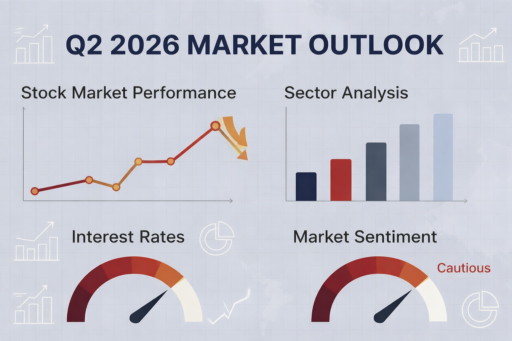
Markets do not respond uniformly to economic signals. Instead, the same macro environment produces different outcomes across asset classes due to:
- Liquidity distribution delays
- Interest rate sensitivity differences
- Cross-asset valuation gaps
- Regional capital flow variations
For example, equities often respond quickly to changes in forward expectations, while credit markets respond more directly to default risk and refinancing conditions.
Private assets adjust with significant delay, and foreign exchange markets react primarily to capital flow dynamics rather than domestic economic data alone.
This means that even when the macro environment is correctly identified, the way that environment affects portfolios can vary significantly depending on where and how capital is deployed within a portfolio construction lens.
What do most investment outlooks miss?
The most important but least discussed component of any investment outlook is the transmission layer.
This refers to the mechanisms through which macroeconomic conditions are converted into asset pricing behavior in the 2026 stock market outlook environment.
In theory, macro signals such as inflation or interest rate changes should affect all assets simultaneously. In practice, the transmission is uneven, delayed, and often distorted by market structure.
Even when macro conditions are correctly identified, the following distort outcomes:
- Liquidity flows concentrate in specific sectors rather than spreading evenly
- Credit markets adjust slower than equities
- FX markets react to capital movement rather than inflation directly
- Private markets lag public market repricing
This creates uneven risk exposure across portfolios.
Why do investors misinterpret macroeconomic conditions?
Even sophisticated investors frequently misinterpret macro environments because they focus on the signal rather than the transmission process in a global investment outlook context.
Investors typically misinterpret macro conditions in three ways:
1. Stability in macro data is mistaken for stability in markets
Even when inflation and growth stabilize, internal market volatility can increase due to sector divergence and liquidity fragmentation.
2. Liquidity is assumed to affect all assets equally
In reality, liquidity impacts:
- Public equities first
- Credit markets later
- Private assets with significant delay
3. Narrative consensus is confused with price alignment
Markets may agree on the macro story while still mispricing timing, duration, and risk across asset classes.
These misreads do not stem from incorrect macro analysis, but from incomplete interpretation of how macro conditions propagate through financial systems.
How does the Q2 2026 outlook affect portfolios?
When macro conditions are translated into portfolio outcomes, the result is not a uniform adjustment across assets, but a divergence in behavior across asset classes.
Diversification behaves differently in fragmented regimes
Traditional diversification becomes less effective when:
- asset classes respond to different liquidity cycles
- correlations break during stress periods
- FX exposure distorts returns across regions
Private credit introduces delayed risk
Private credit often:
- hides stress during expansion phases
- reprices later in tightening cycles
- creates sudden valuation adjustments
FX becomes a structural return driver
For global investors, especially HNWIs:
- currency movements materially affect returns
- capital mobility influences realized performance
- geography becomes as important as asset selection
In this environment, portfolio construction becomes about understanding how those assets respond to liquidity and capital flow dynamics instead of selecting assets that match macro views.
Bottom Line
The central insight from interpreting any Q2 2026 investment outlook is that macro forecasts provide directional clarity, but not performance predictability.
Macroeconomic analysis explains where the economy is heading, but it does not explain how that direction is reflected across different segments of the financial system.
Investment performance depends on how liquidity moves through markets, how different asset classes respond to rates, and how capital flows distort valuation timing.
In 2026, the most important skill is not predicting macro conditions correctly, but understanding how those conditions translate unevenly into risk and returns across portfolios.
FAQs
Is a big recession coming in 2026?
No broad, synchronized global recession is currently the base-case scenario for 2026. The more realistic outcome is uneven growth across regions and sectors rather than a global contraction.
For investors, the more effective approach is to stay invested regardless of macro uncertainty because long-term returns are typically driven by time in the market, not short-term economic timing.
Where is money safest during a recession?
Traditionally, capital rotates into high-quality sovereign bonds, defensive equities, and cash equivalents.
Overall, safety depends on liquidity access and currency stability, not just asset class labels.
Is 2026 expected to be a good year for the stock market?
Equity performance in 2026 is likely to be uneven rather than uniformly strong or weak. Market returns will depend more on sector concentration and liquidity conditions than broad economic direction.
Is it good to invest in 2026?
Yes, but selectivity matters more than timing. The key is positioning around liquidity-sensitive and structurally resilient assets rather than relying on broad market exposure.
What will be the best investment for 2026?
There is no single best investment for 2026 because returns will be driven by regime and liquidity conditions rather than a dominant asset class.
The strongest performance is likely to come from selectively positioned assets that benefit from capital flow shifts, rate sensitivity, and sector-specific liquidity rather than broad market exposure.
What is the biggest risk in 2026 markets?
The biggest risk is mispricing caused by uneven transmission of macro conditions, especially across credit, equities, and private markets.
Markets can look stable while internal risk is quietly building.
Pained by financial indecision?

Adam is an internationally recognised author on financial matters with over 830million answer views on Quora, a widely sold book on Amazon, and a contributor on Forbes.