Choosing a financial advisor for expats starts with verifying qualifications, regulatory status, fee transparency, and experience managing international finances.
The right expat financial advisor should understand cross-border taxation, international investing, residency rules, and estate planning so your financial strategy works across multiple countries—not just one.
The right expat financial advisor helps you grow and protect your wealth while avoiding compliance mistakes that can cost you money.
This article explores:
- What kind of financial advisor should I get?
- How to choose a financial advisor?
- What are the red flags of financial advisors?
- How much should you have before hiring a financial advisor?
- How to tell if your financial advisor is good?
- What not to tell your financial advisor
- Do you need more than one financial advisor?
Key Takeaways:
- Verify your advisor's licensing, qualifications, and regulatory status before investing.
- Choose an advisor with proven experience in cross-border financial planning and international tax considerations.
- Understand how your advisor is paid and avoid those who are not transparent about fees or conflicts of interest.
- Select an advisor whose expertise matches your financial goals, residency, and long-term wealth strategy.
My contact details are hello@adamfayed.com and WhatsApp +44-7393-450-837 if you have any questions.
The information in this article is for general guidance only. It does not constitute financial, legal, or tax advice, and is not a recommendation or solicitation to invest. Some facts may have changed since the time of writing.

What kind of financial advisor do I need?
Expats need a licensed, internationally qualified financial advisor who can manage wealth globally with confidence.
A qualified advisor for expats should:
- Have international credentials such as CFA, CFP, or CISI.
- Offer expertise in cross-border tax planning, offshore investments, and currency management.
- Understand your residency rules and local financial regulations.
For high-net-worth individuals, consider a multi-family office. For mid-tier portfolios, an independent advisor experienced in expat wealth management may suffice.
The type of financial advisor you need varies based on your goals and complexity of your finances.
At what net worth should you consider a financial advisor?
Even portfolios of USD $250,000–500,000 may benefit from expat wealth management advice. Advisors help with tax optimization, investment diversification, and international compliance.
For high-net-worth individuals (USD $1 million+), professional guidance becomes essential for estate structuring, trusts, and international wealth transfer.
How to choose a trustworthy financial advisor?
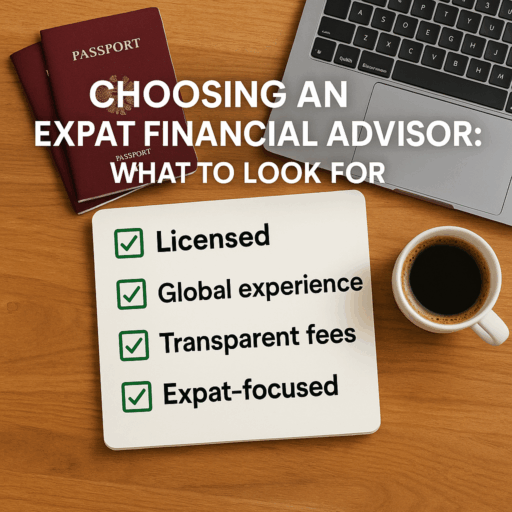
The best way to choose a trustworthy financial advisor by checking their credentials, understanding how they are paid, reviewing their experience with expat clients, and asking questions before committing.
To choose a reliable advisor:
- Verify licenses and certifications recognized in their jurisdiction.
- Ask for references from other expats.
- Confirm transparency in fees and investment strategies.
- Ensure the advisor provides a clear financial plan tailored to your circumstances.
How to tell if a financial advisor is good?
A good financial advisor helps you make informed financial decisions, communicates proactively, and adapts your financial plan as your circumstances change.
Their value lies in providing consistent guidance, not just recommending investments.
A good financial advisor should:
- Explain complex financial matters in a way you understand.
- Demonstrate experience with expat clients and cross-border investments.
- Adjust your financial strategy as your goals, family, career, or residency change.
- Monitor your portfolio regularly and provide meaningful updates rather than only contacting you when selling a product.
Over time, a good advisor should build trust by being responsive, keeping you informed, and helping you stay focused on your long-term objectives during both rising and falling markets.
What is a red flag for a financial advisor?
A financial advisor is a red flag if they promise guaranteed returns, lack proper licensing, are not transparent about fees, or pressure you into products without clearly explaining the risks.
These behaviors may indicate conflicts of interest, poor regulatory oversight, or advice that prioritizes sales over your financial goals.
Major financial advisor red flags include:
- Promising guaranteed high returns or risk-free investments.
- Lacking proper licensing or internationally recognized qualifications.
- Recommending products primarily because they generate commissions.
- Avoiding questions about fees, conflicts of interest, investment strategy, or regulatory status.
A trustworthy financial advisor should be willing to explain how they are compensated, why they recommend a particular investment, and the risks involved.
If an advisor is evasive, dismisses your concerns, or pressures you to make quick decisions, consider seeking a second opinion before proceeding.
What not to say to your financial advisor?
Avoid giving vague instructions, withholding important financial information, or asking your advisor to pursue unrealistic returns without understanding the risks.
Honest and complete communication helps your advisor develop a financial plan that reflects your goals, risk tolerance, and legal obligations.
Avoid statements or actions such as:
- "Invest all my money as quickly as possible."
- Hiding debts, existing investments, or financial commitments.
- Downplaying your risk tolerance or exaggerating your investment experience.
- Failing to disclose changes in your residency, tax status, family circumstances, or long-term objectives.
The more complete and accurate the information you provide, the better your advisor can tailor recommendations to your situation.
Open communication also reduces the risk of unsuitable investments, unexpected tax consequences, or financial strategies that no longer align with your goals.
Should you put all your money with one financial advisor?
Not necessarily. While many investors work successfully with a single trusted financial advisor, there are situations where seeking a second opinion or using specialist advisers can provide additional expertise and reduce decision-making risk.
A primary advisor can coordinate your overall financial strategy, helping to keep your investments, retirement planning, tax considerations, and estate planning aligned.
However, specialist advice may be valuable for complex matters such as international taxation, business succession, trust structures, or alternative investments.
Using more than one advisor should not mean duplicating investment strategies or creating conflicting financial plans.
Instead, each professional should have a clearly defined role, with one advisor maintaining oversight of your broader financial objectives where appropriate.
For many expats with relatively straightforward finances, a single experienced advisor is often sufficient.
As your wealth, business interests, or international financial affairs become more complex, obtaining independent advice on significant decisions can provide additional confidence before committing to a particular strategy.
FAQs
How to choose a financial advisor for beginners?
Start with licensed advisors offering clear fee structures, and focus on those experienced with international or expat clients. Ensure they can explain strategies in simple, actionable terms.
How to choose a financial advisor for retirement?
Look for advisors with expertise in retirement planning, multinational tax optimization, and income generation. They should provide a detailed plan for withdrawals, currency risk, and pension portability.
How to find a financial advisor for investing?
Search for advisors with a proven track record in global investment portfolios, portfolio diversification
, and risk management. Confirm they are registered with recognized regulatory authorities.